This book provides an introduction to the application of the techniques of formal analytic methods and quantitative analysis to the study of political science. The book has been written with several different levels of students in mind. It can be used for relatively simple undergraduate courses in politics that do not require high levels of mathematical competence. However, its framework is such that it can form the core text for more advanced courses on the use of formal methods in politics that might be taught at the graduate level in both politics and economics. To that end each chapter builds in sophistication. Amongst the core topics covered in the book can be counted rent-seeking, voting, collective action, resdistribution and pressure groups. The book cleverly covers the related but distinct disciplines of public choice and political economics and should appeal to students and researchers in both economics and political science.
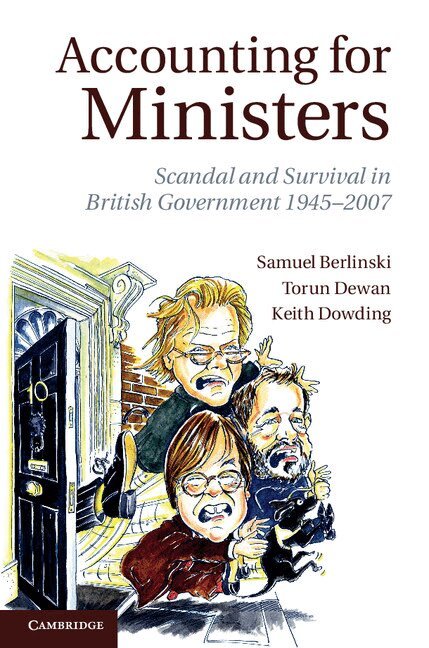
Accounting for Ministers uses the tools of modern political science to analyse the factors which determine the fortunes of Cabinet ministers. Utilising agency theory, it describes Cabinet government as a system of incentives for prime ministerial and parliamentary rule. The authors use a unique dataset of ministers from 1945 to 2007 to examine the structural and individual characteristics that lead to the selection and durability of ministers. Sensitive to historical context, it describes the unique features of different Prime Ministers and the sorts of issues and scandals that lead to the forced exit of ministers. The authors identify the structural factors that determine ministerial performance and tenure, seeing resignation calls as performance indicators. Probing the nature of individual and collective responsibility within Westminster forms of government, its rigorous analysis provides powerful new insights into the nature of Cabinet government.
The formal modeling techniques of rational choice theory have become central to the discipline of political science, for example with regard to the understanding of the working of legislatures, coalition governments, executive-bureaucracy relations or electoral systems. The collection includes the very best work in this field, as well as an editors′ introduction to each volume that describes the importance of the articles and their place in political science.Volume I: Social Choice and EquilibriumVolume II: Voting, Elections and Electoral SystemsVolume III: Legislatures and Pressure PoliticsVolume IV: Bureaucracy, Constitutional Arrangements and the State
This book provides an introduction to the application of the techniques of formal analytic methods and quantitative analysis to the study of political science. The book has been written with several different levels of students in mind. It can be used for relatively simple undergraduate courses in politics that do not require high levels of mathematical competence. However, its framework is such that it can form the core text for more advanced courses on the use of formal methods in politics that might be taught at the graduate level in both politics and economics. To that end each chapter builds in sophistication. Amongst the core topics covered in the book can be counted rent-seeking, voting, collective action, resdistribution and pressure groups. The book cleverly covers the related but distinct disciplines of public choice and political economics and should appeal to students and researchers in both economics and political science.
Accounting for Ministers uses the tools of modern political science to analyse the factors which determine the fortunes of Cabinet ministers. Utilising agency theory, it describes Cabinet government as a system of incentives for prime ministerial and parliamentary rule. The authors use a unique dataset of ministers from 1945 to 2007 to examine the structural and individual characteristics that lead to the selection and durability of ministers. Sensitive to historical context, it describes the unique features of different Prime Ministers and the sorts of issues and scandals that lead to the forced exit of ministers. The authors identify the structural factors that determine ministerial performance and tenure, seeing resignation calls as performance indicators. Probing the nature of individual and collective responsibility within Westminster forms of government, its rigorous analysis provides powerful new insights into the nature of Cabinet government.
The formal modeling techniques of rational choice theory have become central to the discipline of political science, for example with regard to the understanding of the working of legislatures, coalition governments, executive-bureaucracy relations or electoral systems. The collection includes the very best work in this field, as well as an editors′ introduction to each volume that describes the importance of the articles and their place in political science.Volume I: Social Choice and EquilibriumVolume II: Voting, Elections and Electoral SystemsVolume III: Legislatures and Pressure PoliticsVolume IV: Bureaucracy, Constitutional Arrangements and the State