Trevor Wilson – författare
Visar alla böcker från författaren Trevor Wilson. Handla med fri frakt och snabb leverans.
20 produkter
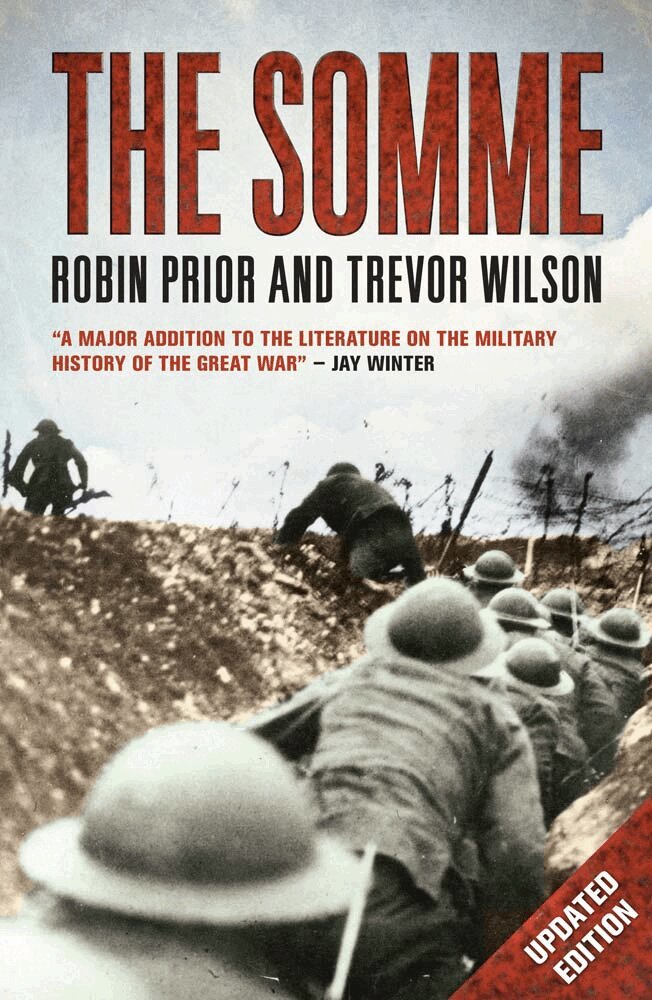
Somme
Häftad, 2016
258 kr
Lägg i varukorg
Published in a new edition on the centenary of the seismic battle, this book provides the definitive account of the Somme and assigns responsibility to military and political leaders for its catastrophic outcome.“A magisterial piece of scholarship. . . . It is a model of historical research and …
Passchendaele
The Untold Story
Häftad, 2016
188 kr
Lägg i varukorg
No conflict of the Great War excites stronger emotions than the war in Flanders in the autumn of 1917, and no name better encapsulates the horror and apparent futility of the Western Front than Passchendaele. By its end there had been 275,000 Allied and 200,000 German casualties. Yet the …
Myriad Faces of War
Britain and the Great War, 1914-1918
Häftad, 2010
519 kr
Lägg i varukorg
'By far the best study of Britain and the First World War that has yet been written.' London Review of BooksThe Myriad Faces of War, first published in 1987, is a unique and compelling study of the First World War from the standpoint of British involvement. It explores the reasons for Britain's …
Downfall of the Liberal Party, 1914-1935
Häftad, 2011
252 kr
Lägg i varukorg
By 1914 the Liberal Party had been governing Britain ever since its stunning general election victory of 1906. Four years later the Party was out of office, and so enfeebled it would never again form a government. What prompted the Liberal decline in the years of The Great War, and why did this …
Downfall of the Liberal Party, 1914-1935
E-bok, 2011
177 kr
Lägg i varukorg
By 1914 the Liberal Party had been governing Britain ever since its stunning general election victory of 1906. Four years later the Party was out of office, and so enfeebled it would never again form a government. What prompted the Liberal decline in the years of The Great War, and why did this …
Myriad Faces of War
Britain and the Great War, 1914-1918
E-bok, 2012
245 kr
Lägg i varukorg
'By far the best study of Britain and the First World War that has yet been written.' London Review of BooksThe Myriad Faces of War, first published in 1987, is a unique and compelling study of the First World War from the standpoint of British involvement. It explores the reasons for Britain's …
Myanmar: The state, community and the environment
Av Monique Skidmore, Trevor Wilson
Häftad, 2007
350 kr
Lägg i varukorg
Alexandre Kojève and the Specters of Russian Philosophy
Häftad, 2024
370 kr
Lägg i varukorg
Recounts KojÈve’s key role in the pivotal exchange of ideas between Eastern and Western European intellectuals in the early twentieth century This book shines critical new light on the story of Alexandre KojÈve’s intellectual origins and his role in the emigration of Russian philosophy into the …
Alexandre Kojève and the Specters of Russian Philosophy
Inbunden, 2024
1124 kr
Lägg i varukorg
Recounts KojÈve’s key role in the pivotal exchange of ideas between Eastern and Western European intellectuals in the early twentieth century This book shines critical new light on the story of Alexandre KojÈve’s intellectual origins and his role in the emigration of Russian philosophy into the …
Human Equity Advantage
Beyond Diversity to Talent Optimization
Inbunden, 2013
247 kr
Lägg i varukorg
A fresh approach to the old problem of "diversity fatigue" Trevor Wilson, global diversity strategist and visionary leader, presents a fresh, new management model that goes beyond the traditional diversity debate towards inclusion and building human capital. Featuring case studies and practical …
Human Equity Advantage
Beyond Diversity to Talent Optimization
E-bok, 2013
296 kr
Lägg i varukorg
A fresh approach to the old problem of "diversity fatigue" Trevor Wilson, global diversity strategist and visionary leader, presents a fresh, new management model that goes beyond the traditional diversity debate towards inclusion and building human capital. Featuring case studies and practical …
Human Equity Advantage
Beyond Diversity to Talent Optimization
E-bok, 2013
296 kr
Lägg i varukorg
A fresh approach to the old problem of "diversity fatigue" Trevor Wilson, global diversity strategist and visionary leader, presents a fresh, new management model that goes beyond the traditional diversity debate towards inclusion and building human capital. Featuring case studies and practical …
Steady Hands Needed: Reflections on the role of the Secretary of Foreign Affairs and Trade in Australia 1979-1999
Av Trevor Wilson, Graham Cooke
Häftad, 2008
277 kr
Lägg i varukorg
Dictatorship, Disorder and Decline in Myanmar
Av Monique Skidmore, Trevor Wilson
Häftad, 2008
327 kr
Lägg i varukorg
Myanmar's Long Road to National Reconciliation
Inbunden, 2006
517 kr
Lägg i varukorg
In late 2004, Myanmar's best known general and long-serving leader of the military regime, General Khin Nyunt, was suddenly dismissed. This shock development, perpetrated by a regime that has defied all predictions of its demise and disintegration, generated widespread uncertainty both inside and …
Ruling Myanmar
From Cyclone Nargis to National Elections
Av Nick Cheesman, Monique Skidmore m. fl.
Inbunden, 2011
460 kr
Lägg i varukorg
Debating Democratization in Myanmar
Av Nick Cheesman, Nicholas Farrelly m. fl.
Inbunden, 2014
460 kr
Lägg i varukorg
Is Myanmar (Burma) democratizing, or is it moving towards a new form of authoritarianism, perhaps one more consonant with other contemporary authoritarian regimes in Asia? Coming at a critical time, and one of growing interest in this Southeast Asian country among researchers and policy-makers, …
Debating Democratization in Myanmar
Av Trevor Wilson, Nicholas Farrelly m. fl.
E-bok, 2018
636 kr
Lägg i varukorg
No detailed description available for "Debating Democratization in Myanmar".