Tushar K. Ghosh - Böcker
Visar alla böcker från författaren Tushar K. Ghosh. Handla med fri frakt och snabb leverans.
12 produkter
12 produkter
906 kr
Skickas inom 10-15 vardagar
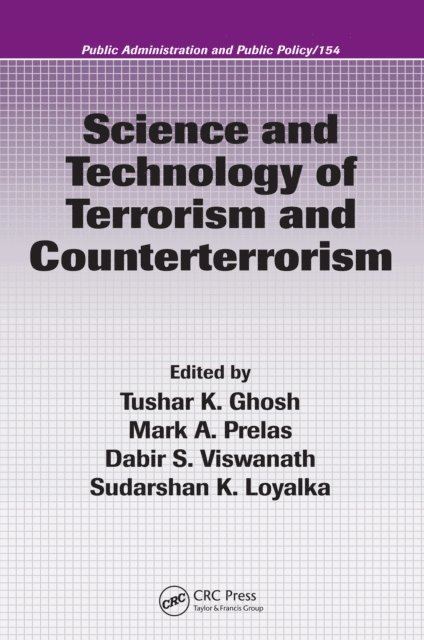
Traditionally, resources on terrorism and counterterrorism tend to focus on the social, behavioral, and legal aspects of the subject, with minimal emphasis on the scientific and technological aspects. Taking into account these practical considerations, the second edition of Science and Technology of Terrorism and Counterterrorism discusses the nature of terrorism and the materials used by terrorists. It describes how intelligence professionals and law enforcement personnel can detect and destroy these materials, and how they can deal with terrorist groups.This volume begins by introducing the shift in analysis of terrorist attacks after September 11, 2001 and summarizes selected case studies. It discusses the origin and nature of terrorism and the factors involved in diplomacy. Covering a broad range of topics, the book examines: Aerosol dispersion of toxic materialsBioterrorism and the manufacture, detection, and delivery of biological agentsAgricultural terrorismNuclear terrorism and nuclear weapons systems, threats, and safeguardsChemical terrorism, including manufacture, detection, delivery, and decontaminationCyber-terrorismPersonal protective equipmentThe role of government at federal, state, and local levelsThe role of international agencies and their resources, capabilities, and responsibilitiesThe National Infrastructure Protection PlanAs terrorist activities increase globally, it is critical that those charged with protecting the public understand the myriad of ways in which terrorists operate. While we cannot predict where, when, and how terrorists will strike, our vigilance in staying abreast of the terrorist threat is the only way to have a fighting chance against those who seek to destroy our world.
2 110 kr
Skickas inom 10-15 vardagar
The need for properties is ever increasing to make processes more economical. A good survey of the viscosity data, its critical evaluation and correlation would help design engineers, scientists and technologists in their areas of interest. This type of work assumes more importance as the amount of experimental work in collection and correlation of properties such as viscosity, thermal conductivity, heat capacities, etc has reduced drastically both at the industry, universities, and national laboratories. One of the c o-authors, Professor Viswanath, co-authored a book jointly with Dr. Natarajan “Data Book on the Viscosity of Liquids” in 1989 which mainly presented collected and evaluated liquid viscosity data from the literature. Although it is one of its kinds in the field, Prof. Viswanath recognized that the design engineers, scientists and technologists should have a better understanding of theories, experimental procedures, and operational aspects of viscometers. Also, rarely the data are readily available at the conditions that are necessary for design of the equipment or for other calculations. Therefore, the data must be interpolated or extrapolated using the existing literature data and using appropriate correlations or models. We have tried to address these issues in this book.
1 895 kr
Skickas inom 10-15 vardagar
Traditionally, resources on terrorism and counterterrorism tend to focus on the social, behavioral, and legal aspects of the subject, with minimal emphasis on the scientific and technological aspects. Taking into account these practical considerations, the second edition of Science and Technology of Terrorism and Counterterrorism discusses the nature of terrorism and the materials used by terrorists. It describes how intelligence professionals and law enforcement personnel can detect and destroy these materials, and how they can deal with terrorist groups.This volume begins by introducing the shift in analysis of terrorist attacks after September 11, 2001 and summarizes selected case studies. It discusses the origin and nature of terrorism and the factors involved in diplomacy. Covering a broad range of topics, the book examines: Aerosol dispersion of toxic materialsBioterrorism and the manufacture, detection, and delivery of biological agentsAgricultural terrorismNuclear terrorism and nuclear weapons systems, threats, and safeguardsChemical terrorism, including manufacture, detection, delivery, and decontaminationCyber-terrorismPersonal protective equipmentThe role of government at federal, state, and local levelsThe role of international agencies and their resources, capabilities, and responsibilitiesThe National Infrastructure Protection PlanAs terrorist activities increase globally, it is critical that those charged with protecting the public understand the myriad of ways in which terrorists operate. While we cannot predict where, when, and how terrorists will strike, our vigilance in staying abreast of the terrorist threat is the only way to have a fighting chance against those who seek to destroy our world.
733 kr
Skickas inom 5-8 vardagar
This book reviews work that covers everything from basic chemistry to advanced applications. Chitin and chitosan are used in a plethora of applications from wastewater treatment to prosthetics. After introducing the subject of polysaccharides as a whole, the authors turn to the preparation of chitin and chitosan and the characterization of the latter. The book provides information on chitin chemistry, extraction of chitin, chitosan preparation processes, and the applications of their derivatives in various fields. Among the applications that are included in detail are the adsorption of heavy metals for pollution prevention and clean-up, biosensors, cosmetics, various medical applications from anti-tumor activity to bone tissue engineering, agriculture and food production, and proton exchange membranes for fuel cells.Chitin and Chitosan features:• information on molecular structure, synthesis, properties, and latest research related to chitin and chitosan;• coverage of a wide range of topics from the properties of chitosan to its derivatives and applications;• in-depth information on biomedical applications of chitin and chitosan; and• information that can be applied to other biopolymer processing engineering areas.This book will be of interest to practitioners working in a wide variety of industries for which chitin and chitosan are useful materials, researchers in biosensors and heavy-metal adsorption, and to academic researchers investigating the properties, preparation, and uses of these materials.
708 kr
Skickas inom 5-8 vardagar
This book reviews work that covers everything from basic chemistry to advanced applications. Chitin and chitosan are used in a plethora of applications from wastewater treatment to prosthetics. After introducing the subject of polysaccharides as a whole, the authors turn to the preparation of chitin and chitosan and the characterization of the latter. The book provides information on chitin chemistry, extraction of chitin, chitosan preparation processes, and the applications of their derivatives in various fields. Among the applications that are included in detail are the adsorption of heavy metals for pollution prevention and clean-up, biosensors, cosmetics, various medical applications from anti-tumor activity to bone tissue engineering, agriculture and food production, and proton exchange membranes for fuel cells.Chitin and Chitosan features:• information on molecular structure, synthesis, properties, and latest research related to chitin and chitosan;• coverage of a wide range of topics from the properties of chitosan to its derivatives and applications;• in-depth information on biomedical applications of chitin and chitosan; and• information that can be applied to other biopolymer processing engineering areas.This book will be of interest to practitioners working in a wide variety of industries for which chitin and chitosan are useful materials, researchers in biosensors and heavy-metal adsorption, and to academic researchers investigating the properties, preparation, and uses of these materials.
Energy Resources and Systems
Volume 1: Fundamentals and Non-Renewable Resources
Inbunden, Engelska, 2009
538 kr
Skickas inom 10-15 vardagar
Other countries made up about one million barrels of oil per day but the net loss of four million barrels of oil production per day extended through March of 1974. At that time the United States imported about one third of its oil (about five million barrels per day).
2 110 kr
Skickas inom 10-15 vardagar
The need for properties is ever increasing to make processes more economical. A good survey of the viscosity data, its critical evaluation and correlation would help design engineers, scientists and technologists in their areas of interest. This type of work assumes more importance as the amount of experimental work in collection and correlation of properties such as viscosity, thermal conductivity, heat capacities, etc has reduced drastically both at the industry, universities, and national laboratories. One of the c o-authors, Professor Viswanath, co-authored a book jointly with Dr. Natarajan “Data Book on the Viscosity of Liquids” in 1989 which mainly presented collected and evaluated liquid viscosity data from the literature. Although it is one of its kinds in the field, Prof. Viswanath recognized that the design engineers, scientists and technologists should have a better understanding of theories, experimental procedures, and operational aspects of viscometers. Also, rarely the data are readily available at the conditions that are necessary for design of the equipment or for other calculations. Therefore, the data must be interpolated or extrapolated using the existing literature data and using appropriate correlations or models. We have tried to address these issues in this book.
Energy Resources and Systems
Volume 1: Fundamentals and Non-Renewable Resources
Häftad, Engelska, 2010
538 kr
Skickas inom 10-15 vardagar
Other countries made up about one million barrels of oil per day but the net loss of four million barrels of oil production per day extended through March of 1974. At that time the United States imported about one third of its oil (about five million barrels per day).
963 kr
Skickas inom 10-15 vardagar
This second volume of Energy Resources and Systems is focused on renewable energy resources. Renewable energy mainly comes from wind, solar, hydropower, geothermal, ocean, bioenergy, ethanol and hydrogen. Each of these energy resources is important and growing. For example, high-head hydroelectric energy is a well established energy resource and already contributes about 20% of the world’s electricity. Some countries have significant high-head resources and produce the bulk of their electrical power by this method. However, the bulk of the world’s high-head hydroelectric resources have not been exploited, particularly by the underdeveloped countries. Low-head hydroelectric is unexploited and has the potential to be a growth area. Wind energy is the fastest growing of the renewable energy resources for the electricity generation. Solar energy is a popular renewable energy resource. Geothermal energy is viable near volcanic areas. Bioenergy and ethanol have grown in recent years primarily due to changes in public policy meant to encourage its usage. Energy policies stimulated the growth of ethanol, for example, with the unintended side effect of rise in food prices. Hydrogen has been pushed as a transportation fuel. The authors want to provide a comprehensive series of texts on the interlinking of the nature of energy resources, the systems that utilize them, the environmental effects, the socioeconomic impact, the political aspects and governing policies. Volume 1 on Fundamentals and Non Renewable Resources was published in 2009. It blends fundamental concepts with an understanding of the non-renewable resources that dominate today’s society. The authors are now working on Volume 3, on nuclear advanced energy resources and nuclear batteries, consists of fusion, space power systems, nuclear energy conversion, nuclear batteries and advanced power, fuel cells and energy storage. Volume 4 will cover environmental effects, remediation and policy. Solutions to providing long term, stable and economical energy is a complex problem, which links social, economical, technical and environmental issues. It is the goal of the four volume Energy Resources and Systems series to tell the whole story and provide the background required by students of energy to understand the complex nature of the problem and the importance of linking social, economical, technical and environmental issues.
963 kr
Skickas inom 10-15 vardagar
This second volume of Energy Resources and Systems is focused on renewable energy resources. Renewable energy mainly comes from wind, solar, hydropower, geothermal, ocean, bioenergy, ethanol and hydrogen. Each of these energy resources is important and growing. For example, high-head hydroelectric energy is a well established energy resource and already contributes about 20% of the world’s electricity. Some countries have significant high-head resources and produce the bulk of their electrical power by this method. However, the bulk of the world’s high-head hydroelectric resources have not been exploited, particularly by the underdeveloped countries. Low-head hydroelectric is unexploited and has the potential to be a growth area. Wind energy is the fastest growing of the renewable energy resources for the electricity generation. Solar energy is a popular renewable energy resource. Geothermal energy is viable near volcanic areas. Bioenergy and ethanol have grown in recent years primarily due to changes in public policy meant to encourage its usage. Energy policies stimulated the growth of ethanol, for example, with the unintended side effect of rise in food prices. Hydrogen has been pushed as a transportation fuel. The authors want to provide a comprehensive series of texts on the interlinking of the nature of energy resources, the systems that utilize them, the environmental effects, the socioeconomic impact, the political aspects and governing policies. Volume 1 on Fundamentals and Non Renewable Resources was published in 2009. It blends fundamental concepts with an understanding of the non-renewable resources that dominate today’s society. The authors are now working on Volume 3, on nuclear advanced energy resources and nuclear batteries, consists of fusion, space power systems, nuclear energy conversion, nuclear batteries and advanced power, fuel cells and energy storage. Volume 4 will cover environmental effects, remediation and policy. Solutions to providing long term, stable and economical energy is a complex problem, which links social, economical, technical and environmental issues. It is the goal of the four volume Energy Resources and Systems series to tell the whole story and provide the background required by students of energy to understand the complex nature of the problem and the importance of linking social, economical, technical and environmental issues.
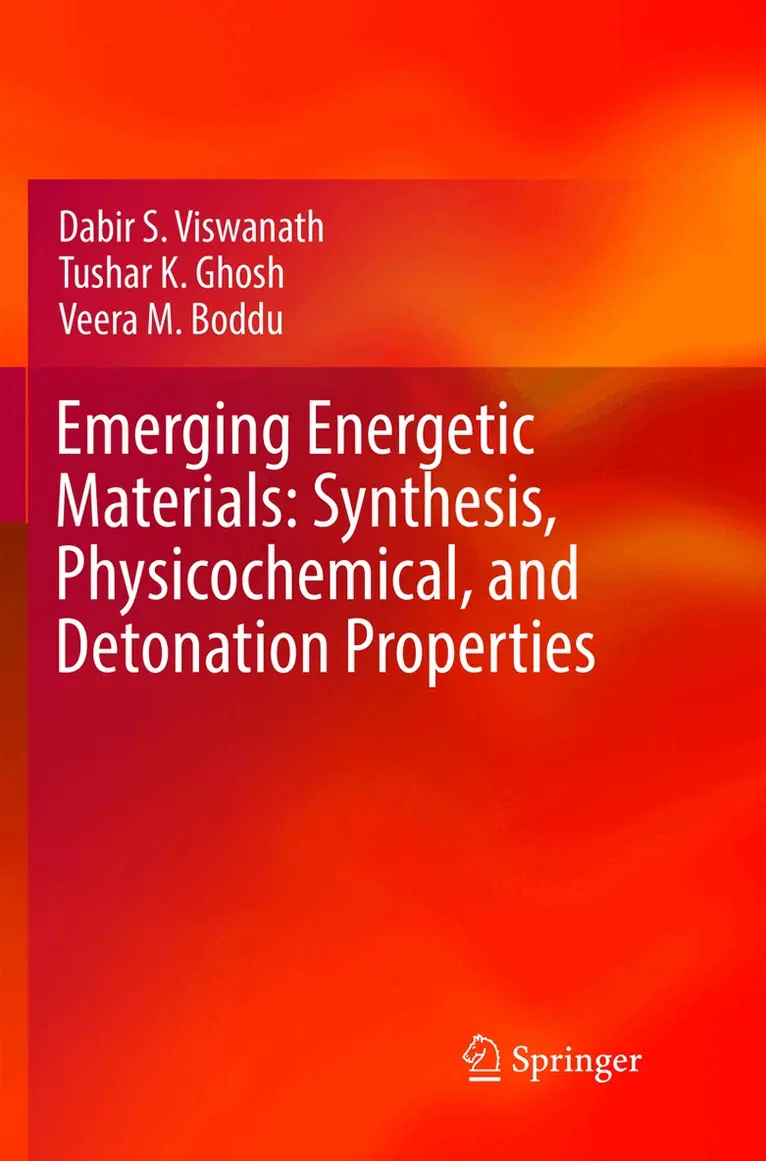
Emerging Energetic Materials: Synthesis, Physicochemical, and Detonation Properties
Inbunden, Engelska, 2018
2 110 kr
Skickas inom 10-15 vardagar
This book summarizes science and technology of a new generation of high-energy andinsensitive explosives. The objective is to provide professionals with comprehensiveinformation on the synthesis and the physicochemical and detonation properties ofthe explosives. Potential technologies applicable for treatment of contaminated wastestreams from manufacturing facilities and environmental matrices are also be included.This book provides the reader an insight into the depth and breadth of theoreticaland empirical models and experimental techniques currently being developed in thefield of energetic materials. It presents the latest research by DoD engineers andscientists, and some of DoD’s academic and industrial researcher partners. The topicsexplored and the simulations developed or modified for the purposes of energetics mayfind application in other closely related fields, such as the pharmaceutical industry.One of the key features of the book is the treatment of wastewaters generated duringmanufacturing of these energetic materials.
Emerging Energetic Materials: Synthesis, Physicochemical, and Detonation Properties
Häftad, Engelska, 2019
1 387 kr
Skickas inom 10-15 vardagar
This book summarizes science and technology of a new generation of high-energy andinsensitive explosives. The objective is to provide professionals with comprehensiveinformation on the synthesis and the physicochemical and detonation properties ofthe explosives. Potential technologies applicable for treatment of contaminated wastestreams from manufacturing facilities and environmental matrices are also be included.This book provides the reader an insight into the depth and breadth of theoreticaland empirical models and experimental techniques currently being developed in thefield of energetic materials. It presents the latest research by DoD engineers andscientists, and some of DoD’s academic and industrial researcher partners. The topicsexplored and the simulations developed or modified for the purposes of energetics mayfind application in other closely related fields, such as the pharmaceutical industry.One of the key features of the book is the treatment of wastewaters generated duringmanufacturing of these energetic materials.