Udo Schickhoff - Böcker
Visar alla böcker från författaren Udo Schickhoff. Handla med fri frakt och snabb leverans.
5 produkter
5 produkter
3 005 kr
Skickas inom 3-6 vardagar
A superb resource for understanding the diversity of the modern discipline of biogeography, and its history and future, especially within geography departments. I expect to refer to it often. - Professor Sally Horn, University of Tennessee "As you browse through this fine book you will be struck by the diverse topics that biogeographers investigate and the many research methods they use.... Biogeography is interdisciplinary, and a commonly-voiced concern is that one biogeographer may not readily understand another's research findings. A handbook like this is important for synthesising, situating, explaining and evaluating a large literature, and pointing the reader to informative publications." - Geographical Research "A valuable contribution in both a research and teaching context. If you are biologically trained, it provides an extensive look into the geographical tradition of biogeography, covering some topics that may be less familiar to those with an evolution/ecology background. Alternatively, if you are a geography student, researcher, or lecturer, it will provide a useful reference and will be invaluable to the non-biogeographer who suddenly has the teaching of an introductory biogeography course thrust upon them." - Adam C. Algar, Frontiers of Biogeography The SAGE Handbook of Biogeography is a manual for scoping the past, present and future of biogeography that enable readers to consider, where relevant, how similar biogeographical issues are tackled by researchers in different 'schools'. In line with the concept of all SAGE Handbooks, this is a retrospective and prospective overview of biogeography that will: Consider the main areas of biogeography researched by geographers Detail a global perspective by incorporating the work of different schools of biogeographers Ecplore the divergent evolution of biogeography as a discipline and consider how this diversity can be harnessed Examine the interdisciplinary debates that biogeographers are contributing to within geography and the biological sciences.
Aimed at an international audience of research students, academics, researchers and practitioners in biogeography, the text will attract interest from environmental scientists, ecologists, biologists and geographers alike.
1 802 kr
Skickas inom 10-15 vardagar
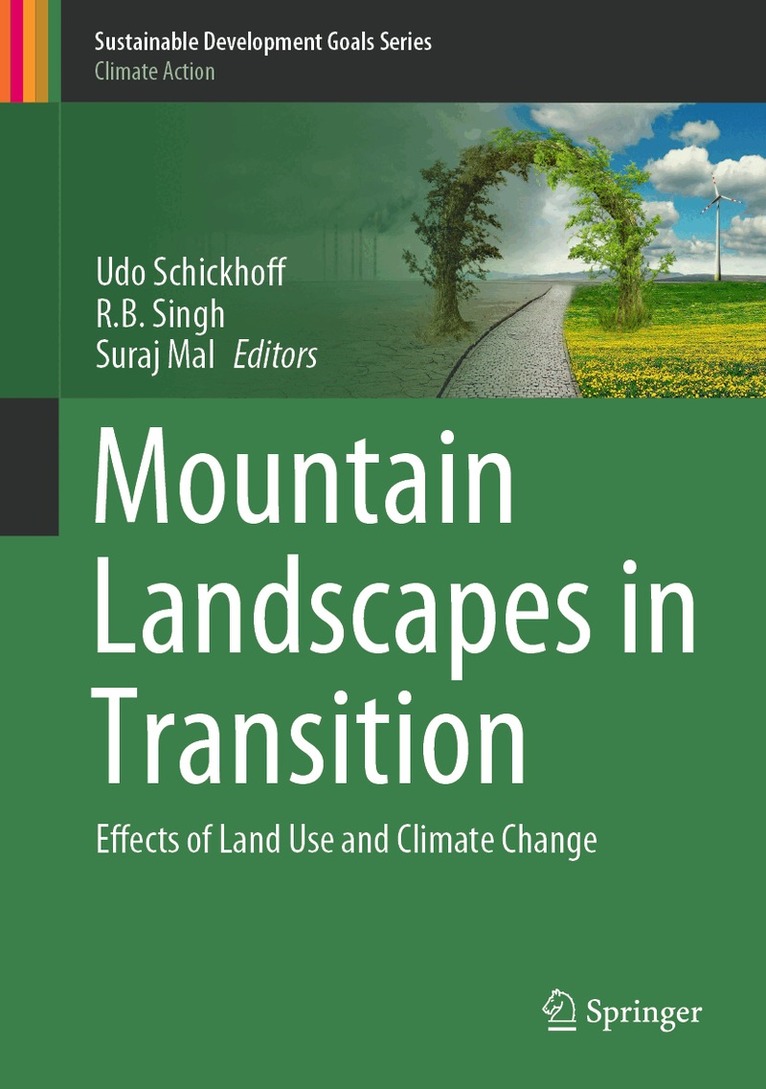
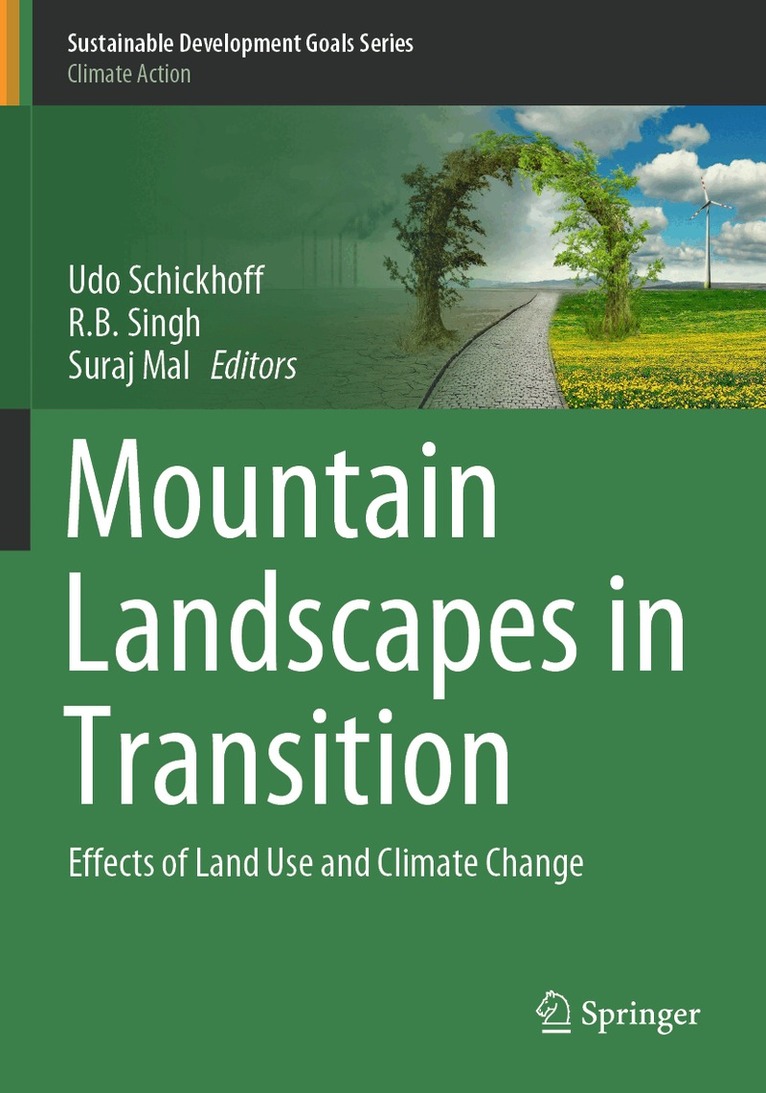
This book compiles available knowledge of the response of mountain ecosystems to recent climate and land use change and intends to bridge the gap between science, policy and the community concerned.The chapters present key concepts, major drivers and key processes of mountain response, providing transdisciplinary orientation to mountain studies incorporating experiences of academics, community leaders and policy-makers from developed and less developed countries. The book chapters are arranged in two sections. The first section concerns the response processes of mountain environments to climate change. This section addresses climate change itself (past, current and future changes of temperature and precipitation) and its impacts on the cryosphere, hydrosphere, biosphere, and human-environment systems. The second section focuses on the response processes of mountain environments to land use/land cover change. The case studies address effects of changing agriculture and pastoralism, forest/water resources management and urbanization processes, landscape management, and biodiversity conservation. The book is designed as an interdisciplinary publication which critically evaluates developments in mountains of the world with contributions from both social and natural sciences.
1 802 kr
Skickas inom 10-15 vardagar
This book compiles available knowledge of the response of mountain ecosystems to recent climate and land use change and intends to bridge the gap between science, policy and the community concerned.The chapters present key concepts, major drivers and key processes of mountain response, providing transdisciplinary orientation to mountain studies incorporating experiences of academics, community leaders and policy-makers from developed and less developed countries. The book chapters are arranged in two sections. The first section concerns the response processes of mountain environments to climate change. This section addresses climate change itself (past, current and future changes of temperature and precipitation) and its impacts on the cryosphere, hydrosphere, biosphere, and human-environment systems. The second section focuses on the response processes of mountain environments to land use/land cover change. The case studies address effects of changing agriculture and pastoralism, forest/water resources management and urbanization processes, landscape management, and biodiversity conservation. The book is designed as an interdisciplinary publication which critically evaluates developments in mountains of the world with contributions from both social and natural sciences.
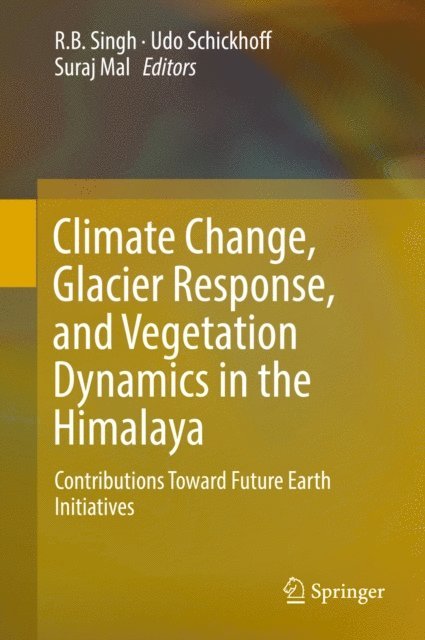
Climate Change, Glacier Response, and Vegetation Dynamics in the Himalaya
Contributions Toward Future Earth Initiatives
Inbunden, Engelska, 2016
1 073 kr
Skickas inom 10-15 vardagar
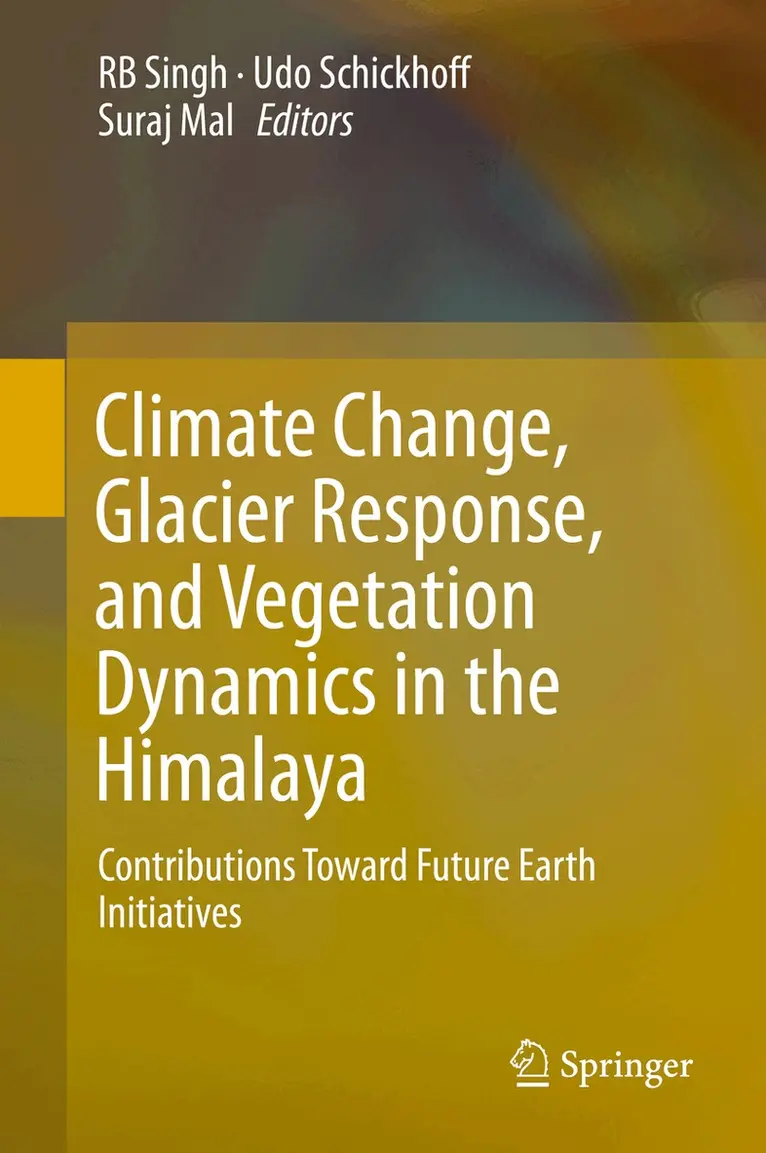
This book provides information essential for anyone interested in climate and environmental change of the Himalayan region, including land and resource managers, environmental planners, conservationists, environmentalists, geographers, climatologists, ecologists, and students. The book is unique in its coverage of the current understanding of the science of climate change in the Himalayan mountain system and of the major impacts on physical systems and ecosystems. The book gives an overview of the physical science basis of climate change and explains drivers and processes of glacier and vegetation dynamics.The book covers relevant aspects of accelerated climate change observed in the Himalayan mountain system, and highlights the regional differentiation of climatic changes and associated environmental modifications. The focus is on climate variability and change, and how physical systems and ecosystems respond to climate change impacts. Consequences include impacts on physicalsystems such as glacier shrinkage, glacial lake outburst floods, altered hydrological characteristics, permafrost warming and thawing, and mass movements on slopes. Climate change is also a powerful stressor on ecosystems and induces range shifts of plant and animal species and alterations in terms of phenology, biomass, plant cover, plant group dominance and species composition. Thus, ecosystem structure and functioning will be strongly affected.The book has an introductory chapter followed by a section on climate change, a section on impacts on glaciers and hydrology, and a section on vegetation dynamics. Each section has several chapters presenting key concepts, major drivers and key processes of environmental change in the Himalayan region from different perspectives. Climate change impacts in the Himalaya have not been studied in much detail, and respective findings were not presented so far in a comprehensive overview. This book summarizes the current knowledge of interactions between climate change and the dynamics of glaciers, hydrology, and vegetation.
Climate Change, Glacier Response, and Vegetation Dynamics in the Himalaya
Contributions Toward Future Earth Initiatives
Häftad, Engelska, 2018
1 073 kr
Skickas inom 10-15 vardagar
This book provides information essential for anyone interested in climate and environmental change of the Himalayan region, including land and resource managers, environmental planners, conservationists, environmentalists, geographers, climatologists, ecologists, and students. The book is unique in its coverage of the current understanding of the science of climate change in the Himalayan mountain system and of the major impacts on physical systems and ecosystems. The book gives an overview of the physical science basis of climate change and explains drivers and processes of glacier and vegetation dynamics.The book covers relevant aspects of accelerated climate change observed in the Himalayan mountain system, and highlights the regional differentiation of climatic changes and associated environmental modifications. The focus is on climate variability and change, and how physical systems and ecosystems respond to climate change impacts. Consequences include impacts on physicalsystems such as glacier shrinkage, glacial lake outburst floods, altered hydrological characteristics, permafrost warming and thawing, and mass movements on slopes. Climate change is also a powerful stressor on ecosystems and induces range shifts of plant and animal species and alterations in terms of phenology, biomass, plant cover, plant group dominance and species composition. Thus, ecosystem structure and functioning will be strongly affected.The book has an introductory chapter followed by a section on climate change, a section on impacts on glaciers and hydrology, and a section on vegetation dynamics. Each section has several chapters presenting key concepts, major drivers and key processes of environmental change in the Himalayan region from different perspectives. Climate change impacts in the Himalaya have not been studied in much detail, and respective findings were not presented so far in a comprehensive overview. This book summarizes the current knowledge of interactions between climate change and the dynamics of glaciers, hydrology, and vegetation.