Uffa Jensen – författare
Visar alla böcker från författaren Uffa Jensen. Handla med fri frakt och snabb leverans.
7 produkter
7 produkter
E-bok
PDF, Engelska, 20141 781 kr
Läs direkt efter köp
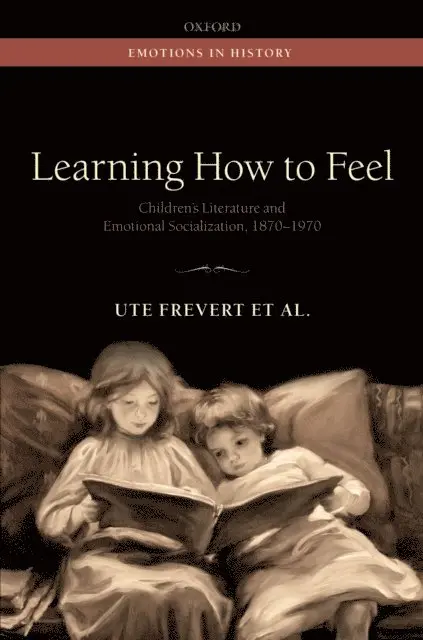
Learning How to Feel explores the ways in which children and adolescents learn not just how to express emotions that are thought to be pre-existing, but actually how to feel. The volume assumes that the embryonic ability to feel unfolds through a complex dialogue with the social and cultural environment and specifically through reading material. The fundamental formation takes place in childhood and youth. A multi-authored historical monograph, Learning How to Feel uses children''s literature and advice manuals to access the training practices and learning processes for a wide range of emotions in the modern age, circa 1870-1970. The study takes an international approach, covering a broad array of social, cultural, and political milieus in Britain, Germany, India, Russia, France, Canada, and the United States.Learning How to Feel places multidirectional learning processes at the centre of the discussion, through the concept of practical knowledge. The book innovatively draws a framework for broad historical change during the course of the period. Emotional interaction between adult and child gave way to a focus on emotional interactions among children, while gender categories became less distinct. Children were increasingly taught to take responsibility for their own emotional development, to find ''authenticity'' for themselves. In the context of changing social, political, cultural, and gender agendas, the building of nations, subjects and citizens, and the forging of moral and religious values, Learning How to Feel demonstrates how children were provided with emotional learning tools through their reading matter to navigate their emotional lives.
Inbunden, Engelska, 2014
1 716 kr
Skickas inom 5-8 vardagar
Learning How to Feel explores the ways in which children and adolescents learn not just how to express emotions that are thought to be pre-existing, but actually how to feel. The volume assumes that the embryonic ability to feel unfolds through a complex dialogue with the social and cultural environment and specifically through reading material. The fundamental formation takes place in childhood and youth. A multi-authored historical monograph, Learning How to Feel uses children's literature and advice manuals to access the training practices and learning processes for a wide range of emotions in the modern age, circa 1870-1970. The study takes an international approach, covering a broad array of social, cultural, and political milieus in Britain, Germany, India, Russia, France, Canada, and the United States.Learning How to Feel places multidirectional learning processes at the centre of the discussion, through the concept of practical knowledge. The book innovatively draws a framework for broad historical change during the course of the period. Emotional interaction between adult and child gave way to a focus on emotional interactions among children, while gender categories became less distinct. Children were increasingly taught to take responsibility for their own emotional development, to find 'authenticity' for themselves. In the context of changing social, political, cultural, and gender agendas, the building of nations, subjects and citizens, and the forging of moral and religious values, Learning How to Feel demonstrates how children were provided with emotional learning tools through their reading matter to navigate their emotional lives.
Inbunden, Engelska, 2025
1 643 kr
Skickas inom 3-6 vardagar
Assessing the role Jews played in Germany’s political and legal history remains a subject of debate. Traditional scholarship’s focus on Jews as objects of state-orchestrated violence and antisemitic discrimination often only risks disempowering them further. Political and Legal History of German Jews offers an insightful and comprehensive reassessment, shifting the focus to consider the political and legal agency Jews gained through Germany’s democratic development. Through an examination of the strategies German Jews used to interact with, and influence, policies, as well as the development of distinct Jewish political and legal frameworks, this book resituates German Jews as active and engaged political agents.
Inbunden, Tyska, 2022
262 kr
Skickas inom 3-6 vardagar
E-bok
PDF, Engelska, 2013272 kr
Läs direkt efter köp
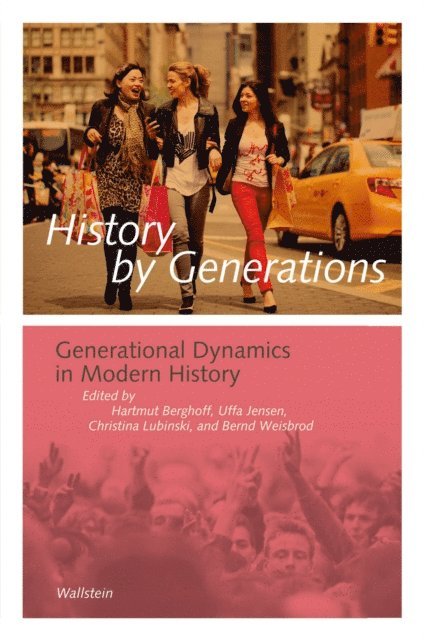
Die Beiträge des vorliegenden Bandes gehen aus einer gemeinsamen Tagung des Graduiertenkollegs "Generationengeschichte" der Georg-August-Universität Göttingen und des Deutschen Historischen Instituts in Washington hervor. Verschiedene Generationenkonzepte standen sich hier gegenüber: die europäische Idee von "Jugendgenerationen" und "politischen Generationen" und die eher pragmatische amerikanische Lesart von den "demographischen Generationen" oder den "Konsumgenerationen". Immer, so scheint es, wird die generationelle Logik überlagert von nationalen Vorstellungen der Dazugehörigkeit. Sehr deutlich arbeiten die Beiträge aus Europa und den USA heraus, dass die historische Zeit wohl in Generationen gelesen wird, doch wird Geschichte nicht von Generationen gemacht.
E-bok
PDF, Tyska, 2024272 kr
Läs direkt efter köp
Grundbegriffe, zentrale Problemfelder und prominente Positionen der Antisemitismusforschung, werden knapp und einführend erläutert»Was ist Antisemitismus?« bietet in knapper Form eine fundierte Darstellung der grundlegenden Begriffe, Probleme und eine Übersicht der Autor:innen, die für die wissenschaftliche und öffentliche Diskussion über das Verständnis von Antisemitismus im deutschsprachigen Raum von Bedeutung sind. Die Herausgeber:innen verfolgen dabei zwei Hauptanliegen: Erstens soll die komplexe wissenschaftliche Arbeit von verschiedenen Antisemitismus-Konzepten, wie dem israelbezogenen oder dem »postkolonialen« Antisemitismus, einem breiteren Publikum zugänglich gemacht werden. Zweitens soll das Wissen über die verschiedenen Auffassungen von Antisemitismus aus Perspektiven der Wissenschafts- und Erkenntnistheorie sowie der Antisemitismusforschung systematisiert werden. Das Buch ist das Ergebnis eines intensiven Austauschs im Rahmen des Forschungsprojekts »Antisemitismus definieren«, in dessen Rahmen acht Personen mit verschiedenen wissenschaftlichen und biografischen Hintergründen die Grundlinien unterschiedlicher Antisemitismusbegriffe herausgearbeitet und die Schwierigkeiten bei der Definition diskutiert haben. Herausgekommen ist ein interdisziplinärer Band, der auch vor dem Hintergrund aktueller kontroverser Debatten eine zentrale Handreichung bietet.
272 kr
Läs direkt efter köp
Grundbegriffe, zentrale Problemfelder und prominente Positionen der Antisemitismusforschung, werden knapp und einführend erläutert»Was ist Antisemitismus?« bietet in knapper Form eine fundierte Darstellung der grundlegenden Begriffe, Probleme und eine Übersicht der Autor:innen, die für die wissenschaftliche und öffentliche Diskussion über das Verständnis von Antisemitismus im deutschsprachigen Raum von Bedeutung sind. Die Herausgeber:innen verfolgen dabei zwei Hauptanliegen: Erstens soll die komplexe wissenschaftliche Arbeit von verschiedenen Antisemitismus-Konzepten, wie dem israelbezogenen oder dem »postkolonialen« Antisemitismus, einem breiteren Publikum zugänglich gemacht werden. Zweitens soll das Wissen über die verschiedenen Auffassungen von Antisemitismus aus Perspektiven der Wissenschafts- und Erkenntnistheorie sowie der Antisemitismusforschung systematisiert werden. Das Buch ist das Ergebnis eines intensiven Austauschs im Rahmen des Forschungsprojekts »Antisemitismus definieren«, in dessen Rahmen acht Personen mit verschiedenen wissenschaftlichen und biografischen Hintergründen die Grundlinien unterschiedlicher Antisemitismusbegriffe herausgearbeitet und die Schwierigkeiten bei der Definition diskutiert haben. Herausgekommen ist ein interdisziplinärer Band, der auch vor dem Hintergrund aktueller kontroverser Debatten eine zentrale Handreichung bietet.