Ugammaur Tüzün – författare
Visar alla böcker från författaren Ugammaur Tüzün. Handla med fri frakt och snabb leverans.
3 produkter
3 produkter
Inbunden, Engelska, 1997
2 152 kr
Skickas inom 10-15 vardagar
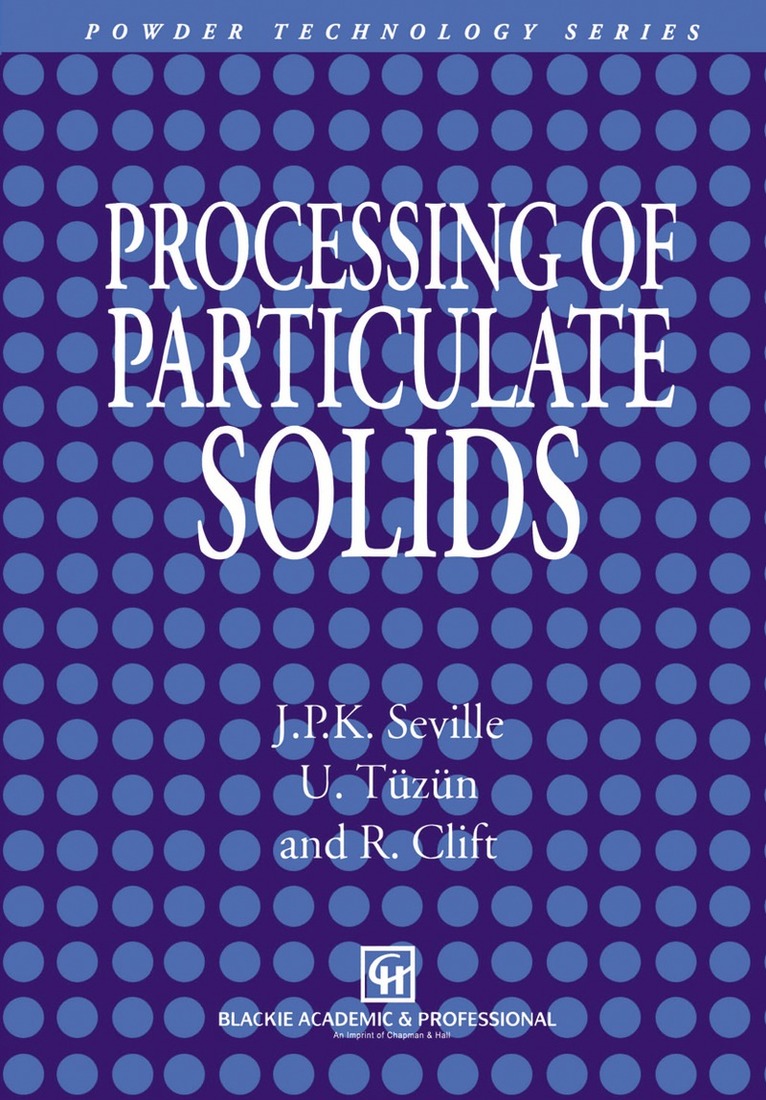
Over half of the products of the chemical and process industries are sold in a particulate form. The range of such products is vast: from agrochemicals to pigments, from detergents to foods, from plastics to pharmaceuticals. However, surveys of the performance of processes designed to produce particulate products have consistently shown inadequate design and poor reliability. `Particle technology' is a new subject facing new challenges. Chemical and process engineering is becoming less concerned with the design of plants to produce generic simple chemicals (which are often single phase fluids) and is now more concerned with speciality `effect' chemicals which may often be in particulate form. Chemical and process engineers are also being recruited in increasing numbers into areas outside their tranditional fields, such as the food industry, pharmaceuticals and the manufacture of a wide variety of consumer products. This book has been written to meet their needs. It provides comprehensive coverage of the technology of particulate solids, in a form which is both accessible and concise enough to be useful to engineering and science students in the final year of an undergraduate degree, and at Master's level. Although it was written with students of chemical engineering in mind, it will also be of use and interest to students of other disciplines. It comprises an account of the fundamentals of teh subject, illustrated by worked examples, and followed by a wide range of selected applications.
E-bok
PDF, Engelska, 20122 840 kr
Läs direkt efter köp
Over half of the products of the chemical and process industries are sold in a particulate form. The range of such products is vast: from agrochemicals to pigments, from detergents to foods, from plastics to pharmaceuticals. However, surveys of the performance of processes designed to produce particulate products have consistently shown inadequate design and poor reliability. `Particle technology'' is a new subject facing new challenges. Chemical and process engineering is becoming less concerned with the design of plants to produce generic simple chemicals (which are often single phase fluids) and is now more concerned with speciality `effect'' chemicals which may often be in particulate form. Chemical and process engineers are also being recruited in increasing numbers into areas outside their tranditional fields, such as the food industry, pharmaceuticals and the manufacture of a wide variety of consumer products. This book has been written to meet their needs. It provides comprehensive coverage of the technology of particulate solids, in a form which is both accessible and concise enough to be useful to engineering and science students in the final year of an undergraduate degree, and at Master''s level. Although it was written with students of chemical engineering in mind, it will also be of use and interest to students of other disciplines. It comprises an account of the fundamentals of teh subject, illustrated by worked examples, and followed by a wide range of selected applications.
Häftad, Engelska, 2011
2 366 kr
Skickas inom 10-15 vardagar
Over half of the products of the chemical and process industries are sold in a particulate form. The range of such products is vast: from agrochemicals to pigments, from detergents to foods, from plastics to pharmaceuticals. However, surveys of the performance of processes designed to produce particulate products have consistently shown inadequate design and poor reliability. `Particle technology' is a new subject facing new challenges. Chemical and process engineering is becoming less concerned with the design of plants to produce generic simple chemicals (which are often single phase fluids) and is now more concerned with speciality `effect' chemicals which may often be in particulate form. Chemical and process engineers are also being recruited in increasing numbers into areas outside their tranditional fields, such as the food industry, pharmaceuticals and the manufacture of a wide variety of consumer products. This book has been written to meet their needs. It provides comprehensive coverage of the technology of particulate solids, in a form which is both accessible and concise enough to be useful to engineering and science students in the final year of an undergraduate degree, and at Master's level. Although it was written with students of chemical engineering in mind, it will also be of use and interest to students of other disciplines. It comprises an account of the fundamentals of teh subject, illustrated by worked examples, and followed by a wide range of selected applications.