Ulf-Daniel Ehlers – författare
495 kr
Skickas inom 10-15 vardagar
396 kr
Läs direkt efter köp
983 kr
Skickas inom 10-15 vardagar
950 kr
Läs direkt efter köp
2 221 kr
Skickas inom 10-15 vardagar
2 663 kr
Läs direkt efter köp
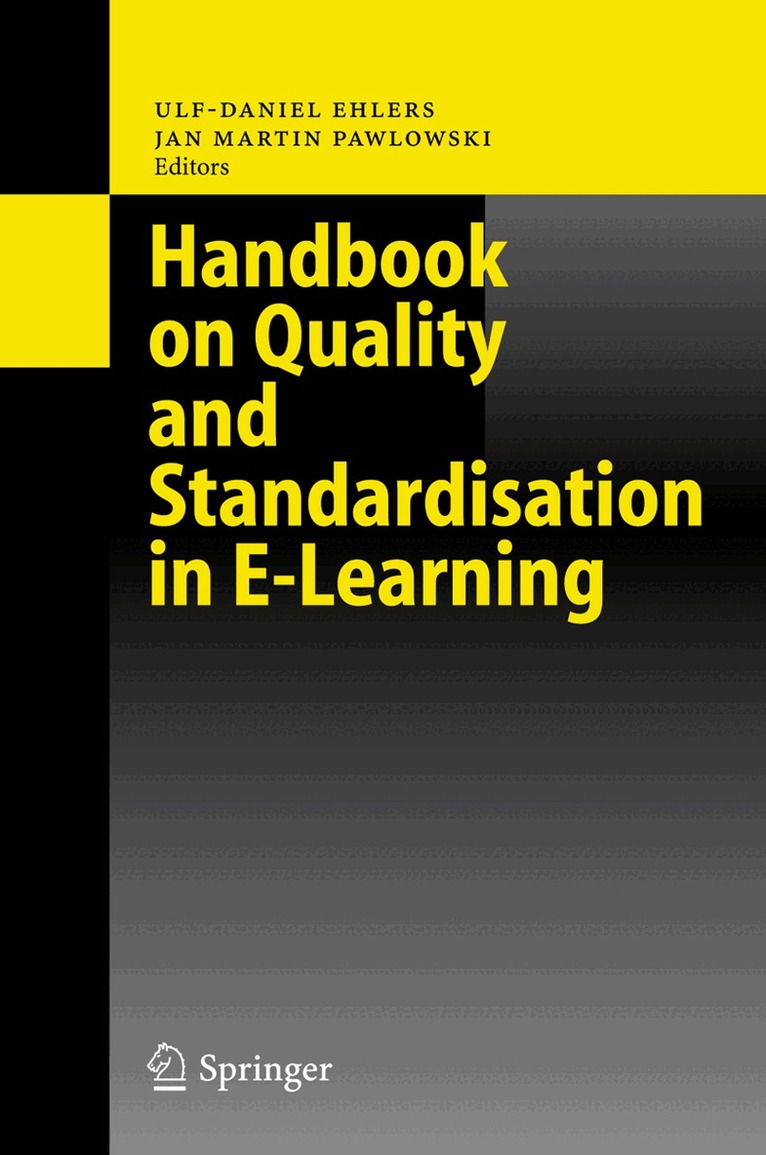
Quality and standardisation in e-learning have become crucial success factors for organisations in learning, education and training: E-Learning has changed from an ‘early adopter’ stage to an integrated part of learning scenarios leading to major changes in educational organisations towards quality orientation.
For building a knowledge society, it is critically important to thoroughly understand quality and standards in e-learning. The handbook provides a cross-national perspective on these issues and draws a clear picture of the situation in quality development and standardisation. It covers topics of a rather foundational nature in quality and standardisation research as well as descriptions of quality approaches, instruments, standards, experiences and best practices. The Handbook is directed to learners, professionals, researchers and policy makers – people creating the next generation of learning.
1 051 kr
Skickas inom 10-15 vardagar
1 328 kr
Läs direkt efter köp
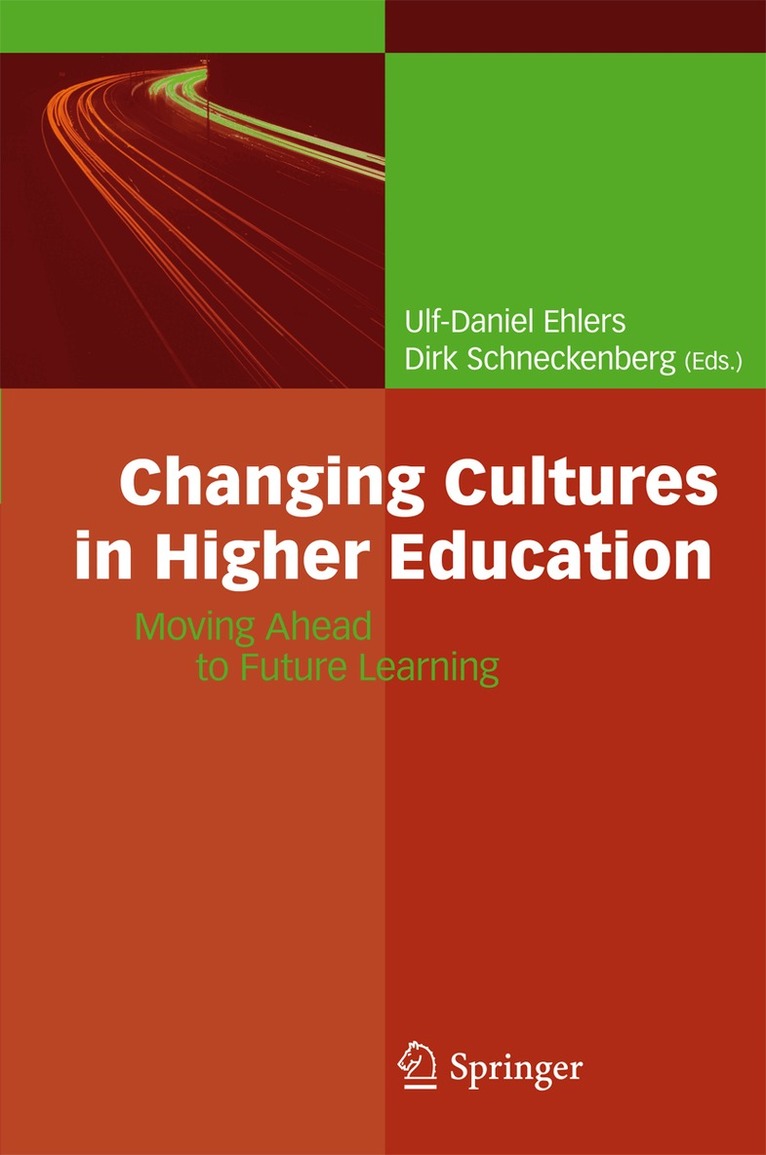
More and more educational scenarios and learning landscapes are developed using blogs, wikis, podcasts and e-portfolios. Web 2.0 tools give learners more control, by allowing them to easily create, share or reuse their own learning materials, and these tools also enable social learning networks that bridge the border between formal and informal learning. However, practices of strategic innovation of universities, faculty development, assessment, evaluation and quality assurance have not fully accommodated these changes in technology and teaching.
Ehlers and Schneckenberg present strategic approaches for innovation in universities. The contributions explore new models for developing and engaging faculty in technology-enhanced education, and they detail underlying reasons for why quality assessment and evaluation in new – and often informal – learning scenarios have to change. Their book is a practical guide for educators, aimed at answering these questions. It describes what E-learning 2.0 is, which basic elements of Web 2.0 it builds on, and how E-learning 2.0 differs from Learning 1.0. The book also details a number of quality methods and examples, such as self-assessment, peer-review, social recommendation, and peer-learning, using illustrative cases and giving practical recommendations. Overall, it offers a step-by-step guide for educators so that they can choose their own quality assurance or assessment methods, or develop their own evaluation methodology for specific learning scenarios.
The book addresses everyone involved in higher education – university leaders, chief information officers, change and quality assurance managers, and faculty developers. Pedagogical advisers and consultants will find new insights and practices for the integration and management of novel learning technologies in higher education. The volume fosters in lecturers and teachers a sound understanding of the need and strategy for change, and it provides them withpractical recommendations on competence and quality methodologies.
2 096 kr
Skickas inom 10-15 vardagar
529 kr
Skickas inom 10-15 vardagar
668 kr
Läs direkt efter köp
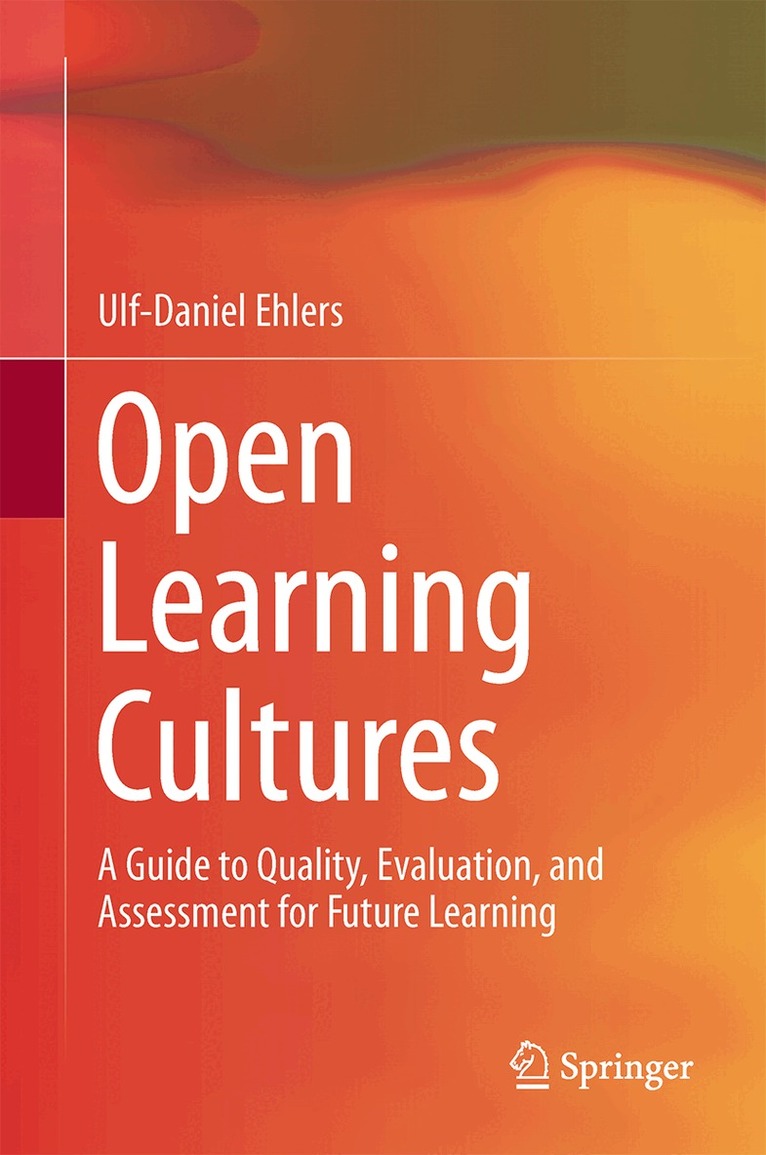
Today we are seeing a new form of blended learning: not only is technology enhancing the learning environment but formal and informal learning are combining and there is self- and peer-assessment of results. Open learning cultures are challenging the old and long-practiced methods used by educators and transforming learning into a more student-driven and independent activity , which uses online tools such as blogs, wikis or podcasts to connect resources, students and teachers in a novel way.
While in higher education institutions most assessments are still tied to formal learning scenarios, teachers are more and more bound to recognize their students’ informal learning processes and networks. This book will help teachers, lecturers and students to better understand how open learning landscapes work, how to define quality and create assessments in such environments, and how to apply these new measures.
To this end, Ehlers first elaborates the technological background for more collaborative, distributed, informal, and self-guided learning. He covers the rise of social media for learning and shows how an architecture of participation can change learning activities. These new paradigms are then applied to learning and education to outline what open learning landscapes look like. Here he highlights the shift from knowledge transfer to competence development, the increase in lifelong learning, and the importance of informal learning, user generated content, and open educational resources. He then shows how to manage quality by presenting a step by step guide to developing customized quality concepts for open learning landscapes. Finally, several methods dealing with assessment in these new environments are presented, including guidelines, templates and use cases to exemplify the approaches.
Overall, Ehlers argues for assessment as an integral part of learning processes, with quality assurance as a method of stimulating a quality culture and continuous quality development rather than as a simple controlling exercise.
1 156 kr
Skickas inom 10-15 vardagar
495 kr
Skickas inom 10-15 vardagar
837 kr
Skickas inom 10-15 vardagar
839 kr
Läs direkt efter köp
423 kr
Skickas inom 5-8 vardagar
529 kr
Skickas inom 10-15 vardagar
509 kr
Läs direkt efter köp
390 kr
Skickas inom 5-8 vardagar