Umberto Rossi – författare
Visar alla böcker från författaren Umberto Rossi. Handla med fri frakt och snabb leverans.
6 produkter
6 produkter
Häftad, Engelska, 2011
403 kr
Skickas inom 5-8 vardagar
Philip K. Dick was one of the most popular science fiction novelists of the 20th century, but the contradictory and wily writer has troubled critics who attempt encompassing explanations of his work. This book examines Dick's writing through the lens of ontological uncertainty, providing a comparative map of his oeuvre, tracing both the interior connections between books and his allusive intertextuality. Topics covered include time travel, alternate worlds, androids and simulacra, finite subjective realities and schizophrenia. Twenty novels are explored in detail, including titles that have received scant critical attention. Some of his most important short stories and two of his realist novels are also examined, providing a general introduction to Dick's body of work.
Inbunden, Italienska, 2025
345 kr
Skickas inom 5-8 vardagar
Häftad, Italienska, 2025
180 kr
Skickas inom 5-8 vardagar
Häftad, Engelska, 1994
1 122 kr
Skickas inom 10-15 vardagar
This text presents scientific reports of the most recent advances in the forensic application of modern haemogenetics, mainly based on DNA technology. The wide variety of polymorphic DNA systems applied, such as VNTR, STR and other PCR-based polymorphisms, have been dealt with extensively. New perspectives offered by techniques such as capillary electrophoresis, DNA sequencing and the so-called "DNA chip-technology" are also covered. The volume offers useful data and methods that can be used by scientists working in the fields of forensic and legal medicine, forensic science, population genetics, anthropology, biostatistics and immunohaematology.
E-bok
PDF, Engelska, 20121 408 kr
Läs direkt efter köp
th This volume comprises the Proceedings of the 15 Congress of the International Society of Forensic Haemogenetics (ISFH), held for the first time in Venezia Lido, th th Italy, on 13 -15 October 1993. The abstracts of the scientific contributions sent to the Congress have been sub divided into chapters with numbers and headings corresponding to the Congress sessions listed in the final programme. A general index of all authors, in alpha betical order, is given at the end of the book. The book consists of 188 contributions and addresses several problems presently being discussed in forensic haemogenetics. The main portion is, of course, devoted to DNA technology: present and future trends in DNA method ology, DNA polymorphisms in paternity testing and in criminal investigation, DNA sequencing, PCR methodology, quality control and quality assurance. Data have been accumulated on population genetics and biostatistics. A new look has been given at old friends, with important contributions on the molecular biology of classical markers. Conventional genetic markers have been studied. Problems connected with genetic typing and human rights have been dealt with in depth, and the history and geography of human genes have been elucidated.
E-bok
PDF, Engelska, 2019263 kr
Läs direkt efter köp
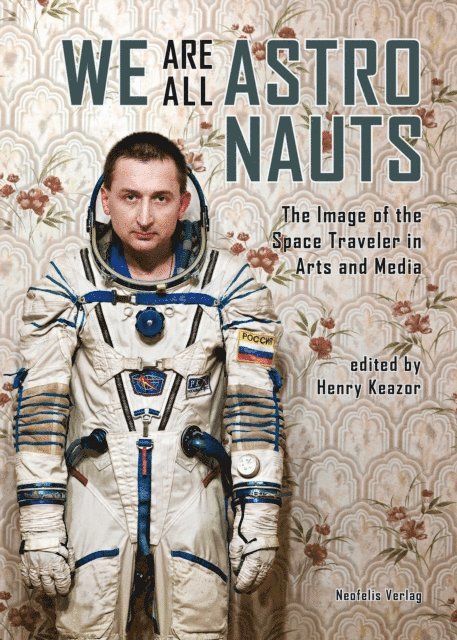
"We are all astronauts", the American architect and thinker Richard Buckminster Fuller wrote in 1968 in his book Operating Manual for Spaceship Earth, where he compared Earth to a spaceship, provided only with exhaustible resources while flying through space.These words show the presence the phenomenon of the astronaut and the cosmonaut had in the public mind from the second half of the twentieth century on: Buckminster Fuller was able to drive his point home by asking his audience to identify with one of the most prominent figures in the public sphere then: the space traveler. At the same time, Buckminster Fuller''s words themselves seem to have played a significant role in further shaping the space-exploring human as a symbol and an image of humankind in general.The twelve contributions in this book by authors from the fields of literature, music, politics, history, the visual arts, film, computer games, comics, social sciences, and media theory track the development, changes and dynamics of this symbol by analyzing the various images of the astronaut and the cosmonaut as constructed throughout the different decades of space exploration, from its beginning to the present day.