Ursula Hoadley - Böcker
Visar alla böcker från författaren Ursula Hoadley. Handla med fri frakt och snabb leverans.
5 produkter
5 produkter
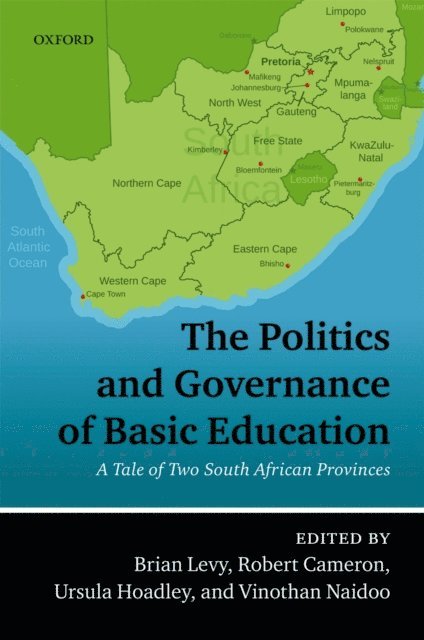
The Politics and Governance of Basic Education
A Tale of Two South African Provinces
Inbunden, Engelska, 2018
1 030 kr
Skickas inom 5-8 vardagar
This is an open access title available under the terms of a CC BY-NC-ND 4.0 International licence. It is free to read at Oxford Scholarship Online and offered as a free PDF download from OUP and selected open access locations. All over the world, economic inclusion has risen to the top of the development discourse. A well-performing education system is central to achieving inclusive development - but the challenge of improving educational outcomes has proven to be unexpectedly difficult. Access to education has increased, but quality remains low, with weaknesses in governance comprising an important part of the explanation. The Politics and Governance of Basic Education explores the balance between hierarchical and horizontal institutional arrangements for the public provision of basic education. Using the vivid example of South Africa, a country that had ambitious goals at the outset of its transition from apartheid to democracy, it explores how the interaction of politics and institutions affects educational outcomes. By examining lessons learned from how South Africa failed to achieve many of its goals, it constructs an innovative alternative strategy for making process, combining practical steps to achieve incremental gains to re-orient the system towards learning.
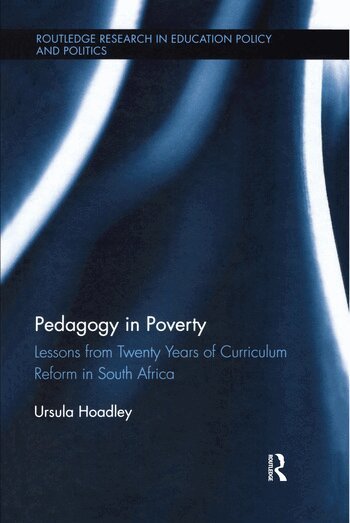
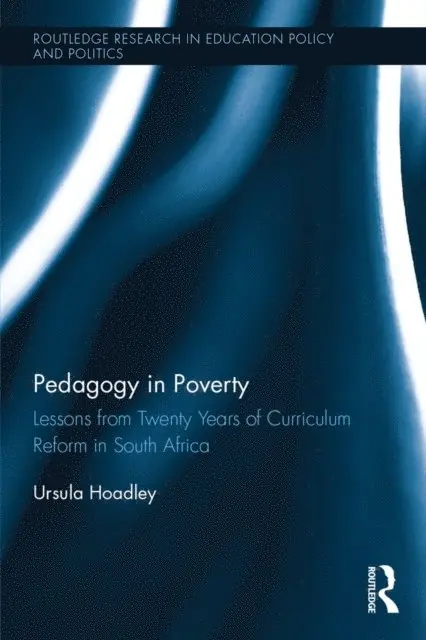
Pedagogy in Poverty
Lessons from Twenty Years of Curriculum Reform in South Africa
Häftad, Engelska, 2020
604 kr
Skickas inom 10-15 vardagar
As South Africa transitioned from apartheid to democracy, changes in the political landscape, as well as educational agendas and discourse on both a national and international level, shaped successive waves of curriculum reform over a relatively short period of time. Using South Africa as a germane example of how curriculum and pedagogy can interact and affect educational outcomes, Pedagogy in Poverty explores the potential of curricula to improve education in developing and emerging economies worldwide, and, ultimately, to reduce inequality. Incorporating detailed, empirical accounts of life inside South African classrooms, this book is a much-needed contribution to international debate surrounding optimal curriculum and pedagogic forms for children in poor schools. Classroom-level responses to curriculum policy reforms reveal some implications of the shifts between a radical, progressive approach and traditional curriculum forms. Hoadley focuses on the crucial role of teachers as mediators between curriculum and pedagogy, and explores key issues related to teacher knowledge by examining the teaching of reading and numeracy at the foundational levels of schooling. Offering a data-rich historical sociology of curriculum and pedagogic change, this book will appeal to academics, researchers and postgraduate students in the fields of education, sociology of education, curriculum studies, educational equality and school reform, and the policy and politics of education.
564 kr
Skickas inom 10-15 vardagar
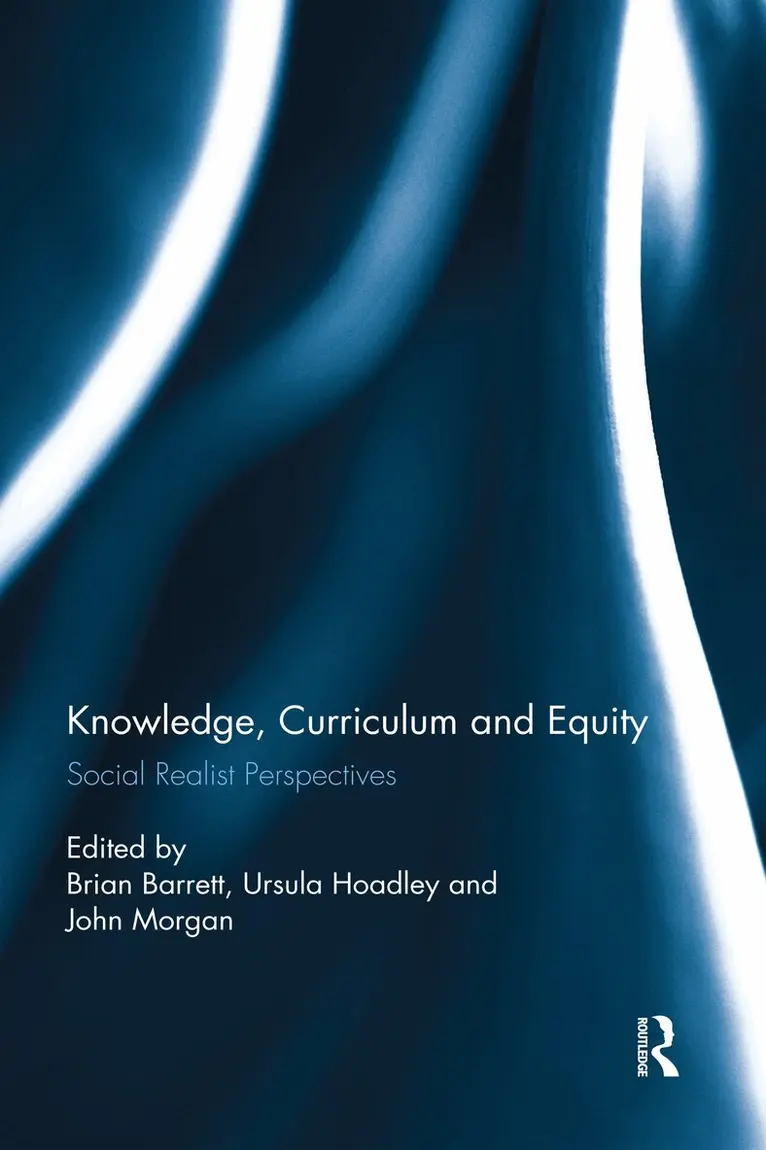
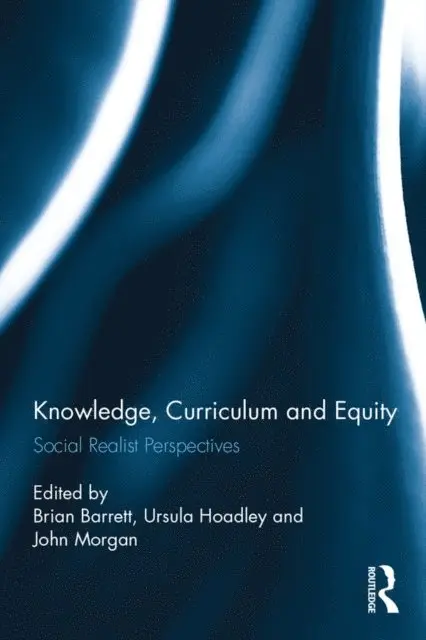
In 2008 the first in a series of symposia established a ‘social realist’ case for ‘knowledge’ as an alternative to the relativist tendencies of the constructivist, post-structuralist and postmodernist approaches dominant in the sociology of education. The second symposium focused on curriculum, and the development of a theoretical language grounded in social realism to talk about issues of knowledge and curriculum. Finally, the third symposium brought together researchers in a broad range of contexts to build on these ideas and arguments and, with a concerted empirical focus, bring these social realist ideas and arguments into conversation with data.Knowledge, Curriculum and Equity: Social Realist Perspectives contains the work of the third symposium, where the strengths and gaps in the social realist approach are identified and where there is critical recognition of the need to incrementally extend the theories through empirical study. Fundamentally, the problem that social realism is seeking to address is about understanding the social conditions of knowledge production and exchange as well as its structuring in the curriculum and in pedagogy. The central concern is with the on-going social reproduction of inequality through schooling, and exploring whether and how foregrounding specialised knowledge and its access holds the possibility for interrupting it. This book consists of 13 chapters by different authors working in Oceania, Asia, Europe, Africa and North America. From very different vantage points the authors focus their theoretical and empirical sights on the assumptions about knowledge that underpin educational processes and the pursuit of more equitable schooling for all.
1 847 kr
Skickas inom 10-15 vardagar
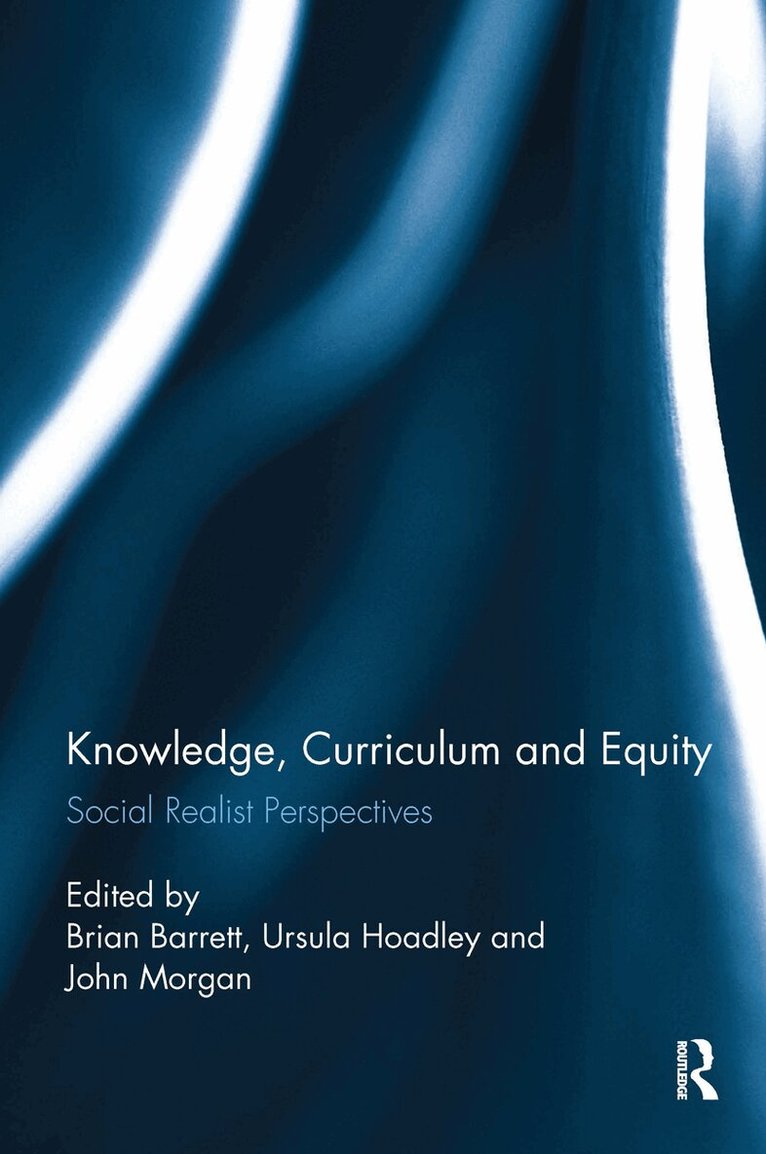
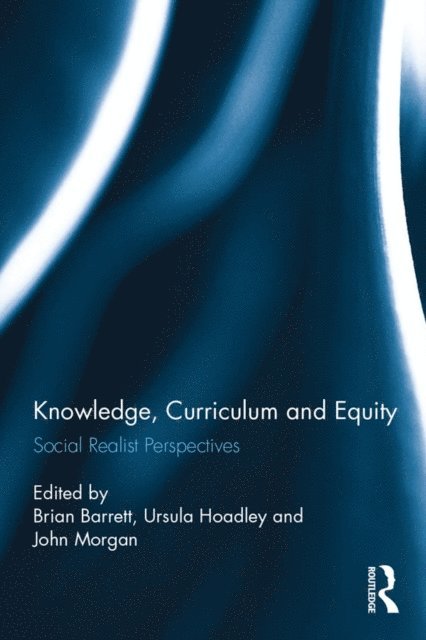
In 2008 the first in a series of symposia established a ‘social realist’ case for ‘knowledge’ as an alternative to the relativist tendencies of the constructivist, post-structuralist and postmodernist approaches dominant in the sociology of education. The second symposium focused on curriculum, and the development of a theoretical language grounded in social realism to talk about issues of knowledge and curriculum. Finally, the third symposium brought together researchers in a broad range of contexts to build on these ideas and arguments and, with a concerted empirical focus, bring these social realist ideas and arguments into conversation with data.Knowledge, Curriculum and Equity: Social Realist Perspectives contains the work of the third symposium, where the strengths and gaps in the social realist approach are identified and where there is critical recognition of the need to incrementally extend the theories through empirical study. Fundamentally, the problem that social realism is seeking to address is about understanding the social conditions of knowledge production and exchange as well as its structuring in the curriculum and in pedagogy. The central concern is with the on-going social reproduction of inequality through schooling, and exploring whether and how foregrounding specialised knowledge and its access holds the possibility for interrupting it. This book consists of 13 chapters by different authors working in Oceania, Asia, Europe, Africa and North America. From very different vantage points the authors focus their theoretical and empirical sights on the assumptions about knowledge that underpin educational processes and the pursuit of more equitable schooling for all.
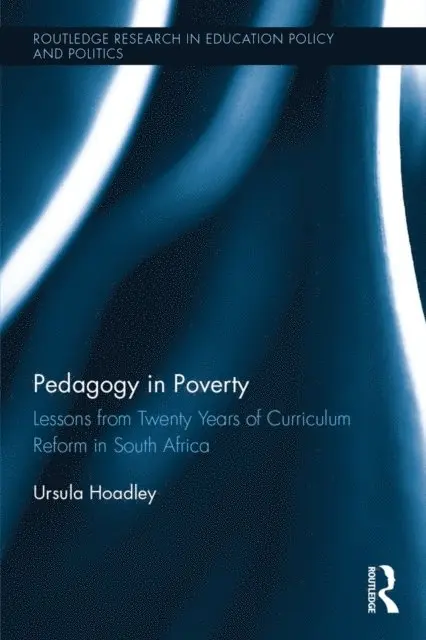
Pedagogy in Poverty
Lessons from Twenty Years of Curriculum Reform in South Africa
Inbunden, Engelska, 2017
2 044 kr
Skickas inom 10-15 vardagar
As South Africa transitioned from apartheid to democracy, changes in the political landscape, as well as educational agendas and discourse on both a national and international level, shaped successive waves of curriculum reform over a relatively short period of time. Using South Africa as a germane example of how curriculum and pedagogy can interact and affect educational outcomes, Pedagogy in Poverty explores the potential of curricula to improve education in developing and emerging economies worldwide, and, ultimately, to reduce inequality. Incorporating detailed, empirical accounts of life inside South African classrooms, this book is a much-needed contribution to international debate surrounding optimal curriculum and pedagogic forms for children in poor schools. Classroom-level responses to curriculum policy reforms reveal some implications of the shifts between a radical, progressive approach and traditional curriculum forms. Hoadley focuses on the crucial role of teachers as mediators between curriculum and pedagogy, and explores key issues related to teacher knowledge by examining the teaching of reading and numeracy at the foundational levels of schooling. Offering a data-rich historical sociology of curriculum and pedagogic change, this book will appeal to academics, researchers and postgraduate students in the fields of education, sociology of education, curriculum studies, educational equality and school reform, and the policy and politics of education.