Ute Hüsken – författare
1 426 kr
Skickas inom 5-8 vardagar
723 kr
Läs direkt efter köp
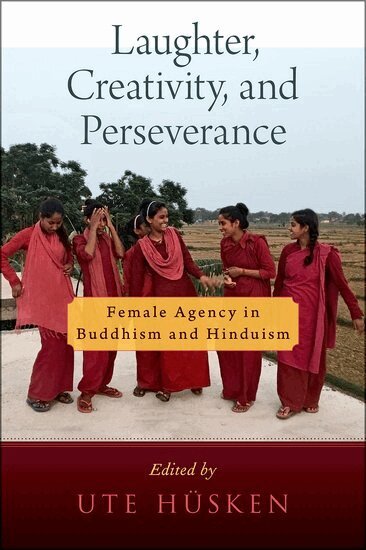
Focusing on complex entanglements of religion and gender from a diversity of perspectives, this book explores how women enact agencies in transcultural Hindu and Buddhist settings. The chapters draw on original, in-depth empirical research in various contexts in South Asian religious traditions. Today, in an increasing number of such contexts, women are able to undergo monastic and priestly education, receive ordination/initiation as nuns and priestesses, and are accepted as ascetic religious leaders. They are starting to establish new religious communities within conservative traditions, occupying religious leadership positions on par with men. This volume considers the historical background, contemporary trajectories, and potential impact of the emergence of these new and powerful female agencies in conservative South Asian religious traditions. It will be of particular interest to scholars of religion, women’s and gender studies, and South Asian studies.
723 kr
Läs direkt efter köp
Focusing on complex entanglements of religion and gender from a diversity of perspectives, this book explores how women enact agencies in transcultural Hindu and Buddhist settings. The chapters draw on original, in-depth empirical research in various contexts in South Asian religious traditions. Today, in an increasing number of such contexts, women are able to undergo monastic and priestly education, receive ordination/initiation as nuns and priestesses, and are accepted as ascetic religious leaders. They are starting to establish new religious communities within conservative traditions, occupying religious leadership positions on par with men. This volume considers the historical background, contemporary trajectories, and potential impact of the emergence of these new and powerful female agencies in conservative South Asian religious traditions. It will be of particular interest to scholars of religion, women’s and gender studies, and South Asian studies.
757 kr
Läs direkt efter köp
The transformations Buddhism has been undergoing in the modern age have inspired much research over the last decade. The main focus of attention has been the phenomenon known as Buddhist modernism, which is defined as a conscious attempt to adjust Buddhist teachings and practices in conformity with the modern norms of rationality, science, or gender equality. This book advances research on Buddhist modernism by attempting to clarify the highly diverse ways in which Buddhist faith, thought, and practice have developed in the modern age, both in Buddhist heartlands in Asia and in the West. It presents a collection of case studies that, taken together, demonstrate how Buddhist traditions interact with modern phenomena such as colonialism and militarism, the market economy, global interconnectedness, the institutionalization of gender equality, and recent historical events such as de-industrialization and the socio-cultural crisis in post-Soviet Buddhist areas. This volume shows how the (re)invention of traditions constitutes an important pathway in the development of Buddhist modernities and emphasizes the pluralistic diversity of these forms in different settings.
757 kr
Läs direkt efter köp
The transformations Buddhism has been undergoing in the modern age have inspired much research over the last decade. The main focus of attention has been the phenomenon known as Buddhist modernism, which is defined as a conscious attempt to adjust Buddhist teachings and practices in conformity with the modern norms of rationality, science, or gender equality. This book advances research on Buddhist modernism by attempting to clarify the highly diverse ways in which Buddhist faith, thought, and practice have developed in the modern age, both in Buddhist heartlands in Asia and in the West. It presents a collection of case studies that, taken together, demonstrate how Buddhist traditions interact with modern phenomena such as colonialism and militarism, the market economy, global interconnectedness, the institutionalization of gender equality, and recent historical events such as de-industrialization and the socio-cultural crisis in post-Soviet Buddhist areas. This volume shows how the (re)invention of traditions constitutes an important pathway in the development of Buddhist modernities and emphasizes the pluralistic diversity of these forms in different settings.