Utku Kose – författare
1 688 kr
Skickas inom 10-15 vardagar
Deep Learning for Medical Applications with Unique Data informs readers about the most recent deep learning-based medical applications in which only unique data gathered in real cases are used. The book provides examples of how deep learning can be used in different problem areas and frameworks in both clinical and research settings, including medical image analysis, medical image registration, time series analysis, medical data synthesis, drug discovery, and pre-processing operations. The volume discusses not only positive findings, but also negative ones obtained by deep learning techniques, including the use of newly developed deep learning techniques rarely reported in the existing literature. The book excludes research works with ready data sets and includes only unique data use to better understand the state of deep learning in real-world cases, along with the feedback and user experiences from physicians and medical staff for applied deep learning-based solutions. Other applications presented in the book include hybrid solutions with deep learning support, disease diagnosis with deep learning focusing on rare diseases and cancer, patient care and treatment, genomics research, as well as research on robotics and autonomous systems.
Introduces deep learning, demonstrating concepts for a wide variety of medical applications using unique data, excluding research with ready datasets Encompasses a wide variety of biomedical applications, including unsupervised learning, natural language processing, pattern recognition, image and video processing and disease diagnosis Provides a robust set of methods that will help readers appropriately and judiciously use the most suitable deep learning techniques for their applications2 317 kr
Läs direkt efter köp
1 629 kr
Skickas inom 10-15 vardagar
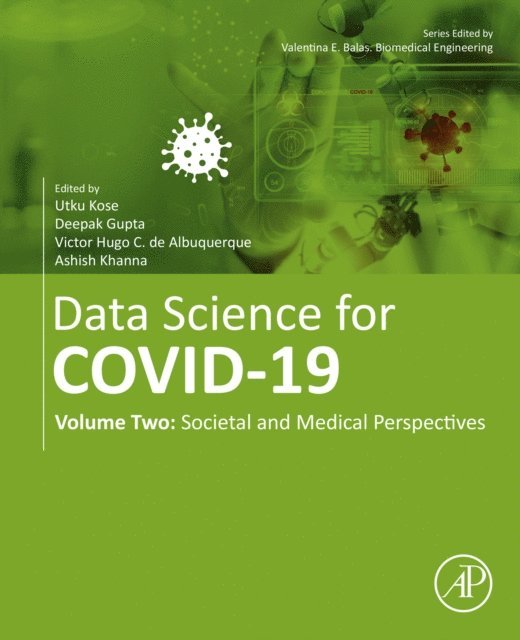
Data Science for COVID-19 presents leading-edge research on data science techniques for the detection, mitigation, treatment and elimination of COVID-19. Sections provide an introduction to data science for COVID-19 research, considering past and future pandemics, as well as related Coronavirus variations. Other chapters cover a wide range of Data Science applications concerning COVID-19 research, including Image Analysis and Data Processing, Geoprocessing and tracking, Predictive Systems, Design Cognition, mobile technology, and telemedicine solutions. The book then covers Artificial Intelligence-based solutions, innovative treatment methods, and public safety. Finally, readers will learn about applications of Big Data and new data models for mitigation.
Provides a leading-edge survey of Data Science techniques and methods for research, mitigation and treatment of the COVID-19 virus Integrates various Data Science techniques to provide a resource for COVID-19 researchers and clinicians around the world, including both positive and negative research findings Provides insights into innovative data-oriented modeling and predictive techniques from COVID-19 researchers Includes real-world feedback and user experiences from physicians and medical staff from around the world on the effectiveness of applied Data Science solutions2 402 kr
Läs direkt efter köp
2 236 kr
Skickas inom 10-15 vardagar
3 300 kr
Läs direkt efter köp
2 259 kr
Skickas inom 10-15 vardagar
1 770 kr
Skickas inom 10-15 vardagar
684 kr
Skickas inom 10-15 vardagar
1 823 kr
Skickas inom 10-15 vardagar
1 762 kr
Skickas inom 10-15 vardagar
2 229 kr
Läs direkt efter köp
732 kr
Läs direkt efter köp
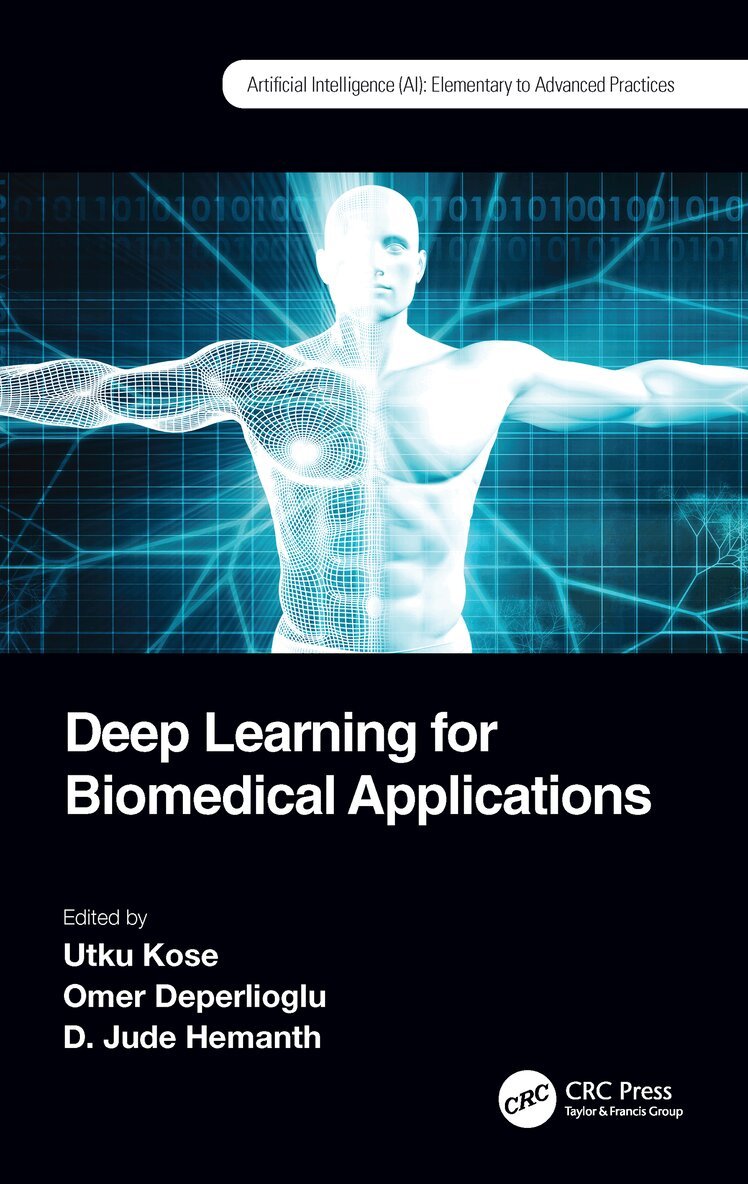
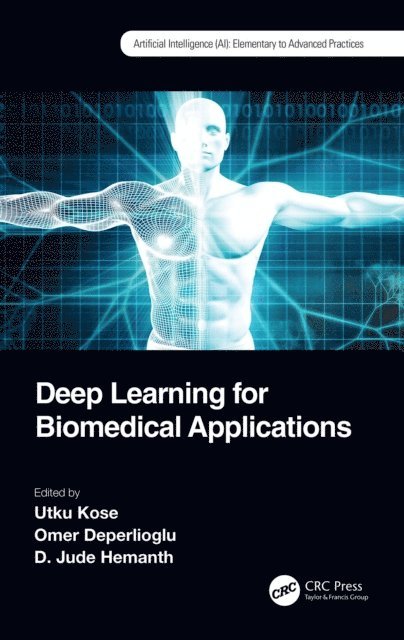
This book is a detailed reference on biomedical applications using Deep Learning. Because Deep Learning is an important actor shaping the future of Artificial Intelligence, its specific and innovative solutions for both medical and biomedical are very critical. This book provides a recent view of research works on essential, and advanced topics.
The book offers detailed information on the application of Deep Learning for solving biomedical problems. It focuses on different types of data (i.e. raw data, signal-time series, medical images) to enable readers to understand the effectiveness and the potential. It includes topics such as disease diagnosis, image processing perspectives, and even genomics. It takes the reader through different sides of Deep Learning oriented solutions.
The specific and innovative solutions covered in this book for both medical and biomedical applications are critical to scientists, researchers, practitioners, professionals, and educations who are working in the context of the topics.
758 kr
Läs direkt efter köp
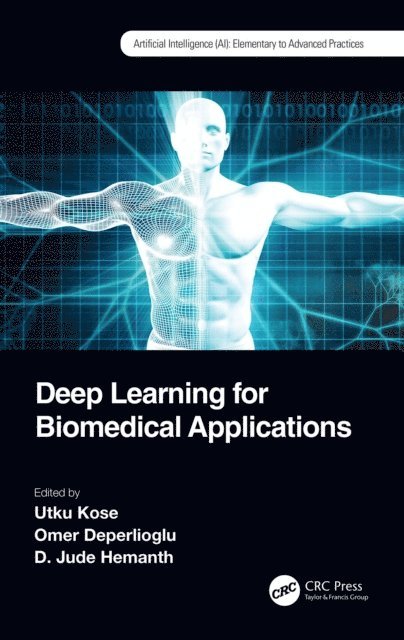
This book is a detailed reference on biomedical applications using Deep Learning. Because Deep Learning is an important actor shaping the future of Artificial Intelligence, its specific and innovative solutions for both medical and biomedical are very critical. This book provides a recent view of research works on essential, and advanced topics.
The book offers detailed information on the application of Deep Learning for solving biomedical problems. It focuses on different types of data (i.e. raw data, signal-time series, medical images) to enable readers to understand the effectiveness and the potential. It includes topics such as disease diagnosis, image processing perspectives, and even genomics. It takes the reader through different sides of Deep Learning oriented solutions.
The specific and innovative solutions covered in this book for both medical and biomedical applications are critical to scientists, researchers, practitioners, professionals, and educations who are working in the context of the topics.
757 kr
Läs direkt efter köp
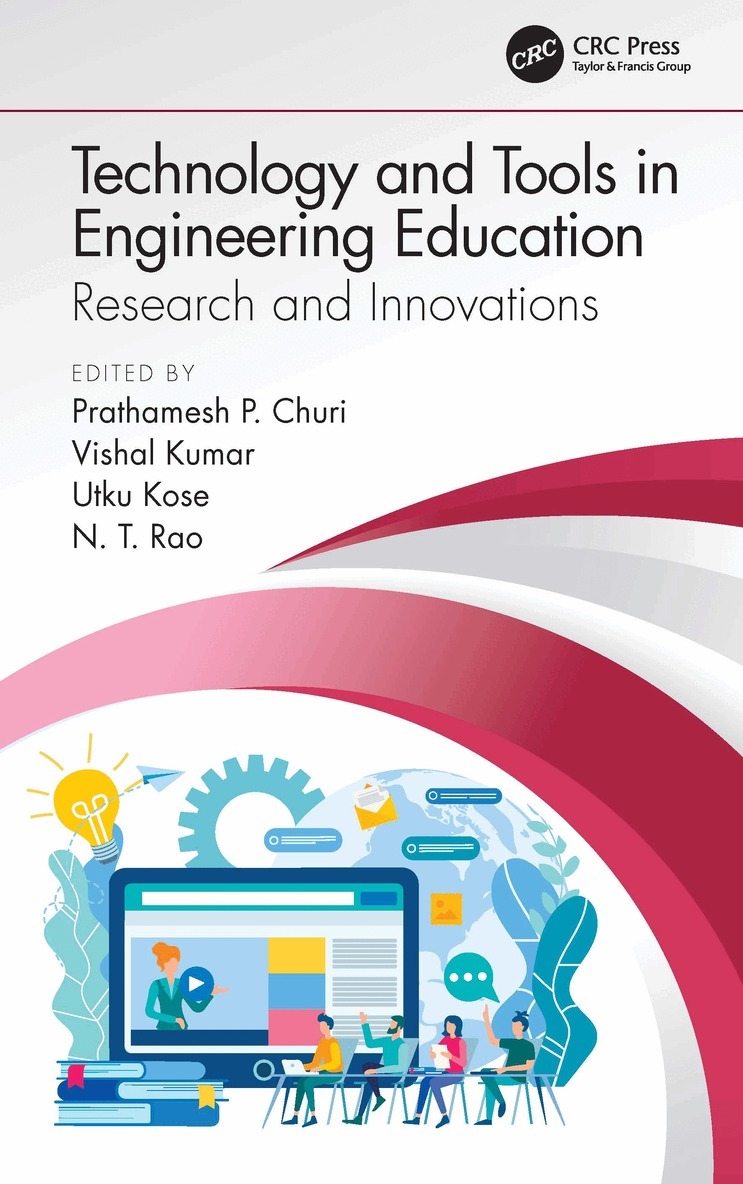
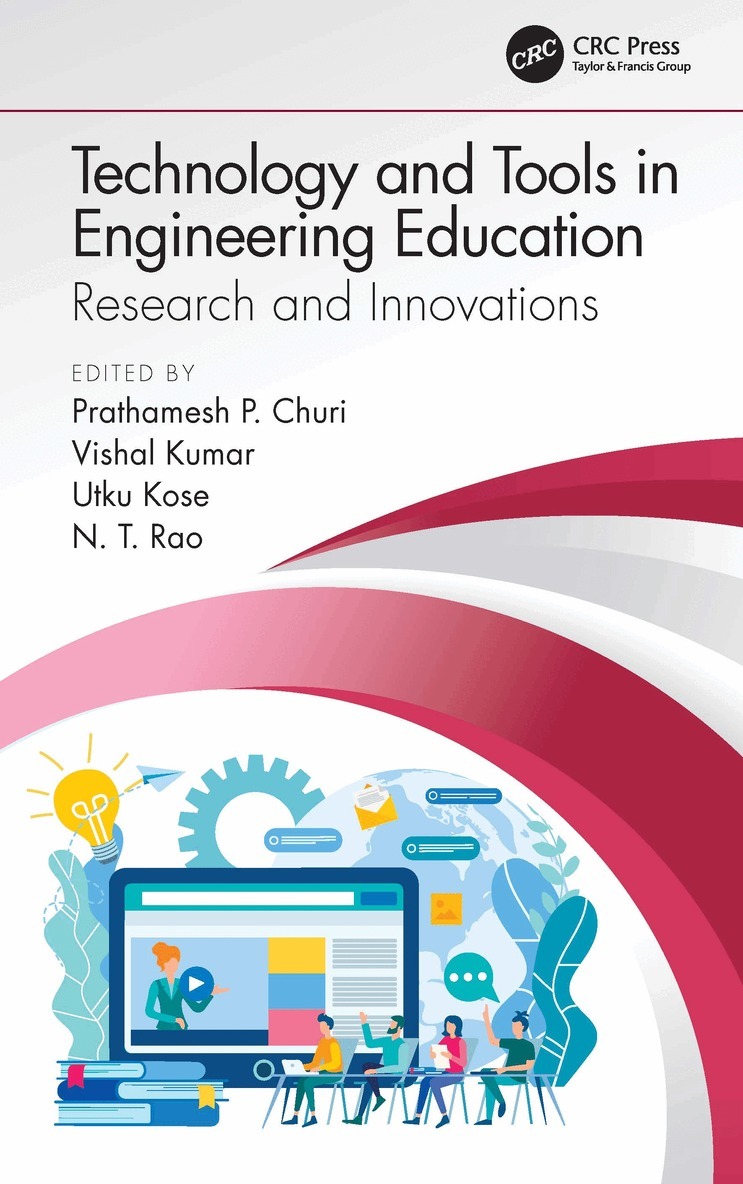
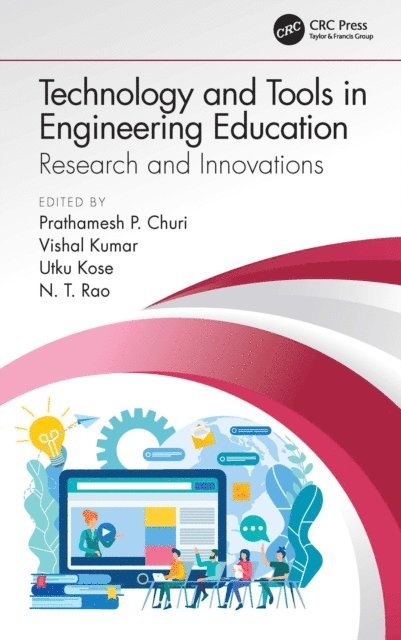
This book explores the innovative and research methods of the teaching-learning process in Engineering field. It focuses on the use of technology in the field of education. It also provides a platform to academicians and educationalists to share their ideas and best practices.
The book includes specific pedagogy used in engineering education. It offers case studies and classroom practices which also include those used in distance mode and during the COVID-19 pandemic. It provides comparisons of national and international accreditation bodies, directions on cost-effective technology, and it discusses advanced technologies such as VR and augmented reality used in education.
This book is intended for research scholars who are pursuing their masters and doctoral studies in the engineering education field as well as teachers who teach undergraduate and postgraduate courses to engineering students.
757 kr
Läs direkt efter köp
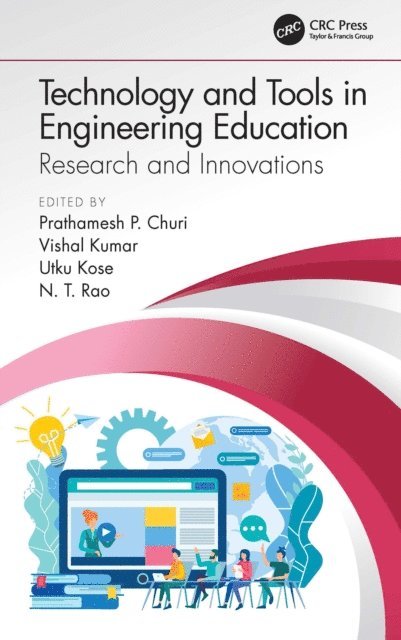
This book explores the innovative and research methods of the teaching-learning process in Engineering field. It focuses on the use of technology in the field of education. It also provides a platform to academicians and educationalists to share their ideas and best practices.
The book includes specific pedagogy used in engineering education. It offers case studies and classroom practices which also include those used in distance mode and during the COVID-19 pandemic. It provides comparisons of national and international accreditation bodies, directions on cost-effective technology, and it discusses advanced technologies such as VR and augmented reality used in education.
This book is intended for research scholars who are pursuing their masters and doctoral studies in the engineering education field as well as teachers who teach undergraduate and postgraduate courses to engineering students.
779 kr
Läs direkt efter köp
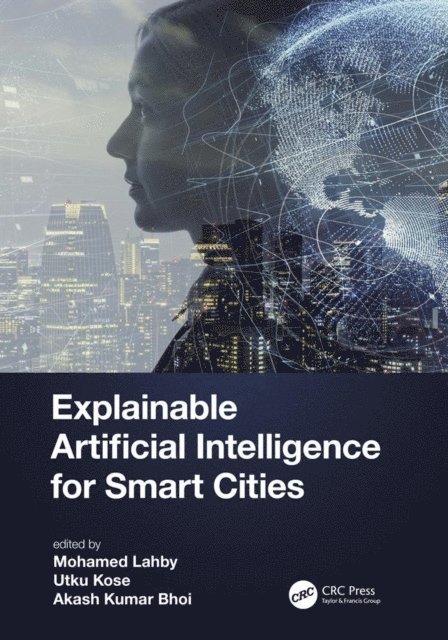
Thanks to rapid technological developments in terms of Computational Intelligence, smart tools have been playing active roles in daily life. It is clear that the 21st century has brought about many advantages in using high-level computation and communication solutions to deal with real-world problems; however, more technologies bring more changes to society. In this sense, the concept of smart cities has been a widely discussed topic in terms of society and Artificial Intelligence-oriented research efforts. The rise of smart cities is a transformation of both community and technology use habits, and there are many different research orientations to shape a better future.
The objective of this book is to focus on Explainable Artificial Intelligence (XAI) in smart city development. As recently designed, advanced smart systems require intense use of complex computational solutions (i.e., Deep Learning, Big Data, IoT architectures), the mechanisms of these systems become ‘black-box’ to users. As this means that there is no clear clue about what is going on within these systems, anxieties regarding ensuring trustworthy tools also rise. In recent years, attempts have been made to solve this issue with the additional use of XAI methods to improve transparency levels. This book provides a timely, global reference source about cutting-edge research efforts to ensure the XAI factor in smart city-oriented developments. The book includes both positive and negative outcomes, as well as future insights and the societal and technical aspects of XAI-based smart city research efforts.
This book contains nineteen contributions beginning with a presentation of the background of XAI techniques and sustainable smart-city applications. It then continues with chapters discussing XAI for Smart Healthcare, Smart Education, Smart Transportation, Smart Environment, Smart Urbanization and Governance, and Cyber Security for Smart Cities.
807 kr
Läs direkt efter köp
Thanks to rapid technological developments in terms of Computational Intelligence, smart tools have been playing active roles in daily life. It is clear that the 21st century has brought about many advantages in using high-level computation and communication solutions to deal with real-world problems; however, more technologies bring more changes to society. In this sense, the concept of smart cities has been a widely discussed topic in terms of society and Artificial Intelligence-oriented research efforts. The rise of smart cities is a transformation of both community and technology use habits, and there are many different research orientations to shape a better future.
The objective of this book is to focus on Explainable Artificial Intelligence (XAI) in smart city development. As recently designed, advanced smart systems require intense use of complex computational solutions (i.e., Deep Learning, Big Data, IoT architectures), the mechanisms of these systems become ‘black-box’ to users. As this means that there is no clear clue about what is going on within these systems, anxieties regarding ensuring trustworthy tools also rise. In recent years, attempts have been made to solve this issue with the additional use of XAI methods to improve transparency levels. This book provides a timely, global reference source about cutting-edge research efforts to ensure the XAI factor in smart city-oriented developments. The book includes both positive and negative outcomes, as well as future insights and the societal and technical aspects of XAI-based smart city research efforts.
This book contains nineteen contributions beginning with a presentation of the background of XAI techniques and sustainable smart-city applications. It then continues with chapters discussing XAI for Smart Healthcare, Smart Education, Smart Transportation, Smart Environment, Smart Urbanization and Governance, and Cyber Security for Smart Cities.
877 kr
Läs direkt efter köp
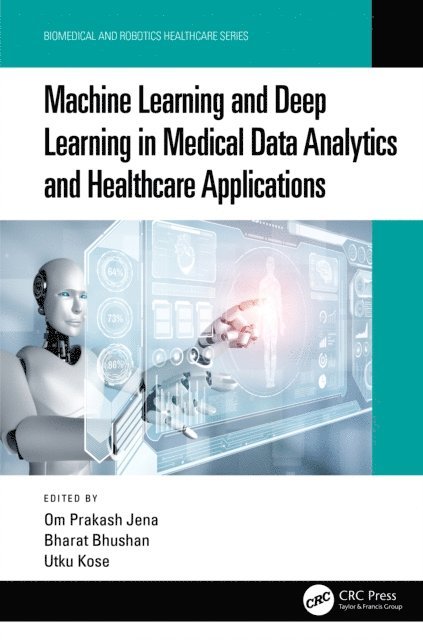
Machine Learning and Deep Learning in Medical Data Analytics and Healthcare Applications introduces and explores a variety of schemes designed to empower, enhance, and represent multi-institutional and multi-disciplinary machine learning (ML) and deep learning (DL) research in healthcare paradigms. Serving as a unique compendium of existing and emerging ML/DL paradigms for the healthcare sector, this book demonstrates the depth, breadth, complexity, and diversity of this multi-disciplinary area. It provides a comprehensive overview of ML/DL algorithms and explores the related use cases in enterprises such as computer-aided medical diagnostics, drug discovery and development, medical imaging, automation, robotic surgery, electronic smart records creation, outbreak prediction, medical image analysis, and radiation treatments.
This book aims to endow different communities with the innovative advances in theory, analytical results, case studies, numerical simulation, modeling, and computational structuring in the field of ML/DL models for healthcare applications. It will reveal different dimensions of ML/DL applications and will illustrate their use in the solution of assorted real-world biomedical and healthcare problems.
Features:
Covers the fundamentals of ML and DL in the context of healthcare applications
Discusses various data collection approaches from various sources and how to use them in ML/DL models
Integrates several aspects of AI-based computational intelligence such as ML and DL from diversified perspectives which describe recent research trends and advanced topics in the field
Explores the current and future impacts of pandemics and risk mitigation in healthcare with advanced analytics
Emphasizes feature selection as an important step in any accurate model simulation where ML/DL methods are used to help train the system and extract the positive solution implicitly
This book is a valuable source of information for researchers, scientists, healthcare professionals, programmers, and graduate-level students interested in understanding the applications of ML/DL in healthcare scenarios.
Dr. Om Prakash Jena is an Assistant Professor in the Department of Computer Science, Ravenshaw University, Cuttack, Odisha, India.
Dr. Bharat Bhushan is an Assistant Professor of Department of Computer Science and Engineering (CSE) at the School of Engineering and Technology, Sharda University, Greater Noida, India.
Dr. Utku Kose is an Associate Professor in Suleyman Demirel University, Turkey.
869 kr
Läs direkt efter köp
Machine Learning and Deep Learning in Medical Data Analytics and Healthcare Applications introduces and explores a variety of schemes designed to empower, enhance, and represent multi-institutional and multi-disciplinary machine learning (ML) and deep learning (DL) research in healthcare paradigms. Serving as a unique compendium of existing and emerging ML/DL paradigms for the healthcare sector, this book demonstrates the depth, breadth, complexity, and diversity of this multi-disciplinary area. It provides a comprehensive overview of ML/DL algorithms and explores the related use cases in enterprises such as computer-aided medical diagnostics, drug discovery and development, medical imaging, automation, robotic surgery, electronic smart records creation, outbreak prediction, medical image analysis, and radiation treatments.
This book aims to endow different communities with the innovative advances in theory, analytical results, case studies, numerical simulation, modeling, and computational structuring in the field of ML/DL models for healthcare applications. It will reveal different dimensions of ML/DL applications and will illustrate their use in the solution of assorted real-world biomedical and healthcare problems.
Features:
Covers the fundamentals of ML and DL in the context of healthcare applications
Discusses various data collection approaches from various sources and how to use them in ML/DL models
Integrates several aspects of AI-based computational intelligence such as ML and DL from diversified perspectives which describe recent research trends and advanced topics in the field
Explores the current and future impacts of pandemics and risk mitigation in healthcare with advanced analytics
Emphasizes feature selection as an important step in any accurate model simulation where ML/DL methods are used to help train the system and extract the positive solution implicitly
This book is a valuable source of information for researchers, scientists, healthcare professionals, programmers, and graduate-level students interested in understanding the applications of ML/DL in healthcare scenarios.
Dr. Om Prakash Jena is an Assistant Professor in the Department of Computer Science, Ravenshaw University, Cuttack, Odisha, India.
Dr. Bharat Bhushan is an Assistant Professor of Department of Computer Science and Engineering (CSE) at the School of Engineering and Technology, Sharda University, Greater Noida, India.
Dr. Utku Kose is an Associate Professor in Suleyman Demirel University, Turkey.
909 kr
Läs direkt efter köp
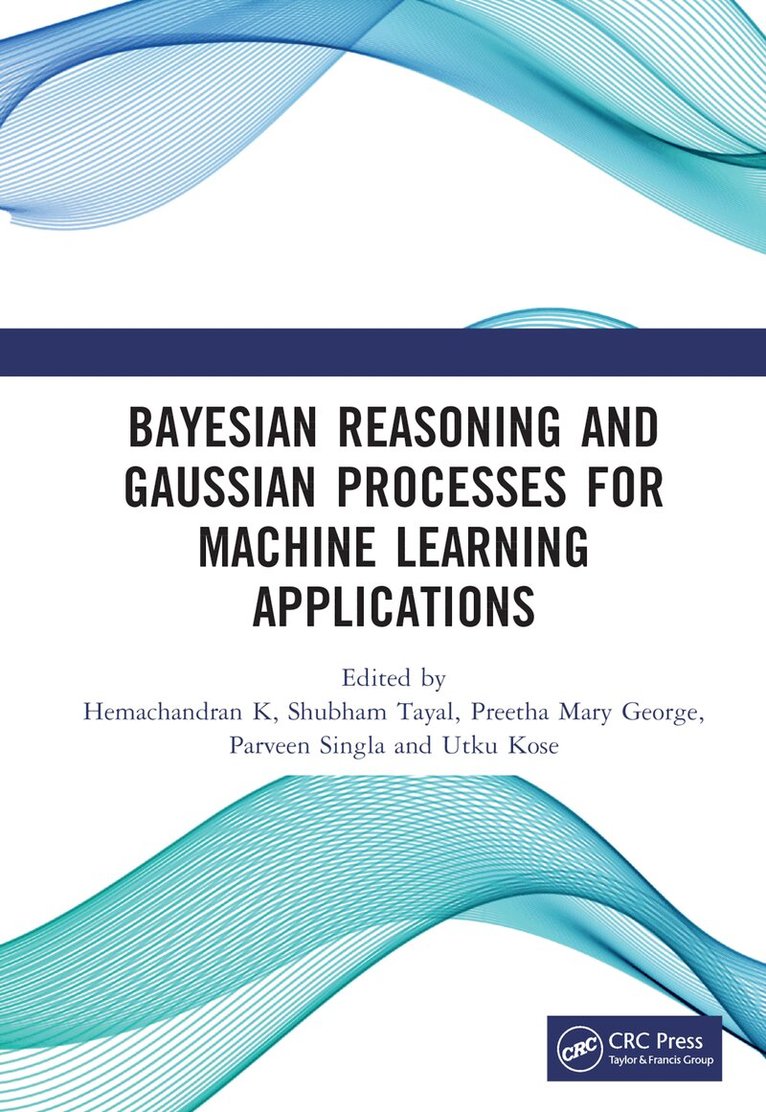
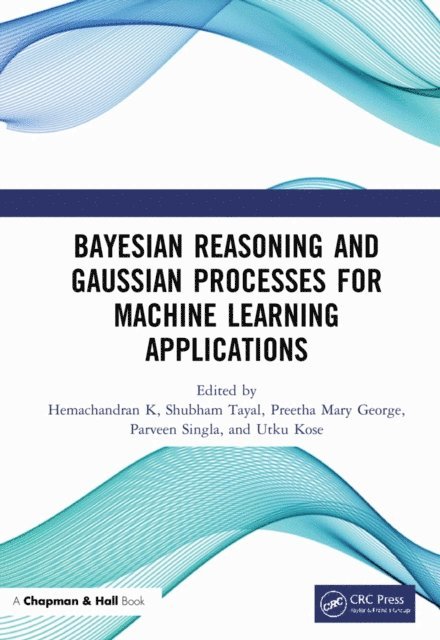
This book introduces Bayesian reasoning and Gaussian processes into machine learning applications. Bayesian methods are applied in many areas, such as game development, decision making, and drug discovery. It is very effective for machine learning algorithms in handling missing data and extracting information from small datasets. Bayesian Reasoning and Gaussian Processes for Machine Learning Applications uses a statistical background to understand continuous distributions and how learning can be viewed from a probabilistic framework. The chapters progress into such machine learning topics as belief network and Bayesian reinforcement learning, which is followed by Gaussian process introduction, classification, regression, covariance, and performance analysis of Gaussian processes with other models.
FEATURES
Contains recent advancements in machine learning
Highlights applications of machine learning algorithms
Offers both quantitative and qualitative research
Includes numerous case studies
This book is aimed at graduates, researchers, and professionals in the field of data science and machine learning.
909 kr
Läs direkt efter köp
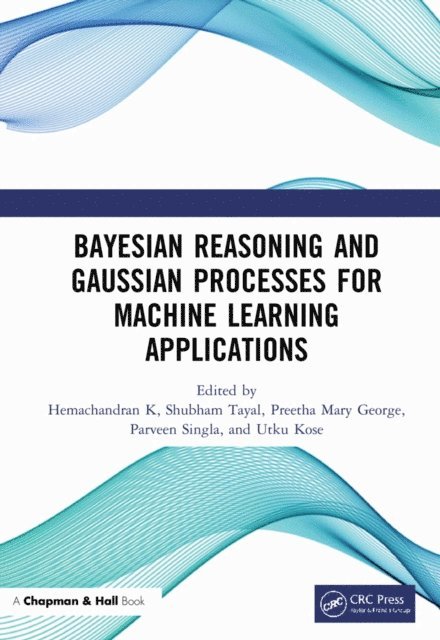
This book introduces Bayesian reasoning and Gaussian processes into machine learning applications. Bayesian methods are applied in many areas, such as game development, decision making, and drug discovery. It is very effective for machine learning algorithms in handling missing data and extracting information from small datasets. Bayesian Reasoning and Gaussian Processes for Machine Learning Applications uses a statistical background to understand continuous distributions and how learning can be viewed from a probabilistic framework. The chapters progress into such machine learning topics as belief network and Bayesian reinforcement learning, which is followed by Gaussian process introduction, classification, regression, covariance, and performance analysis of Gaussian processes with other models.
FEATURES
Contains recent advancements in machine learning
Highlights applications of machine learning algorithms
Offers both quantitative and qualitative research
Includes numerous case studies
This book is aimed at graduates, researchers, and professionals in the field of data science and machine learning.
819 kr
Läs direkt efter köp
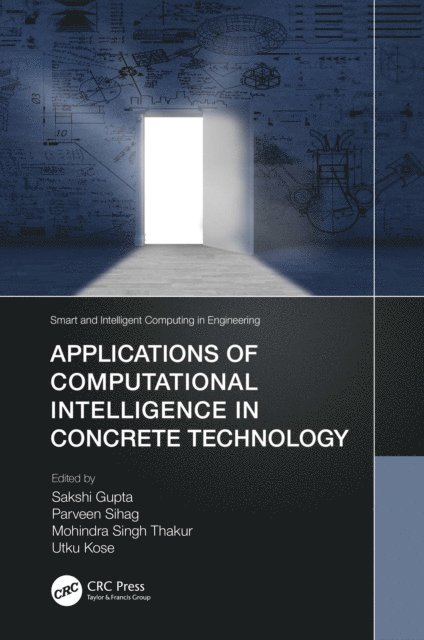
Computational intelligence (CI) in concrete technology has not yet been fully explored worldwide because of some limitations in data sets. This book discusses the selection and separation of data sets, performance evaluation parameters for different types of concrete and related materials, and sensitivity analysis related to various CI techniques. Fundamental concepts and essential analysis for CI techniques such as artificial neural network, fuzzy system, support vector machine, and how they work together for resolving real-life problems, are explained.
Features:
It is the first book on this fast-growing research field.
It discusses the use of various computation intelligence techniques in concrete technology applications.
It explains the effectiveness of the methods used and the wide range of available techniques.
It integrates a wide range of disciplines from civil engineering, construction technology, and concrete technology to computation intelligence, soft computing, data science, computer science, and so on.
It brings together the experiences of contributors from around the world who are doing research in this field and explores the different aspects of their research.
The technical content included is beneficial for researchers as well as practicing engineers in the concrete and construction industry.
811 kr
Läs direkt efter köp
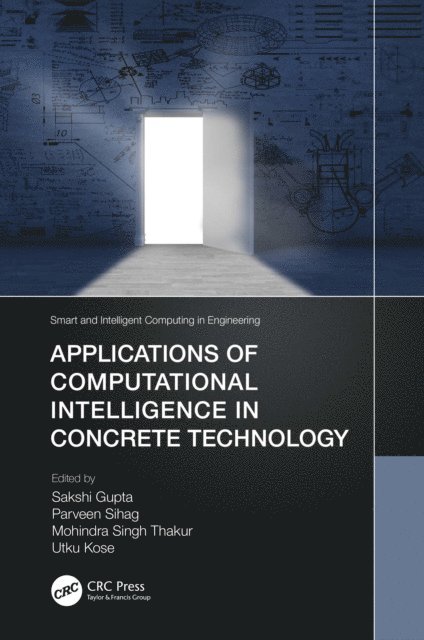
Computational intelligence (CI) in concrete technology has not yet been fully explored worldwide because of some limitations in data sets. This book discusses the selection and separation of data sets, performance evaluation parameters for different types of concrete and related materials, and sensitivity analysis related to various CI techniques. Fundamental concepts and essential analysis for CI techniques such as artificial neural network, fuzzy system, support vector machine, and how they work together for resolving real-life problems, are explained.
Features:
It is the first book on this fast-growing research field.
It discusses the use of various computation intelligence techniques in concrete technology applications.
It explains the effectiveness of the methods used and the wide range of available techniques.
It integrates a wide range of disciplines from civil engineering, construction technology, and concrete technology to computation intelligence, soft computing, data science, computer science, and so on.
It brings together the experiences of contributors from around the world who are doing research in this field and explores the different aspects of their research.
The technical content included is beneficial for researchers as well as practicing engineers in the concrete and construction industry.
819 kr
Läs direkt efter köp
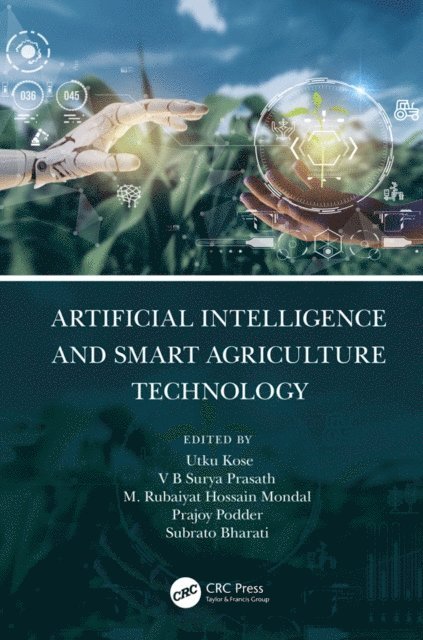
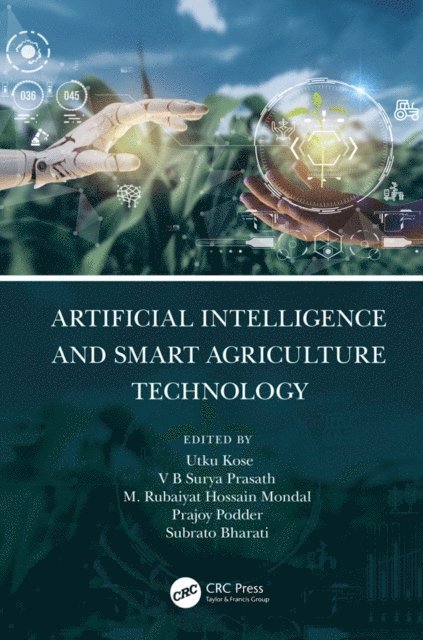
This book was created with the intention of informing an international audience about the latest technological aspects for developing smart agricultural applications. As artificial intelligence (AI) takes the main role in this, the majority of the chapters are associated with the role of AI and data analytics components for better agricultural applications.
The first two chapters provide alternative, wide reviews of the use of AI, robotics, and the Internet of Things as effective solutions to agricultural problems. The third chapter looks at the use of blockchain technology in smart agricultural scenarios. In the fourth chapter, a future view is provided of an Internet of Things-oriented sustainable agriculture. Next, the fifth chapter provides a governmental evaluation of advanced farming technologies, and the sixth chapter discusses the role of big data in smart agricultural applications. The role of the blockchain is evaluated in terms of an industrial view under the seventh chapter, and the eighth chapter provides a discussion of data mining and data extraction, which is essential for better further analysis by smart tools. The ninth chapter evaluates the use of machine learning in food processing and preservation, which is a critical issue for dealing with issues concerns regarding insufficient foud sources. The tenth chapter also discusses sustainability, and the eleventh chapter focuses on the problem of plant disease prediction, which is among the critical agricultural issues. Similarly, the twelfth chapter considers the use of deep learning for classifying plant diseases. Finally, the book ends with a look at cyber threats to farming automation in the thirteenth chapter and a case study of India for a better, smart, and sustainable agriculture in the fourteenth chapter.
This book presents the most critical research topics of today’s smart agricultural applications and provides a valuable view for both technological knowledge and ability that will be helpful to academicians, scientists, students who are the future of science, and industrial practitioners who collaborate with academia.
841 kr
Läs direkt efter köp
This book was created with the intention of informing an international audience about the latest technological aspects for developing smart agricultural applications. As artificial intelligence (AI) takes the main role in this, the majority of the chapters are associated with the role of AI and data analytics components for better agricultural applications.
The first two chapters provide alternative, wide reviews of the use of AI, robotics, and the Internet of Things as effective solutions to agricultural problems. The third chapter looks at the use of blockchain technology in smart agricultural scenarios. In the fourth chapter, a future view is provided of an Internet of Things-oriented sustainable agriculture. Next, the fifth chapter provides a governmental evaluation of advanced farming technologies, and the sixth chapter discusses the role of big data in smart agricultural applications. The role of the blockchain is evaluated in terms of an industrial view under the seventh chapter, and the eighth chapter provides a discussion of data mining and data extraction, which is essential for better further analysis by smart tools. The ninth chapter evaluates the use of machine learning in food processing and preservation, which is a critical issue for dealing with issues concerns regarding insufficient foud sources. The tenth chapter also discusses sustainability, and the eleventh chapter focuses on the problem of plant disease prediction, which is among the critical agricultural issues. Similarly, the twelfth chapter considers the use of deep learning for classifying plant diseases. Finally, the book ends with a look at cyber threats to farming automation in the thirteenth chapter and a case study of India for a better, smart, and sustainable agriculture in the fourteenth chapter.
This book presents the most critical research topics of today’s smart agricultural applications and provides a valuable view for both technological knowledge and ability that will be helpful to academicians, scientists, students who are the future of science, and industrial practitioners who collaborate with academia.
746 kr
Läs direkt efter köp
An essential resource work for understanding how to design and develop smart applications for present and future problems of the field of agriculture.— Dr. Deepak Gupta, Maharaja Agrasen Institute of Technology, Delhi, India
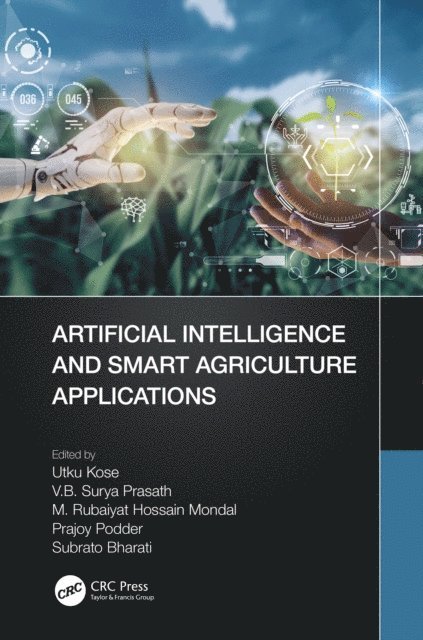
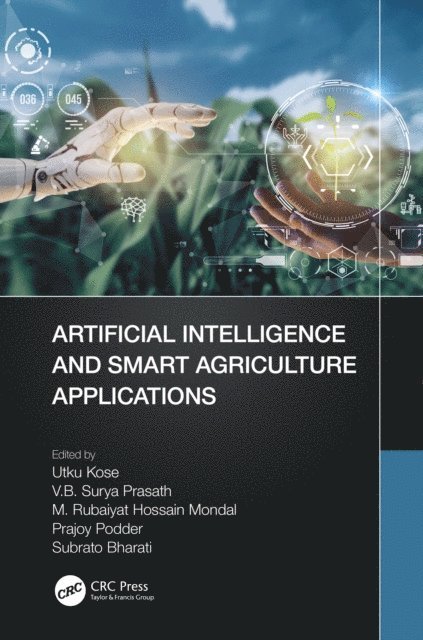
As a result of the advances in Artificial Intelligence (AI), many aspects of daily life have been transformed by smart digital technology. Advanced intelligent algorithms can provide powerful solutions to real-world problems. Smart applications have become commonplace. All areas of life are being changed by smart tools developed to deal with complex issues challenging both humanity and the earth.
Artificial Intelligence and Smart Agriculture Applications presents the latest smart agriculture applications developed across the globe. It covers a broad array of solutions using data science and AI to attack problems facing agriculture worldwide.
Features:
Application of drones and sensors in advanced farming A cloud-computing model for implementing smart agriculture Conversational AI for farmer''s advisory communications Intelligent fuzzy logic to predict global warming’s effect on agriculture Machine learning algorithms for mapping soil macronutrient elements variability A smart IoT framework for soil fertility enhancement AI applications in pest management A model using Python for predicting rainfallThe book examines not only present solutions but also potential future outcomes. It looks at the role of AI-based algorithms and the almost infinite combinations of variables for agricultural applications. Researchers, public and private sector representatives, agriculture scientists, and students can use this book to develop sustainable and solutions for smart agriculture. This book’s findings are especially important as the planet is facing unprecedented environmental challenges from over-farming and climate change due to global warming.
746 kr
Läs direkt efter köp
An essential resource work for understanding how to design and develop smart applications for present and future problems of the field of agriculture.— Dr. Deepak Gupta, Maharaja Agrasen Institute of Technology, Delhi, India
As a result of the advances in Artificial Intelligence (AI), many aspects of daily life have been transformed by smart digital technology. Advanced intelligent algorithms can provide powerful solutions to real-world problems. Smart applications have become commonplace. All areas of life are being changed by smart tools developed to deal with complex issues challenging both humanity and the earth.
Artificial Intelligence and Smart Agriculture Applications presents the latest smart agriculture applications developed across the globe. It covers a broad array of solutions using data science and AI to attack problems facing agriculture worldwide.
Features:
Application of drones and sensors in advanced farming A cloud-computing model for implementing smart agriculture Conversational AI for farmer''s advisory communications Intelligent fuzzy logic to predict global warming’s effect on agriculture Machine learning algorithms for mapping soil macronutrient elements variability A smart IoT framework for soil fertility enhancement AI applications in pest management A model using Python for predicting rainfallThe book examines not only present solutions but also potential future outcomes. It looks at the role of AI-based algorithms and the almost infinite combinations of variables for agricultural applications. Researchers, public and private sector representatives, agriculture scientists, and students can use this book to develop sustainable and solutions for smart agriculture. This book’s findings are especially important as the planet is facing unprecedented environmental challenges from over-farming and climate change due to global warming.
802 kr
Läs direkt efter köp
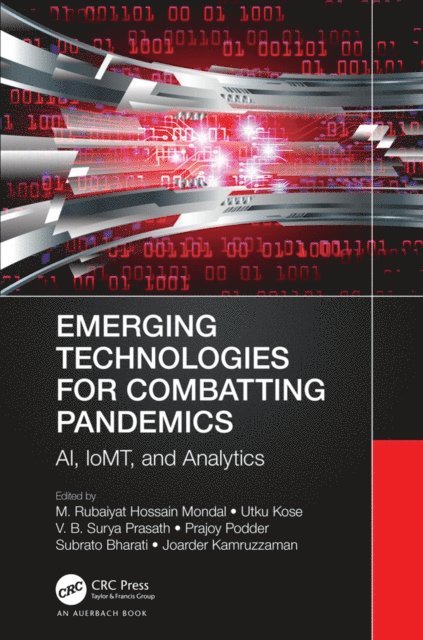
The COVID-19 pandemic has significantly affected the healthcare sector across the globe. Artificial Intelligence (AI) and the Internet of Medical Things (IoMT) play important roles when dealing with emerging challenges. These technologies are being applied to problems involving the early detection of infections, fast contact tracing, decision-making models, risk profiling of cohorts, and remote treatment. Applying these technologies runs against challenges including interoperability, lack of unified structure for eHealth, and data privacy and security. Emerging Technologies for Combatting Pandemics: AI, IoMT, and Analytics examines multiple models and solutions for various settings including individual, home, work, and society. The world’s healthcare systems are battling the novel coronavirus, and government authorities, scientists, medical practitioners, and medical services are striving hard to surmount these challenges.
This book focuses on the design and implementation of AI-based approaches in the proposed COVID-19 solutions that are enabled and supported by IoMT, sensor networks, cloud and edge computing, robotics, and analytics. It covers technologies under the umbrella of AI that include data science, big data, machine learning (ML), semantic technologies, analytics, and cyber security.
Highlights of the book include:
Epidemic forecasting models Surveillance and tracking systems IoMT and Internet of Healthcare Things-based integrated systems for COVID-19 Social network analysis systems Radiological image- based diagnosis systems Computational intelligence methodsThis reference work is beneficial for interdisciplinary students, researchers, and healthcare and technology professionals who need to know how computational intelligence could be used for surveillance, control, prevention, prediction, diagnosis, and potential treatment of the disease.
802 kr
Läs direkt efter köp
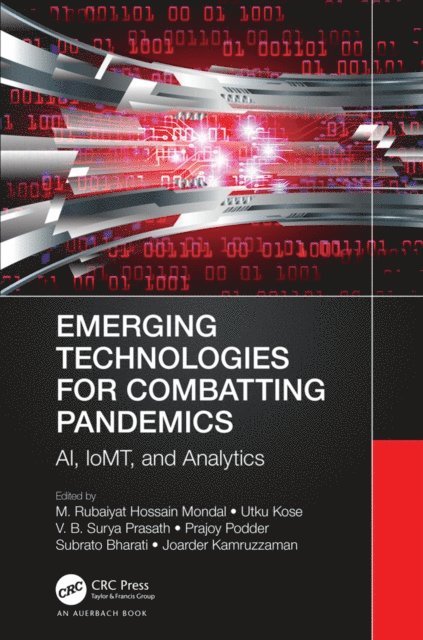
The COVID-19 pandemic has significantly affected the healthcare sector across the globe. Artificial Intelligence (AI) and the Internet of Medical Things (IoMT) play important roles when dealing with emerging challenges. These technologies are being applied to problems involving the early detection of infections, fast contact tracing, decision-making models, risk profiling of cohorts, and remote treatment. Applying these technologies runs against challenges including interoperability, lack of unified structure for eHealth, and data privacy and security. Emerging Technologies for Combatting Pandemics: AI, IoMT, and Analytics examines multiple models and solutions for various settings including individual, home, work, and society. The world’s healthcare systems are battling the novel coronavirus, and government authorities, scientists, medical practitioners, and medical services are striving hard to surmount these challenges.
This book focuses on the design and implementation of AI-based approaches in the proposed COVID-19 solutions that are enabled and supported by IoMT, sensor networks, cloud and edge computing, robotics, and analytics. It covers technologies under the umbrella of AI that include data science, big data, machine learning (ML), semantic technologies, analytics, and cyber security.
Highlights of the book include:
Epidemic forecasting models Surveillance and tracking systems IoMT and Internet of Healthcare Things-based integrated systems for COVID-19 Social network analysis systems Radiological image- based diagnosis systems Computational intelligence methodsThis reference work is beneficial for interdisciplinary students, researchers, and healthcare and technology professionals who need to know how computational intelligence could be used for surveillance, control, prevention, prediction, diagnosis, and potential treatment of the disease.