Uwe Aßmann – författare
Visar alla böcker från författaren Uwe Aßmann. Handla med fri frakt och snabb leverans.
11 produkter
11 produkter
Häftad, Tyska, 2026
830 kr
Kommande
Del 8378 - Lecture Notes in Computer Science
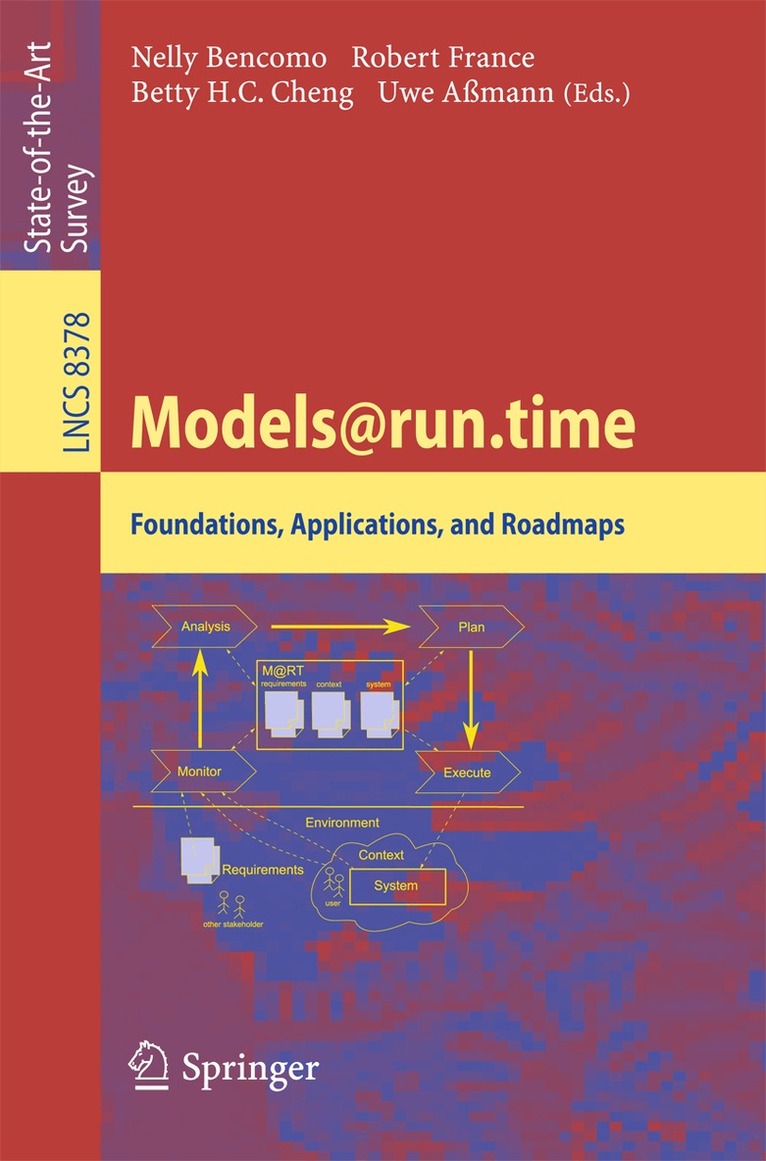
Models@run.time
Foundations, Applications, and Roadmaps
Häftad, Engelska, 2014
558 kr
Skickas inom 10-15 vardagar
Traditionally, research on model-driven engineering (MDE) has mainly focused on the use of models at the design, implementation, and verification stages of development. This work has produced relatively mature techniques and tools that are currently being used in industry and academia. However, software models also have the potential to be used at runtime, to monitor and verify particular aspects of runtime behavior, and to implement self-* capabilities (e.g., adaptation technologies used in self-healing, self-managing, self-optimizing systems). A key benefit of using models at runtime is that they can provide a richer semantic base for runtime decision-making related to runtime system concerns associated with autonomic and adaptive systems.This book is one of the outcomes of the Dagstuhl Seminar 11481 on models@run.time held in November/December 2011, discussing foundations, techniques, mechanisms, state of the art, research challenges, and applications for the use of runtime models. The book comprises four research roadmaps, written by the original participants of the Dagstuhl Seminar over the course of two years following the seminar, and seven research papers from experts in the area. The roadmap papers provide insights to key features of the use of runtime models and identify the following research challenges: the need for a reference architecture, uncertainty tackled by runtime models, mechanisms for leveraging runtime models for self-adaptive software, and the use of models at runtime to address assurance for self-adaptive systems.
558 kr
Skickas inom 10-15 vardagar
Model-Driven Architecture (MDA) is an initiative proposedby the Object M- agement Group (OMG) for platform-generic software development. MDA s- arates the speci?cation of system functionality from the implementation on a speci?c platform. It is aimed at making software assets more resilient to changes caused by emerging technologies. While stressing the importance of modeling, the MDA initiative covers a wide spectrum of research areas. Further e?orts are required to bring them into a coherent approach based on open standards and supported by matured tools and techniques. Thisvolumecontainstheselectedpapersoftwoworkshopson“Model-Driven Architecture – Foundations and Applications” (MDAFA): MDAFA 2003 held at the University of Twente, Twente, The Netherlands, June 26–27, 2003, and MDAFA 2004 held at Linko ¨ping University, Link¨ oping, Sweden, June 10–11, 2004. The goal of the workshops was to understand the foundations of MDA, to share experience in applying MDA techniques and tools, and to outline future research directions. The workshops organizers encouraged authors of accepted papers to re-submit their papers to a post-workshop reviewing process; 15 of these papers were accepted to appear in this volume on MDA.
Häftad, Engelska, 2005
558 kr
Skickas inom 10-15 vardagar
Component-based software development is the next step after object-oriented programmingthatpromisesto reducecomplexityandimprovereusability.These advantages have also been identi?ed by the industry, and consequently, over the past years, a large number of component-based techniques and processes have been adopted in many of these organizations. A visible result of this is the number ofcomponentmodels thathavebeendevelopedandstandardized.These models de?ne how individual software components interact with each other and simplify the design process of software systems by allowing developers to choose from previously existing components. The development of component models is a ?rst step in the right direction, but there are many challenges that cannot be solved by the development of a new component model alone. Such challengesare the adaptation of components, and their development and veri?cation. Software Composition is the premiere workshop to advance the research in component-based software engineering and its related ?elds. SC 2005 was the fourth workshop in this series. As in previous years, SC 2005 was organized as an event co-located with the ETAPS conference. This year’s program consisted of a keynote on the revival of dynamic l- guages given by Prof. Oscar Nierstrasz and 13 technical paper presentations (9 full and 4 short papers). The technical papers were carefully selected from a total of 41 submitted papers. Each paper was thoroughly peer reviewed by at leastthreemembers oftheprogramcommittee andconsensusonacceptancewas achieved by means of an electronic PC discussion. This LNCS volume contains the revised versions of the papers presented at SC 2005.
Inbunden, Engelska, 2003
558 kr
Skickas inom 10-15 vardagar
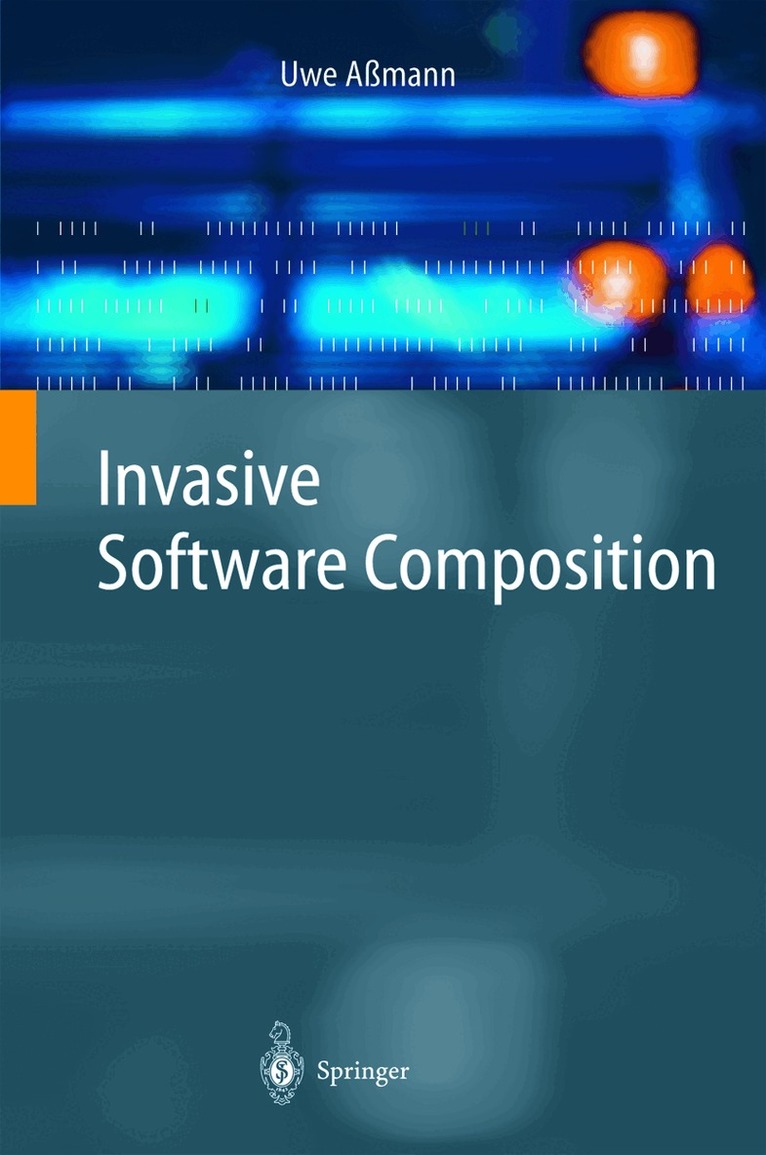
Invasive software composition as a new, component-based way to construct software systems is presented. To improve reuse, this method regards software components as greybox and integrates them during composition. Components are distinct in design, but are merged in implementations, leading to highly integrated and more efficient systems. Building on a minimal set of program transformations, composition operator libraries can be developed that parameterize, extend, connect, mediate, and aspect-weave components. Invasive software composition unifies several software engineering techniques such as generic programming, architecture systems, inheritance, and aspect-oriented programming. The book is centered around the JAVA language and a freely available demonstrator library called COMPOST. The book should provide a wealth of material for researchers, students and professional software architects alike.
Häftad, Engelska, 2007
492 kr
Skickas inom 10-15 vardagar
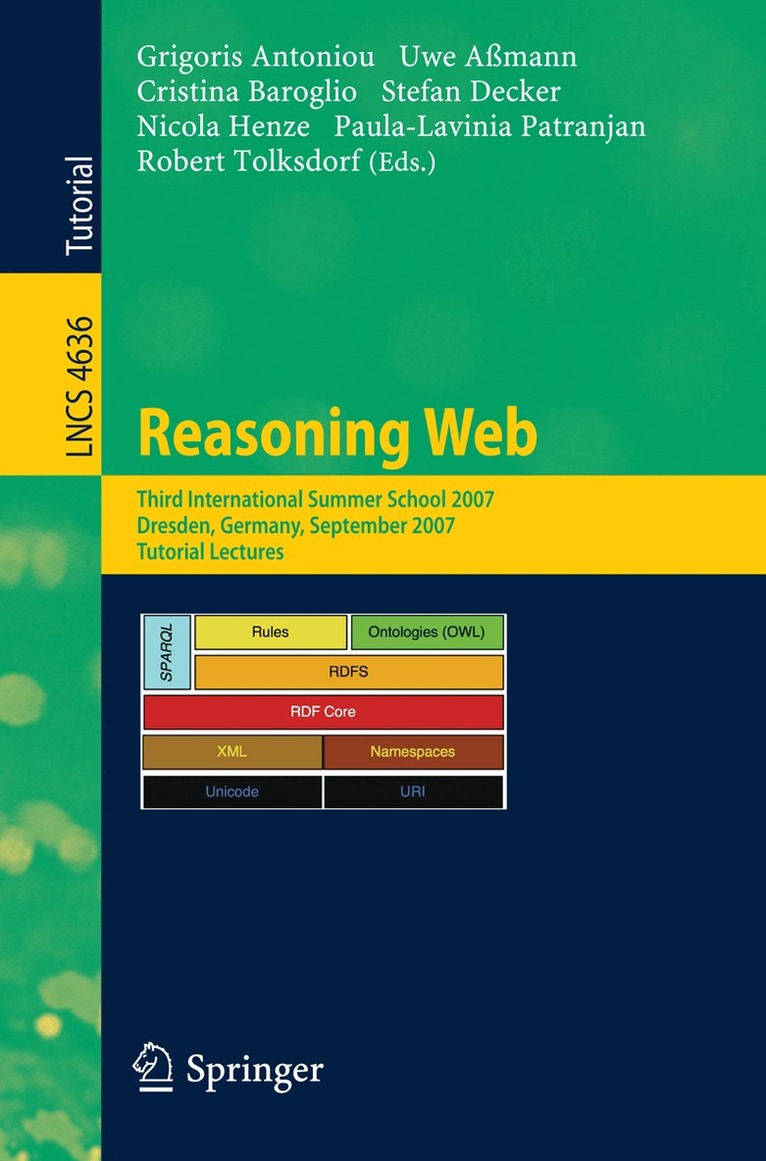
This book contains a collection of thoroughly revised tutorial papers based on lectures given by leading researchers at the Second International Summer School on the Reasoning Web in Dresden, Germany, September 2007. The nine tutorial papers cover methods and research issues of the Semantic Web, ontology languages and their relation to description logics, techniques in Web information extraction, employing ontologies to ease construction of software applications, and more.
Häftad, Engelska, 2010
558 kr
Skickas inom 10-15 vardagar
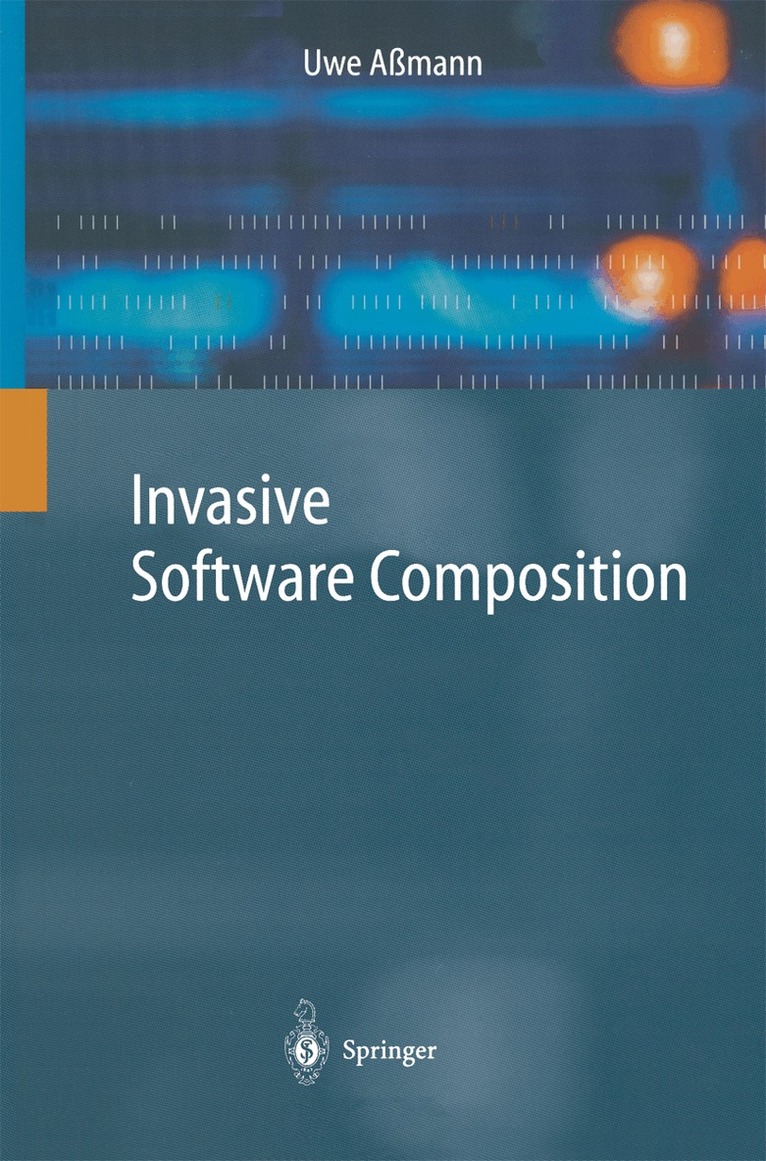
Over the past two decades, software engineering has come a long way from object-based to object-oriented to component-based design and development. Invasive software composition is a new technique that unifies and extends recent software engineering concepts like generic programming, aspect-oriented development, architecture systems, or subject-oriented development. To improve reuse, this new method regards software components as grayboxes and integrates them during composition. Building on a minimal set of program transformations, composition operator libraries can be developed that parameterize, extend, connect, mediate, and aspect-weave components.The book is centered around the JAVA language and the freely available demonstrator library COMPOST. It provides a wealth of materials for researchers, students, and professional software architects alike.
Häftad, Engelska, 2010
558 kr
Skickas inom 10-15 vardagar
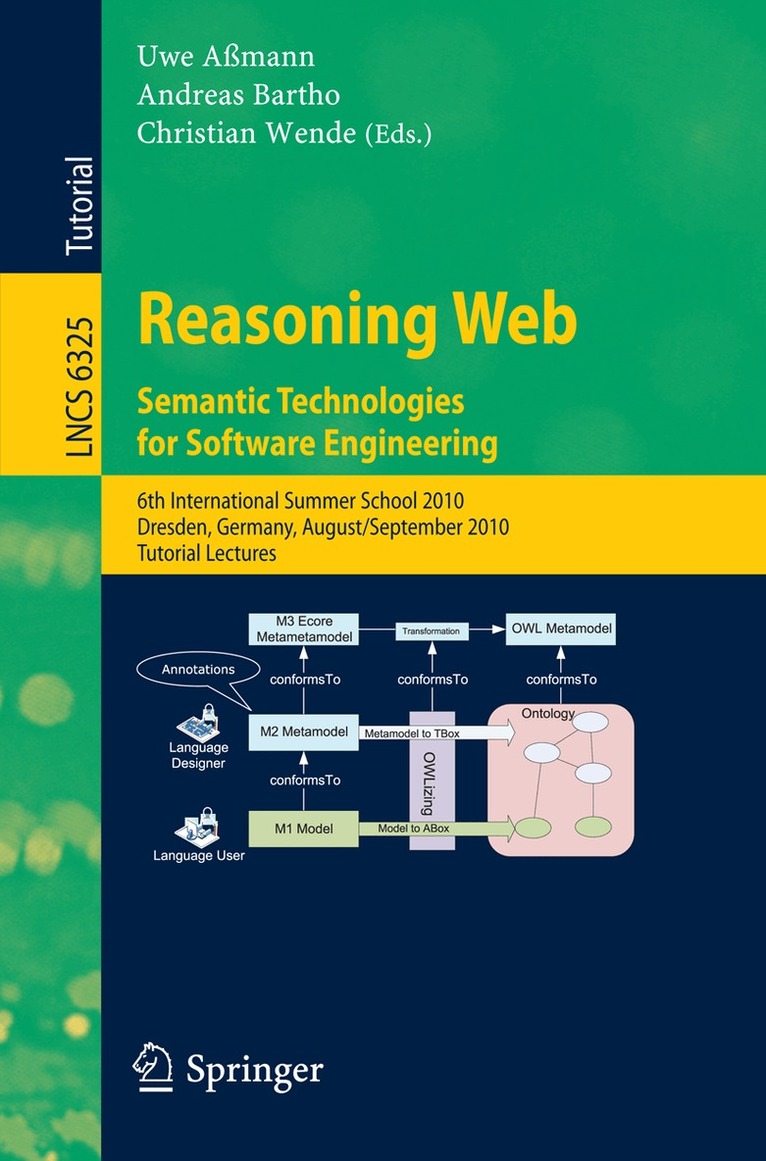
Welcome to the proceedings of Reasoning Web 2010 which was held in Dresden. Reasoning Web is a summer school series on theoretical foundations,contemporary approaches, and practical solutions for reasoning in a Web of Semantics. It has est- lished itself as a meeting point for experts from research institutes and industry, as well as students undertakingtheir PhDs in related ?elds. This volume contains tutorial notes of the sixth school in the series, held from August 30 to September 3, 2010. This year, the school focused on applications of semantic technologies in software engineeringandthereasoningtechnologiesappropriateforsuchanendeavor. Asit turns out, semantic technologies in software engineering are not so easily applied, and s- eral issues mustbe resolvedbeforesoftware modelingcanbene?t fromreasoning. First, reasoning has to be fast and scalable, since models and programscan be quite large and voluminous. SincemanyreasoninglanguagesareexponentialorNP-complete,appro- mation, incrementalization,and other optimizationtechniques are extremelyimportant. Second, software engineering needs to model software systems, in contrast to mod- ing domains of the world.Thus, the modeling techniques are prescriptive rather than descriptive [1], which in?uences the way models are reasoned about. When a software system is modeled, its behavior is prescribed by the model, that is, "the truth is in the model"[2]; when a domainof the world is described,its behaviorcannotbe prescribed, only described by the model ("the truth is in the world"). Therefore, reasoning has to distinguish between prescriptiveness and descriptiveness, leading to different assu- tions about the closeness or openness of the world (closed-world assumption, CWA vs. open-world assumption, OWA).
Häftad, Engelska, 2012
558 kr
Skickas inom 10-15 vardagar
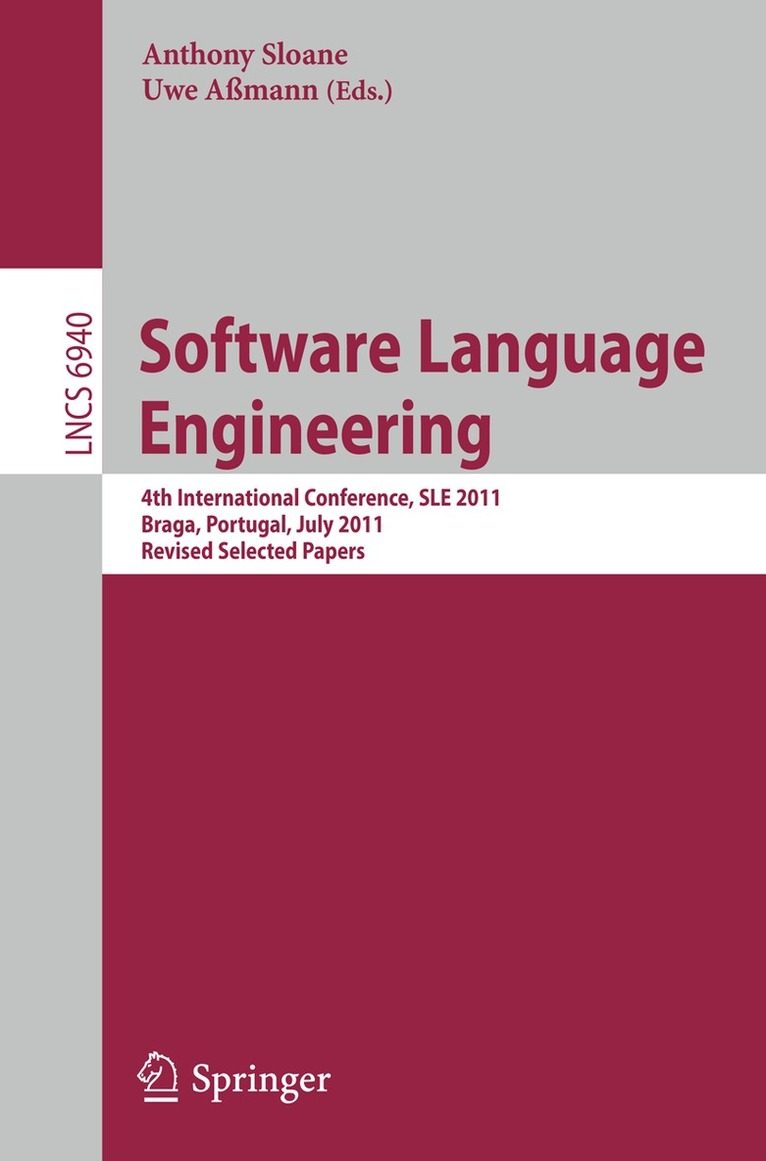
This book constitutes the thoroughly refereed post-proceedings of the 4th International Conference on Software Language Engineering, SLE 2011, held in Braga, Portugal, in July 2011. The 18 papers presented together with 4 tool/language demonstration papers were carefully reviewed and selected from numerous submissions. SLE’s foremost mission is to encourage and organize communication between communities that have traditionally looked at software languages from different, more specialized, and yet complementary perspectives. SLE emphasizes the fundamental notion of languages as opposed to any realization in specific technical spaces.
Inbunden, Engelska, 2012
1 108 kr
Skickas inom 10-15 vardagar
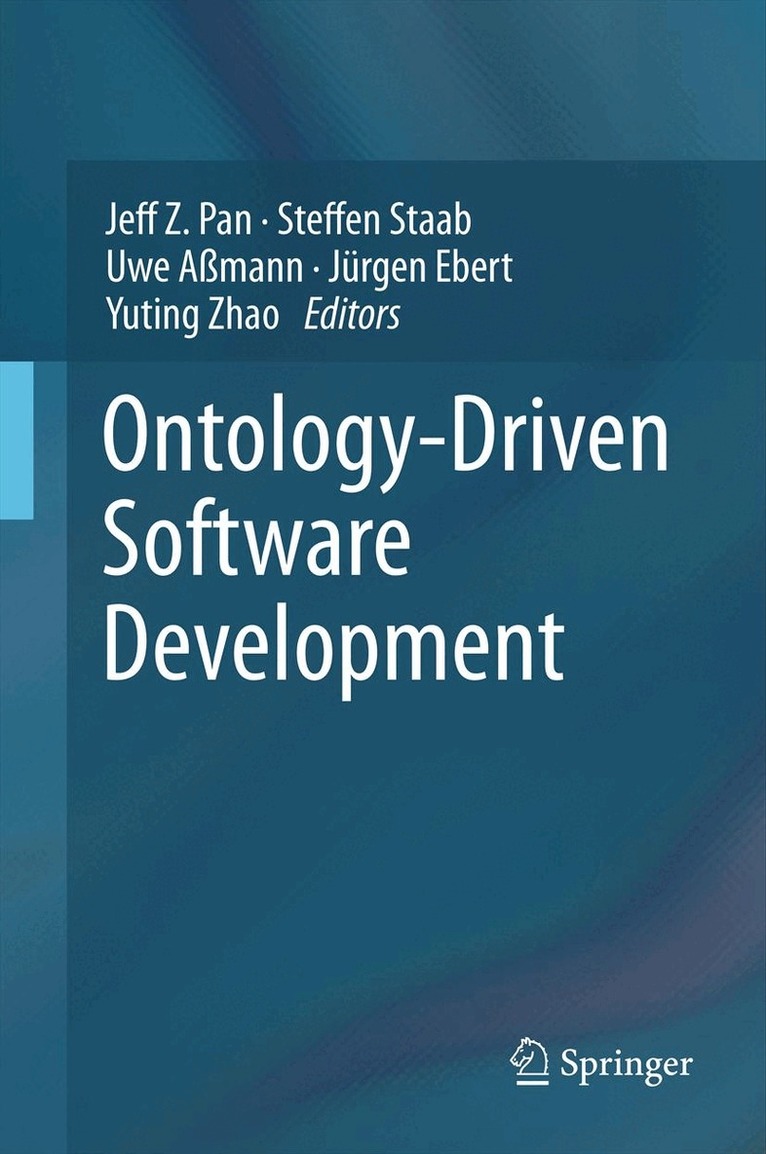
This book is about a significant step forward in software development. It brings state-of-the-art ontology reasoning into mainstream software development and its languages. Ontology Driven Software Development is the essential, comprehensive resource on enabling technologies, consistency checking and process guidance for ontology-driven software development (ODSD). It demonstrates how to apply ontology reasoning in the lifecycle of software development, using current and emerging standards and technologies. You will learn new methodologies and infrastructures, additionally illustrated using detailed industrial case studies.The book will help you: Learn how ontology reasoning allows validations of structure models and key tasks in behavior models.Understand how to develop ODSD guidance engines for important software development activities, such as requirement engineering, domain modeling and process refinement.Become familiar with semantic standards, such as the Web Ontology Language (OWL) and the SPARQL query language.Make use of ontology reasoning, querying and justification techniques to integrate software models and to offer guidance and traceability supports.This book is helpful for undergraduate students and professionals who are interested in studying how ontologies and related semantic reasoning can be applied to the software development process. In addition, itwill also be useful for postgraduate students, professionals and researchers who are going to embark on their research in areas related to ontology or software engineering.
Häftad, Engelska, 2015
1 108 kr
Skickas inom 10-15 vardagar
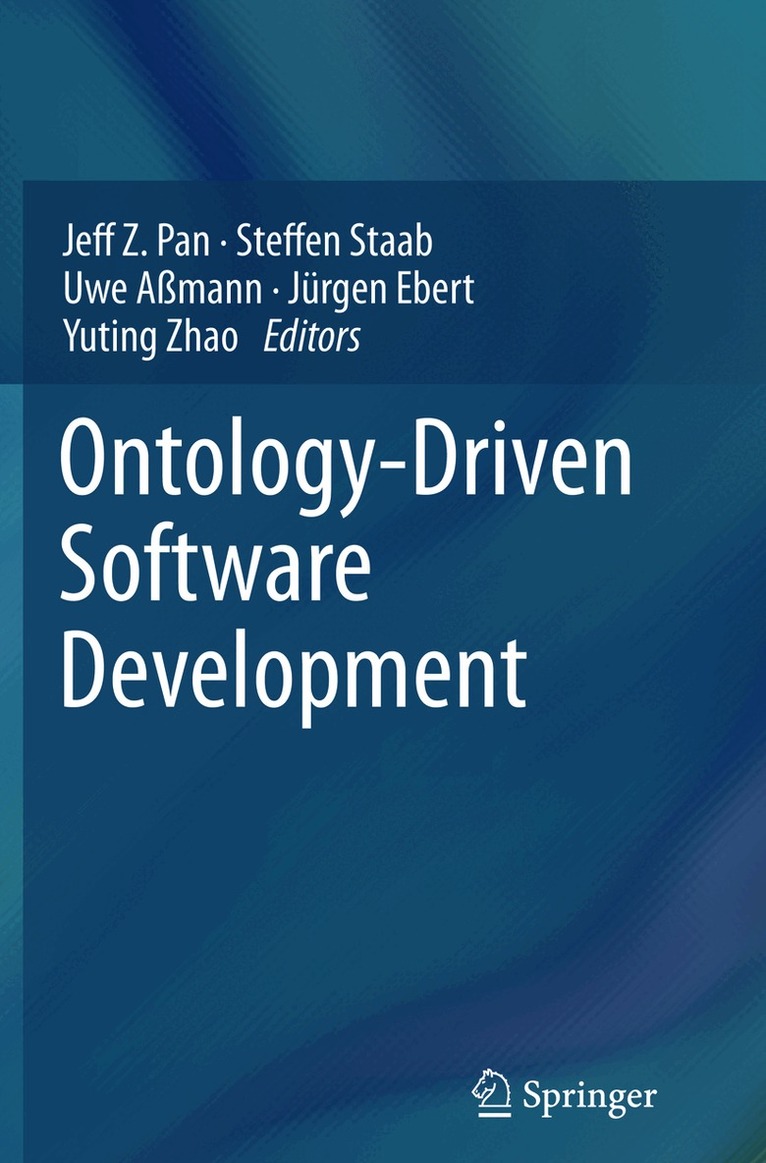
This book is about a significant step forward in software development. It brings state-of-the-art ontology reasoning into mainstream software development and its languages. Ontology Driven Software Development is the essential, comprehensive resource on enabling technologies, consistency checking and process guidance for ontology-driven software development (ODSD). It demonstrates how to apply ontology reasoning in the lifecycle of software development, using current and emerging standards and technologies. You will learn new methodologies and infrastructures, additionally illustrated using detailed industrial case studies.The book will help you: Learn how ontology reasoning allows validations of structure models and key tasks in behavior models.Understand how to develop ODSD guidance engines for important software development activities, such as requirement engineering, domain modeling and process refinement.Become familiar with semantic standards, such as the Web Ontology Language (OWL) and the SPARQL query language.Make use of ontology reasoning, querying and justification techniques to integrate software models and to offer guidance and traceability supports.This book is helpful for undergraduate students and professionals who are interested in studying how ontologies and related semantic reasoning can be applied to the software development process. In addition, itwill also be useful for postgraduate students, professionals and researchers who are going to embark on their research in areas related to ontology or software engineering.