V. G. Julie Rajan - Böcker
Visar alla böcker från författaren V. G. Julie Rajan. Handla med fri frakt och snabb leverans.
6 produkter
6 produkter
805 kr
Skickas inom 10-15 vardagar
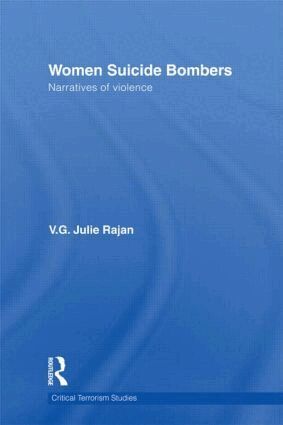
This book offers an evaluation of female suicide bombers through postcolonial, Third World, feminist, and human-rights framework, drawing on case studies from conflicts in Palestine, Sri Lanka, and Chechnya, among others.Women Suicide Bombers explores why cultural, media and political reports from various geographies present different information about and portraits of the same women suicide bombers. The majority of Western media and sovereign states engaged in wars against groups deploying bombings tend to focus on women bombers' abnormal mental conditions; their physicality-for example, their painted fingernails or their beautiful eyes; their sexualities; and the various ways in which they have been victimized by their backward Third World cultures, especially by "Islam." In contrast, propaganda produced by rebel groups deploying women bombers, cultures supporting those campaigns, and governments of those nations at war with sovereign states and Western nations tend to project women bombers as mythical heroes, in ways that supersedes the martyrdom operations of male bombers.Many of the books published on this phenomenon have revealed interesting ways to read women bombers' subjectivities, but do not explore the phenomenon of women bombers both inside and outside of their militant activities, or against the patriarchal, Orientalist, and Western feminist cultural and theoretical frameworks that label female bombers primarily as victims of backward cultures. In contrast, this book offers a corrective lens to the existing discourse, and encourages a more balanced evaluation of women bombers in contemporary conflict.This book will be of interest to students of terrorism, gender studies and security studies in general.
2 306 kr
Skickas inom 10-15 vardagar
This book offers an evaluation of female suicide bombers through postcolonial, Third World, feminist, and human-rights framework, drawing on case studies from conflicts in Palestine, Sri Lanka, and Chechnya, among others.Women Suicide Bombers explores why cultural, media and political reports from various geographies present different information about and portraits of the same women suicide bombers. The majority of Western media and sovereign states engaged in wars against groups deploying bombings tend to focus on women bombers' abnormal mental conditions; their physicality-for example, their painted fingernails or their beautiful eyes; their sexualities; and the various ways in which they have been victimized by their backward Third World cultures, especially by "Islam." In contrast, propaganda produced by rebel groups deploying women bombers, cultures supporting those campaigns, and governments of those nations at war with sovereign states and Western nations tend to project women bombers as mythical heroes, in ways that supersedes the martyrdom operations of male bombers.Many of the books published on this phenomenon have revealed interesting ways to read women bombers' subjectivities, but do not explore the phenomenon of women bombers both inside and outside of their militant activities, or against the patriarchal, Orientalist, and Western feminist cultural and theoretical frameworks that label female bombers primarily as victims of backward cultures. In contrast, this book offers a corrective lens to the existing discourse, and encourages a more balanced evaluation of women bombers in contemporary conflict.This book will be of interest to students of terrorism, gender studies and security studies in general.
2 236 kr
Skickas inom 10-15 vardagar
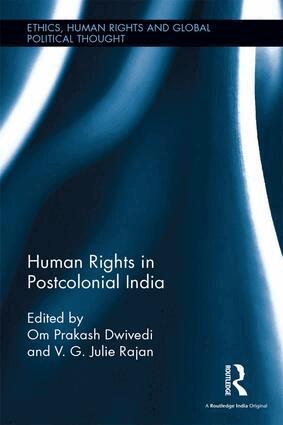
This volume looks at human rights in independent India through frameworks comparable to those in other postcolonial nations in the Global South. It examines wide-ranging issues that require immediate attention such as those related to disability, violence, torture, education, LGBT, neoliberalism, and social justice. The essays presented here explore the discourse surrounding human rights, and engage with aspects linked to the functioning of democracy, security and strategic matters, and terrorism, especially post 9/11. They also discuss cases connected with human rights violations in India and underline the need for a transparent approach and a more comprehensive perspective of India’s human rights record.Part of the series Ethics, Human Rights and Global Political Thought, the volume will be an important resource for academics, policy makers, civil society organisations, lawyers and those concerned with human rights. It will also be useful to scholars and researchers of Indian politics, law and sociology.
643 kr
Skickas inom 10-15 vardagar
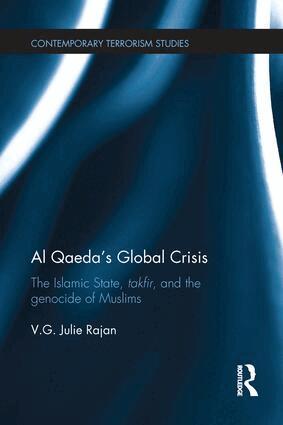
This book focuses on the crises facing Al Qaeda and how the mass killing of Muslims is challenging its credibility as a leader among Islamist jihadist organizations.The book argues that these crises are directly related to Al Qaeda’s affiliation with the extreme violence employed against Muslims in Iraq, Syria, Afghanistan and Pakistan in the decade since 9/11. Al Qaeda’s public and private responses to this violence differ greatly. While in public Al Qaeda has justified those attacks declaring that, for the establishment of a state of ‘true believers’, they are a necessary evil, in private Al Qaeda has been advising its local affiliates to refrain from killing Muslims. To better understand the crises facing Al Qaeda, the book explores the development of Central Al Qaeda’s complex relationship with radical (mis)appropriations and manifestations of takfir, which allows one Muslim to declare another an unbeliever, and its unique relationship with each of its affiliates in Iraq, Syria, Afghanistan and Pakistan. The author then goes on to consider how the prominence of takfir is contributing to the deteriorating security in those countries and how this is affecting Al Qaeda’s credibility as an Islamist terror organization. The book concludes by considering the long-term viability of Al Qaeda and how its demise could allow the rise of the even more radical, violent Islamic State and the implications this has for the future security of the Middle East, North Africa and Central/South Asia.This book will be of much interest to students of political violence and terrorism, Islamism, global security and IR.
717 kr
Skickas inom 10-15 vardagar
This volume looks at human rights in independent India through frameworks comparable to those in other postcolonial nations in the Global South. It examines wide-ranging issues that require immediate attention such as those related to disability, violence, torture, education, LGBT, neoliberalism, and social justice. The essays presented here explore the discourse surrounding human rights, and engage with aspects linked to the functioning of democracy, security and strategic matters, and terrorism, especially post 9/11. They also discuss cases connected with human rights violations in India and underline the need for a transparent approach and a more comprehensive perspective of India’s human rights record.Part of the series Ethics, Human Rights and Global Political Thought, the volume will be an important resource for academics, policy makers, civil society organisations, lawyers and those concerned with human rights. It will also be useful to scholars and researchers of Indian politics, law and sociology.
Al Qaeda's Global Crisis
The Islamic State, Takfir and the Genocide of Muslims
Inbunden, Engelska, 2015
2 238 kr
Skickas inom 10-15 vardagar
This book focuses on the crises facing Al Qaeda and how the mass killing of Muslims is challenging its credibility as a leader among Islamist jihadist organizations.The book argues that these crises are directly related to Al Qaeda’s affiliation with the extreme violence employed against Muslims in Iraq, Syria, Afghanistan and Pakistan in the decade since 9/11. Al Qaeda’s public and private responses to this violence differ greatly. While in public Al Qaeda has justified those attacks declaring that, for the establishment of a state of ‘true believers’, they are a necessary evil, in private Al Qaeda has been advising its local affiliates to refrain from killing Muslims. To better understand the crises facing Al Qaeda, the book explores the development of Central Al Qaeda’s complex relationship with radical (mis)appropriations and manifestations of takfir, which allows one Muslim to declare another an unbeliever, and its unique relationship with each of its affiliates in Iraq, Syria, Afghanistan and Pakistan. The author then goes on to consider how the prominence of takfir is contributing to the deteriorating security in those countries and how this is affecting Al Qaeda’s credibility as an Islamist terror organization. The book concludes by considering the long-term viability of Al Qaeda and how its demise could allow the rise of the even more radical, violent Islamic State and the implications this has for the future security of the Middle East, North Africa and Central/South Asia.This book will be of much interest to students of political violence and terrorism, Islamism, global security and IR.