Valerie J. Bunce - Böcker
Visar alla böcker från författaren Valerie J. Bunce. Handla med fri frakt och snabb leverans.
4 produkter
4 produkter
385 kr
Skickas inom 7-10 vardagar
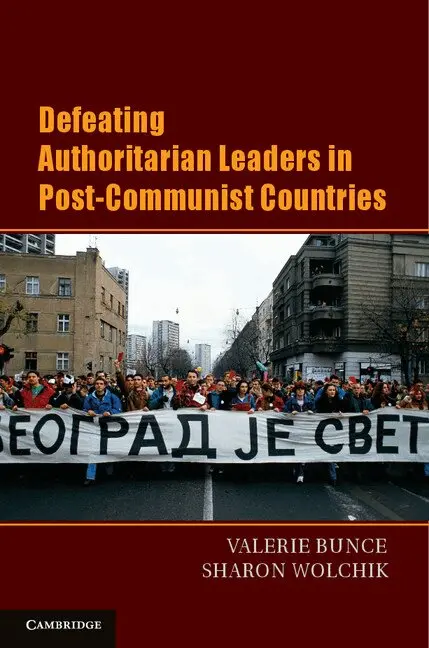
From 1998 to 2005, six elections took place in postcommunist Europe that had the surprising outcome of empowering the opposition and defeating authoritarian incumbents or their designated successors. Valerie J. Bunce and Sharon L. Wolchik compare these unexpected electoral breakthroughs. They draw three conclusions. First, the opposition was victorious because of the hard and creative work of a transnational network composed of local opposition and civil society groups, members of the international democracy assistance community and graduates of successful electoral challenges to authoritarian rule in other countries. Second, the remarkable run of these upset elections reflected the ability of this network to diffuse an ensemble of innovative electoral strategies across state boundaries. Finally, elections can serve as a powerful mechanism for democratic change. This is especially the case when civil society is strong, the transfer of political power is through constitutional means, and opposition leaders win with small mandates.
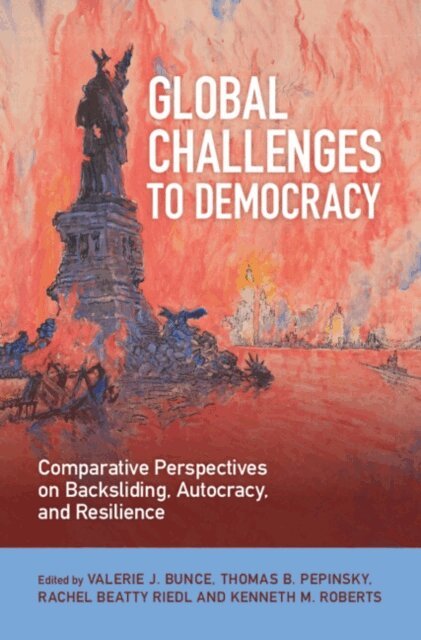
Global Challenges to Democracy
Comparative Perspectives on Backsliding, Autocracy, and Resilience
Häftad, Engelska, 2025
347 kr
Skickas inom 7-10 vardagar
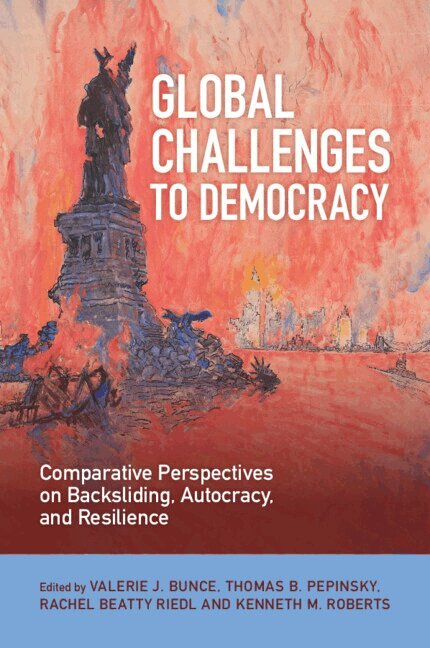
Following democracy's global advance in the late 20th century, recent patterns of democratic erosion or 'backsliding' have generated extensive scholarly debate. Backsliding towards autocracy is often the work of elected leaders operating within democratic institutions, challenging conventional thinking about the logic of democratic consolidation, the enforcement of institutional checks and balances, and the development and reproduction of democratic norms. This volume tackles these challenges head-on, drawing theoretical insights from classic literature on democratic transitions and consolidation to help explain contemporary challenges to democracy. It offers a comparative perspective on the dynamics of democratic backsliding, the changing character of authoritarian threats, and the sources of democratic resiliency around the world. It also integrates the institutional, civil society, and international dimensions of contemporary challenges to democracy, while providing coverage of Western and Eastern Europe, South and Southeast Asia, Africa, Latin America, and the United States.
Global Challenges to Democracy
Comparative Perspectives on Backsliding, Autocracy, and Resilience
Inbunden, Engelska, 2025
1 126 kr
Skickas inom 7-10 vardagar
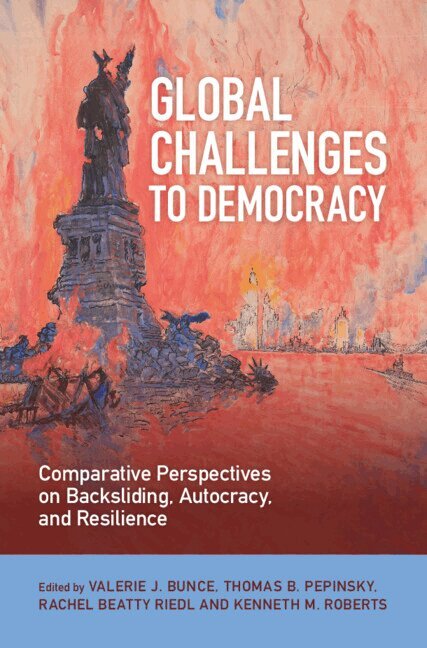
Following democracy's global advance in the late 20th century, recent patterns of democratic erosion or 'backsliding' have generated extensive scholarly debate. Backsliding towards autocracy is often the work of elected leaders operating within democratic institutions, challenging conventional thinking about the logic of democratic consolidation, the enforcement of institutional checks and balances, and the development and reproduction of democratic norms. This volume tackles these challenges head-on, drawing theoretical insights from classic literature on democratic transitions and consolidation to help explain contemporary challenges to democracy. It offers a comparative perspective on the dynamics of democratic backsliding, the changing character of authoritarian threats, and the sources of democratic resiliency around the world. It also integrates the institutional, civil society, and international dimensions of contemporary challenges to democracy, while providing coverage of Western and Eastern Europe, South and Southeast Asia, Africa, Latin America, and the United States.
1 126 kr
Skickas inom 7-10 vardagar
From 1998 to 2005, six elections took place in postcommunist Europe that had the surprising outcome of empowering the opposition and defeating authoritarian incumbents or their designated successors. Valerie J. Bunce and Sharon L. Wolchik compare these unexpected electoral breakthroughs. They draw three conclusions. First, the opposition was victorious because of the hard and creative work of a transnational network composed of local opposition and civil society groups, members of the international democracy assistance community and graduates of successful electoral challenges to authoritarian rule in other countries. Second, the remarkable run of these upset elections reflected the ability of this network to diffuse an ensemble of innovative electoral strategies across state boundaries. Finally, elections can serve as a powerful mechanism for democratic change. This is especially the case when civil society is strong, the transfer of political power is through constitutional means, and opposition leaders win with small mandates.