Valerie Rohy - Böcker
Visar alla böcker från författaren Valerie Rohy. Handla med fri frakt och snabb leverans.
9 produkter
9 produkter
405 kr
Skickas inom 3-6 vardagar
2 071 kr
Skickas inom 5-8 vardagar
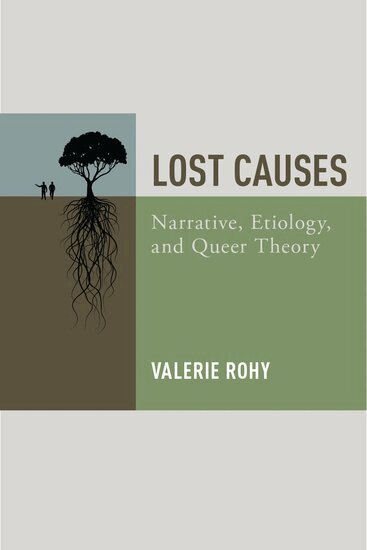
Lost Causes stages a polemical intervention in the discourse that grounds queer civil rights in etiology -- that is, in the cause of homosexuality, whether choice, "recruitment," or biology. Reading etiology as a narrative form, political strategy, and hermeneutic method in American and British literature and popular culture, it argues that today's gay arguments for biological determinism accept their opponents' paranoia about what Rohy calls "homosexual reproduction"-that is, nonsexual forms of queer increase-preventing more complex ways of considering sexuality and causality. This study combines literary texts and psychoanalytic theory--two salient sources of etiological narratives in themselves -- to reconsider phobic tropes of homosexual reproduction: contagion in Borrowed Time, bad influence in The Picture of Dorian Gray, trauma in The Night Watch, choice of identity in James Weldon Johnson's Autobiography of an Ex-Colored Man, and dangerous knowledge in The Well of Loneliness. These readings draw on Lacan's notion of retroactive causality to convert the question of what causes homosexuality into a question of what homosexuality causes as the constitutive outside of a heteronormative symbolic order. Ultimately, this study shows, queer communities and queer theory must embrace formerly shaming terms -- why should the increase of homosexuality be unthinkable? -- while retaining the critical sense of queerness as a non-identity, a permanent negativity.
528 kr
Skickas inom 5-8 vardagar
Lost Causes stages a polemical intervention in the discourse that grounds queer civil rights in etiology -- that is, in the cause of homosexuality, whether choice, "recruitment," or biology. Reading etiology as a narrative form, political strategy, and hermeneutic method in American and British literature and popular culture, it argues that today's gay arguments for biological determinism accept their opponents' paranoia about what Rohy calls "homosexual reproduction"-that is, nonsexual forms of queer increase-preventing more complex ways of considering sexuality and causality. This study combines literary texts and psychoanalytic theory--two salient sources of etiological narratives in themselves -- to reconsider phobic tropes of homosexual reproduction: contagion in Borrowed Time, bad influence in The Picture of Dorian Gray, trauma in The Night Watch, choice of identity in James Weldon Johnson's Autobiography of an Ex-Colored Man, and dangerous knowledge in The Well of Loneliness. These readings draw on Lacan's notion of retroactive causality to convert the question of what causes homosexuality into a question of what homosexuality causes as the constitutive outside of a heteronormative symbolic order. Ultimately, this study shows, queer communities and queer theory must embrace formerly shaming terms -- why should the increase of homosexuality be unthinkable? -- while retaining the critical sense of queerness as a non-identity, a permanent negativity.
1 783 kr
Skickas inom 10-15 vardagar
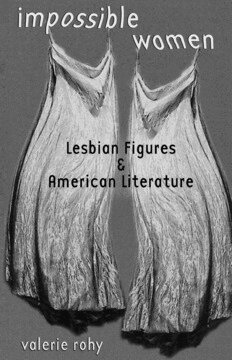
Impossible Women fills a critical gap in queer theory by spotlighting representations of lesbian sexuality in nineteenth- and twentieth-century American literature. Reading through the lens of feminist and psychoanalytic theory, Valerie Rohy considers texts by Nathaniel Hawthorne, Kate Chopin, Henry James, Zora Neale Hurston, Ernest Hemingway, and Elizabeth Bishop.Addressing American ideologies of reproduction and representation, Impossible Women suggests that lesbian figures are made to symbolize both the unrepresentable and the failures of meaning inherent in language. Rohy traces the ways lesbian sexuality—relegated to the domain of the ineffable, yet endlessly subject to inscription—appears in tropes of transference and displacement, the disembodied voice, repetition-compulsion, and the uncanny. Impossible Women also asks what cultural work such figures perform, locating lesbian desire in American literary history and engaging issues of genre and narrative, social formations such as the rhetoric of the "New Woman," and intersections of racism, sexism, and homophobia.
513 kr
Skickas inom 10-15 vardagar
Impossible Women fills a critical gap in queer theory by spotlighting representations of lesbian sexuality in nineteenth- and twentieth-century American literature. Reading through the lens of feminist and psychoanalytic theory, Valerie Rohy considers texts by Nathaniel Hawthorne, Kate Chopin, Henry James, Zora Neale Hurston, Ernest Hemingway, and Elizabeth Bishop.Addressing American ideologies of reproduction and representation, Impossible Women suggests that lesbian figures are made to symbolize both the unrepresentable and the failures of meaning inherent in language. Rohy traces the ways lesbian sexuality—relegated to the domain of the ineffable, yet endlessly subject to inscription—appears in tropes of transference and displacement, the disembodied voice, repetition-compulsion, and the uncanny. Impossible Women also asks what cultural work such figures perform, locating lesbian desire in American literary history and engaging issues of genre and narrative, social formations such as the rhetoric of the "New Woman," and intersections of racism, sexism, and homophobia.
2 652 kr
Skickas inom 10-15 vardagar
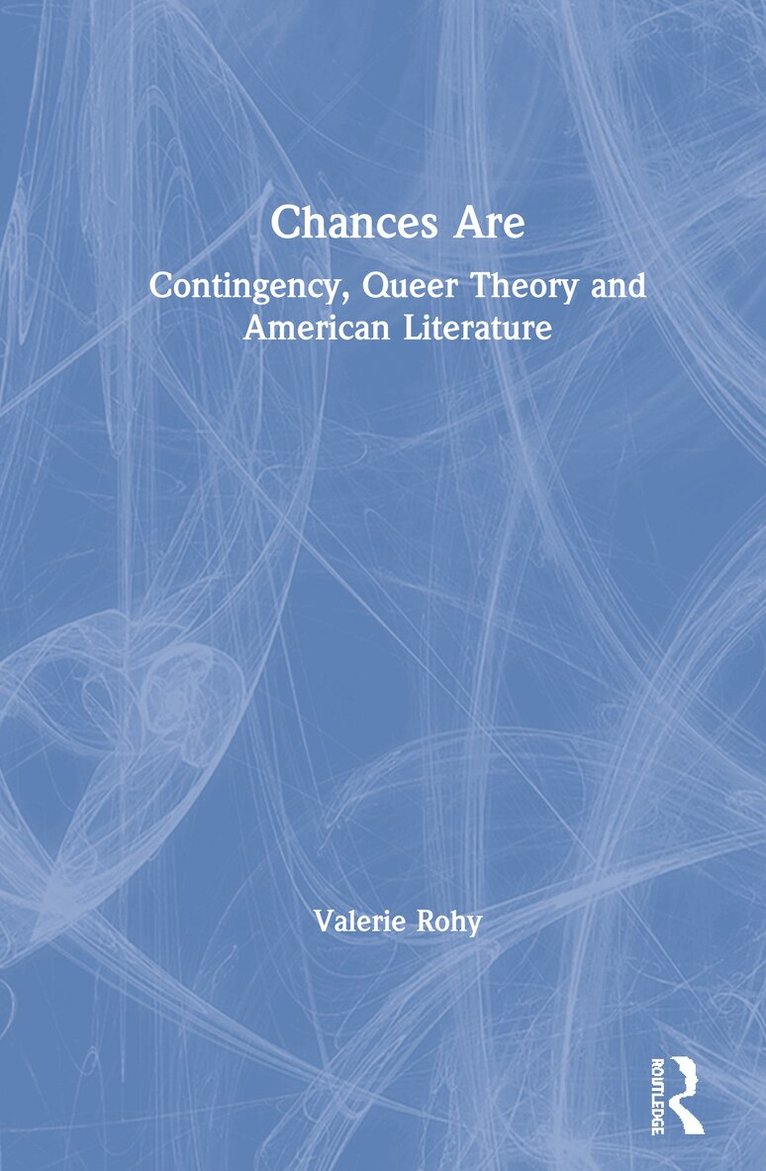
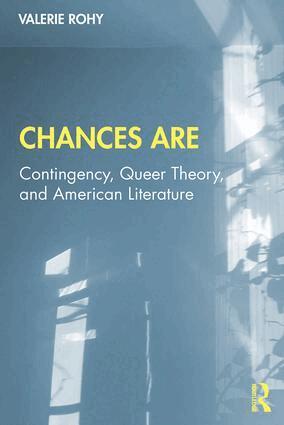
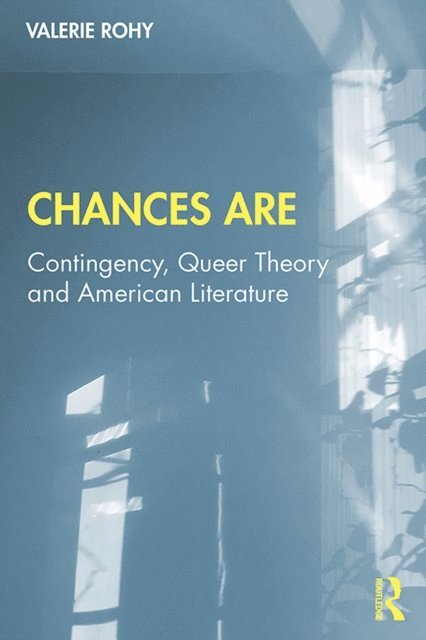
This innovative work makes use of psychoanalytic, queer, and narrative theories to read nineteenth and twentieth-century American literature and demonstrate how the concept of contingency—whether chance, accident, luck, or mutation—enriches our understanding of how queer sexualities are articulated. Perhaps love always carries an element of contingency (our attraction to a particular person can be arbitrary and inexplicable), and a sense of necessity (we find that we cannot imagine life without them). But contingency and chance mean something different for queer subjects. In a heteronormative culture, heterosexuality claims to be necessary (it must be), whereas homosexuality not only could be otherwise, but perhaps it should be otherwise, and probably it should not be at all. This book outlines why and how issues of chance and contingency should matter to queer theory and queer literary studies. Combining psychoanalytic, queer, and narrative theories, Chances Are considers nineteenth- and twentieth-century American literary texts that formally or thematically involve contingencies of their own, including narrative coincidences and accidents, the role of luck in notions of race and class, and efforts to imagine queer hermeneutic methods that make space for contingency. Literary texts include Edgar Allan Poe’s "The Mystery of Marie Rogêt" (1842), Horatio Alger’s Ragged Dick novels (1868-69), Frank Norris’s The Pit (1903) and Edith Wharton’s The House of Mirth (1905), Frances E.W. Harper's Iola Leroy (1892) and Nella Larsen's Passing (1929), H.D.'s Tribute to Freud (1956), and Alison Bechdel's Are You My Mother (2012). This dynamic and original text would be suitable for students and researchers in literary studies, critical theory and women’s and gender studies.
723 kr
Skickas inom 10-15 vardagar
This innovative work makes use of psychoanalytic, queer, and narrative theories to read nineteenth and twentieth-century American literature and demonstrate how the concept of contingency—whether chance, accident, luck, or mutation—enriches our understanding of how queer sexualities are articulated. Perhaps love always carries an element of contingency (our attraction to a particular person can be arbitrary and inexplicable), and a sense of necessity (we find that we cannot imagine life without them). But contingency and chance mean something different for queer subjects. In a heteronormative culture, heterosexuality claims to be necessary (it must be), whereas homosexuality not only could be otherwise, but perhaps it should be otherwise, and probably it should not be at all. This book outlines why and how issues of chance and contingency should matter to queer theory and queer literary studies. Combining psychoanalytic, queer, and narrative theories, Chances Are considers nineteenth- and twentieth-century American literary texts that formally or thematically involve contingencies of their own, including narrative coincidences and accidents, the role of luck in notions of race and class, and efforts to imagine queer hermeneutic methods that make space for contingency. Literary texts include Edgar Allan Poe’s "The Mystery of Marie Rogêt" (1842), Horatio Alger’s Ragged Dick novels (1868-69), Frank Norris’s The Pit (1903) and Edith Wharton’s The House of Mirth (1905), Frances E.W. Harper's Iola Leroy (1892) and Nella Larsen's Passing (1929), H.D.'s Tribute to Freud (1956), and Alison Bechdel's Are You My Mother (2012). This dynamic and original text would be suitable for students and researchers in literary studies, critical theory and women’s and gender studies.
432 kr
Skickas inom 5-8 vardagar
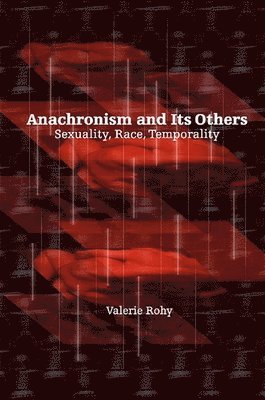
Traces the origins of contemporary analogies between queerness and blackness.Slogans such as "gay is the new black," the use of evolutionary rhetoric against gay marriage, and nationalist efforts within the United States to promote the white family all gesture toward an analogical relationship between race and sexuality in contemporary culture. Anachronism and Its Others traces contemporary analogies between homosexuality and blackness to their nineteenth-century origins-particularly the notions of "primitivism" associated with people of color as promoted by scientific racism, and the characterization of homosexuality as "arrested development," according to sexologists. Valerie Rohy explores the linked tropes of backwardness and regression associated with race and sexuality in U.S. culture and included in literary works by Edgar Allen Poe, Frederick Douglass, Pauline Hopkins, Willa Cather, and Ernest Hemingway, as well as interdisciplinary cultural contexts such as the history of science, psychoanalytic theory, popular journalism, and political rhetoric. Linking together two major directions in current queer scholarship-the relationship between race and sexuality and queer temporality-Rohy offers a critical genealogy that illuminates the ways in which race and sexuality are connected by concepts of time and untimeliness.
1 215 kr
Tillfälligt slut
Traces the origins of contemporary analogies between queerness and blackness.Slogans such as "gay is the new black," the use of evolutionary rhetoric against gay marriage, and nationalist efforts within the United States to promote the white family all gesture toward an analogical relationship between race and sexuality in contemporary culture. Anachronism and Its Others traces contemporary analogies between homosexuality and blackness to their nineteenth-century origins-particularly the notions of "primitivism" associated with people of color as promoted by scientific racism, and the characterization of homosexuality as "arrested development," according to sexologists. Valerie Rohy explores the linked tropes of backwardness and regression associated with race and sexuality in U.S. culture and included in literary works by Edgar Allen Poe, Frederick Douglass, Pauline Hopkins, Willa Cather, and Ernest Hemingway, as well as interdisciplinary cultural contexts such as the history of science, psychoanalytic theory, popular journalism, and political rhetoric. Linking together two major directions in current queer scholarship-the relationship between race and sexuality and queer temporality-Rohy offers a critical genealogy that illuminates the ways in which race and sexuality are connected by concepts of time and untimeliness.