Vasudeo Zambare - Böcker
Visar alla böcker från författaren Vasudeo Zambare. Handla med fri frakt och snabb leverans.
4 produkter
4 produkter
1 221 kr
Skickas inom 10-15 vardagar
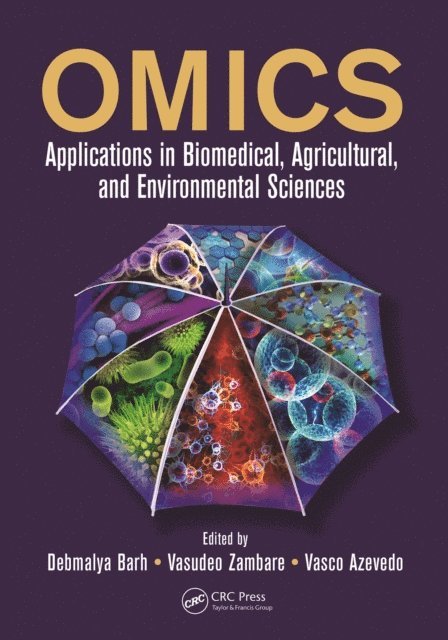
With the advent of new technologies and acquired knowledge, the number of fields in omics and their applications in diverse areas are rapidly increasing in the postgenomics era. Such emerging fields—including pharmacogenomics, toxicogenomics, regulomics, spliceomics, metagenomics, and environomics—present budding solutions to combat global challenges in biomedicine, agriculture, and the environment. OMICS: Applications in Biomedical, Agricultural, and Environmental Sciences provides valuable insights into the applications of modern omics technologies to real-world problems in the life sciences. Filling a gap in the literature, it offers a broad, multidisciplinary view of current and emerging applications of omics in a single volume.Written by highly experienced active researchers, each chapter describes a particular area of omics and the associated technologies and applications. Topics covered include:Proteomics, epigenomics, and pharmacogenomicsToxicogenomics and the assessment of environmental pollutantsApplications of plant metabolomicsNutrigenomics and its therapeutic applicationsMicroalgal omics and omics approaches in biofuel production Next-generation sequencing and omics technology for transgenic plant analysisOmics approaches in crop improvement Engineering dark-operative chlorophyll synthesis Computational regulomicsOmics techniques for the analysis of RNA splicingNew fields, including metagenomics, glycomics, and miRNABreast cancer biomarkers for early detectionEnvironomics strategies for environmental sustainabilityThis timely book explores a wide range of omics application areas in the biomedical, agricultural, and environmental sciences. Throughout, it highlights working solutions as well as open problems and future challenges. Demonstrating the diversity of omics, it introduces readers to state-of-the-art developments and trends in omics-driven research.
3 048 kr
Skickas inom 10-15 vardagar
With the advent of new technologies and acquired knowledge, the number of fields in omics and their applications in diverse areas are rapidly increasing in the postgenomics era. Such emerging fields—including pharmacogenomics, toxicogenomics, regulomics, spliceomics, metagenomics, and environomics—present budding solutions to combat global challenges in biomedicine, agriculture, and the environment. OMICS: Applications in Biomedical, Agricultural, and Environmental Sciences provides valuable insights into the applications of modern omics technologies to real-world problems in the life sciences. Filling a gap in the literature, it offers a broad, multidisciplinary view of current and emerging applications of omics in a single volume.Written by highly experienced active researchers, each chapter describes a particular area of omics and the associated technologies and applications. Topics covered include:Proteomics, epigenomics, and pharmacogenomicsToxicogenomics and the assessment of environmental pollutantsApplications of plant metabolomicsNutrigenomics and its therapeutic applicationsMicroalgal omics and omics approaches in biofuel production Next-generation sequencing and omics technology for transgenic plant analysisOmics approaches in crop improvement Engineering dark-operative chlorophyll synthesis Computational regulomicsOmics techniques for the analysis of RNA splicingNew fields, including metagenomics, glycomics, and miRNABreast cancer biomarkers for early detectionEnvironomics strategies for environmental sustainabilityThis timely book explores a wide range of omics application areas in the biomedical, agricultural, and environmental sciences. Throughout, it highlights working solutions as well as open problems and future challenges. Demonstrating the diversity of omics, it introduces readers to state-of-the-art developments and trends in omics-driven research.
2 975 kr
Kommande
This book provides a comprehensive overview of biotechnological advances and applications in microbial proteases, offering readers a detailed understanding of their role in modern science and industry. By exploring the latest research and innovations, this volume sheds light on how microbial proteases are revolutionizing fields such as food processing, waste management, and biorefinery applications. The chapters cover a wide range of topics, including the sources and classification of microbial proteases, emerging trends in their applications, and advanced fermentation technologies for their production. Readers will discover the potential of genetic engineering and CRISPR-Cas9 techniques to enhance protease properties, as well as the use of AI and machine learning for optimization. The book also addresses the multifaceted applications of microbial proteases in dermatology, cosmetics, and the meat and poultry industries, highlighting their versatility and impact.Ideal for researchers, academics, and professionals in biotechnology, microbiology, and related fields, this book serves as an essential resource for anyone interested in the future of microbial protease technology. It is particularly relevant for those interested in the practical applications of microbial proteases and their potential to drive innovation and sustainability across various industries. This collection invites readers to consider critical questions about sustainable production, scalability, and safety considerations, making it a must-read for anyone involved in biotechnology and microbiology. It serves as a valuable resource for academics and postgraduate students engaged in microbial protease technology for food, feed, leather, waste management, and biotransformation, as well as for microbiologists, biotechnologists, environmental engineers, bioprocess engineers, analysts, biochemical engineers, and industrial entrepreneurs.
Del 44 - Microorganisms for Sustainability
Anaerobes and Waste Conversion Technologies
Inbunden, Engelska, 2024
2 101 kr
Skickas inom 10-15 vardagar
This book covers all aspects of anaerobic waste conversion technologies using anaerobes, particularly in anaerobic digestion and fermentation processes.