Vasudha Dalmia - Böcker
Visar alla böcker från författaren Vasudha Dalmia. Handla med fri frakt och snabb leverans.
7 produkter
7 produkter
658 kr
Skickas inom 5-8 vardagar
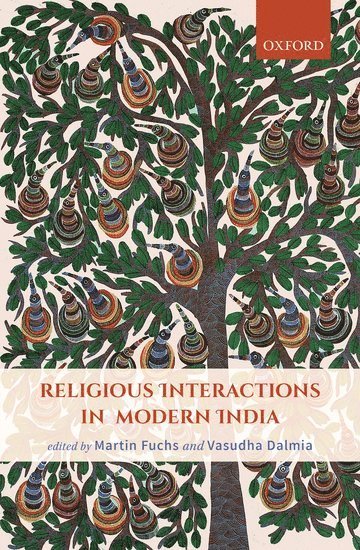
Religions in South Asia have tended to be studied in blocks, whether in the various monolithic traditions in which they are now regarded, thus Hindu, Muslim, Buddhist, Sikh, Jain, Christian, or indeed in temporal blocks: ancient, medieval, modern. This volume seeks to look at relationships both within and between religions. It explores the diversity and the multiplicity within each tradition, the historical links between the various traditions which have crisscrossed the monoliths, but also the specific forms of their co-existence with each other, whether in accord or in antagonism. It views the interaction between 'reformed' and non-reformed branches within each of the modern monoliths, as for instance the Arya Samaj and the Sanatani positions within Hinduism. Its second major concern is to look for grounds shared in the process of modernizing. Though there has been much research to date on religious reform movements, there has been less concern with investigating and analyzing developments across the religious boundaries that so sharply divide Hinduism, Sikhism, Buddhism and Islam from each other today, and all of these from Christianity. And finally, it also looks at the changing social and political frames of reference shared by both religious and secularist strands of thought. The 'religions' targeted include Hindu discourses (Brahmo, Arya, Sanatana, and various traditional formations, the Aryan/Dravidian divide), Buddhist, Jain, Sikh and Islamic traditions, and Indian Christianity.
1 034 kr
Skickas inom 7-10 vardagar
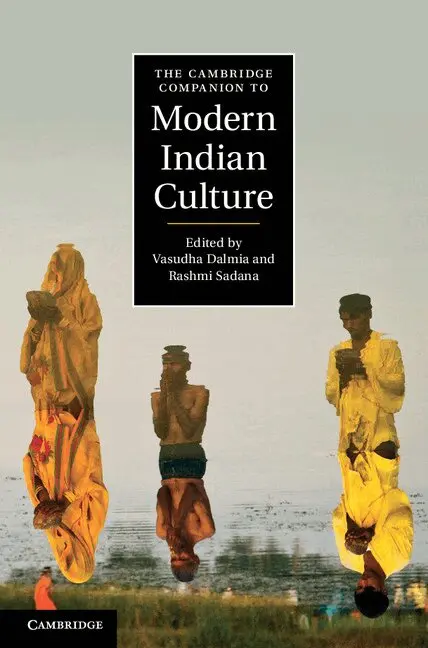
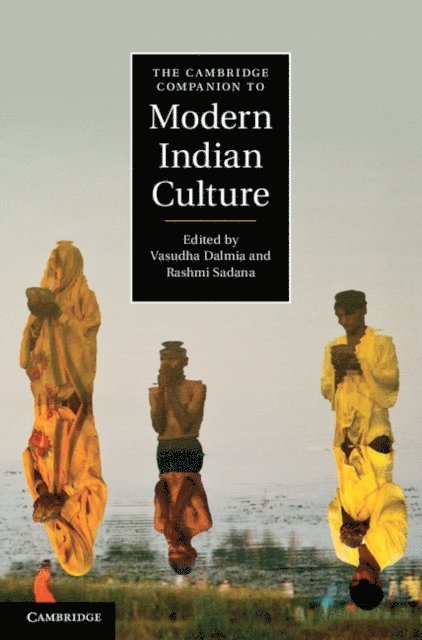
India is changing at a rapid pace as it continues to move from its colonial past to its globalised future. This Companion offers a framework for understanding that change, and how modern cultural forms have emerged out of very different histories and traditions. The book provides accounts of literature, theatre, film, modern and popular art, music, television and food; it also explores in detail social divisions, customs, communications and daily life. In a series of engaging, erudite and occasionally moving essays the contributors, drawn from a variety of disciplines, examine not merely what constitutes modern Indian culture, but just how wide-ranging are the cultures that persist in the regions of India. This volume will help the reader understand the continuities and fissures within Indian culture and some of the conflicts arising from them. Throughout, what comes to the fore is the extraordinary richness and diversity of modern Indian culture.
322 kr
Skickas inom 7-10 vardagar
India is changing at a rapid pace as it continues to move from its colonial past to its globalised future. This Companion offers a framework for understanding that change, and how modern cultural forms have emerged out of very different histories and traditions. The book provides accounts of literature, theatre, film, modern and popular art, music, television and food; it also explores in detail social divisions, customs, communications and daily life. In a series of engaging, erudite and occasionally moving essays the contributors, drawn from a variety of disciplines, examine not merely what constitutes modern Indian culture, but just how wide-ranging are the cultures that persist in the regions of India. This volume will help the reader understand the continuities and fissures within Indian culture and some of the conflicts arising from them. Throughout, what comes to the fore is the extraordinary richness and diversity of modern Indian culture.
1 057 kr
Tillfälligt slut
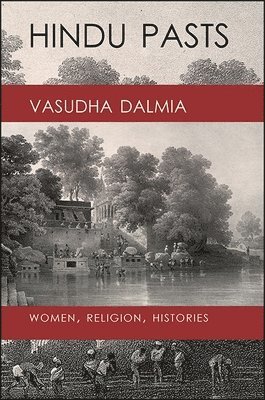
Challenges the monolithic view of Hinduism in the nineteenth century, and instead offers a vision of India that contains a rich multiplicity of Hinduisms, women's stories, and cultural histories.In her introduction to Hindu Pasts-which showcases her work as a scholar of social, literary, and religious history-Vasudha Dalmia outlines the central ideas which thread her writings: first, to understand in greater historical depth the relationship between body language, religion, and society in India, as well as the ever-changing role of its religious and social institutions; second, to recognize that the Hindu tradition, which colonials and nationalists tend to see as monolithic, is in fact a multiplicity of distinct and semi-autonomous strands.
594 kr
Skickas inom 3-6 vardagar
Challenges the monolithic view of Hinduism in the nineteenth century, and instead offers a vision of India that contains a rich multiplicity of Hinduisms, women's stories, and cultural histories.In her introduction to Hindu Pasts-which showcases her work as a scholar of social, literary, and religious history-Vasudha Dalmia outlines the central ideas which thread her writings: first, to understand in greater historical depth the relationship between body language, religion, and society in India, as well as the ever-changing role of its religious and social institutions; second, to recognize that the Hindu tradition, which colonials and nationalists tend to see as monolithic, is in fact a multiplicity of distinct and semi-autonomous strands.
981 kr
Tillfälligt slut
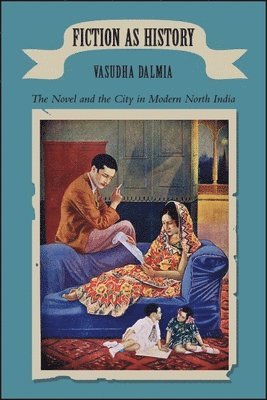
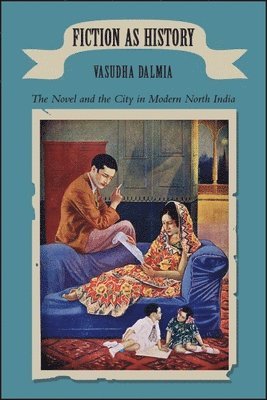
Explains the Hindi novel's role in anticipating and creating the story of middle-class modernity and modernization in North India.Vasudha Dalmia offers a panoramic view of the intellectual and cultural life of North India over a century, from the aftermath of the 1857 uprising to the end of the Nehruvian era. The North's historical cities, rooted in an Indo-Persianate culture, began changing more slowly than the Presidency towns founded by the British. Dalmia takes up eight canonical Hindi novels set in six of these cities-Agra, Allahabad, Banaras, Delhi, Lahore, and Lucknow-to trace a literary history of domestic and political cataclysms. Her exploration of the emerging Hindu middle classes, changing personal and professional ambitions, and new notions of married life provides a vivid sense of urban modernity. She argues that the radical social transformations associated with post-1857 urban restructuring, and the political flux resulting from social reform, Gandhian nationalism, communalism, Partition, and the Cold War shaped the realm of the intimate as much as the public sphere. Love and friendship, notions of privacy, attitudes to women's work, and relationships within households are among the book's major themes.
626 kr
Skickas inom 3-6 vardagar
Explains the Hindi novel's role in anticipating and creating the story of middle-class modernity and modernization in North India.Vasudha Dalmia offers a panoramic view of the intellectual and cultural life of North India over a century, from the aftermath of the 1857 uprising to the end of the Nehruvian era. The North's historical cities, rooted in an Indo-Persianate culture, began changing more slowly than the Presidency towns founded by the British. Dalmia takes up eight canonical Hindi novels set in six of these cities-Agra, Allahabad, Banaras, Delhi, Lahore, and Lucknow-to trace a literary history of domestic and political cataclysms. Her exploration of the emerging Hindu middle classes, changing personal and professional ambitions, and new notions of married life provides a vivid sense of urban modernity. She argues that the radical social transformations associated with post-1857 urban restructuring, and the political flux resulting from social reform, Gandhian nationalism, communalism, Partition, and the Cold War shaped the realm of the intimate as much as the public sphere. Love and friendship, notions of privacy, attitudes to women's work, and relationships within households are among the book's major themes.