Veljko Dubljevic - Böcker
Visar alla böcker från författaren Veljko Dubljevic. Handla med fri frakt och snabb leverans.
8 produkter
8 produkter
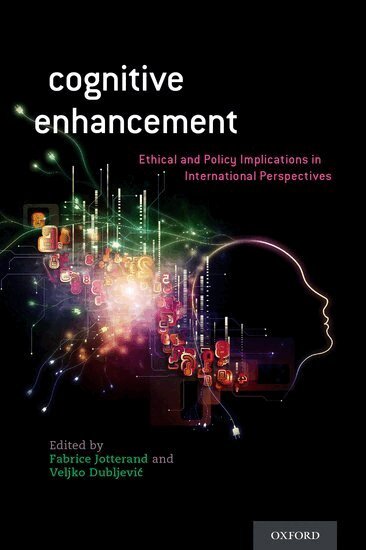
Cognitive Enhancement
Ethical and Policy Implications in International Perspectives
Inbunden, Engelska, 2016
1 217 kr
Skickas inom 5-8 vardagar
There is a growing literature in neuroethics dealing with cognitive neuro-enhancement for healthy adults. However, discussions on this topic tend to focus on abstract theoretical positions while concrete policy proposals and detailed models are scarce. Furthermore, discussions appear to rely solely on data from the US or UK, while international perspectives are mostly non-existent. This volume fills this gap and addresses issues on cognitive enhancement comprehensively in three important ways: 1) it examines the conceptual implications stemming from competing points of view about the nature and goals of enhancement; 2) it addresses the ethical, social, and legal implications of neuroenhancement from an international and global perspective including contributions from scholars in Africa, Asia, Australia, Europe, North America, and South America; and 3) it discusses and analyzes concrete legal issues and policy options tailored to specific contexts.
Del 19 - International Library of Ethics, Law and Technology
Neuroethics, Justice and Autonomy: Public Reason in the Cognitive Enhancement Debate
Inbunden, Engelska, 2019
959 kr
Skickas inom 10-15 vardagar
This book explicitly addresses policy options in a democratic society regarding cognitive enhancement drugs and devices. The author provides an argument on the much debated issue of fairness of cognitive enhancement practices and tackles the tricky issue of how to respect preferences of citizens opposing and those preferring enhancement.
1 381 kr
Skickas inom 10-15 vardagar
This book addresses current issues in the neuroscience and ethics of dementia care, including philosophical as well as ethical legal, and social issues (ELSIs), issues in clinical, institutional, and private care-giving, and international perspectives on dementia and care innovations.
959 kr
Skickas inom 10-15 vardagar
This book addresses current issues in the neuroscience and ethics of dementia care, including philosophical as well as ethical legal, and social issues (ELSIs), issues in clinical, institutional, and private care-giving, and international perspectives on dementia and care innovations.
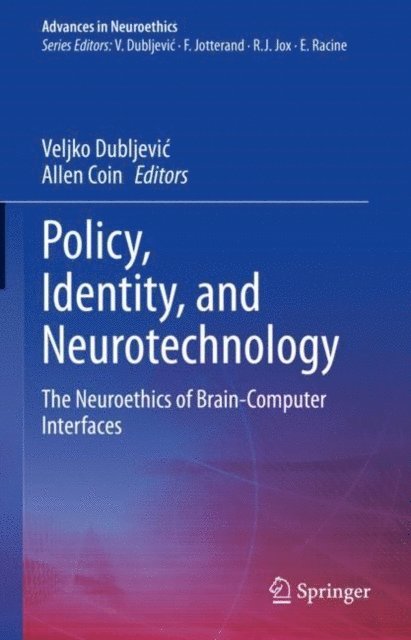
Policy, Identity, and Neurotechnology
The Neuroethics of Brain-Computer Interfaces
Inbunden, Engelska, 2023
1 578 kr
Skickas inom 10-15 vardagar
In this volume the authors explore the landscape of thought on the ethical and policy implications of Brain Computer Interface (BCI) technology.
653 kr
Skickas inom 5-8 vardagar
Policy, Identity, and Neurotechnology
The Neuroethics of Brain-Computer Interfaces
Häftad, Engelska, 2024
1 170 kr
Skickas inom 10-15 vardagar
In this volume the authors explore the landscape of thought on the ethical and policy implications of Brain Computer Interface (BCI) technology.
1 517 kr
Skickas inom 10-15 vardagar
As transcranial magnetic stimulation (TMS) continues to expand from a tool of neuroscience research into a growing array of clinical applications, it presents a number of open questions that both invite and complicate ethical evaluation. Empirically supported concerns remain regarding interactions between TMS and psychiatric medications or other interventions, the potential for adverse effects in stimulated brain regions, and whether modulation of brain activity—particularly via changes in oscillatory states—might affect aspects of personhood.This volume explores the ethical landscape surrounding TMS in both research and clinical settings. Prior neuroethics literature has largely focused on theoretical implications of neurostimulation technologies, including conceptual clarification (e.g., invasiveness) and normative questions regarding the alignment of these technologies with societal values. However, while some empirical work has captured perspectives from TMS patients, many key voices—such as those of family members, clinicians, and underrepresented communities—have remained absent from scholarly discussions.Spanning historical reflection, theoretical debate, empirical analysis, and clinical insight, this collection features contributions from scholars and practitioners working at the intersection of neuroethics, neuroscience, psychiatry, and biomedical engineering. Part I of the volume offers historical and theoretical reflections, including the origins and growth of TMS research, racial disparities in access and participation, caregiver perspectives, and emerging issues related to cognitive enhancement, non-clinical use, and applications in social neuroscience and creativity. Part II turns to new directions and ethical issues in clinical TMS research, addressing treatment subgrouping, adolescent and geriatric use, mood and substance use disorders, suicidality, and the evolving regulatory landscape.Together, these chapters provide an interdisciplinary examination of the ethical, clinical, and societal dimensions of TMS. Whether as an introduction to the neuroethics of brain stimulation or as a resource for neuroscientists, clinicians, engineers, and ethicists, this volume aims to foster greater understanding and dialogue around the responsible development and application of TMS.