• Fri frakt över 249 kr
  • •
  • Snabba leveranser
  • •
  • Billiga böcker
Kundservice

Du är på sajten för privatpersoner.

Företag, bibliotek eller offentlig verksamhet?

Du handlar på classic.bokus.com, där alla dina funktioner finns intakta.
Till classic.bokus.com
Bokus logotyp. Gå till startsidan.
  • Erbjudanden
  • Nyheter
  • Student
  • Topplistor
  • Barn & ungdom
  • Bokus Play
  • E-böcker
  • Pocketböcker
  • Spel & pussel

10% rabatt på allt med kod NYSTART10 →

Sidfot

Mina sidor

    Hjälp

    • Kundservice
    • Vanliga frågor och svar
    • Frakt och leverans
    • Retur vid ångerrätt
    • Reklamera vara
    • Betalning
    • Köpvillkor
    • Allmänna villkor
    • Information om webbplatsens tillgänglighet

    Om Bokus

    • Om oss
    • Pressrum
    • För studenter
    • För företag
    • För bibliotek och offentlig verksamhet
    • För leverantörer
    • Hållbarhet

    Populärt

    • Aktuella erbjudanden
    • Presentkort
    • Studentlitteratur
    • Nya böcker
    • Topplistor
    • Signerade böcker
    • Engelska böcker

    Inspiration

    • Boktips
    • BookTok
    • Populära bokserier
    • Barnbokskaraktärer
    • Populära författare
    Logotyp för Bokus
    Följ oss på Facebook (extern länk)Följ oss på Instagram (extern länk)Följ oss på YouTube (extern länk)Följ oss på TikTok (extern länk)
    bokus @ CookiesAnpassa cookiesIntegritetspolicyKöpvillkor
    Till Citymail hemsida (extern länk)Till Budbee hemsida (extern länk)Till Postnord hemsida (extern länk)Till Schenker hemsida (extern länk)Till Early Bird hemsida (extern länk)Till Walleys hemsida (extern länk)
    1. Medicin
    2. Andra medicinska specialiteter
    3. Psykiatri

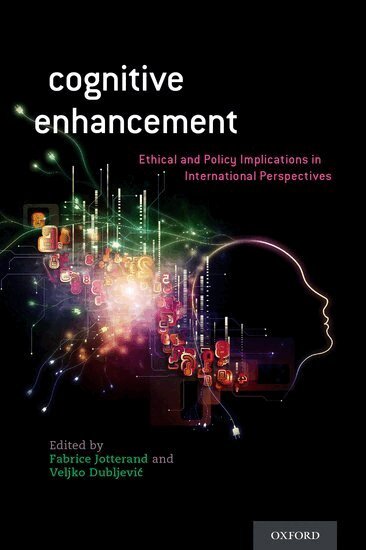
    Cognitive Enhancement

    Ethical and Policy Implications in International Perspectives

    AvFabrice Jotterand,Veljko Dubljevic

    Inbunden, Engelska, 2016

    1 879 kr

    Beställningsvara. Skickas inom 5-8 vardagar. Fri frakt över 249 kr.

    Beskrivning

    There is a growing literature in neuroethics dealing with cognitive neuro-enhancement for healthy adults. However, discussions on this topic tend to focus on abstract theoretical positions while concrete policy proposals and detailed models are scarce. Furthermore, discussions appear to rely solely on data from the US or UK, while international perspectives are mostly non-existent. This volume fills this gap and addresses issues on cognitive enhancement comprehensively in three important ways: 1) it examines the conceptual implications stemming from competing points of view about the nature and goals of enhancement; 2) it addresses the ethical, social, and legal implications of neuroenhancement from an international and global perspective including contributions from scholars in Africa, Asia, Australia, Europe, North America, and South America; and 3) it discusses and analyzes concrete legal issues and policy options tailored to specific contexts.

    Produktinformation

    • Utgivningsdatum:2016-07-07
    • Mått:157 x 239 x 33 mm
    • Vikt:658 g
    • Format:Inbunden
    • Språk:Engelska
    • Antal sidor:376
    • Förlag:OUP USA
    • ISBN:9780199396818

    Utforska kategorier

    • Psykiatri inom Medicin
    • Biovetenskap inom Naturvetenskap och teknik
    • Filosofiska discipliner inom Filosofi och religion

    Mer om författaren

    Fabrice Jotterand, PhD, MA, is Associate Professor & Director of the Graduate Program in Bioethics at the Center for Bioethics and Medical Humanities, Medical College of Wisconsin, Milwaukee, WI, USA and Senior Researcher at the Institute for Biomedical Ethics, University of Basel, Switzerland. His scholarship and research interests focus on issues including moral enhancement, neurotechnologies and human identity, the use of neurotechnologies in psychiatry, medical professionalism, and moral and political philosophy.Veljko Dubljevic, PhD, DPhil, is a Banting Postdoctoral Fellow in the Neuroethics research unit at IRCM and McGill University in Montreal, and an associate member of the International Centre for Ethics in the Sciences and Humanities, University of Tübingen. He obtained a PhD in political science (University of Belgrade), and after studying bioethics, philosophy and neuroscience (University of Tübingen), he obtained a doctorate in philosophy (University of Stuttgart). His primary research focuses on ethics of neuroscience and technology, and neuroscience of ethics. He has over 30 publications in moral, legal and political philosophy and in neuroethics.

    Innehållsförteckning

    • Chapter 1: IntroductionBy Fabrice Jotterand and Veljko Dubljevic PART 1: CONCEPTUAL IMPLICATIONS Chapter 2: Towards a more banal neuroethicsBy Neil Levy Chapter 3: Why less praise for enhanced performance?Moving beyond responsibility-shifting, authenticity, and cheating, towards a nature-of-activities approachBy Filippo Santoni de Sio, Nadira Faber, Julian Savulescu, and Nicole A. Vincent Chapter 4: Moral enhancement, Neuroessentialism, and Moral ContentBy Fabrice Jotterand Chapter 5: Cognitive/neuroenhancement through an Ability Studies Lens By Gregor Wolbring and Lucy Diep Chapter 6: Defining Contexts of Cognitive (Performance) Enhancements: Neuroethical Considerations, and Implications for PolicyBy John R. Shook and James Giordano PART 2: INTERNATIONAL PERSPECTIVES Chapter 7: Cognitive enhancement: A South African PerspectiveBy Dan J. Stein Chapter 8: Cognitive enhancement: A Confucian perspective from TaiwanBy Kevin Chien-Chang Wu Chapter 9: Enhancing Cognition in the 'Brain Nation': An Israeli PerspectiveBy Hillel Braude Chapter 10: Cognitive Enhancement Down-Under: An Australian PerspectiveBy Charmaine Jensen, Brad Partridge, Cynthia Forlini, Wayne Hall and Jayne Lucke Chapter 11: Cognitive Enhancement in Germany: Prevalence, Attitudes, Moral Acceptability, Terms, Legal Status, and the Ethics Debateby Sebastian Sattler Chapter 12: Cognitive enhancement in the Netherlands: Practices, public opinion and ethicsBy Maartje Schermer Chapter 13: Cognitive enhancement in Canada: An overview of conceptual and contextual aspects, policy discussions, and academic researchBy Eric Racine Chapter 14: Cognitive enhancement and the leveling of the playing-field: The case of Latin AmericaBy Daniel Loewe PART 3: LAW AND POLICY OPTIONS Chapter 15: Regulating Cognitive Enhancement Technologies: Policy Options and ProblemsBy Robert H. Blank Chapter 16: Enhancing with Modafinil: Benefiting or harming society?By Veljko Dubljevic Chapter 17: Towards an Ethical Framework for Regulating the Market for Cognitive Enhancement DevicesBy Hannah Maslen Chapter 18: A constitutional Right to Use Thought-Enhancing TechnologyBy Mark Jonathan Blitz Chapter 19: Drugs, Enhancements & Rights: Ten Points for Lawmakers to ConsiderBy Jan-Christoph Bublitz Chapter 20: Cognitive Enhancement in the Courtroom: What can we learn about the ethics of pharmacological cognitive enhancement by looking at judicial cognition?By Jennifer A. Chandler and Adam M. Dodek Epilogue: A Feast of Thinking on the Naturalization of Enhancement NeurotechnologyBy Judy Illes