Véronique Zardet - Böcker
Visar alla böcker från författaren Véronique Zardet. Handla med fri frakt och snabb leverans.
14 produkter
14 produkter
634 kr
Skickas inom 10-15 vardagar
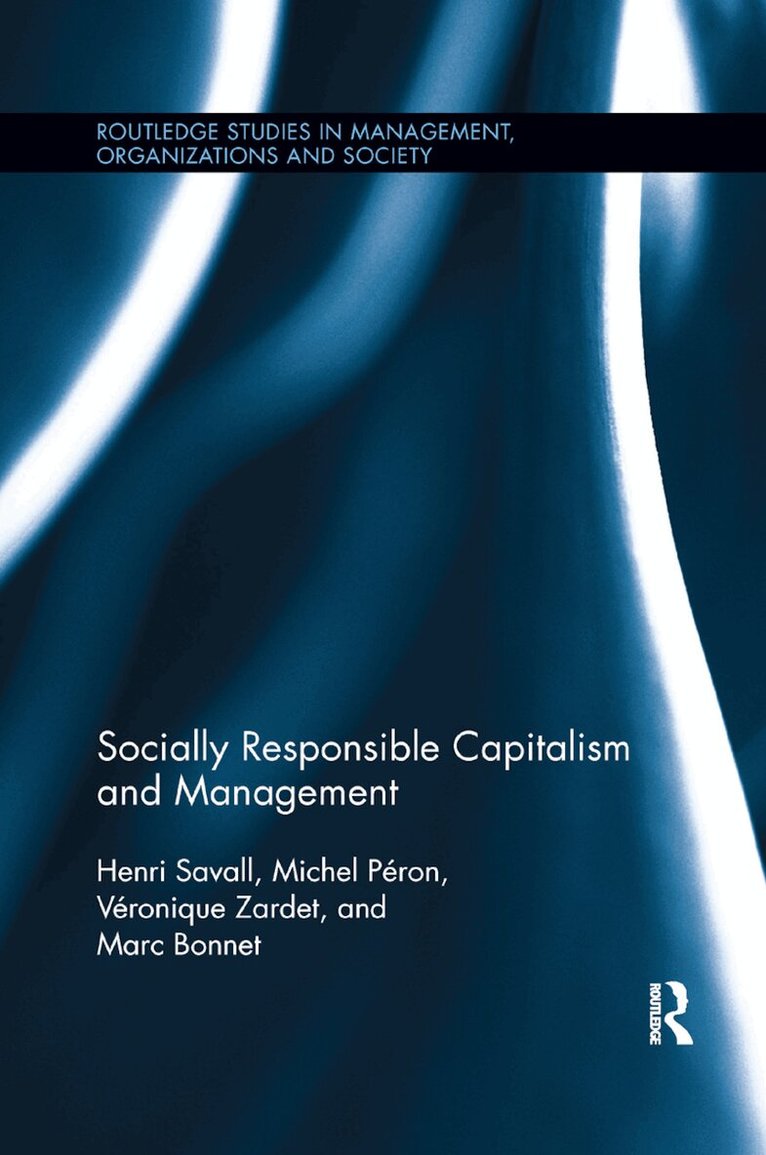
In the current crisis context, capitalism is questioned by its detractors or defended by its partisans. The concept of Socially Responsible Capitalism (SRC) is based on the entrepreneurial spirit. It encourages exemplary behaviors, such as effective, efficient and ethical behaviors, by stimulating social responsibility of companies and organizations. This is combined with the development of economic empowerment and legitimate efforts of each citizen-actor.Socially Responsible Capitalism and Management does not confuse financial capitalism and entrepreneurial capitalism. The first one improves the creation of artificial value which leads to financial bubbles that periodically burst and bankrupt the real economy. Quite the reverse, entrepreneurial capitalism creates both solid economic value and employment. This is justified by the production of goods and services that meet legitimate needs of consumer-citizens.This book shows that by putting Human Beings at the heart of action enables producing sustainable economic value, and anthropological values which are inseparable. The innovative aspect of this book lies in its analysis starting from the macro-economic level to the individual one, by presenting a detailed analysis of the micro-economic level of companies within its managerial issues. Socially Responsible Capitalism and Management is dedicated to present the different aspects of SRC for the Society, companies and organizations and also individual actors, as citizens, producers and consumers.
2 375 kr
Skickas inom 10-15 vardagar
In the current crisis context, capitalism is questioned by its detractors or defended by its partisans. The concept of Socially Responsible Capitalism (SRC) is based on the entrepreneurial spirit. It encourages exemplary behaviors, such as effective, efficient and ethical behaviors, by stimulating social responsibility of companies and organizations. This is combined with the development of economic empowerment and legitimate efforts of each citizen-actor.Socially Responsible Capitalism and Management does not confuse financial capitalism and entrepreneurial capitalism. The first one improves the creation of artificial value which leads to financial bubbles that periodically burst and bankrupt the real economy. Quite the reverse, entrepreneurial capitalism creates both solid economic value and employment. This is justified by the production of goods and services that meet legitimate needs of consumer-citizens.This book shows that by putting Human Beings at the heart of action enables producing sustainable economic value, and anthropological values which are inseparable. The innovative aspect of this book lies in its analysis starting from the macro-economic level to the individual one, by presenting a detailed analysis of the micro-economic level of companies within its managerial issues. Socially Responsible Capitalism and Management is dedicated to present the different aspects of SRC for the Society, companies and organizations and also individual actors, as citizens, producers and consumers.
683 kr
Skickas inom 7-10 vardagar
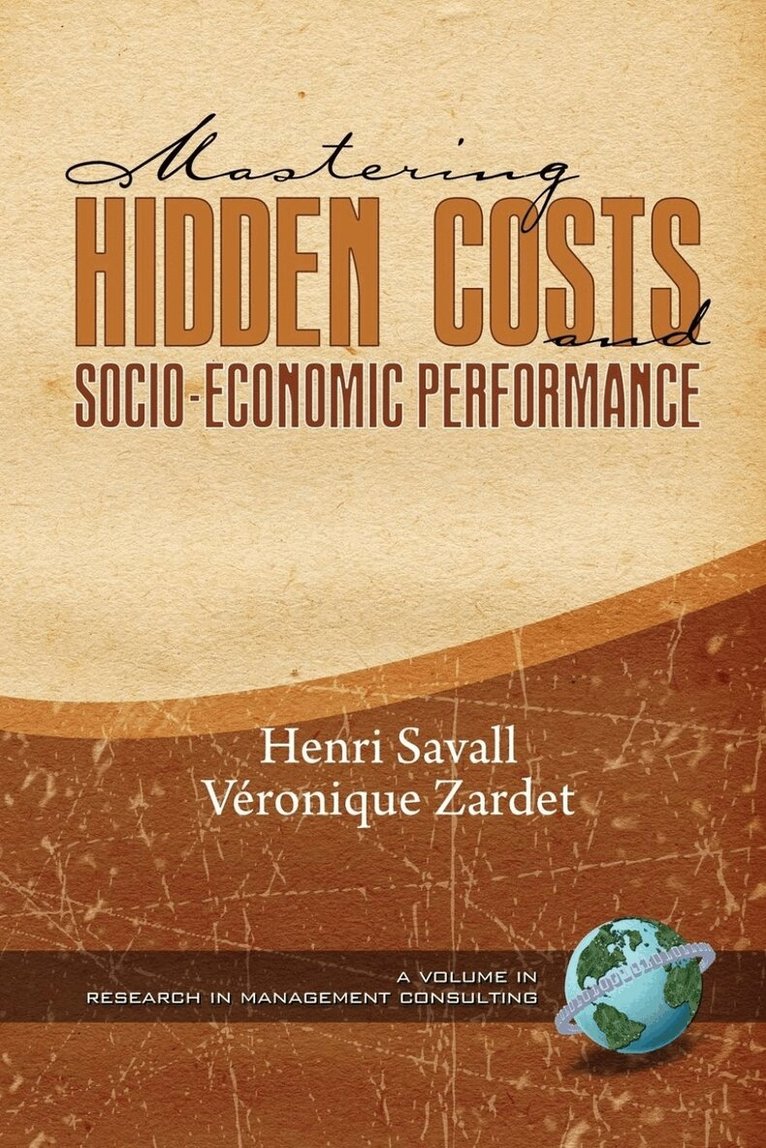
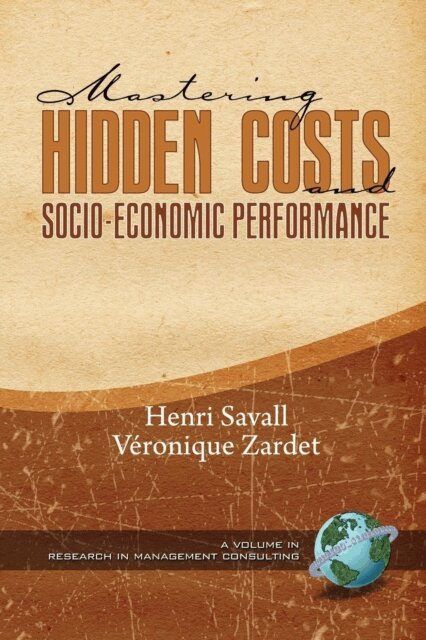
This volume is a first for the Research in Management Consulting series. As research and theory building in management consulting have grown rapidly during the past several years, the series is dedicated to capturing the latest thinking from applied scholars and scholarly practitioners in this field. Complexity and uncertainty in today’s fast-paced business world have prompted a growing number of organizations—profit and not-for-profit alike—to seek guidance in their concomitant change efforts. External and internal consultants and change agents have become increasingly visible in most, if not all, organizational change initiatives. Individual consultants and consulting firms have become increasingly involved in not only providing organizational clients with advice and new ideas but in implementing those ideas and solutions as well. While the series will continue to seek out and explore emerging trends, innovative perspectives, and new insights into the world of management consulting, it is also useful to look back— especially in different countries and cultures—to recapture and revisit past frameworks, intervention models and contributions. This volume is a translation and modest updating of Henri Savall and Véronique Zardet’s original work on mastering “hidden costs,” initially published in French in 1987.
870 kr
Skickas
This volume is a first for the Research in Management Consulting series. As research and theory building in management consulting have grown rapidly during the past several years, the series is dedicated to capturing the latest thinking from applied scholars and scholarly practitioners in this field. Complexity and uncertainty in today’s fast-paced business world have prompted a growing number of organizations—profit and not-for-profit alike—to seek guidance in their concomitant change efforts. External and internal consultants and change agents have become increasingly visible in most, if not all, organizational change initiatives. Individual consultants and consulting firms have become increasingly involved in not only providing organizational clients with advice and new ideas but in implementing those ideas and solutions as well. While the series will continue to seek out and explore emerging trends, innovative perspectives, and new insights into the world of management consulting, it is also useful to look back— especially in different countries and cultures—to recapture and revisit past frameworks, intervention models and contributions. This volume is a translation and modest updating of Henri Savall and Véronique Zardet’s original work on mastering “hidden costs,” initially published in French in 1987.
683 kr
Skickas inom 7-10 vardagar
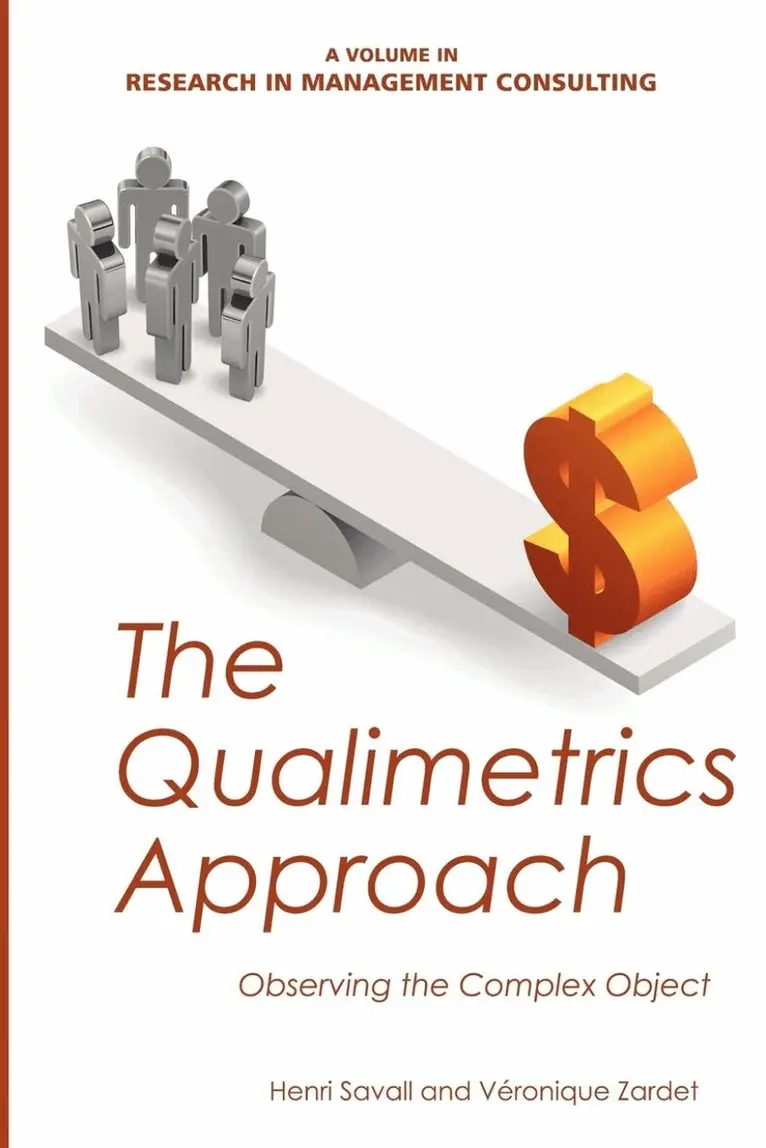
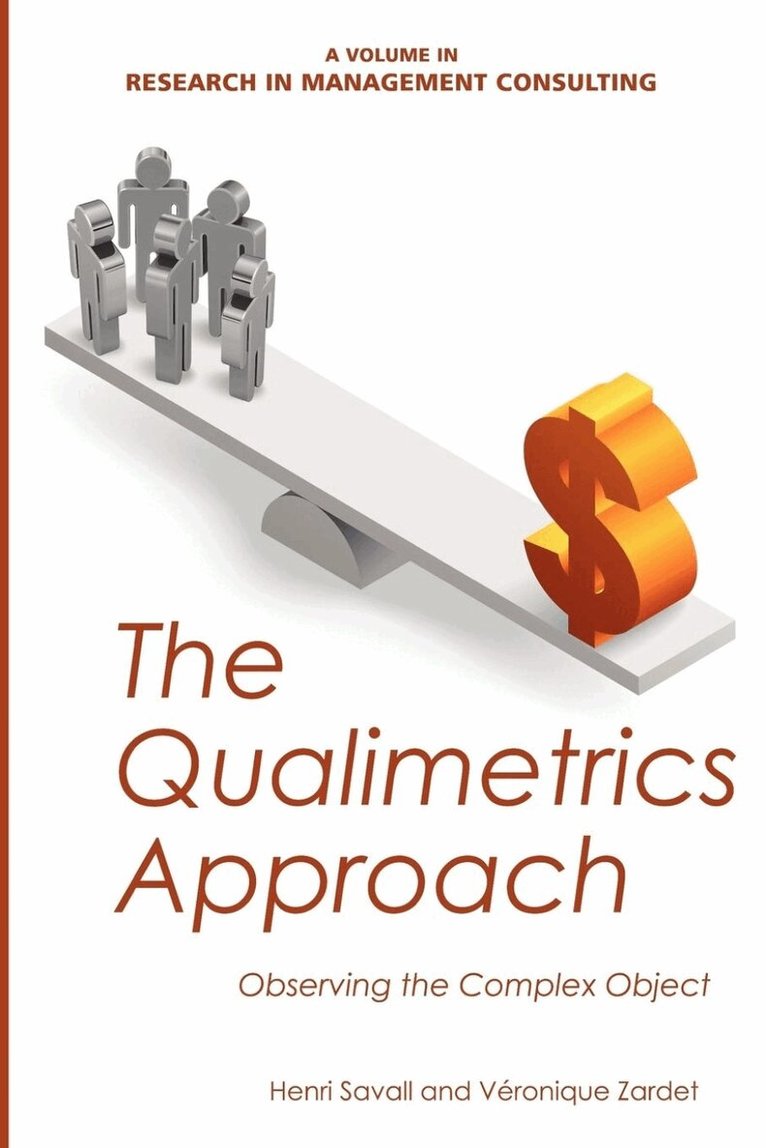
The impetus for this work emerged from Savall’s belief that there is a doubleloop interaction between social and economic factors in organizations, between behaviors and structures, and between the quality of life in organizations and their economic performance. When managers underestimate this dynamic interaction, the resulting tension ultimately manifests in lowered performance and increased costs, what he refers to as the “hidden costs” of organizational life. Only by delving into the depths of these organizational dynamics can we hope to fully understand – and create the basis for improving – organizational performance.The Qualimetrics Approach presents a different and challenging way of thinking about analyzing organizations, one that draws together quantitative information, financial analysis and qualitative insights into organizational dynamics. As Savall and Zardet argue, to gain a true understanding of what is happening in organizations, intervener-researchers must focus on all three perspectives, as ignoring any one of them will lead to incomplete understandings. Their approach underscores the importance of using qualitative data to validate quantitative depictions (“the numbers”) of organizational performance in understanding the construction of financial statements. The strength of Savall and Zardet’s approach is that it pushes us to go deeper, to fully understand the narratives underlying the numbers and the social construction of our financial assessments.
1 156 kr
Skickas inom 7-10 vardagar
The impetus for this work emerged from Savall’s belief that there is a doubleloop interaction between social and economic factors in organizations, between behaviors and structures, and between the quality of life in organizations and their economic performance. When managers underestimate this dynamic interaction, the resulting tension ultimately manifests in lowered performance and increased costs, what he refers to as the “hidden costs” of organizational life. Only by delving into the depths of these organizational dynamics can we hope to fully understand – and create the basis for improving – organizational performance.The Qualimetrics Approach presents a different and challenging way of thinking about analyzing organizations, one that draws together quantitative information, financial analysis and qualitative insights into organizational dynamics. As Savall and Zardet argue, to gain a true understanding of what is happening in organizations, intervener-researchers must focus on all three perspectives, as ignoring any one of them will lead to incomplete understandings. Their approach underscores the importance of using qualitative data to validate quantitative depictions (“the numbers”) of organizational performance in understanding the construction of financial statements. The strength of Savall and Zardet’s approach is that it pushes us to go deeper, to fully understand the narratives underlying the numbers and the social construction of our financial assessments.
548 kr
Skickas inom 7-10 vardagar
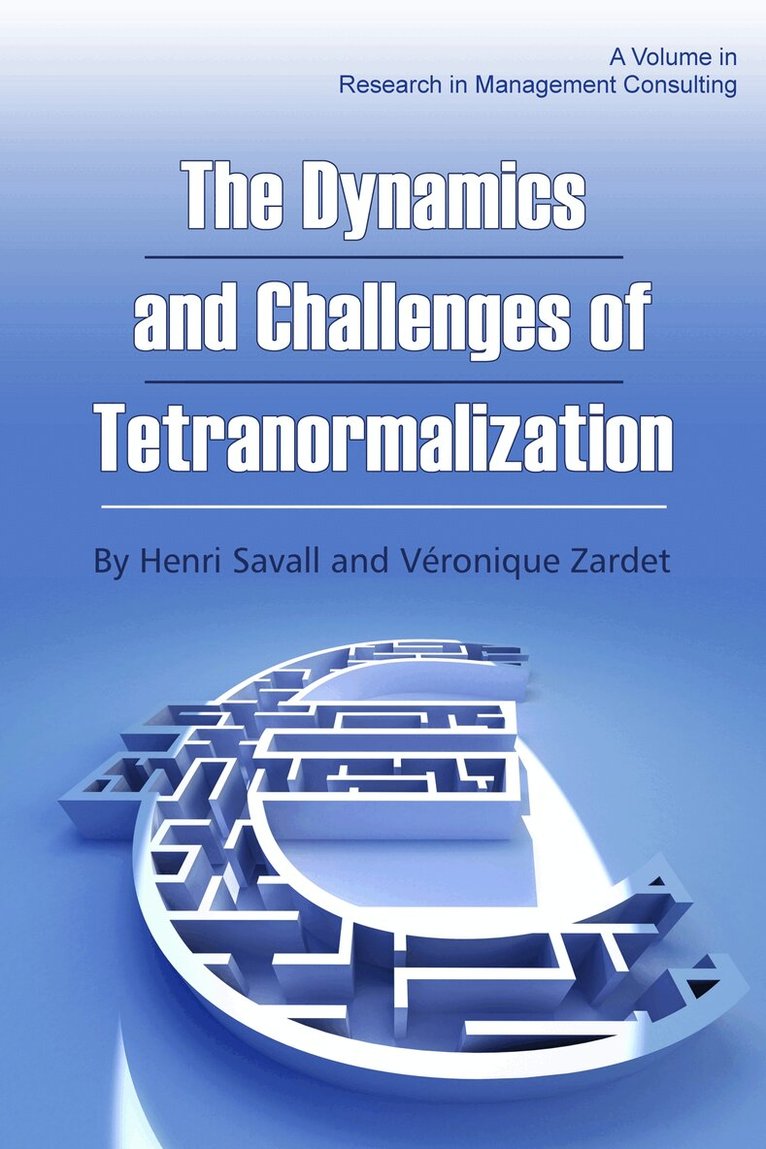
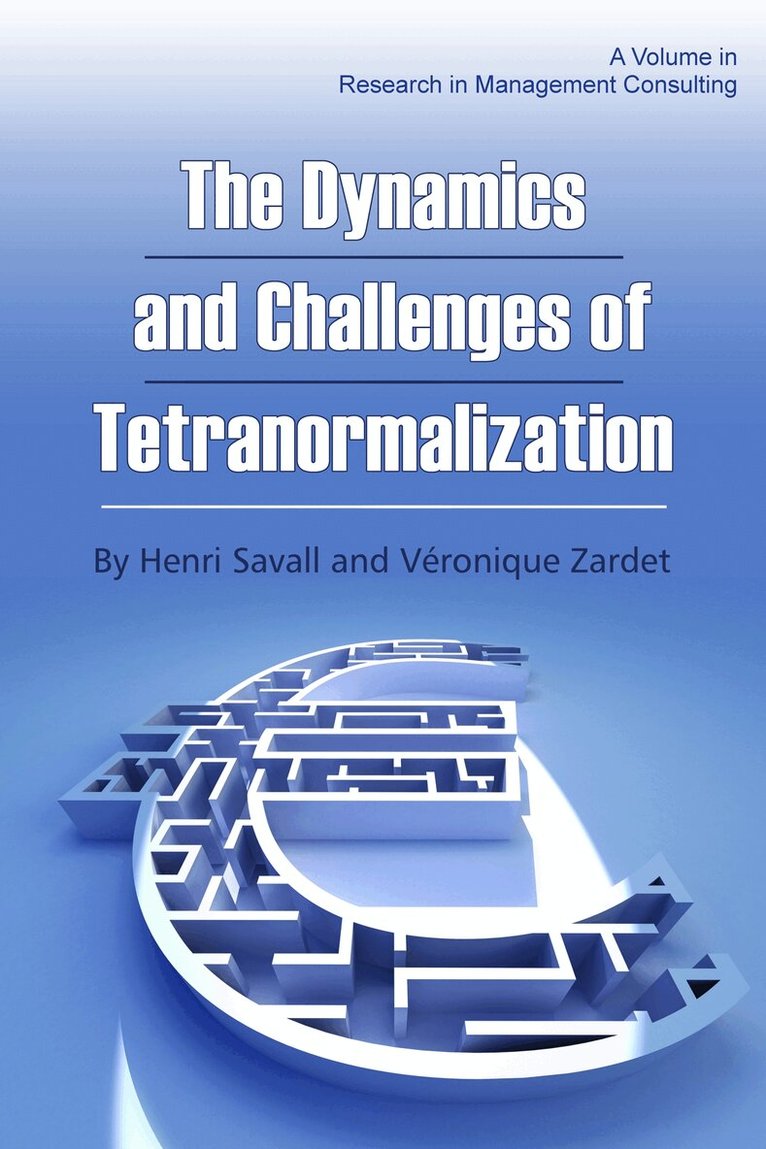
This volume continues the collaboration between the RMC book series and the French management research think tank ISEOR (Socio-Economic Institute for Firms and Organizations). Those familiar with Henri Savall’s and his colleague Véronique Zardet’s earlier work on the socio-economic theory of organizations will recognize their assessments of organizational dysfunctions and hidden costs – but in a different context. In their current work, the emphasis is on the tensions created by the wider environment – the idea of tetranormalization – and how those tensions shape and influence organizational life. Drawing on a wide range of examples from the news media and popular press, Savall and Zardet paint a disturbing picture of the underlying dynamics and challenges posed by a literal avalanche of standards and norms – which are often ambiguous and conflicting – that literally encompasses all that we do.Their analytic framework is composed of four “poles” – two social dimensions and two economic dimensions – that capture social norms and quality, safety and environment standards (the social dimension), and trade-related norms and accounting and financial standards (the economic dimension). Throughout the volume, Savall and Zardet’s analysis captures the myriad ways in which these dimensions interact, shaping the “rules of the game” that dictate how organizations compete and collaborate. Differentiating the “rules of the game” from “playing with” those rules, they delve into the subtleties and nuances that underlie these “poles,” providing further insight into how these forces are manipulated through lobbying and the seemingly 24/7 cycle of exposing, publicizing and rule-making surrounding social and economic as well as scientific and technological controversies.As Savall and Zardet argue, we are in the midst of a profound upheaval that will play havoc with our economic and social lives for some time to come. If we are going to exert influence on that reality, the challenges that we face moving forward must be conceptualized, constructed and implemented today, for, as they argue, “the road to durable prosperity will be a long haul.” Yet, moving beyond these challenges per se, they underscore that we are also presented with an exceptional opportunity – the very real opportunity to create a sustainable commitment to responsible and responsive organizational performance, one that can be fuelled and financed by our ability to translate the hidden costs that exist in all our organizations into productive, value-added activities and true wealth creation. Their analysis presents an intriguing challenge to traditional notions of corporate social responsibility, delving into the idea of “durably acceptable” responsibility, ways to facilitate greater stakeholder engagement, and how we can capture ongoing and sustainable improvement in organizational performance.
1 009 kr
Skickas inom 7-10 vardagar
This volume continues the collaboration between the RMC book series and the French management research think tank ISEOR (Socio-Economic Institute for Firms and Organizations). Those familiar with Henri Savall’s and his colleague Véronique Zardet’s earlier work on the socio-economic theory of organizations will recognize their assessments of organizational dysfunctions and hidden costs – but in a different context. In their current work, the emphasis is on the tensions created by the wider environment – the idea of tetranormalization – and how those tensions shape and influence organizational life. Drawing on a wide range of examples from the news media and popular press, Savall and Zardet paint a disturbing picture of the underlying dynamics and challenges posed by a literal avalanche of standards and norms – which are often ambiguous and conflicting – that literally encompasses all that we do.Their analytic framework is composed of four “poles” – two social dimensions and two economic dimensions – that capture social norms and quality, safety and environment standards (the social dimension), and trade-related norms and accounting and financial standards (the economic dimension). Throughout the volume, Savall and Zardet’s analysis captures the myriad ways in which these dimensions interact, shaping the “rules of the game” that dictate how organizations compete and collaborate. Differentiating the “rules of the game” from “playing with” those rules, they delve into the subtleties and nuances that underlie these “poles,” providing further insight into how these forces are manipulated through lobbying and the seemingly 24/7 cycle of exposing, publicizing and rule-making surrounding social and economic as well as scientific and technological controversies.As Savall and Zardet argue, we are in the midst of a profound upheaval that will play havoc with our economic and social lives for some time to come. If we are going to exert influence on that reality, the challenges that we face moving forward must be conceptualized, constructed and implemented today, for, as they argue, “the road to durable prosperity will be a long haul.” Yet, moving beyond these challenges per se, they underscore that we are also presented with an exceptional opportunity – the very real opportunity to create a sustainable commitment to responsible and responsive organizational performance, one that can be fuelled and financed by our ability to translate the hidden costs that exist in all our organizations into productive, value-added activities and true wealth creation. Their analysis presents an intriguing challenge to traditional notions of corporate social responsibility, delving into the idea of “durably acceptable” responsibility, ways to facilitate greater stakeholder engagement, and how we can capture ongoing and sustainable improvement in organizational performance.
Strategic Engineering of the Reed
Reflections on Socio-Economic Strategy and Implementation
Häftad, Engelska, 2017
683 kr
Skickas inom 7-10 vardagar
This volume is part of an ongoing partnership between the Research in Management Consulting book series and the Socio-Economic Institute for Firms and Organizations (ISEOR), located in Ecully, France, on the outskirts of Lyon. The socio-economic approach to management (SEAM) provides a pathway to creating more engaged, more responsible and responsive, and more productive organizations. In many respects this volume reflects a culmination of ISEOR’s work, drawing together Henri Savall and Veronique Zardet’s insights and framing them in the context of strategy creation and, just as if not more important, strategy implementation.This volume casts SEAM in the context of strategy development and implementation. Reflecting on the changing nature of work and the workplace, the potential power of—and need to develop and build on—human potential has never been greater. Savall and Zardet have always thought that the Western concept of human resources was misguided, that people are not a resource to use up but rather a source of potential to invest in, develop, and nurture. People bring their potential to the organizations in which they work—and it is their choice as to whether they will apply it in their jobs. Thus, a core managerial challenge is to create an environment in which that potential can be maximized.SEAM-based strategy builds on this premise, developing an approach to economic and social performance, providing direction as to how managers can create and implement strategies that enhance organizational effectiveness and efficiency. As Savall and Zardet argue, strategic vision does not have to be limited by constraints in the external environment—companies “are not compelled to enter in a ‘strategic’ tunnel” that mimics the competition and the market. Instead, companies can experience breakthroughs, turning constraints into opportunities by unleashing their internal energy, power, and cohesion, working and succeeding as a team. The SEAM approach to strategy is grounded in innovation and creation far more than imitation—and, as convincingly illustrated in the volume, that creativity can be self-financed through the value-added created by the elimination of organizational dysfunctions and the hidden costs they generate. The volume provides an insightful guide for enhancing economic and social performance, with a useful mixture of specific tools and techniques—grounded in a conceptual view of organizational life—interspersed throughout that illustrate how it can be done.
Strategic Engineering of the Reed
Reflections on Socio-Economic Strategy and Implementation
Inbunden, Engelska, 2017
1 156 kr
Skickas inom 7-10 vardagar
This volume is part of an ongoing partnership between the Research in Management Consulting book series and the Socio-Economic Institute for Firms and Organizations (ISEOR), located in Ecully, France, on the outskirts of Lyon. The socio-economic approach to management (SEAM) provides a pathway to creating more engaged, more responsible and responsive, and more productive organizations. In many respects this volume reflects a culmination of ISEOR’s work, drawing together Henri Savall and Veronique Zardet’s insights and framing them in the context of strategy creation and, just as if not more important, strategy implementation.This volume casts SEAM in the context of strategy development and implementation. Reflecting on the changing nature of work and the workplace, the potential power of—and need to develop and build on—human potential has never been greater. Savall and Zardet have always thought that the Western concept of human resources was misguided, that people are not a resource to use up but rather a source of potential to invest in, develop, and nurture. People bring their potential to the organizations in which they work—and it is their choice as to whether they will apply it in their jobs. Thus, a core managerial challenge is to create an environment in which that potential can be maximized.SEAM-based strategy builds on this premise, developing an approach to economic and social performance, providing direction as to how managers can create and implement strategies that enhance organizational effectiveness and efficiency. As Savall and Zardet argue, strategic vision does not have to be limited by constraints in the external environment—companies “are not compelled to enter in a ‘strategic’ tunnel” that mimics the competition and the market. Instead, companies can experience breakthroughs, turning constraints into opportunities by unleashing their internal energy, power, and cohesion, working and succeeding as a team. The SEAM approach to strategy is grounded in innovation and creation far more than imitation—and, as convincingly illustrated in the volume, that creativity can be self-financed through the value-added created by the elimination of organizational dysfunctions and the hidden costs they generate. The volume provides an insightful guide for enhancing economic and social performance, with a useful mixture of specific tools and techniques—grounded in a conceptual view of organizational life—interspersed throughout that illustrate how it can be done.
Socio-Economic Approach to Management
Science-Based Consulting for Sustainability
Inbunden, Engelska, 2024
483 kr
Skickas inom 10-15 vardagar
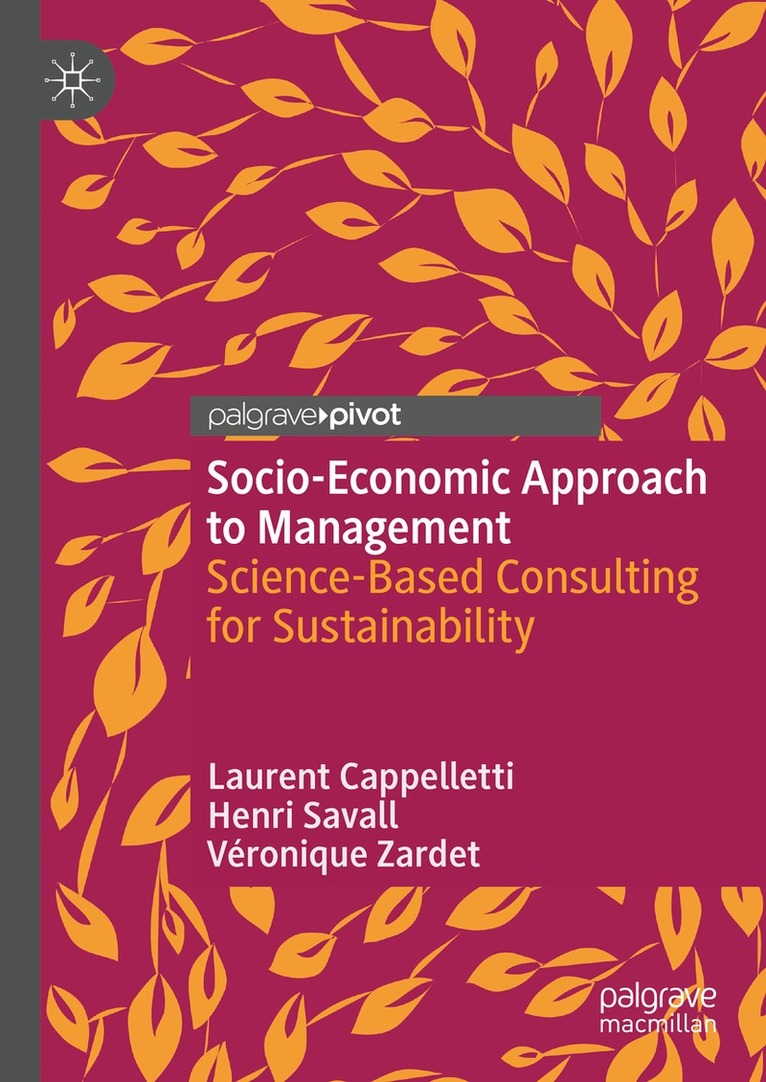
The Socio-Economic Approach to Management (SEAM) is a management methodology for developing the sustainable performance of organizations.
Socio-Economic Approach to Management
Science-Based Consulting for Sustainability
Häftad, Engelska, 2025
497 kr
Skickas inom 10-15 vardagar
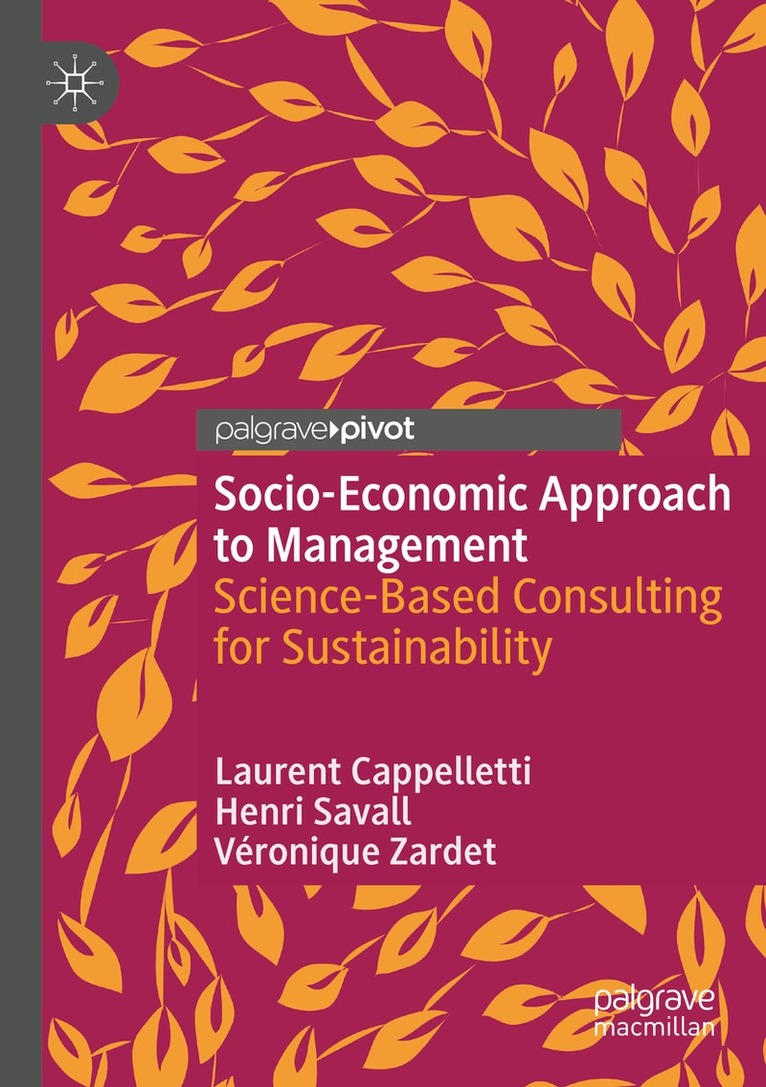
The Socio-Economic Approach to Management (SEAM) is a management methodology for developing the sustainable performance of organizations.
1 403 kr
Skickas
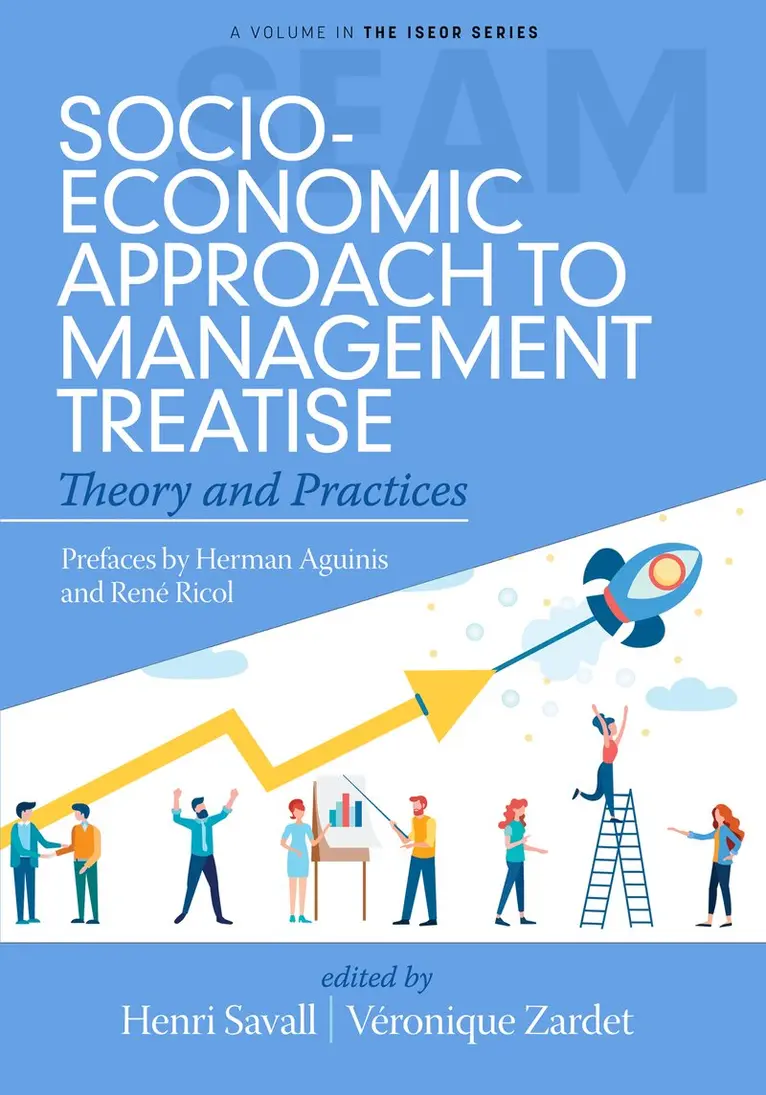
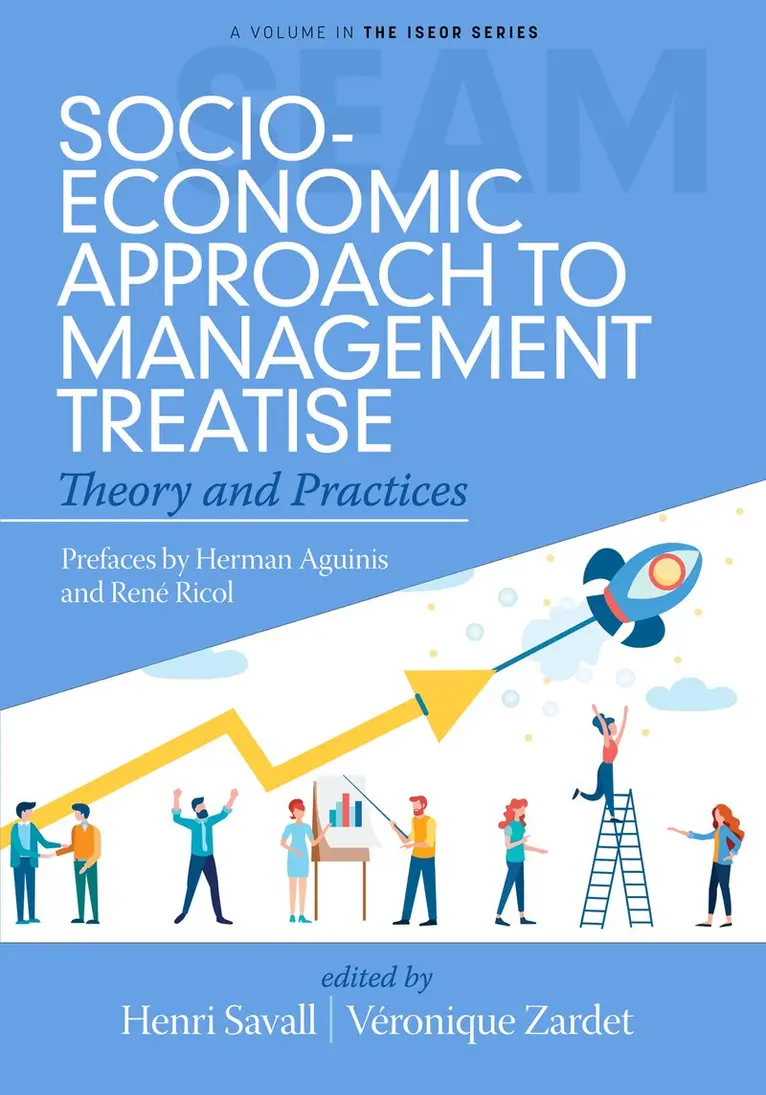
The result of half a century of research and experimentation in economics and management, this Treatise is intended for management practitioners. Socio-economic management (SEAM) makes the demands of humanism in professional life and sustainable economic prosperity compatible. It is illustrated with numerous cases from 2,150 companies and organizations from a wide variety of sectors and presents observed and measured results. Most of these chapters are written jointly by managers or executives of companies and organizations, and scholars or consultants involved in the pilot actions.This book is the work of 193 authors, from 16 countries and 4 continents, practitioners or academics in management sciences and management. This reflects the diversity of national and sectoral contexts of SEAM applications. Some chapters situate this concept in relation to the major currents of current thought. Each chapter is preceded by abstracts in French, English and Spanish. The prefaces, signed by Herman Aguinis and Rene Ricol, show the scope of socio-economic theory and management beyond the borders of the company. The book illustrates the international influence (48 countries) of the innovative and robust methods created and developed by the ISEOR team.Socio-economic theory constitutes a "breakthrough innovation", both in terms of its conceptual contribution and the practical methods and tools of its applications. This holistic approach touches on the different functions of the company and its multiple problems. It provides a structured change management method, focused on stimulating Human Potential and on self-financing the development of the company or organization, through the periodic recycling of hidden costs.
2 258 kr
Skickas inom 5-8 vardagar
The result of half a century of research and experimentation in economics and management, this Treatise is intended for management practitioners. Socio-economic management (SEAM) makes the demands of humanism in professional life and sustainable economic prosperity compatible. It is illustrated with numerous cases from 2,150 companies and organizations from a wide variety of sectors and presents observed and measured results. Most of these chapters are written jointly by managers or executives of companies and organizations, and scholars or consultants involved in the pilot actions.This book is the work of 193 authors, from 16 countries and 4 continents, practitioners or academics in management sciences and management. This reflects the diversity of national and sectoral contexts of SEAM applications. Some chapters situate this concept in relation to the major currents of current thought. Each chapter is preceded by abstracts in French, English and Spanish. The prefaces, signed by Herman Aguinis and Rene Ricol, show the scope of socio-economic theory and management beyond the borders of the company. The book illustrates the international influence (48 countries) of the innovative and robust methods created and developed by the ISEOR team.Socio-economic theory constitutes a "breakthrough innovation", both in terms of its conceptual contribution and the practical methods and tools of its applications. This holistic approach touches on the different functions of the company and its multiple problems. It provides a structured change management method, focused on stimulating Human Potential and on self-financing the development of the company or organization, through the periodic recycling of hidden costs.