Versteegh Kees Versteegh – författare
Visar alla böcker från författaren . Handla med fri frakt och snabb leverans.
6 produkter
6 produkter
E-bok
PDF, Engelska, 19951 646 kr
Läs direkt efter köp
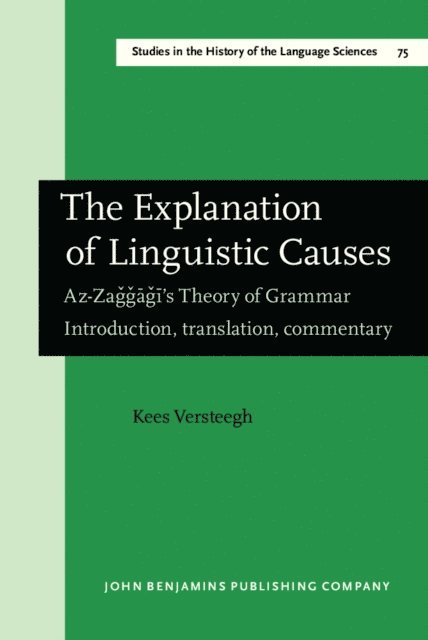
The ultimate aim of every linguistic tradition is to go beyond the purely descriptive level and seek an explanation for linguistic phenomena. Traditions differ, however, with regard to the class of linguistic phenomena they wish to explain and the framework in which they define their explanation. In this volume the English translation is presented of the treatise on linguistic explanation by the 10th-century Arab grammarian az-Zağğāğī, one of the most original thinkers of the Arabic tradition. He worked in a period in which the influence of Greek logic and philosophy made itself felt in almost all Arabo-Islamic disciplines. Some of the problems he deals with are familiar to modern linguists (e.g., morphological segmentation, categorization of parts of speech), others are comprehensible only within the frame of reference of Arabic linguistics (e.g., the declension of the verb). An extensive commentary on the text analyzes the problems discussed, both within the Arabic tradition and from the point of view of modern linguistics. Apart from the index of names and terms, there is an index of subjects which enables the general reader to consult text and comments on specific key notions.
E-bok
PDF, Engelska, 19921 776 kr
Läs direkt efter köp
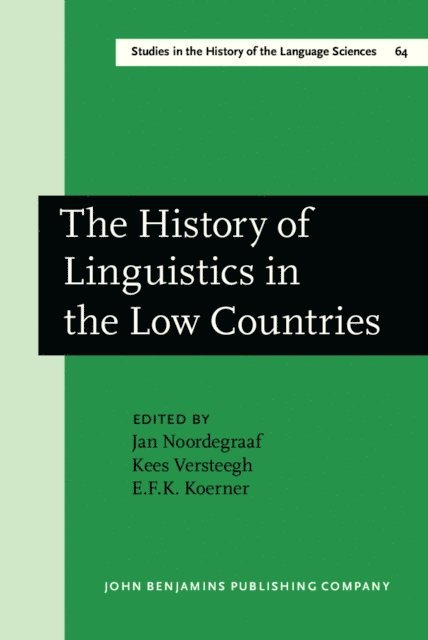
The importance of the Low Countries as a centre for the study of foreign languages is well-known. The mutual relationship between the Dutch grammatical tradition and the Western European context has, however, been largely neglected. In this collection of papers on the history of linguistics in the Low Countries the editors have made an effort to present the Dutch tradition in connection with that of the neighbouring countries. Three articles by Claes, Dibbets and Klifman deal with the earliest stages of the development of a grammar for the Dutch vernacular. Several important European figures worked in the Low Countries; their contribution to linguistics is discussed in articles on Vossius (Rademaker), Spinoza (Klijnsmit), and one of the most original phoneticians of European linguistics, Montanus (Hulsker). Vivian Salmon''s article is a survey on the relations between English and Dutch linguistics in the field of foreign language teaching. In the 19th century Dutch linguistics had a special relationship with German general and historical linguistics; four articles deal with this period (Jongeneelen, van Driel, le Loux-Schuringa, Noordegraaf). Finally, there are three articles by Kaldewij, Hagen and van Els/Knops on the development of three branches of linguistics in the 20th century: structuralism, dialectology and applied linguistics. This volume should be of interest for all specialists in the history of linguistics in Europe, who are interested in the interdependence of the various traditions.
E-bok
PDF, Engelska, 19901 588 kr
Läs direkt efter köp
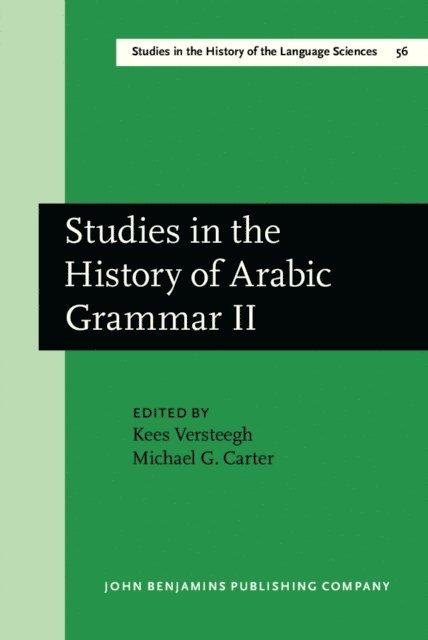
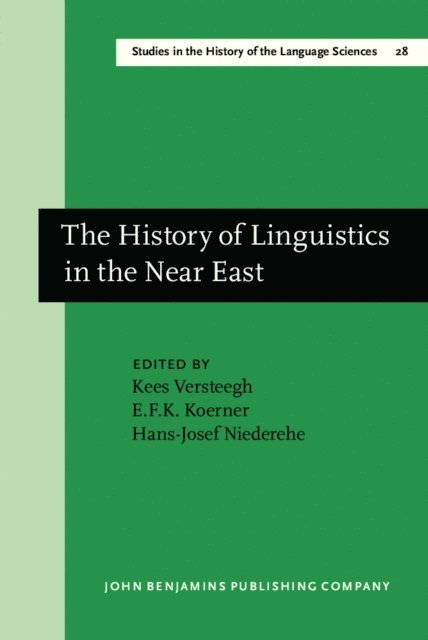
This volume presents papers given at the second Symposium on the History of Arabic Grammar (Nijmegen, 1987). The subject has many aspects and invites many different approaches, which might roughly be categorized into three main groupings, viz. treatments of individual grammarians, examinations of particular grammatical topics, and analysis of medieval concepts from the perspective of contemporary linguistics.
E-bok
PDF, Engelska, 19841 434 kr
Läs direkt efter köp
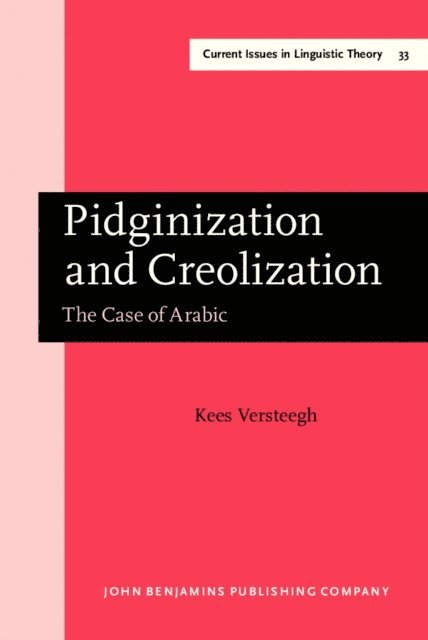
This book is concerned with the notions of “pidginization” and “creolization” and the role of these processes of language learning in the history of the Arabic language. It is argued that when a new type of Arabic emerged after the Islamic conquests in the 7th century AD, the language went through these processes, as can be concluded from the sociolinguistic context of the period. The radical changes in the language that led to the development of the modern dialects are then seen as the result of pidginization and creolization. Data from the dialects are compared with phenomena in pidginized/creolized languages, and suggestions are given for the application of this framework to the history of other languages.
E-bok
PDF, Engelska, 19821 499 kr
Läs direkt efter köp
This collection of papers deals with aspects of the history of Arabic and Hebrew linguistics. These papers appeared simultaneously in Historiographia Linguistica 8:2/3 (1981).
E-bok
PDF, Engelska, 19971 646 kr
Läs direkt efter köp
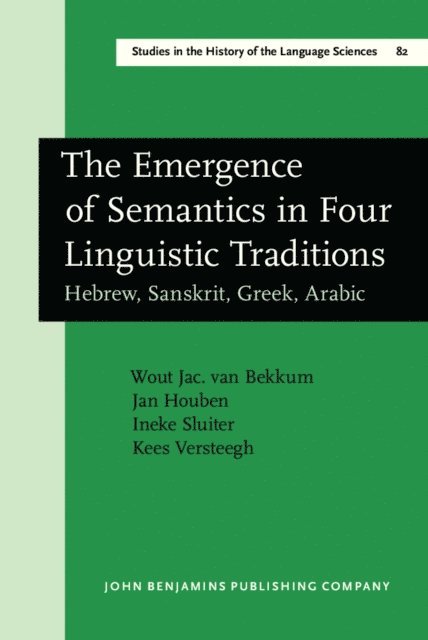
The aim of this study is a comparative analysis of the role of semantics in the linguistic theory of four grammatical traditions, Sanskrit, Hebrew, Greek, Arabic. If one compares the organization of linguistic theory in various grammatical traditions, it soon turns out that there are marked differences in the way they define the place of ‘semantics’ within the theory. In some traditions, semantics is formally excluded from linguistic theory, and linguists do not express any opinion as to the relationship between syntactic and semantic analysis. In other traditions, the whole basis of linguistic theory is semantically orientated, and syntactic features are always analysed as correlates of a semantic structure. However, even in those traditions, in which semantics falls explicitly or implicitly outside the scope of linguistics, there may be factors forcing linguists to occupy themselves with the semantic dimension of language. One important factor seems to be the presence of a corpus of revealed/sacred texts: the necessity to formulate hermeneutic rules for the interpretation of this corpus brings semantics in through the back door.