Vimala Ramachandran – författare
2 043 kr
Skickas inom 10-15 vardagar
2 222 kr
Skickas inom 10-15 vardagar
757 kr
Läs direkt efter köp
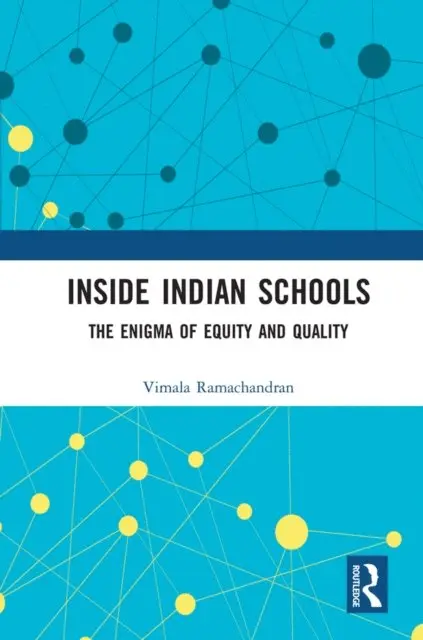
After 70 years after independence, the tragic reality of Indian schools is that who we are, where we live, how much we earn and our gender influences the kind of education we will get. In this collection of essays the author explores the contours of a school system that is facing a crisis of legitimacy. While India aspires to march towards a knowledge driven society and economy, millions of young people are left behind. Those who can afford march out of government schools only to realize that the private schools are no better. The schools they attend leaves them with little knowledge or skill, a very low self-esteem and a bleak future. This book argues that the struggle for equality in education, is ultimately a struggle for quality – both being two sides of the same coin.
Please note: Taylor & Francis does not sell or distribute the Hardback in India, Pakistan, Nepal, Bhutan, Bangladesh and Sri Lanka.
757 kr
Läs direkt efter köp
After 70 years after independence, the tragic reality of Indian schools is that who we are, where we live, how much we earn and our gender influences the kind of education we will get. In this collection of essays the author explores the contours of a school system that is facing a crisis of legitimacy. While India aspires to march towards a knowledge driven society and economy, millions of young people are left behind. Those who can afford march out of government schools only to realize that the private schools are no better. The schools they attend leaves them with little knowledge or skill, a very low self-esteem and a bleak future. This book argues that the struggle for equality in education, is ultimately a struggle for quality – both being two sides of the same coin.
Please note: Taylor & Francis does not sell or distribute the Hardback in India, Pakistan, Nepal, Bhutan, Bangladesh and Sri Lanka.
844 kr
Läs direkt efter köp
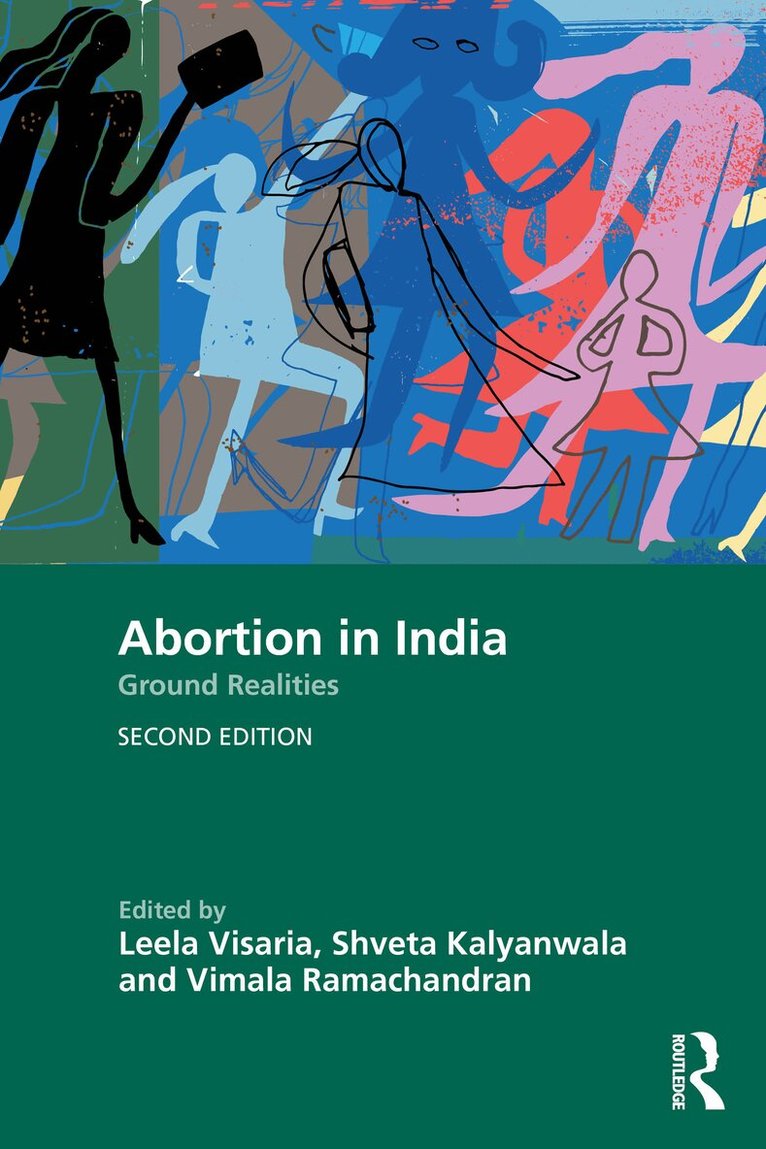
India was a pioneer in legalizing induced abortion, or Medical Termination of Pregnancy (MTP) in 1971. Yet, after three decades, morbidity and mortality due to unsafe abortion remain a serious problem. There is little public debate on the issue despite several national campaigns on safe motherhood. Instead, discussion on abortion has mainly centred around declining sex ratio, sex-selective abortion, and the proliferation of abortion clinics in urban areas. Adding to the problem is that abortion continues to be a sensitive, private matter, often with ethical/moral/religious connotations that sets it apart from other reproductive health-seeking behaviour.
This book fills a gap in our understanding of the ground realities with respect to induced abortion in India to create an evidence-based body of knowledge. Using both quantitative and qualitative research methods, the case studies show why and under what circumstances women seek abortion and the quality of services available to them. They also explore inter-generational differences in attitudes and practices, the perceptions and selection of providers, female-selective abortion, and informal abortion practitioners. Among other issues, the contributors show that strong preference for sons, availability of modern techniques for diagnostic tests, widespread acceptance of the small family norm, and heavy reliance on female sterilisation as the primary method of contraception lead women to abort unwanted pregnancies.
A book that goes beyond the smokescreen of data and regulations to unravel the human story behind elective abortion, it will be of interest to those studying health, public policy, and gender, apart from the general reader.
874 kr
Läs direkt efter köp
India was a pioneer in legalizing induced abortion, or Medical Termination of Pregnancy (MTP) in 1971. Yet, after three decades, morbidity and mortality due to unsafe abortion remain a serious problem. There is little public debate on the issue despite several national campaigns on safe motherhood. Instead, discussion on abortion has mainly centred around declining sex ratio, sex-selective abortion, and the proliferation of abortion clinics in urban areas. Adding to the problem is that abortion continues to be a sensitive, private matter, often with ethical/moral/religious connotations that sets it apart from other reproductive health-seeking behaviour.
This book fills a gap in our understanding of the ground realities with respect to induced abortion in India to create an evidence-based body of knowledge. Using both quantitative and qualitative research methods, the case studies show why and under what circumstances women seek abortion and the quality of services available to them. They also explore inter-generational differences in attitudes and practices, the perceptions and selection of providers, female-selective abortion, and informal abortion practitioners. Among other issues, the contributors show that strong preference for sons, availability of modern techniques for diagnostic tests, widespread acceptance of the small family norm, and heavy reliance on female sterilisation as the primary method of contraception lead women to abort unwanted pregnancies.
A book that goes beyond the smokescreen of data and regulations to unravel the human story behind elective abortion, it will be of interest to those studying health, public policy, and gender, apart from the general reader.
621 kr
Skickas inom 10-15 vardagar
762 kr
Läs direkt efter köp
762 kr
Läs direkt efter köp
2 494 kr
Skickas inom 10-15 vardagar
643 kr
Skickas inom 10-15 vardagar
878 kr
Läs direkt efter köp
878 kr
Läs direkt efter köp
737 kr
Skickas inom 10-15 vardagar
774 kr
Skickas inom 10-15 vardagar
2 122 kr
Skickas inom 10-15 vardagar
439 kr
Skickas inom 10-15 vardagar