Vincent Guyonnet - Böcker
Visar alla böcker från författaren Vincent Guyonnet. Handla med fri frakt och snabb leverans.
3 produkter
3 produkter
3 185 kr
Skickas inom 10-15 vardagar
Eggs are one of the most popular foods worldwide due to their great taste and versatility, economical value and high nutritional content. The egg plays an important role in the human diet, both for the nutritional value of its many components (e.g., proteins, vitamins, minerals, choline, specific long chain fatty acids) as well for its wide range of functional characteristics, including foaming, gelling and emulsifying properties. The egg sector is a vibrant field with many new developments in terms of production, processing and commercialization as well as research. Since the beginning of the 21st century, the global production of eggs has grown by 69.5%, farm production systems have evolved to improve the welfare of laying hens, many eggshell and egg products have been developed to address the changing demands of consumers and our knowledge of the composition of the egg has been boosted by the latest gene-based technologies. Information on the science and technology of egg and egg processing is essential to governments, academia and industry.The Handbook of Egg Science and Technology aims to be the first book providing a complete source of information about egg science and technology, covering topics such as world egg production, marketing of eggs, chemistry of egg components, functional properties of egg components, egg processing, egg product development, eggshell quality, grading, egg microbiology, egg pasteurization, egg nutrition and bioactive components, egg biotechnology and sustainability of egg production.FeaturesIncludes the most current and comprehensive scientific and technical information about egg science and technologyPresents an ideal guide for professionals in related food industries, egg business consultants, regulatory agencies and research groupsAnswers the need for a comprehensive textbook for upper-level undergraduate and graduate courses in food science, animal science and poultry departmentsA global panel of experts in the field of egg science was gathered with the aim to provide the most updated information and development on many topics likely to interest readers ranging from academia and food science students to managers working in the food production and egg processing sectors. This handbook is an excellent resource for the food and poultry industry, R&D sectors, as well as experts in the field of food and nutrition.
1 085 kr
Skickas inom 10-15 vardagar
Eggs are one of the most popular foods worldwide due to their great taste and versatility, economical value and high nutritional content. The egg plays an important role in the human diet, both for the nutritional value of its many components (e.g., proteins, vitamins, minerals, choline, specific long chain fatty acids) as well for its wide range of functional characteristics, including foaming, gelling and emulsifying properties. The egg sector is a vibrant field with many new developments in terms of production, processing and commercialization as well as research. Since the beginning of the 21st century, the global production of eggs has grown by 69.5%, farm production systems have evolved to improve the welfare of laying hens, many eggshell and egg products have been developed to address the changing demands of consumers and our knowledge of the composition of the egg has been boosted by the latest gene-based technologies. Information on the science and technology of egg and egg processing is essential to governments, academia and industry.The Handbook of Egg Science and Technology aims to be the first book providing a complete source of information about egg science and technology, covering topics such as world egg production, marketing of eggs, chemistry of egg components, functional properties of egg components, egg processing, egg product development, eggshell quality, grading, egg microbiology, egg pasteurization, egg nutrition and bioactive components, egg biotechnology and sustainability of egg production.FeaturesIncludes the most current and comprehensive scientific and technical information about egg science and technologyPresents an ideal guide for professionals in related food industries, egg business consultants, regulatory agencies and research groupsAnswers the need for a comprehensive textbook for upper-level undergraduate and graduate courses in food science, animal science and poultry departmentsA global panel of experts in the field of egg science was gathered with the aim to provide the most updated information and development on many topics likely to interest readers ranging from academia and food science students to managers working in the food production and egg processing sectors. This handbook is an excellent resource for the food and poultry industry, R&D sectors, as well as experts in the field of food and nutrition.
Del 123 - Burleigh Dodds Science: Instant Insights
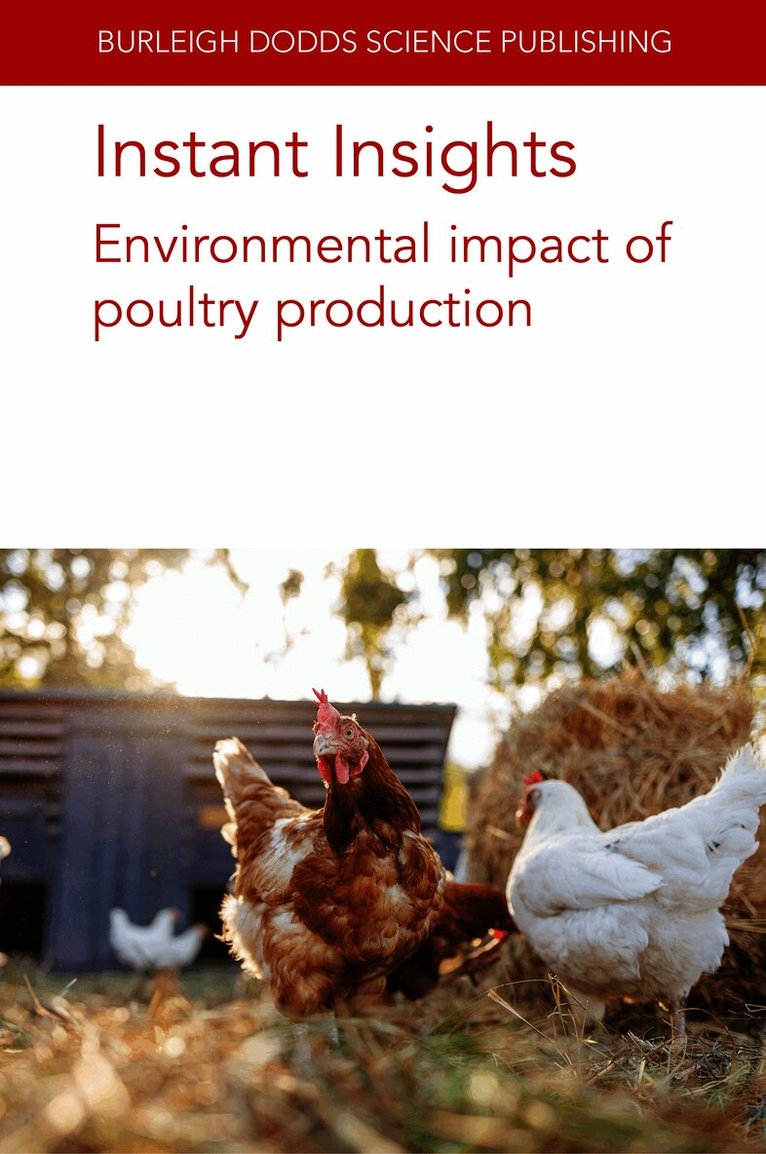
Instant Insights: Environmental Impact of Poultry Production
Häftad, Engelska, 2026
677 kr
Skickas inom 5-8 vardagar
This book features five peer-reviewed reviews on the environmental impact of poultry production.The first chapter briefly introduces life cycle assessment (LCA) methodology and addresses the particular effects of egg production on four key impact categories: climate change, land use change, acidifying and eutrophying emissions and water footprint.The second chapter reviews the key role of LCA in identifying the sources of environmental impacts in poultry meat production, as well as potential mitigation strategies.The third chapter discusses key emissions resulting from layer production systems, including greenhouse gases, ammonia, particulate matter, odours and volatile organic compounds. It also considers practical solutions for emissions mitigation, from diet and genetics, to manure and litter management.The fourth chapter reviews the major types of waste generated in egg production facilities and discusses the various methods and technologies for treating and managing these waste streams, such as the use of aerobic treatments.The final chapter addresses current poultry processing practices, the consequent production of byproducts, as well as future opportunities to enhance the value of these byproducts as sources of high-value biological compounds and tissues.