Vinzenz Brinkmann - Böcker
Visar alla böcker från författaren Vinzenz Brinkmann. Handla med fri frakt och snabb leverans.
3 produkter
3 produkter
836 kr
Skickas inom 3-6 vardagar
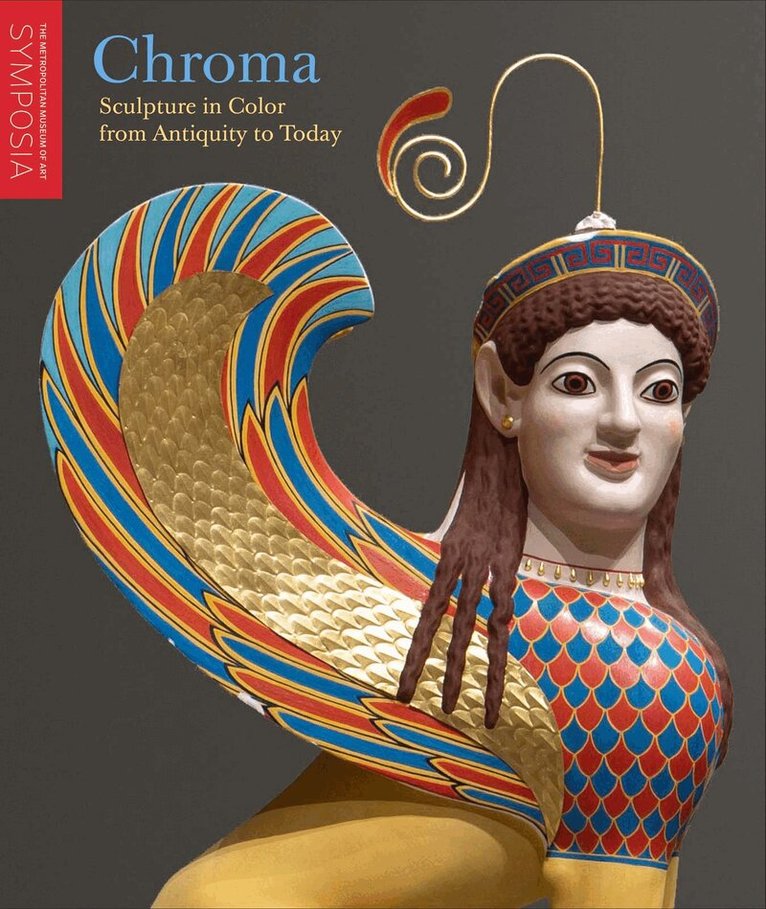
New discoveries of surviving color on sculpture spanning two millennia and across the globe, from ancient Greece to Tenochtitlán to Renaissance Europe Many ancient and early modern works that are viewed in monochrome today were once painted in vibrant colors. Lost to time until recently, the pigments and other surface treatments that originally adorned these objects offer a deeper appreciation of the cultures from which they originate. This handsome volume features new research by more than thirty international experts in polychromy, including art historians, conservators, scientists, and photographers. Identified through advanced technologies, scientific analyses, and in-depth research, their discoveries of surviving traces of color span the globe and vary in material, including an Archaic Greek marble sphinx, an ancient Phoenician cloisonné furniture plaque, Mexica (Aztec) lime-stone sculptures, and medieval and Renaissance European marbles and bronzes. This wide-ranging publication explores how these works further our understanding of ancient ideas around skin color, race, and gender; summarizes recent advances in the field; and considers polychromy’s controversial rediscovery and modern reception— highlighting the role of reconstructions such as 3D-printed replicas and virtual animations in contemporary museum practice as well as the resurgence of polychromy techniques in postmodern and contemporary European architecture. Published by The Metropolitan Museum of Art/Distributed by Yale University Press
472 kr
Skickas inom 3-6 vardagar
The ancient cultures of East Asia, the Near and Middle East and the Mediterranean were characterised by spectacular scientific findings and advances, which are mirrored and enhanced in their mythology. Hesitantly in the late Gothic period, but more insistently during the Italian Renaissance, this knowledge gradually permeated Europe, although initially meeting with resistance from the Christian Church. The book accompanying the exhibition deals with the latest research on science and technology in myth and art from antiquity to the golden age of Arab-Islamic culture. Light is shed on the early precise records of astronomical events, as well as the technology of automata and kinetic sculpture. The latest findings relating e.g. to the famous Greek Antikythera mechanism, a form of analogue computer, or the sophisticated revolving ceilings and floors of the banquet halls in the Roman Emperor Nero’s palace illustrate the significance of sculpture’s automatisation in reference to the natural sciences in Islamic-Arabic culture. Magnificent works of art reflecting ancient myths, models of animated sculptures, impressive scientific apparatus and automata from the Mediterranean and Islamic-Arab cultural spheres International authors reflect on current research into the history of science in conjunction with art technology Exhibition: Liebieghaus Skulpturensammlung, Frankfurt/M., 08.03.2023 to 21.01.2024 Look inside
552 kr
Skickas inom 5-8 vardagar
The ancient cultures of East Asia, the Near and Middle East and the Mediterranean were characterised by spectacular scientific findings and advances, which are mirrored and enhanced in their mythology. Hesitantly in the late Gothic period, but more insistently during the Italian Renaissance, this knowledge gradually permeated Europe, although initially meeting with resistance from the Christian Church. The book accompanying the exhibition deals with the latest research on science and technology in myth and art from antiquity to the golden age of Arab-Islamic culture. Light is shed on the early precise records of astronomical events, as well as the technology of automata and kinetic sculpture. The latest findings relating e.g. to the famous Greek Antikythera mechanism, a form of analogue computer, or the sophisticated revolving ceilings and floors of the banquet halls in the Roman Emperor Nero’s palace illustrate the significance of sculpture’s automatisation in reference to the natural sciences in Islamic-Arabic culture. Magnificent works of art reflecting ancient myths, models of animated sculptures, impressive scientific apparatus and automata from the Mediterranean and Islamic-Arab cultural spheres International authors reflect on current research into the history of science in conjunction with art technology Exhibition: Liebieghaus Skulpturensammlung, Frankfurt/M., 08.03.2023 to 21.01.2024 Look inside