
Virendra Pal Singh – författare
Visar alla böcker från författaren . Handla med fri frakt och snabb leverans.
5 produkter
5 produkter
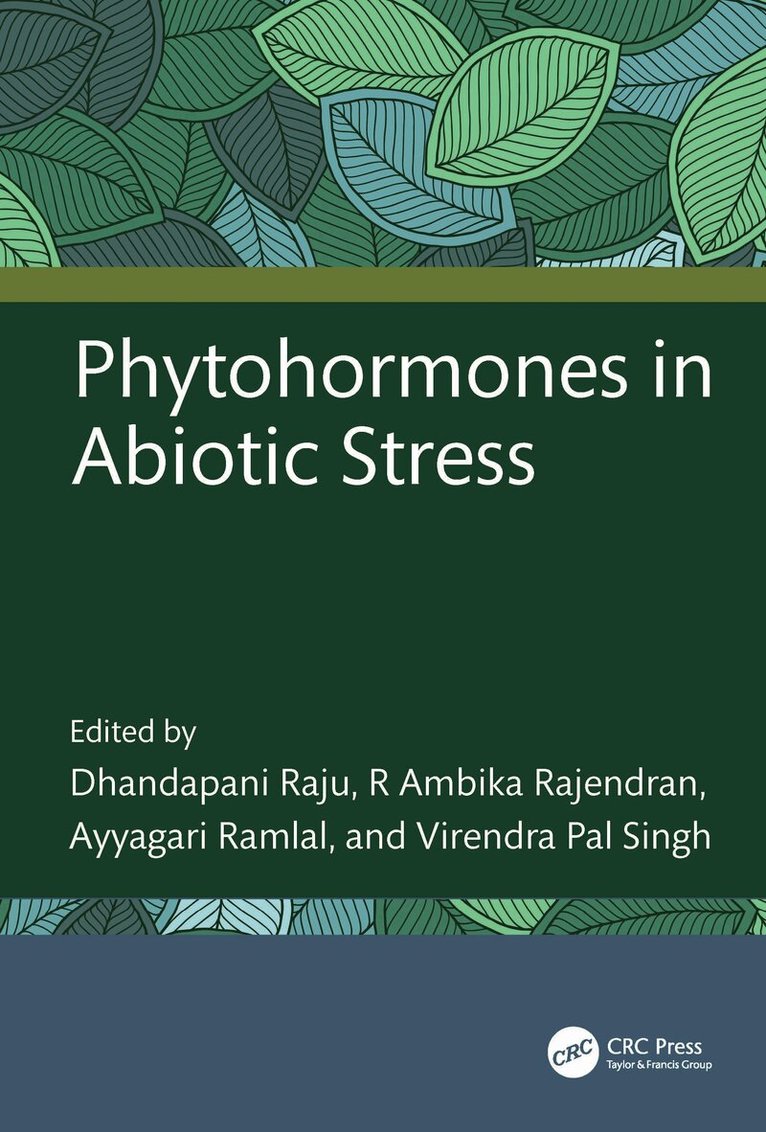
Inbunden, Engelska, 2024
2 049 kr
Skickas inom 10-15 vardagar
Plants are continuously exposed to different environmental stresses that negatively impact their physiology and morphology, resulting in production reduction. As a result of constant pressure, plants evolve different mechanisms for sustenance and survival. Hormones play a major role in defences against the stresses and stimulate regulatory mechanisms. One of the ways through which they mitigate stress is via the production of hormones like auxins, ethylene, jasmonic acid, etc. The phytohormones help in signaling and enhance the chances of their survival. Plant hormones play many vital roles from integrating developmental events, physiological and biochemical processes to mediating both abiotic and biotic stresses. This book aims to highlight these issues and provide scope for the development of tolerance in crops against abiotic stresses to maximize yield for the growing population. There is an urgent need for the development of strategies, methods and tools for the broad-spectrum tolerance in plants supporting sustainable crop production under hostile environmental conditions.The salient features are as follows:• It includes both traditional and non-traditional phytohormones and focuses on the latest progress emphasizing the roles of different hormones under abiotic stresses.• It provides a scope of the best plausible and suitable options for overcoming these stresses and puts forward the methods for crop improvement.• It is an amalgamation of the biosynthesis of phytohormones and also provides molecular intricacies and signalling mechanisms in different abiotic stresses.• This book serves as a reference book for scientific investigators from recent graduates, academicians and researchers working on phytohormones and abiotic stresses.
E-bok
PDF, Engelska, 2024989 kr
Läs direkt efter köp
Plants are continuously exposed to different environmental stresses that negatively impact their physiology and morphology, resulting in production reduction. As a result of constant pressure, plants evolve different mechanisms for sustenance and survival. Hormones play a major role in defences against the stresses and stimulate regulatory mechanisms. One of the ways through which they mitigate stress is via the production of hormones like auxins, ethylene, jasmonic acid, etc. The phytohormones help in signaling and enhance the chances of their survival. Plant hormones play many vital roles from integrating developmental events, physiological and biochemical processes to mediating both abiotic and biotic stresses. This book aims to highlight these issues and provide scope for the development of tolerance in crops against abiotic stresses to maximize yield for the growing population. There is an urgent need for the development of strategies, methods and tools for the broad-spectrum tolerance in plants supporting sustainable crop production under hostile environmental conditions.The salient features are as follows:* It includes both traditional and non-traditional phytohormones and focuses on the latest progress emphasizing the roles of different hormones under abiotic stresses.* It provides a scope of the best plausible and suitable options for overcoming these stresses and puts forward the methods for crop improvement.* It is an amalgamation of the biosynthesis of phytohormones and also provides molecular intricacies and signalling mechanisms in different abiotic stresses.* This book serves as a reference book for scientific investigators from recent graduates, academicians and researchers working on phytohormones and abiotic stresses.
E-bok
Engelska, 2024989 kr
Läs direkt efter köp
Plants are continuously exposed to different environmental stresses that negatively impact their physiology and morphology, resulting in production reduction. As a result of constant pressure, plants evolve different mechanisms for sustenance and survival. Hormones play a major role in defences against the stresses and stimulate regulatory mechanisms. One of the ways through which they mitigate stress is via the production of hormones like auxins, ethylene, jasmonic acid, etc. The phytohormones help in signaling and enhance the chances of their survival. Plant hormones play many vital roles from integrating developmental events, physiological and biochemical processes to mediating both abiotic and biotic stresses. This book aims to highlight these issues and provide scope for the development of tolerance in crops against abiotic stresses to maximize yield for the growing population. There is an urgent need for the development of strategies, methods and tools for the broad-spectrum tolerance in plants supporting sustainable crop production under hostile environmental conditions.The salient features are as follows:* It includes both traditional and non-traditional phytohormones and focuses on the latest progress emphasizing the roles of different hormones under abiotic stresses.* It provides a scope of the best plausible and suitable options for overcoming these stresses and puts forward the methods for crop improvement.* It is an amalgamation of the biosynthesis of phytohormones and also provides molecular intricacies and signalling mechanisms in different abiotic stresses.* This book serves as a reference book for scientific investigators from recent graduates, academicians and researchers working on phytohormones and abiotic stresses.

E-bok
PDF, Engelska, 200839 kr
Läs direkt efter köp
Project Report from the year 2008 in the subject Sociology - Culture, Technology, Nations, grade: A, , language: English, abstract: In a broad sense the content (messages) of all meaningful communication is information. More narrowly (but still loosely), information refers to verifiable and thus reliable factual data about the 'real world'. This includes opinions as well as reports about the facts of the world. Even more narrowly and precisely, information may be equated with communicated 'data' that do (or can) enable discriminations to be made in some domain of reality and thus 'reduce uncertainty' for the receiver (Mc Quail 2000:497). The flow and nature of information varies with the form of society. In a primitive society the information is shared equally with the members of the society by informal ways of communication. The flow of information is very smooth and the information is transmitted through interpersonal communication i.e. through the 'word of mouth'. There are no specialized institutions and communicators in the process of communication. With the development of society, the nature of communication also undergoes through the process of change and gradually society becomes more differentiated and the specialized institutions perform different functions of society. The form of communication is also changed as it is now mediated through some sort of technology for the group of the people through some technical devices. The access of the people to these devices varies to different sections of the society and thus smoothness in the flow of information is disrupted to a great extent. In modern society, first developed in Europe and then spread over to the rest of the world in the form of nation states, the nature and flow of information is relatively smooth as the traditional and modern mass media are well integrated (Pye 1963). In transitional communication system, however, the flow of information is disrupted due to lack of integration among the traditional and modern media of mass communication. The unequal distribution of the information poses different kind of problems in this type of society. In modern society, modern mass media also change with the pace and level of development and gradually new forms and institutions of communicationemerge on the scenario.

Häftad, Portugisiska, 2023
512 kr
Skickas inom 5-8 vardagar