Vishnu Prasad Pandey – författare
1 089 kr
Skickas inom 10-15 vardagar
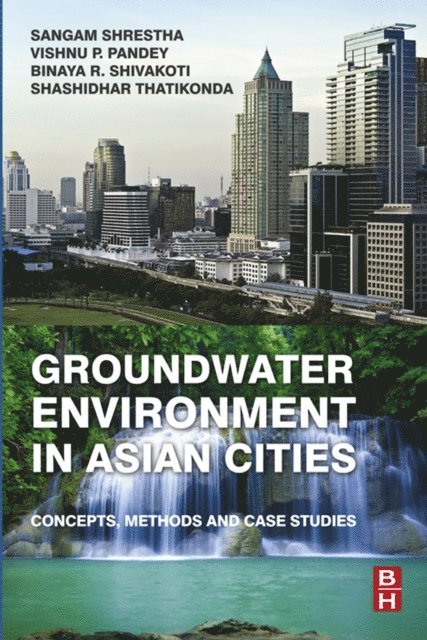
Groundwater contributes to the sustainable development of many Asian cities by providing water for domestic, industrial and agricultural uses and regulating ecosystem flows. However, groundwater has not always been properly managed, which often has resulted in depletion and degradation of the resource. Groundwater Environment in Asian Cities presents the up-to-date scientific knowledge on groundwater environment in fourteen Asian cities using Driver-Pressure-State-Impact-Response (DPSIR) framework. In detail the book presents the facts and figures of groundwater dependency, problems related to groundwater over exploitation, implementation of various policy instruments and management practices and their results in selected fourteen Asian cities, namely; Bandung (Indonesia), Bangkok (Thailand), Beijing (China), Bishkek (Kyrgyzstan), Chitwan (Nepal), Delhi (India), Dili (East Timor), Ho Chi Minh (Vietnam), Hyderabad (India), Khulna (Bangladesh), Lahore (Pakistan), Seoul (South Korea), Tokyo (Japan), and Yangon (Myanmar). The book provides the one-step platform to get sufficient details about groundwater aquifers, hydrogeology, groundwater status, impacts on groundwater environment and responses (technology, policy, institutional, etc.) deployed in the case studies cities, and therefore, provides a snap-shot of Asian groundwater environments. The theoretical background of the topics discussed along with the case studies help the readers understand the similarities and differences about the status of groundwater development and use in each city. In addition, the information in the book will serve as a baseline for other research such as mitigation of groundwater related problems (e.g., land subsidence), impact of climate change on groundwater, and importance of groundwater for implementing sustainable development goals in future.
Presents a framework for evaluating groundwater environment in urban environments Includes case studies and local examples from a broad geographical range of urban environments from virtually every region in Asia, including Bandung, Bangkok, Delhi, Bishkek, Beijing and Tokyo The book will be a valuable resource for groundwater adversaries in the scientific, decision-making and end-user communities, particularly for understanding and assessing state of groundwater resources in the region as well as learning from the responses practiced so far (Dr. Linda Anne Stevenson, APN) The contents in this book are very much useful for informed decision-making for protecting groundwater environemntand therefore contributes in making invisible visible (Dr. Neno Kukuric, IGRAC) With concrete examples and lessons for readers, this book responds to the call for comprehensive research and studies, the implementation of new science-based methodologies and endorsement of principles for groundwater resources management and cities (Dr. Aureli Alice, UNESCO-IHP) As a "Regional Hub for Groundwater Management in the Asia Pacific Region�, IGES finds this book as a very much useful reference for knowledge hub partners, groundwater managers, academic institutions, research scholars, and international organizations working in the areas of groundwater in Asia and beyond (Dr. Hideyuki Mori, IGES)1 357 kr
Läs direkt efter köp
3 028 kr
Läs direkt efter köp
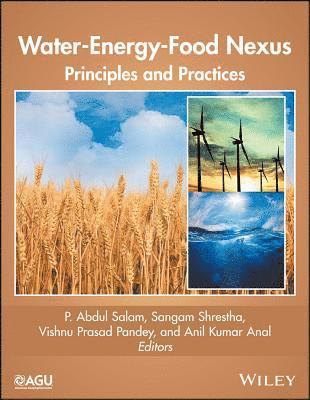
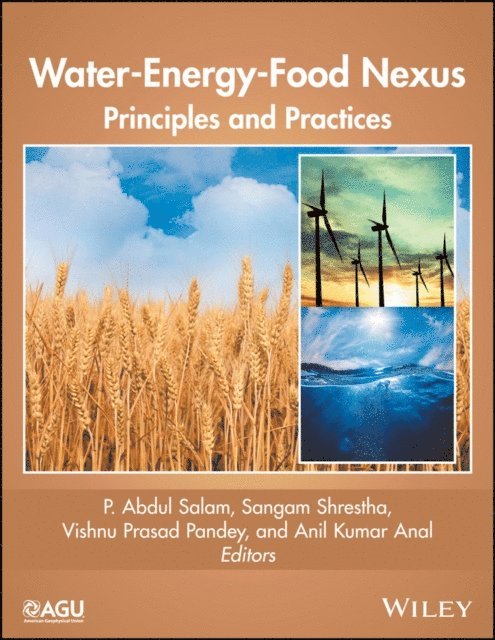
Water-Energy-Food Nexus
Principles and Practices
1 970 kr
Skickas inom 11-20 vardagar
2 244 kr
Läs direkt efter köp
Water, energy and food are key resources to sustain life, and are the fundamental to national, regional and global economies. These three resources are interlinked in multiple ways, and the term “nexus” captures the interconnections. The nexus has been discussed, debated, researched, and advocated widely but the focus is often on the pairings of “water-energy” or “water-food” or “energy-food”. To really benefit from the nexus approach in terms of resource use efficiency it is essential to understand, operationalize and practice the nexus of all three resources. As demand for these resources increases worldwide, using them sustainability is a critical concern for scientists and citizens, governments and policy makers.
Volume highlights include:
Contributions to the global debate on water-energy-food nexus Examples of the nexus approach in practice from different regions of the world Perspectives on the future of the nexus agendaWater-Energy-Food Nexus: Theories and Practices is a valuable resource for students, research scholars and professionals in academic institutions with strong interests in interdisciplinary research involving geography, earth science, environmental science, environmental management, sustainability science, international development, and ecological economics. The volume will also be useful for professionals, practitioners and consultants in /NGOs, government, and international agencies.Read an interview with the editors to find out more:https://eos.org/editors-vox/working-towards-a-sustainable-future
2 244 kr
Läs direkt efter köp
Water, energy and food are key resources to sustain life, and are the fundamental to national, regional and global economies. These three resources are interlinked in multiple ways, and the term “nexus” captures the interconnections. The nexus has been discussed, debated, researched, and advocated widely but the focus is often on the pairings of “water-energy” or “water-food” or “energy-food”. To really benefit from the nexus approach in terms of resource use efficiency it is essential to understand, operationalize and practice the nexus of all three resources. As demand for these resources increases worldwide, using them sustainability is a critical concern for scientists and citizens, governments and policy makers.
Volume highlights include:
Contributions to the global debate on water-energy-food nexus Examples of the nexus approach in practice from different regions of the world Perspectives on the future of the nexus agendaWater-Energy-Food Nexus: Theories and Practices is a valuable resource for students, research scholars and professionals in academic institutions with strong interests in interdisciplinary research involving geography, earth science, environmental science, environmental management, sustainability science, international development, and ecological economics. The volume will also be useful for professionals, practitioners and consultants in /NGOs, government, and international agencies.Read an interview with the editors to find out more:https://eos.org/editors-vox/working-towards-a-sustainable-future
2 181 kr
Skickas inom 5-8 vardagar
2 473 kr
Läs direkt efter köp
An in-depth review of sustainable concepts in water resources management under climate change
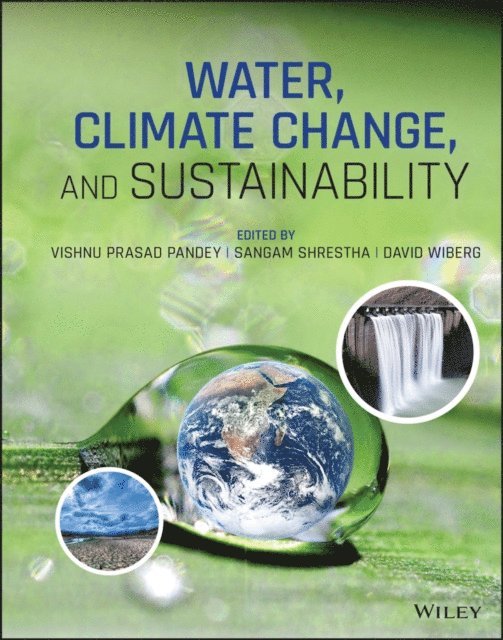
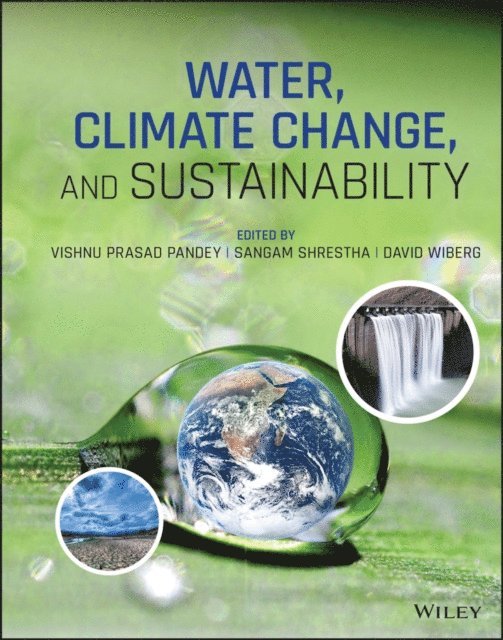
Climate change continues to intensify existing pressures in water resources management, such as rapid population growth, land use changes, pollution, damming of rivers, and many others. Securing a reliable water supply—critical for achieving Sustainable Development Goals (SDGs)—requires understanding of the relation between finite water resources, climate variability/change, and various elements of sustainability. Water, Climate Change, and Sustainability is a timely and in-depth examination of the concept of sustainability as it relates to water resources management in the context of climate change risks.
Featuring contributions by global authors, this edited volume is organized into three sections: Sustainability Concepts; Sustainability Approaches, Tools, and Techniques; and Sustainability in Practice. Detailed chapters describe the linkage between water and sustainable development, highlight the development and use of new measuring and reporting methods, and discuss the implementation of sustainability concepts in various water use sectors. Topics include localizing and mainstreaming global water sustainability initiatives, resilient water infrastructure for poverty reduction, urban water security for sustainable cities, climate actions and challenges for sustainable ecosystem services, and more. This important resource:
Reviews contemporary scientific research and practical applications in the areas of water, climate change and sustainability in different regions of the worldDiscusses future directions of research and practices in relation to expected patterns of climate changesCovers a wide range of concepts, theories, and perspectives of sustainable development of water resourcesFeatures case studies of field and modelling techniques for analyzing water resources and evaluating vulnerability, security, and associated risksDiscusses practical applications of water resources in contexts such as food security, global health, clean energy, and climate actionWater, Climate Change, and Sustainability is an invaluable resource for policy makers water managers, researchers, and other professionals in the field, and an ideal text for graduate students in hydrogeology, climate change, geophysics, geochemistry, geography, water resources, and environmental science.
2 442 kr
Läs direkt efter köp
An in-depth review of sustainable concepts in water resources management under climate change
Climate change continues to intensify existing pressures in water resources management, such as rapid population growth, land use changes, pollution, damming of rivers, and many others. Securing a reliable water supply—critical for achieving Sustainable Development Goals (SDGs)—requires understanding of the relation between finite water resources, climate variability/change, and various elements of sustainability. Water, Climate Change, and Sustainability is a timely and in-depth examination of the concept of sustainability as it relates to water resources management in the context of climate change risks.
Featuring contributions by global authors, this edited volume is organized into three sections: Sustainability Concepts; Sustainability Approaches, Tools, and Techniques; and Sustainability in Practice. Detailed chapters describe the linkage between water and sustainable development, highlight the development and use of new measuring and reporting methods, and discuss the implementation of sustainability concepts in various water use sectors. Topics include localizing and mainstreaming global water sustainability initiatives, resilient water infrastructure for poverty reduction, urban water security for sustainable cities, climate actions and challenges for sustainable ecosystem services, and more. This important resource:
Reviews contemporary scientific research and practical applications in the areas of water, climate change and sustainability in different regions of the worldDiscusses future directions of research and practices in relation to expected patterns of climate changesCovers a wide range of concepts, theories, and perspectives of sustainable development of water resourcesFeatures case studies of field and modelling techniques for analyzing water resources and evaluating vulnerability, security, and associated risksDiscusses practical applications of water resources in contexts such as food security, global health, clean energy, and climate actionWater, Climate Change, and Sustainability is an invaluable resource for policy makers water managers, researchers, and other professionals in the field, and an ideal text for graduate students in hydrogeology, climate change, geophysics, geochemistry, geography, water resources, and environmental science.
2 599 kr
Skickas inom 10-15 vardagar
3 001 kr
Läs direkt efter köp