Volker Peckhaus – författare
Visar alla böcker från författaren Volker Peckhaus. Handla med fri frakt och snabb leverans.
8 produkter
Foundations of the Formal Sciences. the History of the Concept of the Formal Sciences
Av Benedikt Lowe, Volker Peckhaus m. fl.
Häftad, 2006
279 kr
Lägg i varukorg
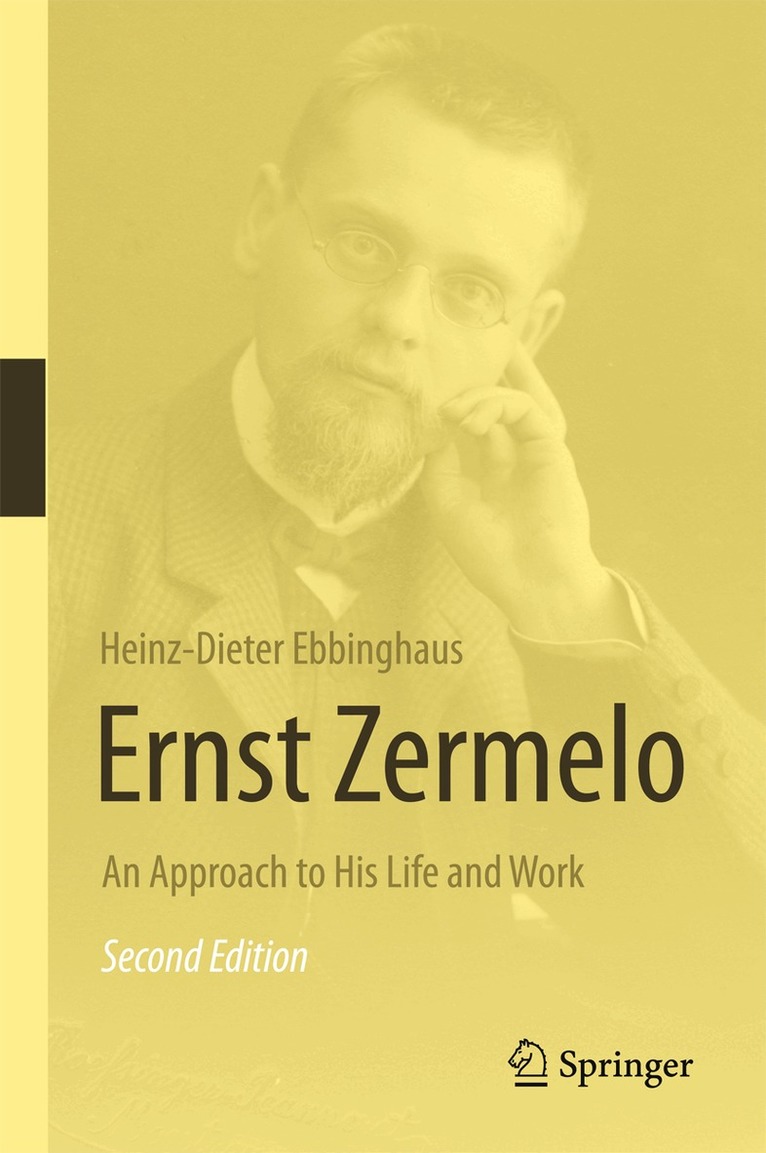
Ernst Zermelo
An Approach to His Life and Work
Av Heinz Dieter Ebbinghaus, Volker Peckhaus
Inbunden, 2015
643 kr
Lägg i varukorg
This biography sheds light on all facets of the life and the achievements of Ernst Zermelo (1871-1953). Zermelo is best-known for the statement of the axiom of choice and his axiomatization of set theory. However, he also worked in applied mathematics and mathematical physics. His dissertation, for …
Ernst Zermelo
An Approach to His Life and Work
Av Volker Peckhaus, Heinz Dieter Ebbinghaus
E-bok, 2015
815 kr
Lägg i varukorg
This biography sheds light on all facets of the life and the achievements of Ernst Zermelo (1871-1953). Zermelo is best-known for the statement of the axiom of choice and his axiomatization of set theory. However, he also worked in applied mathematics and mathematical physics. His dissertation, for …
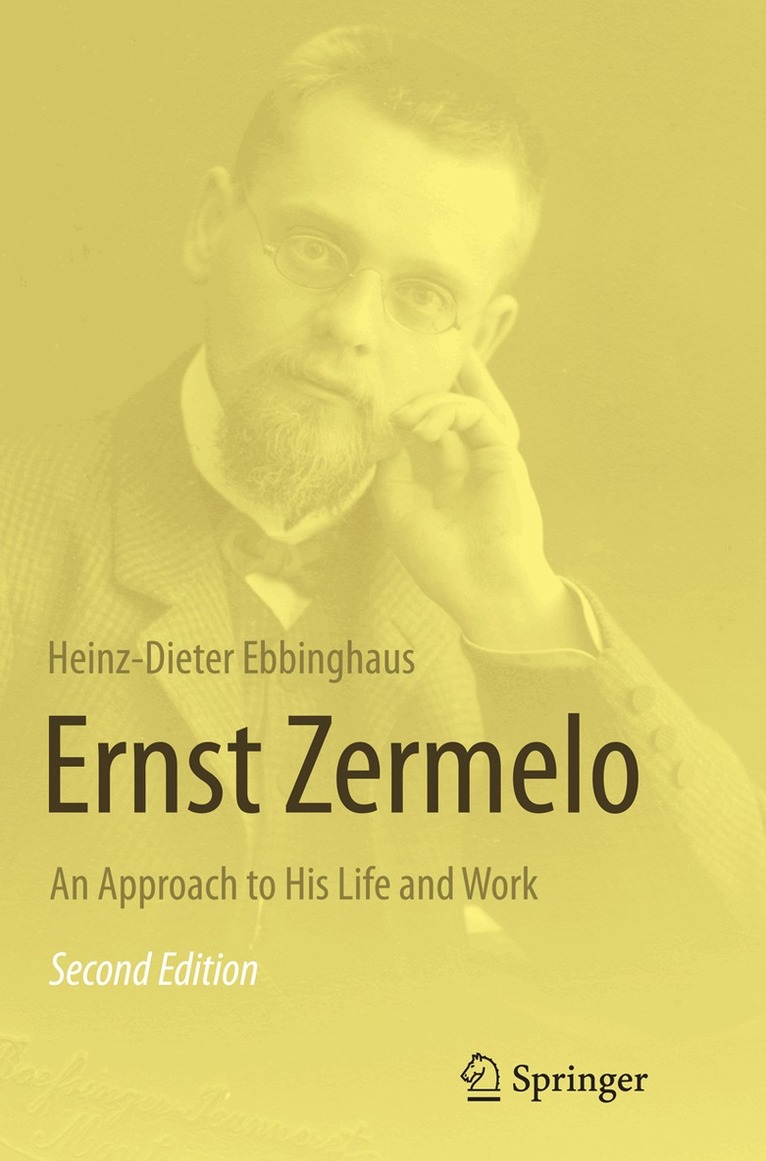
Ernst Zermelo
An Approach to His Life and Work
Av Heinz Dieter Ebbinghaus, Volker Peckhaus
Häftad, 2016
605 kr
Lägg i varukorg
This biography sheds light on all facets of the life and the achievements of Ernst Zermelo (1871-1953). Zermelo is best-known for the statement of the axiom of choice and his axiomatization of set theory. However, he also worked in applied mathematics and mathematical physics. His dissertation, for …
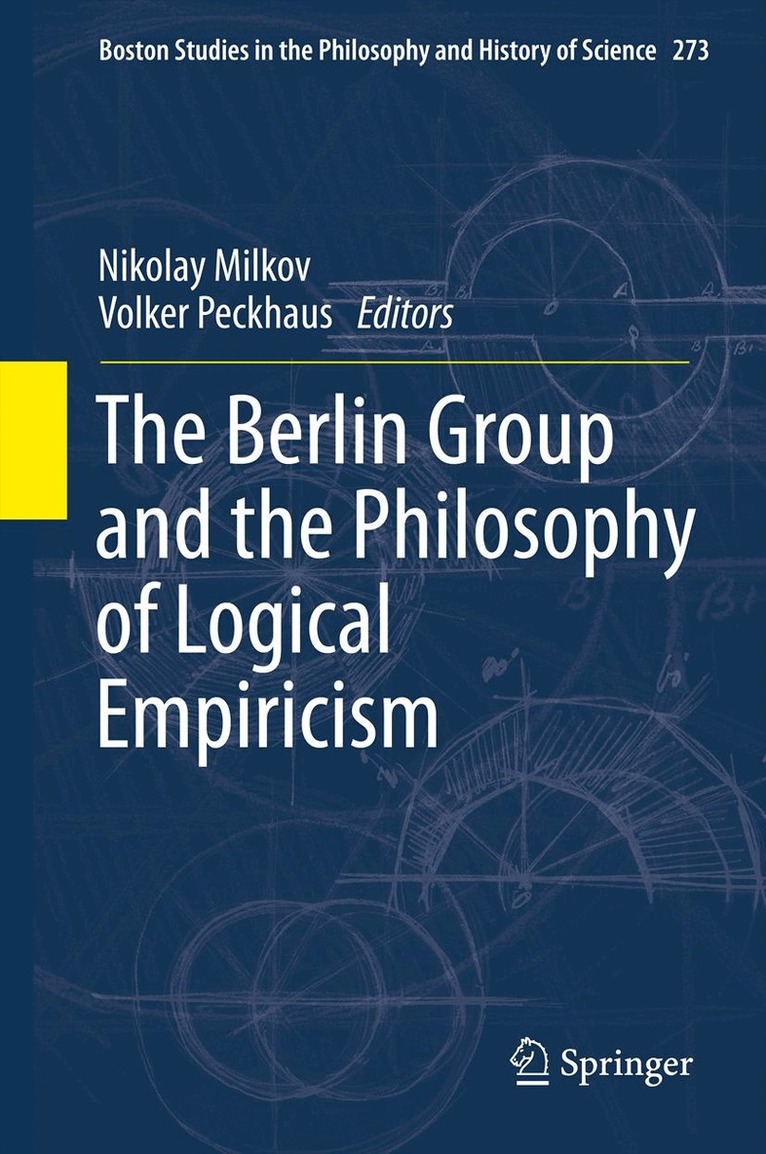
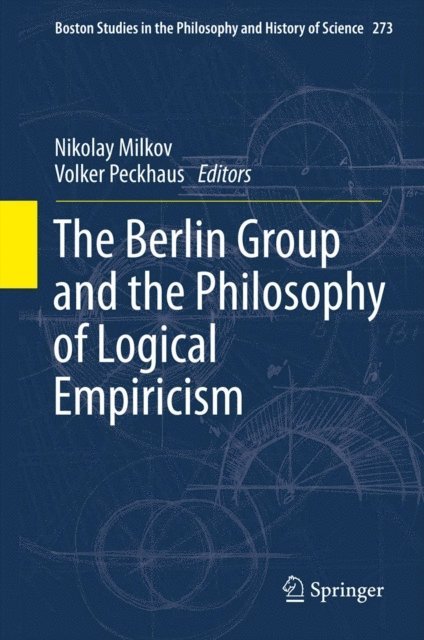
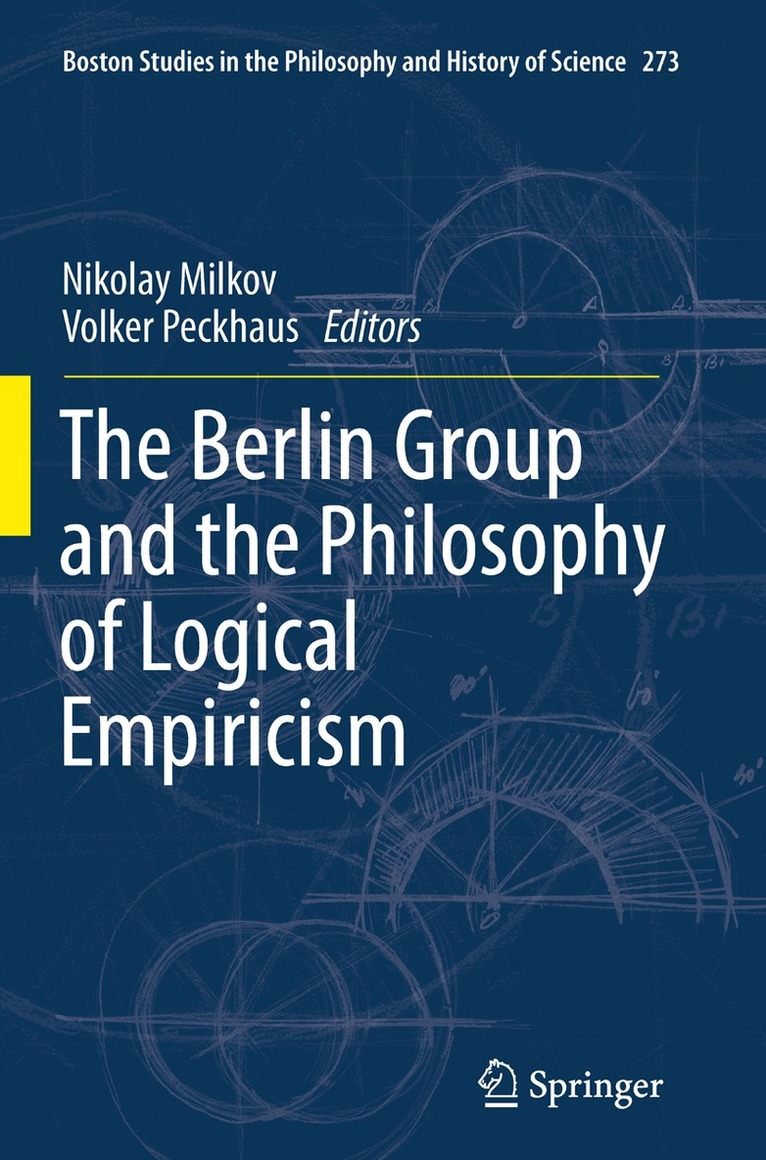
Berlin Group and the Philosophy of Logical Empiricism
Av Nikolay Milkov, Volker Peckhaus
Inbunden, 2013
1095 kr
Lägg i varukorg
The Berlin Group for scientific philosophy was active between 1928 and 1933 and was closely related to the Vienna Circle. In 1930, the leaders of the two Groups, Hans Reichenbach and Rudolf Carnap, launched the journal Erkenntnis. However, between the Berlin Group and the Vienna Circle, there was …
Berlin Group and the Philosophy of Logical Empiricism
Av Volker Peckhaus, Nikolay Milkov
E-bok, 2013
1427 kr
Lägg i varukorg
The Berlin Group for scientific philosophy was active between 1928 and 1933 and was closely related to the Vienna Circle. In 1930, the leaders of the two Groups, Hans Reichenbach and Rudolf Carnap, launched the journal Erkenntnis. However, between the Berlin Group and the Vienna Circle, there was …
Berlin Group and the Philosophy of Logical Empiricism
Av Nikolay Milkov, Volker Peckhaus
Häftad, 2015
1095 kr
Lägg i varukorg
The Berlin Group for scientific philosophy was active between 1928 and 1933 and was closely related to the Vienna Circle. In 1930, the leaders of the two Groups, Hans Reichenbach and Rudolf Carnap, launched the journal Erkenntnis. However, between the Berlin Group and the Vienna Circle, there was …