W. Russell Neuman - Böcker
Visar alla böcker från författaren W. Russell Neuman. Handla med fri frakt och snabb leverans.
13 produkter
13 produkter
763 kr
Skickas inom 7-10 vardagar
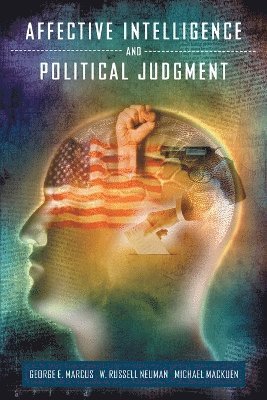
Although the rational choice approach toward political behavior has been severely criticized, its adherents claim that competing models have failed to offer a more scientific model of political decisionmaking. This measured but provocative book offers precisely that: an alternative way of understanding political behavior based on cognitive research.The authors draw on research in neuroscience, physiology, and experimental psychology to conceptualize habit and reason as two mental states that interact in a delicate, highly functional balance controlled by emotion. Applying this approach to more than fifteen years of election results, they shed light on a wide range of political behavior, including party identification, symbolic politics, and negative campaigning.Remarkably accessible, Affective Intelligence and Political Judgment urges social scientists to move beyond the idealistic notion of the purely rational citizen to form a more complete, realistic model that includes the emotional side of human judgment.
259 kr
Skickas inom 7-10 vardagar
Although the rational choice approach toward political behavior has been severely criticized, its adherents claim that competing models have failed to offer a more scientific model of political decisionmaking. This measured but provocative book offers precisely that: an alternative way of understanding political behavior based on cognitive research.The authors draw on research in neuroscience, physiology, and experimental psychology to conceptualize habit and reason as two mental states that interact in a delicate, highly functional balance controlled by emotion. Applying this approach to more than fifteen years of election results, they shed light on a wide range of political behavior, including party identification, symbolic politics, and negative campaigning.Remarkably accessible, Affective Intelligence and Political Judgment urges social scientists to move beyond the idealistic notion of the purely rational citizen to form a more complete, realistic model that includes the emotional side of human judgment.
227 kr
Skickas inom 7-10 vardagar
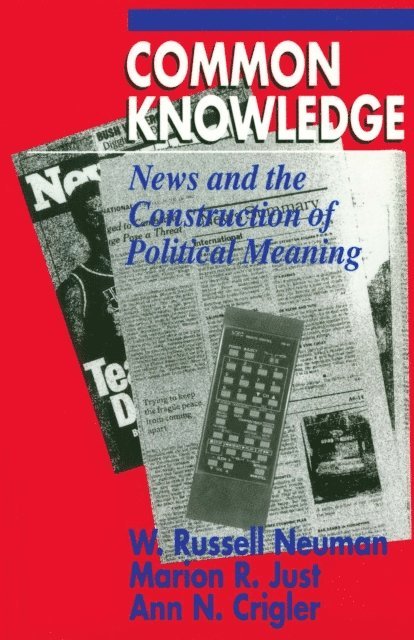
Photo opportunities, ten-second sound bites, talking heads and celebrity anchors: so the world is explained daily to millions of Americans. The result, according to the experts, is an ignorant public, helpless targets of a one-way flow of carefully filtered and orchestrated communication. Common Knowledge shatters this pervasive myth. Reporting on a ground-breaking study, the authors reveal that our shared knowledge and evolving political beliefs are determined largely by how we actively reinterpret the images, fragments, and signals we find in the mass media. For their study, the authors analyzed coverage of 150 television and newspaper stories on five prominent issues--drugs, AIDS, South African apartheid, the Strategic Defense Initiative, and the stock market crash of October 1987. They tested audience responses of more than 1,600 people, and conducted in-depth interviews with a select sample. What emerges is a surprisingly complex picture of people actively and critically interpreting the news, making sense of even the most abstract issues in terms of their own lives, and finding political meaning in a sophisticated interplay of message, medium, and firsthand experience.At every turn, Common Knowledge refutes conventional wisdom. It shows that television is far more effective at raising the saliency of issues and promoting learning than is generally assumed; it also undermines the assumed causal connection between newspaper reading and higher levels of political knowledge. Finally, this book gives a deeply responsible and thoroughly fascinating account of how the news is conveyed to us, and how we in turn convey it to others, making meaning of at once so much and so little. For anyone who makes the news--or tries to make anything of it--Common Knowledge promises uncommon wisdom.
298 kr
Skickas inom 7-10 vardagar
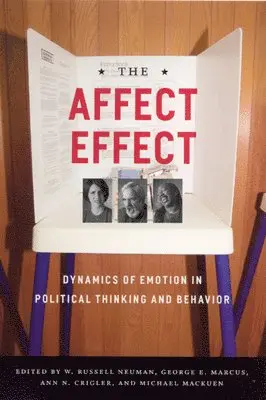
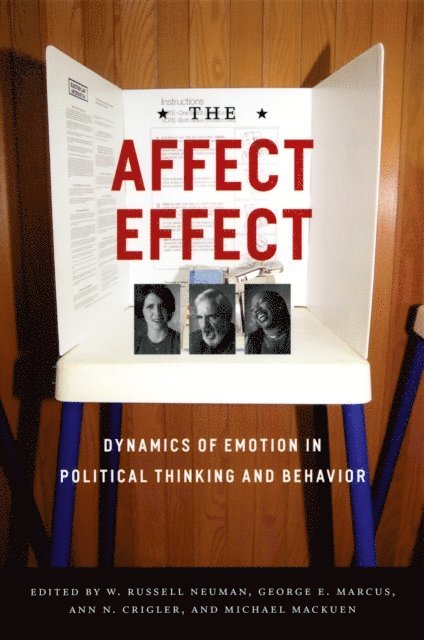
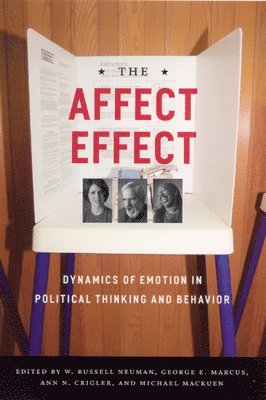
Passion and emotion run deep in politics, but researchers have only recently begun to study how they influence our political thinking. Contending that the long-standing neglect of such feelings has left unfortunate gaps in our understanding of political behavior, "The Affect Effect" fills the void by providing a comprehensive overview of current research on emotion in politics and where it is likely to lead. In sixteen seamlessly integrated essays, thirty top scholars approach this topic from a broad array of angles that address four major themes. The first section outlines the philosophical and neuroscientific foundations of emotion in politics, while the second focuses on how emotions function within and among individuals. The final two sections branch out to explore how politics work at the societal level and suggest the next steps in modeling, research, and political activity itself. Opening up new paths of inquiry in an exciting new field, this volume will appeal not only to scholars of American politics and political behavior, but also to anyone interested in political psychology and sociology.
264 kr
Skickas
A surprising vision of how human intelligence will coevolve with digital technology and revolutionize how we think and behave.It is natural for us to fear artificial intelligence. But does Siri really want to kill us? Perhaps we are falling into the trap of projecting human traits onto the machines we might build. In Evolutionary Intelligence, Neuman offers a surprisingly positive vision in which computational intelligence compensates for the well-recognized limits of human judgment, improves decision making, and actually increases our agency. In artful, accessible, and adventurous prose, Neuman takes the reader on an exciting, fast-paced ride, all the while making a convincing case about a revolution in computationally augmented human intelligence.Neuman argues that, just as the wheel made us mobile and machines made us stronger, the migration of artificial intelligence from room-sized computers to laptops to our watches, smart glasses, and even smart contact lenses will transform day-to-day human decision making. If intelligence is the capacity to match means with ends, then augmented intelligence can offer the ability to adapt to changing environments as we face the ultimate challenge of long-term survival.Tapping into a global interest in technology’s potential impacts on society, economics, and culture, Evolutionary Intelligence demonstrates that our future depends on our ability to computationally compensate for the limitations of a human cognitive system that has only recently graduated from hunting and gathering.
345 kr
Skickas inom 7-10 vardagar
"This book is the perfect primer for understanding media in the digital age. We are in an era when newspaper, radio, and television are fast becoming archeological concepts. Herein are the reasons why."---Nicholas Negroponte, founder and chairman of One Laptop per Child and cofounder of the MIT Media Laboratory"Congratulations to Neuman and colleagues for a fascinating exploration of how previous new media were constructed, whether things could have been otherwise, and what can be learned for future media."---Sonia Livingstone, Department of Media and Communications, the London School of Economics and Political Science In Media, Technology, and Society, some of the most prominent figures in media studies explore the issue of media evolution. Focusing on a variety of compelling examples in media history, ranging from the telephone to the television, the radio to the Internet, these essays collectively address a series of notoriously vexing questions about the nature of technological change. Is it possible to make general claims about the conditions that enable or inhibit innovation? Does government regulation tend to protect or thwart incumbent interests? What kinds of concepts are needed to address the relationship between technology and society in a nonreductive and nondeterministic manner? To what extent can media history help us to understand and to influence the future of media in constructive ways? The contributors' historically grounded responses to these questions will be relevant to numerous fields, including history, media and communication studies, management, sociology, and information studies.W. Russell Neuman is John Derby Evans Professor of Media Technology and Research Professor, Center for Political Studies, Institute for Social Research, at the University of Michigan.DIGITALCULTUREBOOKS: a collaborative imprint of the University of Michigan Press and the University of Michigan Library
1 192 kr
Skickas inom 7-10 vardagar
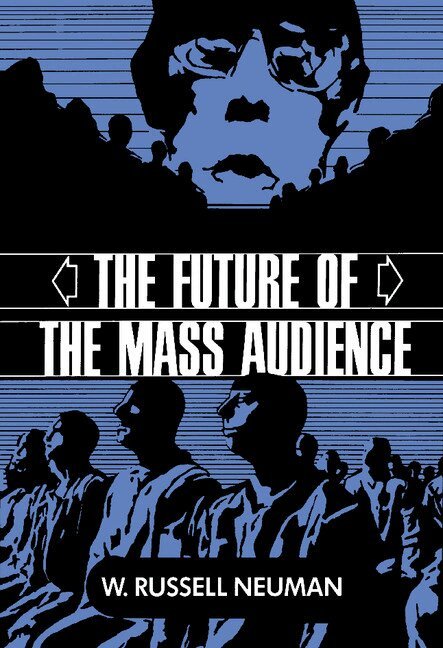
The Future of the Mass Audience focuses on how the changing technology and economics of the mass media in post-industrial society will influence public communication. It summarises the results of a five-year study conducted in cooperation with the senior corporate planners at ABC, CBS, NBC, Time Warner, The New York Times and the Washington Post. The central question is whether the new electronic media and the use of personal computers in the communication process will lead to a fragmentation of the mass audience. Some analysts have suggested that with the growth of increasingly specialised cable television channels and electronic publishing, people will filter and pre-select news concerning only their own special interests and, as a result, cultural and political life will become increasingly polarised. This study demonstrates, however, that the movement towards fragmentation will be modest. It concludes that the production and promotion costs and economies of scale for electronic media put natural constraints on special interest, small audience programming.
428 kr
Skickas inom 7-10 vardagar
The Future of the Mass Audience focuses on how the changing technology and economics of the mass media in post-industrial society will influence public communication. It summarises the results of a five-year study conducted in cooperation with the senior corporate planners at ABC, CBS, NBC, Time Warner, The New York Times and the Washington Post. The central question is whether the new electronic media and the use of personal computers in the communication process will lead to a fragmentation of the mass audience. Some analysts have suggested that with the growth of increasingly specialised cable television channels and electronic publishing, people will filter and pre-select news concerning only their own special interests and, as a result, cultural and political life will become increasingly polarised. This study demonstrates, however, that the movement towards fragmentation will be modest. It concludes that the production and promotion costs and economies of scale for electronic media put natural constraints on special interest, small audience programming.
494 kr
Tillfälligt slut
383 kr
Skickas inom 10-15 vardagar
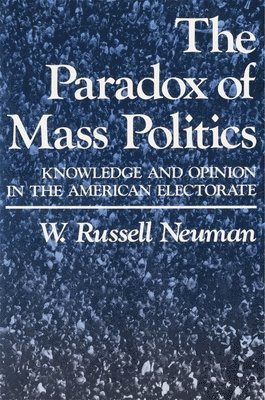
A central current in the history of democratic politics is the tensions between the political culture of an informed citizenry and the potentially antidemocratic impulses of the larger mass of individuals who are only marginally involved in the political world. Given the public’s low level of political interest and knowledge, it is paradoxical that the democratic system works at all.In The Paradox of Mass Politics W. Russell Neuman analyzes the major election surveys in the United States for the period 1948–1980 and develops for each a central index of political sophistication based on measures of political interest, knowledge, and style of political conceptualization. Taking a fresh look at the dramatic findings of public apathy and ignorance, he probes the process by which citizens acquire political knowledge and the impact of their knowledge on voting behavior.The book challenges the commonly held view that politically oriented college-educated individuals have a sophisticated grasp of the fundamental political issues of the day and do not rely heavily on vague political symbolism and party identification in their electoral calculus. In their expression of political opinions and in the stability and coherence of those opinions over time, the more knowledgeable half of the population, Neuman concludes, is almost indistinguishable from the other half. This is, in effect, a second paradox closely related to the first.In an attempt to resolve a major and persisting paradox of political theory, Neuman develops a model of three publics, which more accurately portrays the distribution of political knowledge and behavior in the mass population. He identifies a stratum of apoliticals, a large middle mass, and a politically sophisticated elite. The elite is so small (less than 5 percent) that the beliefs and behavior of its member are lost in the large random samples of national election surveys, but so active and articulate that its views are often equated with public opinion at large by the powers in Washington. The key to the paradox of mass politics is the activity of this tiny stratum of persons who follow political issues with care and expertise. This book is essential reading for concerned students of American politics, sociology, public opinion, and mass communication.
251 kr
Skickas inom 7-10 vardagar
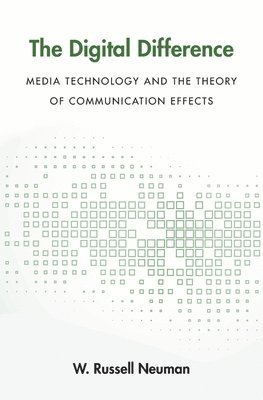
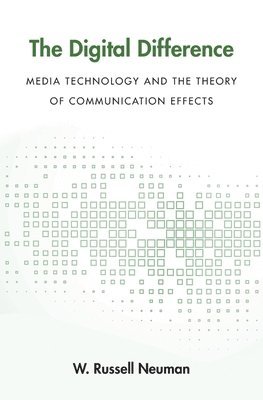
The Digital Difference examines how the transition from the industrial-era media of one-way publishing and broadcasting to the two-way digital era of online search and social media has affected the dynamics of public life.In the digital age, fundamental beliefs about privacy and identity are subject to change, as is the formal legal basis of freedom of expression. Will it be possible to maintain a vibrant and open marketplace of ideas? In W. Russell Neuman’s analysis, the marketplace metaphor does not signal that money buys influence, but rather just the opposite—that the digital commons must be open to all ideas so that the most powerful ideas win public attention on their merits rather than on the taken-for-granted authority of their authorship.“Well-documented, methodical, provocative, and clear, The Digital Difference deserves a prominent place in communication proseminars and graduate courses in research methods because of its reorientation of media effects research and its application to media policy making.”—John P. Ferré, Journalism and Mass Communication Quarterly
1 679 kr
Skickas inom 10-15 vardagar
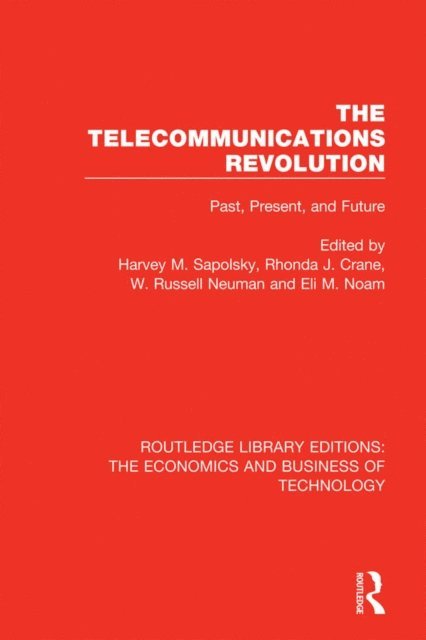
Originally published in 1992 this book charts the global restructuring of telecommunications industries away from the monopoly structures of the past towards increased competition, deregulation and privatization. The book's authors are international policy-makers and scholars, who examine the regulatory environment within a theoretical and historical context. The book looks at the roots of regulatory and legislative changes by discussing individually the countries at the forefront of the revolution: the UK, France, Germany, Japan and the United States. It examines the impact of new technology for consequences of change in trade and government policies.
509 kr
Skickas inom 10-15 vardagar
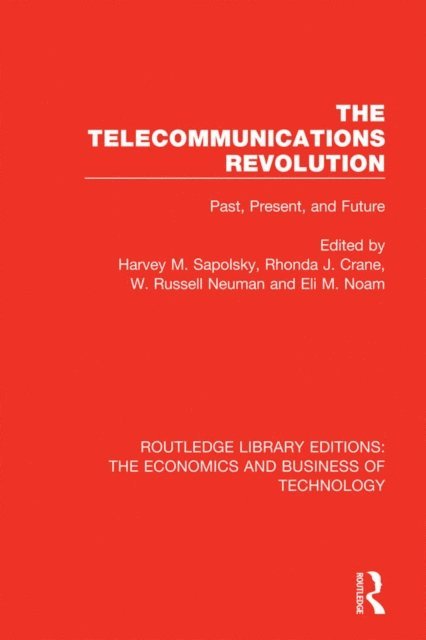
Originally published in 1992 this book charts the global restructuring of telecommunications industries away from the monopoly structures of the past towards increased competition, deregulation and privatization. The book's authors are international policy-makers and scholars, who examine the regulatory environment within a theoretical and historical context. The book looks at the roots of regulatory and legislative changes by discussing individually the countries at the forefront of the revolution: the UK, France, Germany, Japan and the United States. It examines the impact of new technology for consequences of change in trade and government policies.