Wade Clark Roof – författare
Visar alla böcker från författaren Wade Clark Roof. Handla med fri frakt och snabb leverans.
13 produkter
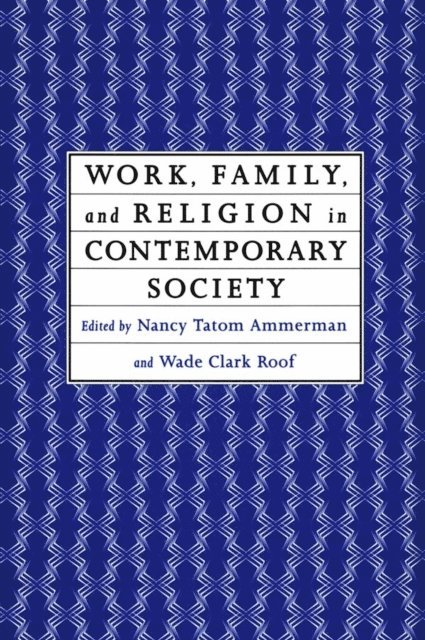
Work, Family and Religion in Contemporary Society
Remaking Our Lives
Av Nancy Tatom Ammerman, Wade Clark Roof
Häftad, 1995
649 kr
Lägg i varukorg
Until recently, religious institutions have been organized to suit the traditional American family, where the wife stayed at home, caring for children. Today, churches and synagogues are beginning to adapt to the reality of the American family: dual-career marriages, high levels of divorce, …
Beyond Establishment
Protestant Identity in a Post-Protestant Age
Av Jackson W. Carroll, Wade Clark Roof
Häftad, 1993
436 kr
Lägg i varukorg
This book takes a novel, cultural approach to studying mainline denominations, focusing on the denominations' religious and moral vision--the beliefs, values, symbols, stories, and style that make a denomination distinct. Of special concern are the ways in which denominations passed on their vision …
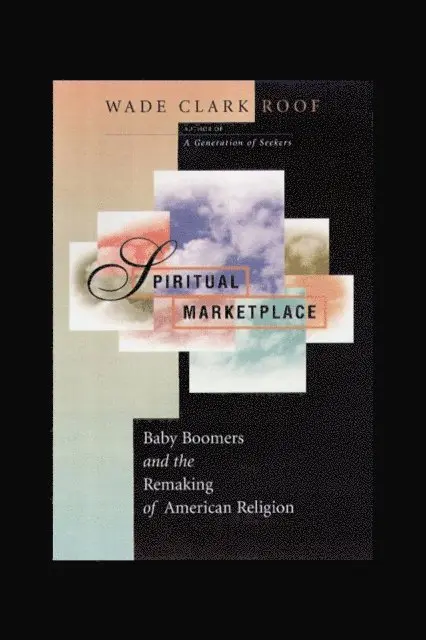
Spiritual Marketplace
Baby Boomers and the Remaking of American Religion
Häftad, 2001
431 kr
Lägg i varukorg
In large chain bookstores the "religion" section is gone and in its place is an expanding number of topics including angels, Sufism, journey, recovery, meditation, magic, inspiration, Judaica, astrology, gurus, Bible, prophesy, evangelicalism, Mary, Buddhism, Catholicism, and esoterica. As Wade …
Religion and Public Life in the Pacific Region
Fluid Identities
Häftad, 2005
460 kr
Lägg i varukorg
'Pretty much like the rest of the country, only more so.' This quip from Wallace Stegner well-represents the Pacific region's religious culture. California, Nevada, and Hawaii emerged more recently, more quickly and with more diversity and fluidity than the other United States. Although influenced …
American Mainline Religion
Its Changing Shape and Future
Av Wade Clark Roof, William McKinney
Häftad, 1987
349 kr
Lägg i varukorg
Wade Clark Roof and William McKinney argue that a new voluntarism is slowly eroding the old social and economic boundaries that once defined and separated religious groups and is opening new cleavages along moral and life-style lines. Nowhere has the impact of these changes been more profoundly …
Work, Family and Religion in Contemporary Society
Remaking Our Lives
Av Wade Clark Roof, Nancy Tatom Ammerman
E-bok, 2014
676 kr
Lägg i varukorg
Until recently, religious institutions have been organized to suit the traditional American family, where the wife stayed at home, caring for children. Today, churches and synagogues are beginning to adapt to the reality of the American family: dual-career marriages, high levels of divorce, …
Work, Family and Religion in Contemporary Society
Remaking Our Lives
Av Wade Clark Roof, Nancy Tatom Ammerman
E-bok, 2014
676 kr
Lägg i varukorg
Until recently, religious institutions have been organized to suit the traditional American family, where the wife stayed at home, caring for children. Today, churches and synagogues are beginning to adapt to the reality of the American family: dual-career marriages, high levels of divorce, …
Spiritual Marketplace
Baby Boomers and the Remaking of American Religion
E-bok, 2001
586 kr
Lägg i varukorg
In large chain bookstores the "religion" section is gone and in its place is an expanding number of topics including angels, Sufism, journey, recovery, meditation, magic, inspiration, Judaica, astrology, gurus, Bible, prophesy, evangelicalism, Mary, Buddhism, Catholicism, and esoterica. As Wade …
Religious Pluralism and Civil Society
Av Wade Clark Roof, Wade Clark Roof
Häftad, 2007
1184 kr
Lägg i varukorg
"Religious outsiders" as seen through the eyes of Euro-American Christians are nothing new, but the growing range of religious diversity in the United States has reached new heights of visibility as well as deeper intensities of tension. As U.S. communities of Muslims, Hindus, Buddhists, and Sikhs …
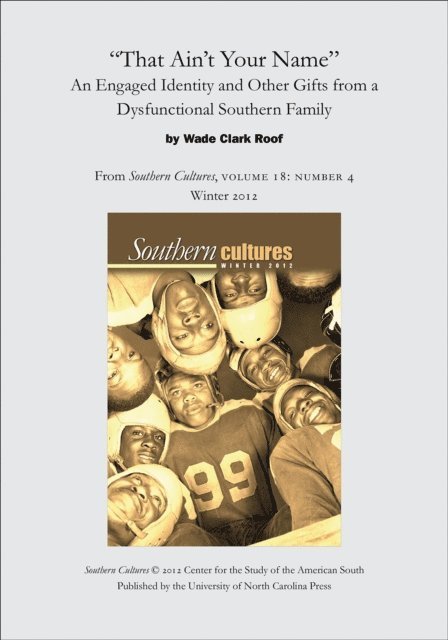
"e;That Ain't Your Name"e;: An Engaged Identity and Other Gifts from a Dysfunctional Southern Family
An article from Southern Cultures 18:4, Winter 2012
E-bok, 2012
54 kr
Lägg i varukorg
It was not until 1946 when my grandmother received a copy of the revised birth certificate in the mail from my father and blurted out to me ''That ain''t your name,'' that I really became aware of the problems. She quickly added, ''Your mother, she never got it right neither.''" This article …
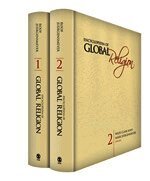
Encyclopedia of Global Religion
Av Mark Juergensmeyer, Wade Clark Roof
2011
5049 kr
Tillfälligt slut
The multi-volume Encyclopedia of Global Religion provides a comprehensive overview of the globalization of religious culture and society around the world in both its historical and contemporary aspects. The encyclopedia includes topics related to the diaspora of cultures and dispersions of peoples; …
World Order and Religion
Häftad, 1991
422 kr
Tillfälligt slut
This book looks at religion from a global perspective and examines how religion is shaped by the larger set of political and economic relationships that make up today's world. Focusing mainly on Western religion and on the changing role of the United States in world affairs, the authors show how …
Religious Pluralism and Civil Society
Inbunden, 2007
1662 kr
Tillfälligt slut
"Religious outsiders" as seen through the eyes of Euro-American Christians are nothing new, but the growing range of religious diversity in the United States has reached new heights of visibility as well as deeper intensities of tension. As U.S. communities of Muslims, Hindus, Buddhists, and Sikhs …