Wade D. Cook - Böcker
Visar alla böcker från författaren Wade D. Cook. Handla med fri frakt och snabb leverans.
6 produkter
6 produkter
656 kr
Skickas inom 10-15 vardagar
DEA (Data Envelopment Analysis) if a subfield of economics that compares the best ideal producer of a given good or service with one or more actual producers. "If the virtual [ideal] producer is better than the original producer by either making more output with the same input or making the same output with less input then the original producer is inefficient. Some of the subtleties of DEA are introduced in the various ways that producers A and B can be scaled up or down and combined." (From the Portland State University website).
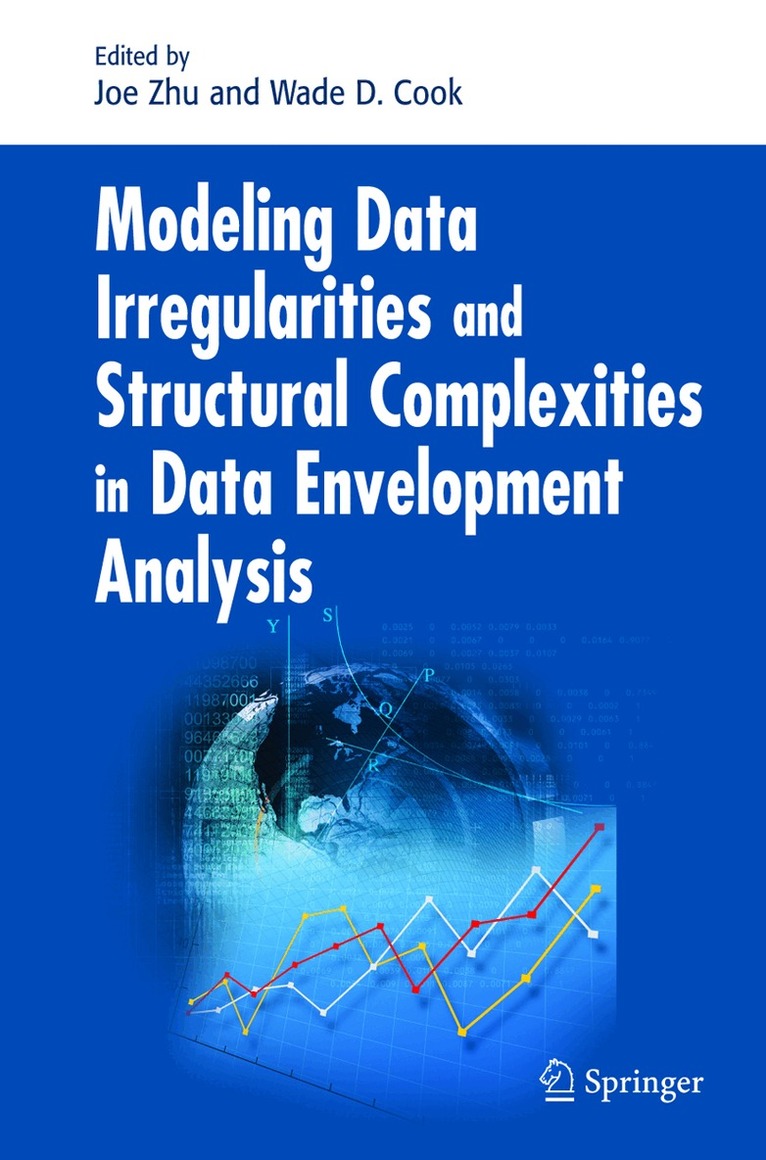
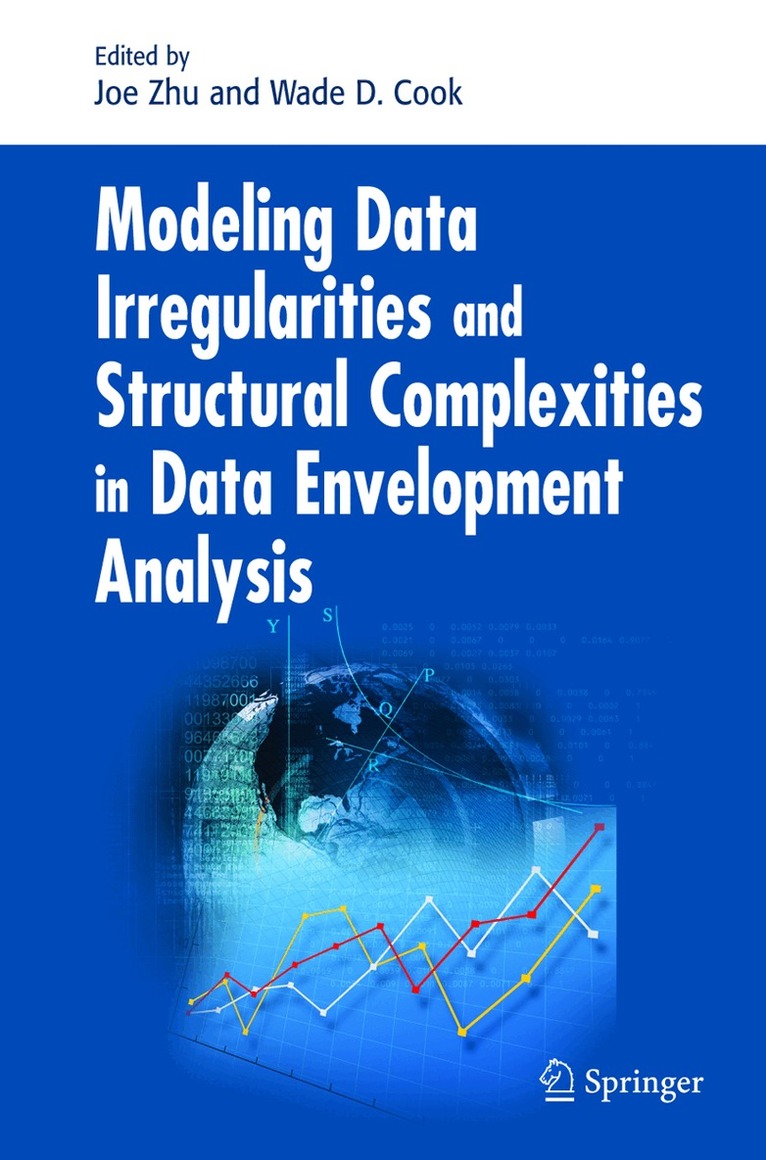
Modeling Data Irregularities and Structural Complexities in Data Envelopment Analysis
Inbunden, Engelska, 2007
1 073 kr
Skickas inom 10-15 vardagar
DEA is computational at its core and this book will be one of several books that we will look to publish on the computational aspects of DEA. This book by Zhu and Cook will deal with the micro aspects of handling and modeling data issues in modeling DEA problems. DEA's use has grown with its capability of dealing with complex "service industry" and the "public service domain" types of problems that require modeling both qualitative and quantitative data. This will be a handbook treatment dealing with specific data problems including the following: (1) imprecise data, (2) inaccurate data, (3) missing data, (4) qualitative data, (5) outliers, (6) undesirable outputs, (7) quality data, (8) statistical analysis, (9) software and other data aspects of modeling complex DEA problems. In addition, the book will demonstrate how to visualize DEA results when the data is more than 3-dimensional, and how to identify efficiency units quickly and accurately.
Modeling Data Irregularities and Structural Complexities in Data Envelopment Analysis
Häftad, Engelska, 2010
1 169 kr
Skickas inom 10-15 vardagar
DEA is computational at its core and this book will be one of several books that we will look to publish on the computational aspects of DEA. This book by Zhu and Cook will deal with the micro aspects of handling and modeling data issues in modeling DEA problems. DEA's use has grown with its capability of dealing with complex "service industry" and the "public service domain" types of problems that require modeling both qualitative and quantitative data. This will be a handbook treatment dealing with specific data problems including the following: (1) imprecise data, (2) inaccurate data, (3) missing data, (4) qualitative data, (5) outliers, (6) undesirable outputs, (7) quality data, (8) statistical analysis, (9) software and other data aspects of modeling complex DEA problems. In addition, the book will demonstrate how to visualize DEA results when the data is more than 3-dimensional, and how to identify efficiency units quickly and accurately.
Del 208 - International Series in Operations Research & Management Science
Data Envelopment Analysis
A Handbook of Modeling Internal Structure and Network
Häftad, Engelska, 2016
1 577 kr
Skickas inom 10-15 vardagar
This handbook serves as a complement to the Handbook on Data Envelopment Analysis (eds, W.W. Cooper, L.M. Seiford and J, Zhu, 2011, Springer) in an effort to extend the frontier of DEA research. It provides a comprehensive source for the state-of-the art DEA modeling on internal structures and network DEA. Chapter 1 provides a survey on two-stage network performance decomposition and modeling techniques. Chapter 2 discusses the pitfalls in network DEA modeling. Chapter 3 discusses efficiency decompositions in network DEA under three types of structures, namely series, parallel and dynamic. Chapter 4 studies the determination of the network DEA frontier. In chapter 5 additive efficiency decomposition in network DEA is discussed. An approach in scale efficiency measurement in two-stage networks is presented in chapter 6. Chapter 7 further discusses the scale efficiency decomposition in two stage networks. Chapter 8 offers a bargaining game approach to modeling two-stage networks. Chapter 9 studies shared resources and efficiency decomposition in two-stage networks. Chapter 10 introduces an approach to computing the technical efficiency scores for a dynamic production network and its sub-processes. Chapter 11 presents a slacks-based network DEA. Chapter 12 discusses a DEA modeling technique for a two-stage network process where the inputs of the second stage include both the outputs from the first stage and additional inputs to the second stage. Chapter 13 presents an efficiency measurement methodology for multi-stage production systems. Chapter 14 discusses network DEA models, both static and dynamic. The discussion also explores various useful objective functions that can be applied to the models to find the optimal allocation of resources for processes within the black box, that are normally invisible to DEA. Chapter 15 provides a comprehensive review of various type network DEA modeling techniques. Chapter 16 presents shared resources models forderiving aggregate measures of bank-branch performance, with accompanying component measures that make up that aggregate value. Chapter 17 examines a set of manufacturing plants operating under a single umbrella, with the objective being to use the component or function measures to decide what might be considered as each plant’s core business. Chapter 18 considers problem settings where there may be clusters or groups of DMUs that form a hierarchy. The specific case of a set off electric power plants is examined in this context. Chapter 19 models bad outputs in two-stage network DEA. Chapter 20 presents an application of network DEA to performance measurement of Major League Baseball (MLB) teams. Chapter 21 presents an application of a two-stage network DEA model for examining the performance of 30 U.S. airline companies. Chapter 22 then presents two distinct network efficiency models that are applied to engineering systems.
Del 208 - International Series in Operations Research & Management Science
Data Envelopment Analysis
A Handbook of Modeling Internal Structure and Network
Inbunden, Engelska, 2014
1 577 kr
Skickas inom 10-15 vardagar
This handbook serves as a complement to the Handbook on Data Envelopment Analysis (eds, W.W. Cooper, L.M. Seiford and J, Zhu, 2011, Springer) in an effort to extend the frontier of DEA research. It provides a comprehensive source for the state-of-the art DEA modeling on internal structures and network DEA. Chapter 1 provides a survey on two-stage network performance decomposition and modeling techniques. Chapter 2 discusses the pitfalls in network DEA modeling. Chapter 3 discusses efficiency decompositions in network DEA under three types of structures, namely series, parallel and dynamic. Chapter 4 studies the determination of the network DEA frontier. In chapter 5 additive efficiency decomposition in network DEA is discussed. An approach in scale efficiency measurement in two-stage networks is presented in chapter 6. Chapter 7 further discusses the scale efficiency decomposition in two stage networks. Chapter 8 offers a bargaining game approach to modeling two-stage networks. Chapter 9 studies shared resources and efficiency decomposition in two-stage networks. Chapter 10 introduces an approach to computing the technical efficiency scores for a dynamic production network and its sub-processes. Chapter 11 presents a slacks-based network DEA. Chapter 12 discusses a DEA modeling technique for a two-stage network process where the inputs of the second stage include both the outputs from the first stage and additional inputs to the second stage. Chapter 13 presents an efficiency measurement methodology for multi-stage production systems. Chapter 14 discusses network DEA models, both static and dynamic. The discussion also explores various useful objective functions that can be applied to the models to find the optimal allocation of resources for processes within the black box, that are normally invisible to DEA. Chapter 15 provides a comprehensive review of various type network DEA modeling techniques. Chapter 16 presents shared resources models forderiving aggregate measures of bank-branch performance, with accompanying component measures that make up that aggregate value. Chapter 17 examines a set of manufacturing plants operating under a single umbrella, with the objective being to use the component or function measures to decide what might be considered as each plant’s core business. Chapter 18 considers problem settings where there may be clusters or groups of DMUs that form a hierarchy. The specific case of a set off electric power plants is examined in this context. Chapter 19 models bad outputs in two-stage network DEA. Chapter 20 presents an application of network DEA to performance measurement of Major League Baseball (MLB) teams. Chapter 21 presents an application of a two-stage network DEA model for examining the performance of 30 U.S. airline companies. Chapter 22 then presents two distinct network efficiency models that are applied to engineering systems.
551 kr
Skickas inom 10-15 vardagar
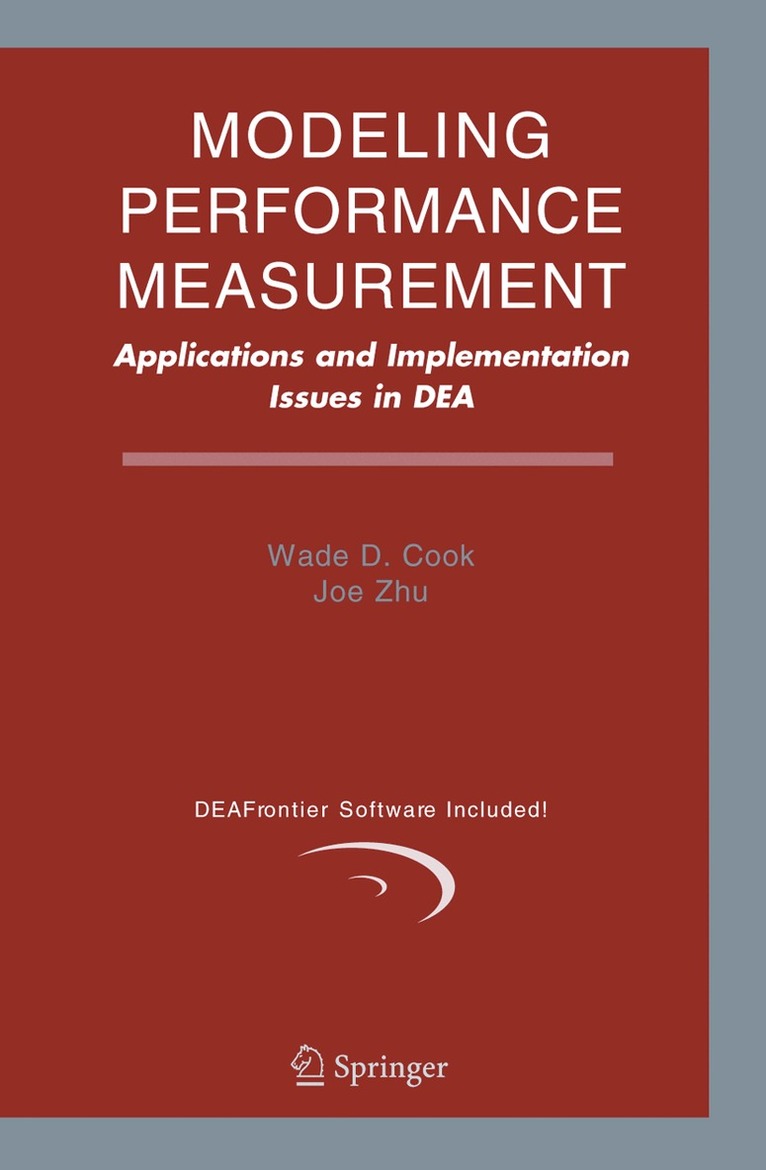
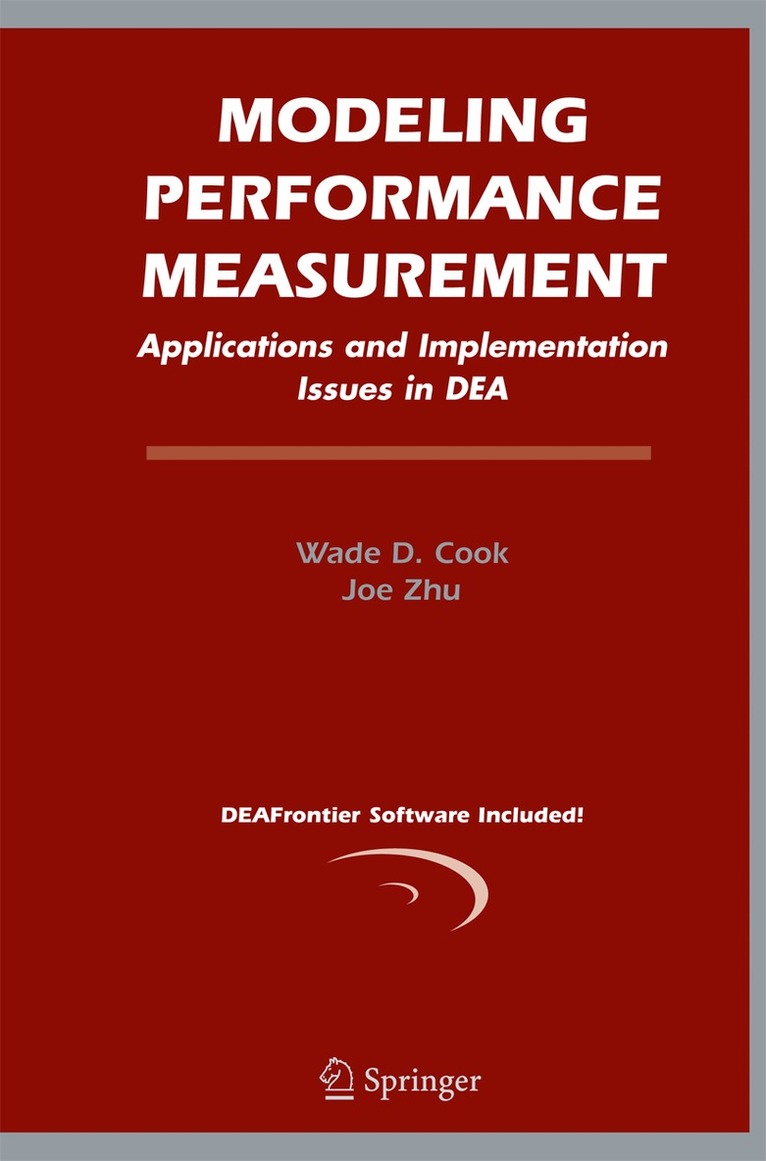
Modeling Performance Measurement: Applications and Implementation Issues in DEA presents unified results from several authors’ recent DEA research. These new DEA methodology and techniques are developed in application-driven scenarios that go beyond the identification of the best-practice frontier and seek solutions to aid managerial decisions. These new DEA developments are well-grounded in real world applications. Both DEA researchers and practitioners will find this book helpful. Theory is provided for DEA researchers for further development and possible extensions. However, it should also be mentioned that each theory is presented in practical terms with numerical examples, simple real management cases and verbal descriptions. These concrete examples will be of value to researchers, students, and practitioners.