Walter Lorenz - Böcker
Visar alla böcker från författaren Walter Lorenz. Handla med fri frakt och snabb leverans.
9 produkter
9 produkter
671 kr
Skickas inom 10-15 vardagar
This book bears testimony to the value of a progressive form of academisation of social work education in most European countries, including former communist countries which had to re-establish social work education. It also manifests the confidence of contributors in belonging to a serious academic discipline, and the fruitfulness of bringing research ‘home’ from neighbouring disciplines such as sociology, psychology, social policy, or pedagogy into the mainstream of social work. The contributions to this book converge on a small number of core issues for contemporary social work. These are methodologically the conceptualisation of different and interacting dimensions of diversity, and practically the defence of professionalism and discretion against encroachment by neo-liberal ideologies and cost-cutting regulations. In so doing, this underscores that theory matters in social work. Authentic social work research can demonstrate that social work practice has no reason to shy away from basing itself on evidence and being professionally accountable as long as its notion of evidence recognises and does justice to the complexity of social problems and acknowledges the value of inter-subjectivity in producing useable and ethically grounded evidence. This book was originally published as a special issue of the European Journal of Social Work.
2 088 kr
Skickas inom 10-15 vardagar
Written by leading authorities in the field, this challenging book addresses complex issues of ethnicity and racial discrimination in ways that encourage further debate and analysis. Its main theme is that social work has been and remains, deeply implicated in racist policies and practices that have been locality specific, but that racism is also recognizable across borders as a phenomenon that appears everywhere. At the same time, the book focuses on innovative theories and practice which seek to promote an emancipatory social work which sets itself the goal of eradicating social injustice - particularly that applying to race. The contributors come from a wide range of countries and describe their experiences in tackling racism in social work at the levels of both theory and practice. This provides an impressive range of perspectives which cover models of social work created by people who have had to live with racism and find ways of overcoming it as well as those who have struggled to become able to express their own ethnicity without oppressing others. The concluding message of the book is a positive one - people can create a world that goes beyond racial divides by accepting, validating and celebrating diversity while at the same time recognizing that people share many commonalities with others which can be used to establish egalitarian relationships, realize social justice and communicate effectively with each other.
747 kr
Skickas inom 10-15 vardagar
Written by leading authorities in the field, this challenging book addresses complex issues of ethnicity and racial discrimination in ways that encourage further debate and analysis. Its main theme is that social work has been and remains, deeply implicated in racist policies and practices that have been locality specific, but that racism is also recognizable across borders as a phenomenon that appears everywhere. At the same time, the book focuses on innovative theories and practice which seek to promote an emancipatory social work which sets itself the goal of eradicating social injustice - particularly that applying to race. The contributors come from a wide range of countries and describe their experiences in tackling racism in social work at the levels of both theory and practice. This provides an impressive range of perspectives which cover models of social work created by people who have had to live with racism and find ways of overcoming it as well as those who have struggled to become able to express their own ethnicity without oppressing others. The concluding message of the book is a positive one - people can create a world that goes beyond racial divides by accepting, validating and celebrating diversity while at the same time recognizing that people share many commonalities with others which can be used to establish egalitarian relationships, realize social justice and communicate effectively with each other.
2 088 kr
Skickas inom 10-15 vardagar
This book bears testimony to the value of a progressive form of academisation of social work education in most European countries, including former communist countries which had to re-establish social work education. It also manifests the confidence of contributors in belonging to a serious academic discipline, and the fruitfulness of bringing research ‘home’ from neighbouring disciplines such as sociology, psychology, social policy, or pedagogy into the mainstream of social work. The contributions to this book converge on a small number of core issues for contemporary social work. These are methodologically the conceptualisation of different and interacting dimensions of diversity, and practically the defence of professionalism and discretion against encroachment by neo-liberal ideologies and cost-cutting regulations. In so doing, this underscores that theory matters in social work. Authentic social work research can demonstrate that social work practice has no reason to shy away from basing itself on evidence and being professionally accountable as long as its notion of evidence recognises and does justice to the complexity of social problems and acknowledges the value of inter-subjectivity in producing useable and ethically grounded evidence. This book was originally published as a special issue of the European Journal of Social Work.
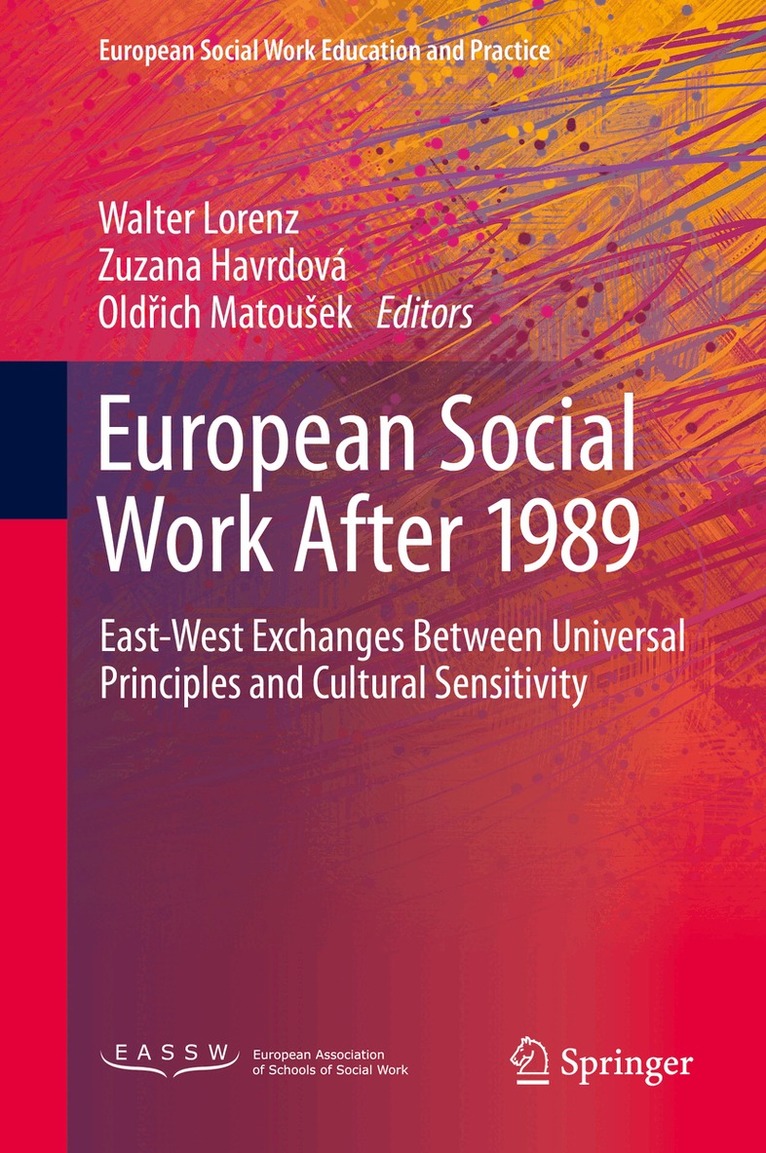
European Social Work After 1989
East-West Exchanges Between Universal Principles and Cultural Sensitivity
Inbunden, Engelska, 2020
852 kr
Skickas inom 10-15 vardagar
This book presents a unique analysis of the learning derived from East-West contacts in social work and reflects on the discipline's inalienable trans-national dimensions, of high actuality in the face of the re-emergence of nationalisms. The fundamental transformations in Europe subsequent to the revolutions of 1989 had a profound impact on social work in terms of raising sharply the profession’s relationship with politics. The exchanges between western schools of social work and the emergent academic partner institutions in former Communist countries formed a valuable testing ground for the essential principles and competences of social work in terms of their universal scientific basis on the one hand and their regard for cultural and national values and contexts on the other. The chapters in this contributed volume focus on lessons derived from fundamental social and political transformations, highlighted by East-West encounters and intra-national divisions, and thereby have important messages for mastering impending transformations in the light of the global COVID-19 health crisis. They demonstrate how cultural and social divisions can be addressed constructively with direct implications for training and practice in dramatically changing contexts:Lithuanian social work’s claim to professional autonomy vs. authoritarianism in popular and political culture Social work between civil society and the state – lessons for and from Hungary in a European contextWhen Europe’s East, West, North and South meet: learning from cross-country collaboration in creating an international social work master programmeNordic-Baltic cooperation in social work researcher education: A Finnish perspective on the impact on scientific, historical and linguistic similarities and differencesIntra-national similarities and differences in social work and theirsignificance for developing European dimensions of research and educationSocial work, political conflict and European society: reflections from Northern IrelandEuropean Social Work After 1989: East-West Exchanges Between Universal Principles and Cultural Sensitivity is an invaluable resource for social work educators; social work practitioners confronted with national and international divisions; students of social work, of social administration and policy; and any policy researcher with a comparative focus.
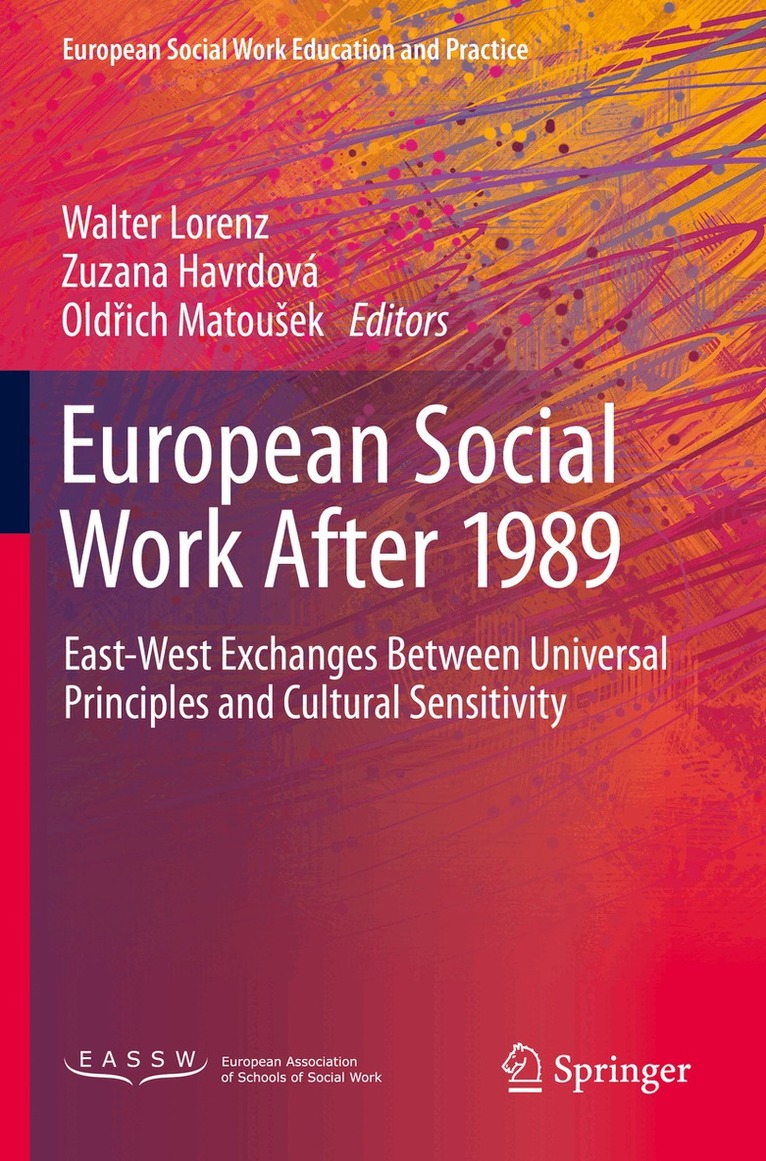
European Social Work After 1989
East-West Exchanges Between Universal Principles and Cultural Sensitivity
Häftad, Engelska, 2021
641 kr
Skickas inom 10-15 vardagar
This book presents a unique analysis of the learning derived from East-West contacts in social work and reflects on the discipline's inalienable trans-national dimensions, of high actuality in the face of the re-emergence of nationalisms. The fundamental transformations in Europe subsequent to the revolutions of 1989 had a profound impact on social work in terms of raising sharply the profession’s relationship with politics. The exchanges between western schools of social work and the emergent academic partner institutions in former Communist countries formed a valuable testing ground for the essential principles and competences of social work in terms of their universal scientific basis on the one hand and their regard for cultural and national values and contexts on the other. The chapters in this contributed volume focus on lessons derived from fundamental social and political transformations, highlighted by East-West encounters and intra-national divisions, and thereby have important messages for mastering impending transformations in the light of the global COVID-19 health crisis. They demonstrate how cultural and social divisions can be addressed constructively with direct implications for training and practice in dramatically changing contexts:Lithuanian social work’s claim to professional autonomy vs. authoritarianism in popular and political culture Social work between civil society and the state – lessons for and from Hungary in a European contextWhen Europe’s East, West, North and South meet: learning from cross-country collaboration in creating an international social work master programmeNordic-Baltic cooperation in social work researcher education: A Finnish perspective on the impact on scientific, historical and linguistic similarities and differencesIntra-national similarities and differences in social work and theirsignificance for developing European dimensions of research and educationSocial work, political conflict and European society: reflections from Northern IrelandEuropean Social Work After 1989: East-West Exchanges Between Universal Principles and Cultural Sensitivity is an invaluable resource for social work educators; social work practitioners confronted with national and international divisions; students of social work, of social administration and policy; and any policy researcher with a comparative focus.
1 313 kr
Skickas inom 7-10 vardagar
This book discusses complex motivational conditions and strategies on macro, meso, and micro levels promoting reflectivity in interpersonal professional practice. The increasing demands made on practitioners in social and health services, as illustrated by the COVID-19 pandemic, can lead to great uncertainty over how to find "the right response" to complex expressions of need and how to account for ethical professional decisions in view of prevailing strategies of 'risk reduction' and managerial accounting. Reflectivity has been recognised as being of central importance for guiding practitioners towards situationally differentiated and accountable practice. However, it is a complex process made up not only of different psychological components and their interplay with educational and organisational contexts, but also of multilevel interactions and purely situational conditions that can have positive or negative effects. The individual and team reflectivity can be learnedand supported through various educational and managerial opportunities, sensitively guided personal and professional experiences and specific patterns of interaction which are reviewed in the book. Reflective supervision in the workplace plays a pivotal role in enabling individual and team reflective processes. However, there are also social and organisational factors that can hinder the development of individual and team reflectivity. The particular value of this publication is that the authors focus on complex research findings from several consecutive studies and critically review and discuss the conditions for reflectivity from various perspectives and with the background of rich academic literature and research. Their research-derived empirical and analytical insights were submitted to managers and educators, and effective and realistic strategies and methods to enhance different levels of reflectivity in students and practitioners were discussed and are summarised in this volume. Among the topics covered:The significance of reflectivity in professional social and health care in relation to changing socio-political contexts Gender aspects of reflectivity in the social and healthcare fieldOperationalisation of reflectivity for research by personal, team and organisational scales Cultural and communicational patterns of interaction enabling professional reflective processes Enhancing Professionality Through Reflectivity in Social and Health Care is pertinent reading for professors of professional academic training programmes for social workers, nurses, supervisors, trainers in non-formal learning settings, students, and managers of social and health services with an interest in enhancing organisational cultures.
932 kr
Skickas inom 10-15 vardagar
This book discusses complex motivational conditions and strategies on macro, meso, and micro levels promoting reflectivity in interpersonal professional practice. The increasing demands made on practitioners in social and health services, as illustrated by the COVID-19 pandemic, can lead to great uncertainty over how to find "the right response" to complex expressions of need and how to account for ethical professional decisions in view of prevailing strategies of 'risk reduction' and managerial accounting. Reflectivity has been recognised as being of central importance for guiding practitioners towards situationally differentiated and accountable practice. However, it is a complex process made up not only of different psychological components and their interplay with educational and organisational contexts, but also of multilevel interactions and purely situational conditions that can have positive or negative effects. The individual and team reflectivity can be learnedand supported through various educational and managerial opportunities, sensitively guided personal and professional experiences and specific patterns of interaction which are reviewed in the book. Reflective supervision in the workplace plays a pivotal role in enabling individual and team reflective processes. However, there are also social and organisational factors that can hinder the development of individual and team reflectivity. The particular value of this publication is that the authors focus on complex research findings from several consecutive studies and critically review and discuss the conditions for reflectivity from various perspectives and with the background of rich academic literature and research. Their research-derived empirical and analytical insights were submitted to managers and educators, and effective and realistic strategies and methods to enhance different levels of reflectivity in students and practitioners were discussed and are summarised in this volume. Among the topics covered:The significance of reflectivity in professional social and health care in relation to changing socio-political contexts Gender aspects of reflectivity in the social and healthcare fieldOperationalisation of reflectivity for research by personal, team and organisational scales Cultural and communicational patterns of interaction enabling professional reflective processes Enhancing Professionality Through Reflectivity in Social and Health Care is pertinent reading for professors of professional academic training programmes for social workers, nurses, supervisors, trainers in non-formal learning settings, students, and managers of social and health services with an interest in enhancing organisational cultures.
1 908 kr
Skickas inom 3-6 vardagar
This volume gives an account of the fundamental developments transforming social work in Europe at the beginning of the 21st century. A European standard of social work has already emerged, but models for future European social work are absent. Therefore, the compendium gives an overview of the current transformation process for the first time, discussing the visible and invisible changes and mapping out where social work is positioned in the emerging post-welfare states. Contents include: A General Introduction: Transforming Perspectives. Social Work in Europe and European Social Work * Analytical Perspectives: Social Work in Europe and European Social Work in Post-Welfarist Contexts * Professional Perspectives: Main Approaches of Social Work in Europe and European Social Work * Positions: New Theoretical and Methodological Discourses of Social Work in Europe and European Social Work * Future Perspectives of Social Work in Europe and European Social Work * Social Work's Contribution to a Social Europe. [Subject: Social Work, European Studies]