Waltina Scheumann - Böcker
Visar alla böcker från författaren Waltina Scheumann. Handla med fri frakt och snabb leverans.
11 produkter
11 produkter
440 kr
Skickas inom 10-15 vardagar
It is beyond doubt that the interconnectedness between food, energy, water security and environmental sustainability exists and is getting amplified with increased globalization. It has been recognized that efforts to address only one part of a systemic problem by neglecting other inherently interlinked aspects may not lead to desirable and sustainable outcomes. In this perspective, policy- and decision- making requires a nexus approach that reduces trade-offs and builds synergies across sectors, and helps to reduce costs and increase benefits for humans and nature compared to independent approaches to the management of water, energy, food and the environment. In the past, work related to the Nexus has looked at the interactions between water and food or water and energy, but there has been a reluctance to bring forward a broader systematic perspective that captures the multiple sectors and resource dependencies while understanding its cost to the environment if we neglect these linkages. This book is a compilation of thirteen papers published previously as a special issue of Water International, contains significant pieces of work on the W-E-F nexus focusing on relevant tools, solutions and governance at local and broader human scales.
1 292 kr
Skickas inom 10-15 vardagar
It is beyond doubt that the interconnectedness between food, energy, water security and environmental sustainability exists and is getting amplified with increased globalization. It has been recognized that efforts to address only one part of a systemic problem by neglecting other inherently interlinked aspects may not lead to desirable and sustainable outcomes. In this perspective, policy- and decision- making requires a nexus approach that reduces trade-offs and builds synergies across sectors, and helps to reduce costs and increase benefits for humans and nature compared to independent approaches to the management of water, energy, food and the environment. In the past, work related to the Nexus has looked at the interactions between water and food or water and energy, but there has been a reluctance to bring forward a broader systematic perspective that captures the multiple sectors and resource dependencies while understanding its cost to the environment if we neglect these linkages. This book is a compilation of thirteen papers published previously as a special issue of Water International, contains significant pieces of work on the W-E-F nexus focusing on relevant tools, solutions and governance at local and broader human scales.
Water in the Middle East
Potential for Conflicts and Prospects for Cooperation
Inbunden, Engelska, 1998
1 064 kr
Skickas inom 10-15 vardagar
The book deals with the potential conflicts over shared rivers in the Middle East, and with approaches towards cooperation regarding the Euphrates and Tigris, the Jordan and the Nile Rivers. Far from echoing the warnings about imminent water wars, the book highlights the potential for water savings and for cooperation in many fields inside and outside the water sector. Such creative approaches may foster interdependence, build trust, and create the incentives and conditions for an equitable sharing of international water resources in the Middle East. The text of the International Water Convention is also included.
Water Politics and Development Cooperation
Local Power Plays and Global Governance
Inbunden, Engelska, 2008
1 593 kr
Skickas inom 10-15 vardagar
This statement in the most recent Human Development Report articulates a conv- tion that has increasingly gained ground in the water community over recent years: the key challenge in the water sector is not a lack of water, knowledge, nancial - sourcesortechnology.Ingeneral,itisthepoliticalspherethatdetermineswhetheror not water problems are solved, whether or not people have access to drinking water, irrigation water and sanitation, whether our natural resource base is developed s- tainable or overexploited, and whether new challenges for the water sector – such as adaptation to climate change – will be tackled or not. Politics (the process of decision-making of groups of people, involving the authoritative allocation of e.g. resources), the actors, their interests and interactions determine whether progress is made or hindered. The outcome of water politics is then re ected in water po- cies, the substantive outcome of the political interplay in terms of regulations, action programs or spending priorities of the various public or private entities concerned.
979 kr
Skickas inom 10-15 vardagar
The book deals with the potential conflicts over shared rivers in the Middle East, and with approaches towards cooperation regarding the Euphrates and Tigris, the Jordan and the Nile Rivers. Far from echoing the warnings about imminent water wars, the book highlights the potential for water savings and for cooperation in many fields inside and outside the water sector. Such creative approaches may foster interdependence, build trust, and create the incentives and conditions for an equitable sharing of international water resources in the Middle East. The text of the International Water Convention is also included.
Water Politics and Development Cooperation
Local Power Plays and Global Governance
Häftad, Engelska, 2010
1 465 kr
Skickas inom 10-15 vardagar
This statement in the most recent Human Development Report articulates a conv- tion that has increasingly gained ground in the water community over recent years: the key challenge in the water sector is not a lack of water, knowledge, nancial - sourcesortechnology.Ingeneral,itisthepoliticalspherethatdetermineswhetheror not water problems are solved, whether or not people have access to drinking water, irrigation water and sanitation, whether our natural resource base is developed s- tainable or overexploited, and whether new challenges for the water sector – such as adaptation to climate change – will be tackled or not. Politics (the process of decision-making of groups of people, involving the authoritative allocation of e.g. resources), the actors, their interests and interactions determine whether progress is made or hindered. The outcome of water politics is then re ected in water po- cies, the substantive outcome of the political interplay in terms of regulations, action programs or spending priorities of the various public or private entities concerned.
1 593 kr
Skickas inom 10-15 vardagar
Water is a strategic natural resource of vital importance to all nations. As such it has been the cause of several international disputes. For Turkey especially, water is crucial to social and economic development. Turkey’s current national water regime that emphasises water resources development and management for productive uses, however, faces growing environmental concerns and international criticism regarding transboundary water cooperation. Furthermore, EU accession requires Turkey to adopt an extensive and ambitious body of EU water law. To understand Turkey’s position to international water law, the national policies and socio-economic circumstances that impact water resources management need to be considered. This book fills the existing knowledge gap through a broad perspective and analysis of the current state of Turkey’s water policy and its management of both national and transboundary waters. It is a unique undertaking that brings together Turkish and international authors, practitioners and academics, covering all aspects of water management
1 465 kr
Skickas inom 10-15 vardagar
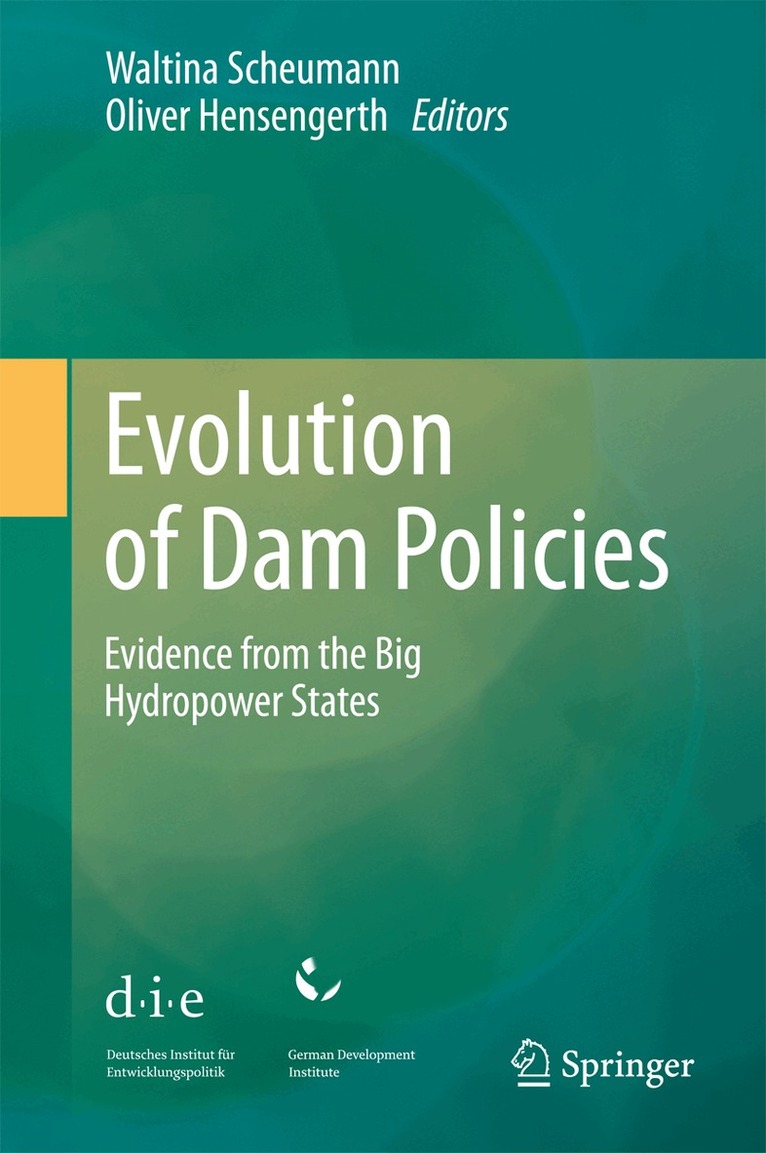
The World Commission on Dams (WCD) report (2000) “Dams and Development: A New Framework for Decision-Making” set a landmark in the ongoing controversy over large dams. Now that more than ten years have passed, one has to realize that the WCD norms matter. However, their real chance of becoming implemented relies on whether their core values, strategic priorities and guidelines are accepted by national decision-makers and are translated into official policies and practices. The book’s major concern is whether the big hydropower states have improved their standards for environment and resettlement, and whether international standards are applied or exist only on paper. The introductory and synthesis chapters present the methodological approach and discuss the findings. Other chapters analyze changes in dam policies in the big hydropower states Brazil, China, India and Turkey; the role of non-governmental organizations in advocating against the Turkish Ilisu Dam project on the Tigris River; the strategies of International Rivers and World Wildlife Fund for Nature in the global hydropower game; the policies of the German government and its positioning in the dam debate, and the engagement of Chinese actors in building the Bui Dam (Ghana) and the Kamchay Dam (Cambodia).
1 593 kr
Skickas inom 10-15 vardagar
Water is a strategic natural resource of vital importance to all nations. As such it has been the cause of several international disputes. For Turkey especially, water is crucial to social and economic development. Turkey’s current national water regime that emphasises water resources development and management for productive uses, however, faces growing environmental concerns and international criticism regarding transboundary water cooperation. Furthermore, EU accession requires Turkey to adopt an extensive and ambitious body of EU water law. To understand Turkey’s position to international water law, the national policies and socio-economic circumstances that impact water resources management need to be considered. This book fills the existing knowledge gap through a broad perspective and analysis of the current state of Turkey’s water policy and its management of both national and transboundary waters. It is a unique undertaking that brings together Turkish and international authors, practitioners and academics, covering all aspects of water management
536 kr
Skickas inom 10-15 vardagar
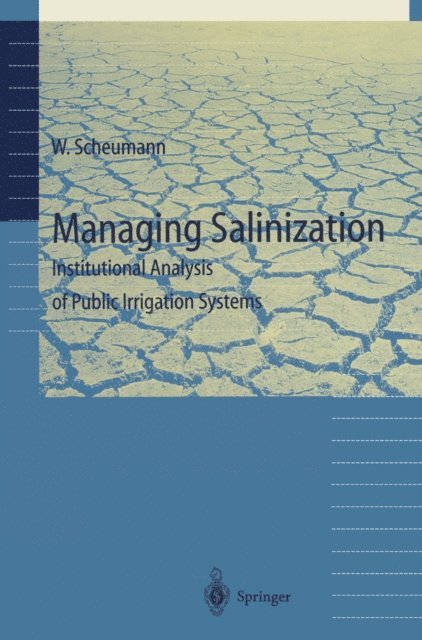
Salinization of soils is a major threat to irrigated agriculture and counteracts the targets of costly public infrastructure investments. In this study, salinization is regarded as the outcome of an institutional arrangement which impedes the effective implementation of well-known and well-established control measures be they technical, managerial or economic. In public irrigation systems neither the management units nor the farmers are offered any incentives towards the control of high groundwater levels and salinization if the management units are embedded in a highly centralized non-market institutional setting. The author answers the question under which conditions management units and irrigators are active in halting and reversing the process of salinization.
1 465 kr
Skickas inom 10-15 vardagar
The World Commission on Dams (WCD) report (2000) “Dams and Development: A New Framework for Decision-Making” set a landmark in the ongoing controversy over large dams. Now that more than ten years have passed, one has to realize that the WCD norms matter. However, their real chance of becoming implemented relies on whether their core values, strategic priorities and guidelines are accepted by national decision-makers and are translated into official policies and practices. The book’s major concern is whether the big hydropower states have improved their standards for environment and resettlement, and whether international standards are applied or exist only on paper. The introductory and synthesis chapters present the methodological approach and discuss the findings. Other chapters analyze changes in dam policies in the big hydropower states Brazil, China, India and Turkey; the role of non-governmental organizations in advocating against the Turkish Ilisu Dam project on the Tigris River; the strategies of International Rivers and World Wildlife Fund for Nature in the global hydropower game; the policies of the German government and its positioning in the dam debate, and the engagement of Chinese actors in building the Bui Dam (Ghana) and the Kamchay Dam (Cambodia).