Warren E. Miller – författare
Visar alla böcker från författaren Warren E. Miller. Handla med fri frakt och snabb leverans.
4 produkter
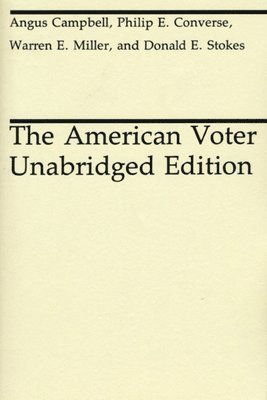
American Voter
Av Angus Campbell, Philip E. Converse m. fl.
Häftad, 1980
576 kr
Lägg i varukorg
Here is the unabridged version of the classic theoretical study of voting behavior, originally published in 1960. It is a standard reference in the field of electoral research, presenting formulations of the theoretical issues that have been the focus of scholarly publication. No single study …
Without Consent
Mass-Elite Linkages in Presidential Politics
Inbunden, 1988
372 kr
Lägg i varukorg
The transmission of policy preferences from the mass electorate to the political elite is the subject of Warren Miller's illuminating new book. The elites of whom he writes are the delegates to recent nominating conventions analyzed in their subsequent roles as activists involved in presidential …
Without Consent
Mass-Elite Linkages in Presidential Politics
E-bok, 2014
445 kr
Lägg i varukorg
The transmission of policy preferences from the mass electorate to the political elite is the subject of Warren Miller's illuminating new book. The elites of whom he writes are the delegates to recent nominating conventions analyzed in their subsequent roles as activists involved in presidential …
Leadership and Change
Presidential Elections from 1952-1976
Av Warren E. Miller, Teresa E. Levitin
Häftad, 1984
467 kr
Tillfälligt slut
Originally published by Winthrop Publishers in 1976, this volume provides a critical examination of the contribution of the New Politics to continuity and change in the American electorate.