Warren G. Frisina – författare
Visar alla böcker från författaren Warren G. Frisina. Handla med fri frakt och snabb leverans.
6 produkter
6 produkter
E-bok
Engelska, 2008979 kr
Läs direkt efter köp
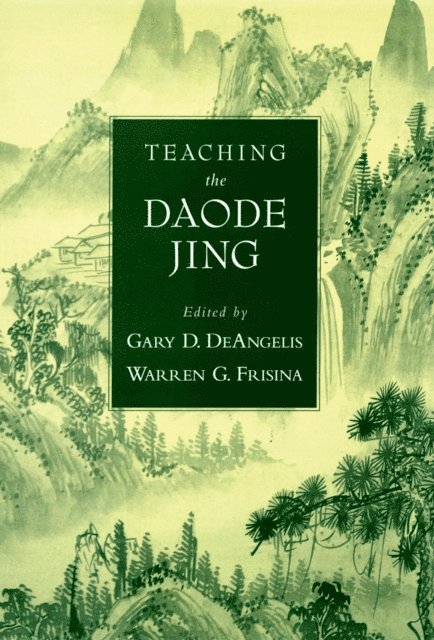
The Daode Jing, a highly enigmatic work rooted in ancient Chinese cosmology, ontology, metaphysics, and moral thinking, is regularly offered to college and high-school students in religion, philosophy, history, literature, Asian studies, and humanities courses. As a result, an ever-expanding group of faculty with very different backgrounds and training routinely confront the question: "How should I teach the Daode Jing?" Written for non-specialists who may not have a background in ancient Chinese culture, the essays collected in this volume provide up-to-date information on contemporary scholarship and classroom strategies that have been successful in a variety of teaching environments. A classic text like the Daode Jing generates debate among scholars and teachers who ask questions like: Should we capitalize on popular interest in the Daode Jing in our classrooms? Which of the many translations and scholarly approaches ought we to use? Is it appropriate to think of the Daode Jing as a religious text at all? These and other controversies are addressed in this volume. Contributors are well-known scholars of Daoism, including Livia Kohn, Norman Girardot, Robert Henricks, Russell Kirkland, Hans-Georg Moeller, Hall Roth, and Michael LaFargue. In addition, there are essays by Eva Wong (Daoist practitioner), David Hall (philosophy), Gary DeAngelis (mysticism), and a jointly written essay on pedagogical strategies by Judith Berling, Geoffrey Foy, and John Thompson (Chinese religion).
Inbunden, Engelska, 2008
1 492 kr
Skickas inom 5-8 vardagar
'How should I teach the Daode Jing?' This question haunts a growing number of non-specialists who find themselves called upon for either curricular or intellectual reasons to teach the DDJ. Teaching the Daode Jing is designed to provide access to contemporary scholarship and pedagogical strategies that can be used when introducing this confounding and yet wonderful text.
E-bok
PDF, Engelska, 2008979 kr
Läs direkt efter köp
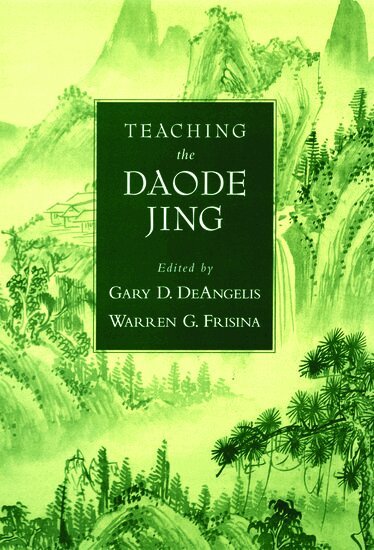
The Daode Jing, a highly enigmatic work rooted in ancient Chinese cosmology, ontology, metaphysics, and moral thinking, is regularly offered to college and high-school students in religion, philosophy, history, literature, Asian studies, and humanities courses. As a result, an ever-expanding group of faculty with very different backgrounds and training routinely confront the question: "How should I teach the Daode Jing?" Written for non-specialists who may not have a background in ancient Chinese culture, the essays collected in this volume provide up-to-date information on contemporary scholarship and classroom strategies that have been successful in a variety of teaching environments. A classic text like the Daode Jing generates debate among scholars and teachers who ask questions like: Should we capitalize on popular interest in the Daode Jing in our classrooms? Which of the many translations and scholarly approaches ought we to use? Is it appropriate to think of the Daode Jing as a religious text at all? These and other controversies are addressed in this volume. Contributors are well-known scholars of Daoism, including Livia Kohn, Norman Girardot, Robert Henricks, Russell Kirkland, Hans-Georg Moeller, Hall Roth, and Michael LaFargue. In addition, there are essays by Eva Wong (Daoist practitioner), David Hall (philosophy), Gary DeAngelis (mysticism), and a jointly written essay on pedagogical strategies by Judith Berling, Geoffrey Foy, and John Thompson (Chinese religion).
Häftad, Engelska, 2002
388 kr
Skickas
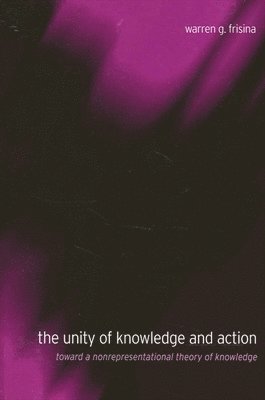
Uses the thought of Wang Yang-ming, John Dewey, and Alfred North Whitehead to explain a more coherent theory of knowledge.Building upon insights from the sixteenth century Neo-Confucian Wang Yang-ming, the American pragmatist John Dewey, and the process philosopher Alfred North Whitehead, this book argues that knowledge is best understood as a form of action. Many of the most puzzling philosophic problems in the modern era can be traced to our tendency to assume that knowledge is separate from action. Letting go of the sharp knowledge-action distinction, however, makes possible a more coherent theory of knowledge that is more adaptive to the way we experience one another, the world, and ourselves. By responding directly to problems raised by contemporary thinkers like Charles Taylor, Donald Davidson, Richard Rorty, Daniel Dennett, Mark Johnson, George Lakoff, and Robert Neville, this book maps out a strategy for making progress in the contemporary quest for a "nonrepresentational theory of knowledge."
Häftad, Engelska, 2006
348 kr
Skickas inom 7-10 vardagar
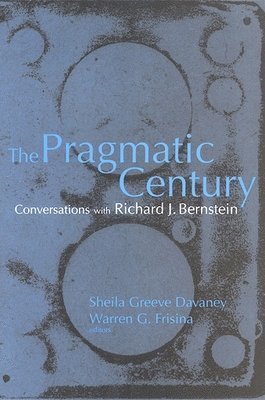
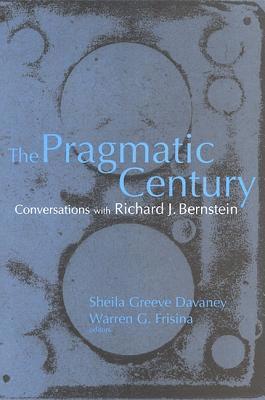
Critically engages the work of American philosopher Richard J. Bernstein.The Pragmatic Century critically assesses the significance of American philosopher Richard J. Bernstein's intellectual contributions. Written by scholars who share with Bernstein a combined interest in the American pragmatic tradition and contemporary religious thought, the essays explore such diverse topics as Bernstein's place as an interpreter of both American and continental thought, the possibility of system building and analysis in an antimetaphysical age, the potential for theological and ethical reinterpretation in contemporary society, and much more. Included are not only responses by Bernstein to each essay, but also two new essays by Bernstein himself that orient readers to the central role pragmatism has played throughout the last century and also provide an encomium to the continuing value of democratic ideals at a time when those ideals are threatened on many different fronts.
Inbunden, Engelska, 2006
1 079 kr
Tillfälligt slut
Critically engages the work of American philosopher Richard J. Bernstein.The Pragmatic Century critically assesses the significance of American philosopher Richard J. Bernstein's intellectual contributions. Written by scholars who share with Bernstein a combined interest in the American pragmatic tradition and contemporary religious thought, the essays explore such diverse topics as Bernstein's place as an interpreter of both American and continental thought, the possibility of system building and analysis in an antimetaphysical age, the potential for theological and ethical reinterpretation in contemporary society, and much more. Included are not only responses by Bernstein to each essay, but also two new essays by Bernstein himself that orient readers to the central role pragmatism has played throughout the last century and also provide an encomium to the continuing value of democratic ideals at a time when those ideals are threatened on many different fronts.