Weilie Zhou – författare
Visar alla böcker från författaren Weilie Zhou. Handla med fri frakt och snabb leverans.
6 produkter
Scanning Microscopy for Nanotechnology
Techniques and Applications
Av Weilie Zhou, Zhong Lin Wang
Inbunden, 2006
2512 kr
Lägg i varukorg
Scanning electron microscopy (SEM) can be exploited not only for nanomaterials characterization but also integrated with new technologies for in-situ nanomaterials engineering and manipulation. Scanning Microscopy for Nanotechnology addresses the rapid development of these techniques for …
Scanning Microscopy for Nanotechnology
Techniques and Applications
Av Zhong Lin Wang, Weilie Zhou
E-bok, 2007
3251 kr
Lägg i varukorg
Scanning electron microscopy (SEM) can be exploited not only for nanomaterials characterization but also integrated with new technologies for in-situ nanomaterials engineering and manipulation. Scanning Microscopy for Nanotechnology addresses the rapid development of these techniques for …
Scanning Microscopy for Nanotechnology
Techniques and Applications
Av Weilie Zhou, Zhong Lin Wang
Häftad, 2010
2512 kr
Lägg i varukorg
Scanning electron microscopy (SEM) can be exploited not only for nanomaterials characterization but also integrated with new technologies for in-situ nanomaterials engineering and manipulation. Scanning Microscopy for Nanotechnology addresses the rapid development of these techniques for …
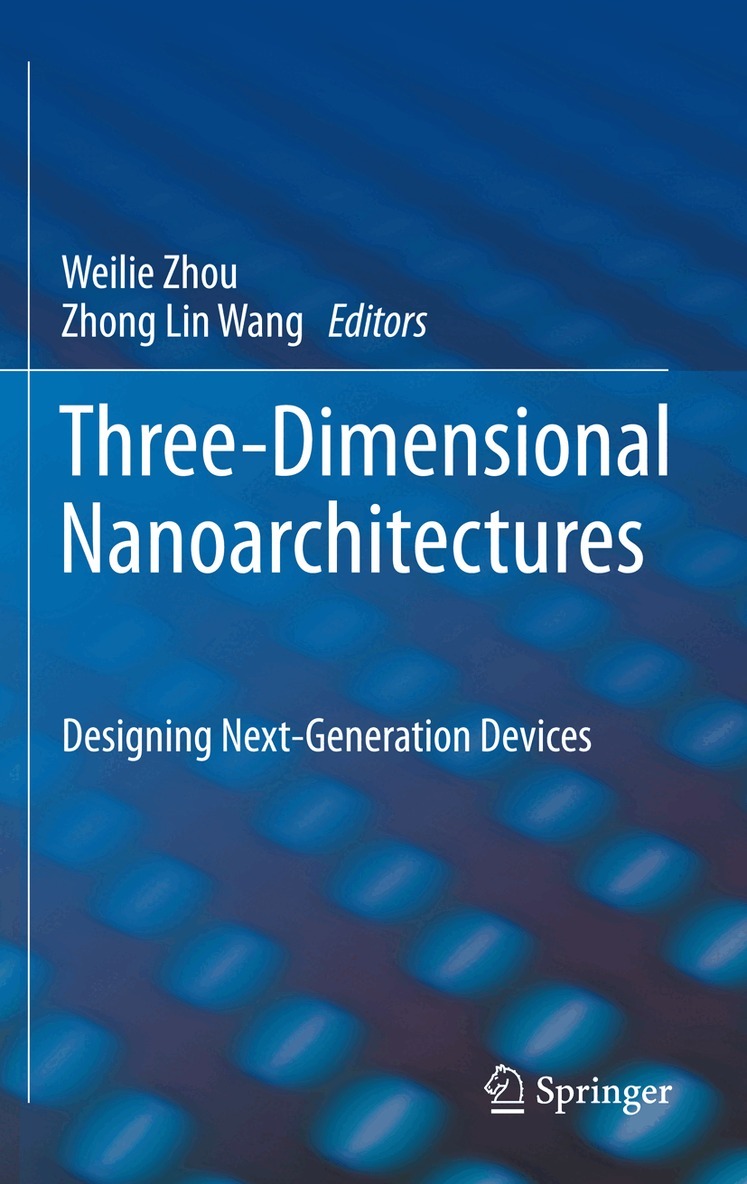
Three-Dimensional Nanoarchitectures
Designing Next-Generation Devices
Av Weilie Zhou, Zhong Lin Wang
Inbunden, 2011
1641 kr
Lägg i varukorg
Devices built from three-dimensional nanoarchitectures offer a number of advantages over those based on thin-film technology, such as larger surface area to enhance the sensitivity of sensors, to collect more sunlight to improve the efficiency of solar cells, and to supply higher density emitters …
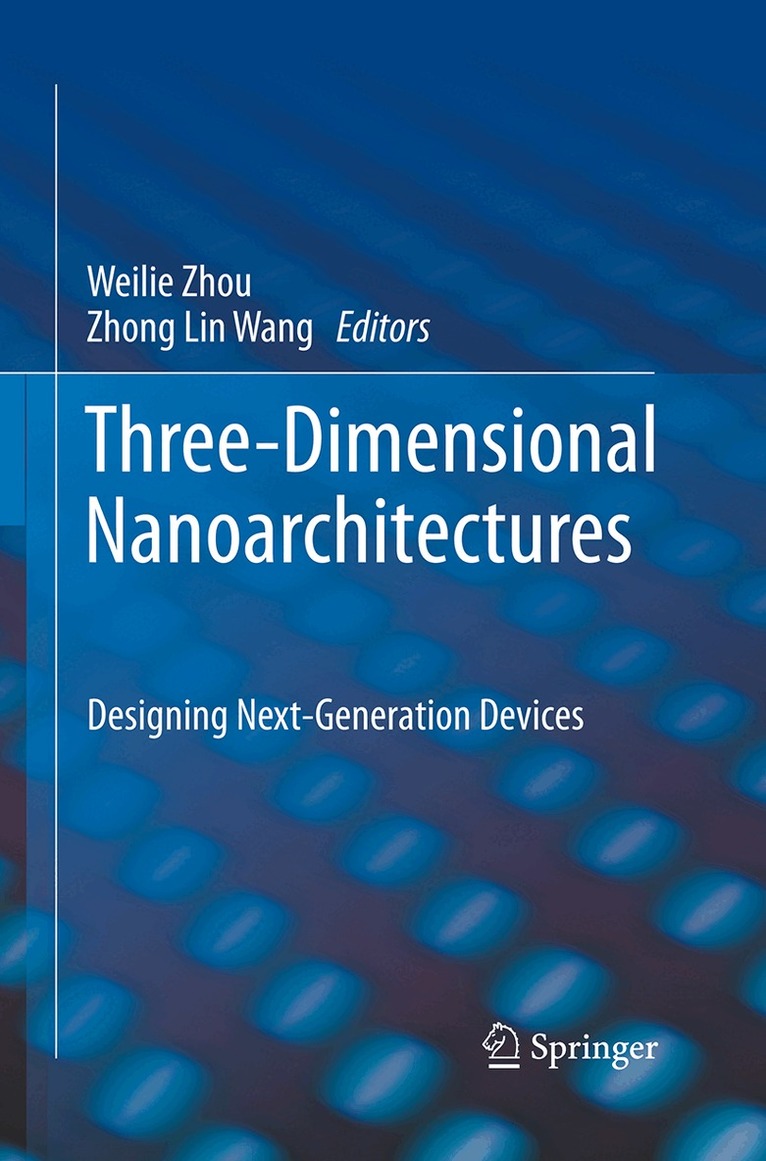
Three-Dimensional Nanoarchitectures
Designing Next-Generation Devices
Av Zhong Lin Wang, Weilie Zhou
E-bok, 2011
2111 kr
Lägg i varukorg
Devices built from three-dimensional nanoarchitectures offer a number of advantages over those based on thin-film technology, such as larger surface area to enhance the sensitivity of sensors, to collect more sunlight to improve the efficiency of solar cells, and to supply higher density emitters …
Three-Dimensional Nanoarchitectures
Designing Next-Generation Devices
Av Weilie Zhou, Zhong Lin Wang
Häftad, 2016
1638 kr
Lägg i varukorg
Devices built from three-dimensional nanoarchitectures offer a number of advantages over those based on thin-film technology, such as larger surface area to enhance the sensitivity of sensors, to collect more sunlight to improve the efficiency of solar cells, and to supply higher density emitters …