Weisheng Lu – författare
1 325 kr
Skickas inom 10-15 vardagar
715 kr
Skickas inom 10-15 vardagar
2 508 kr
Skickas inom 10-15 vardagar
765 kr
Skickas inom 10-15 vardagar
2 924 kr
Läs direkt efter köp
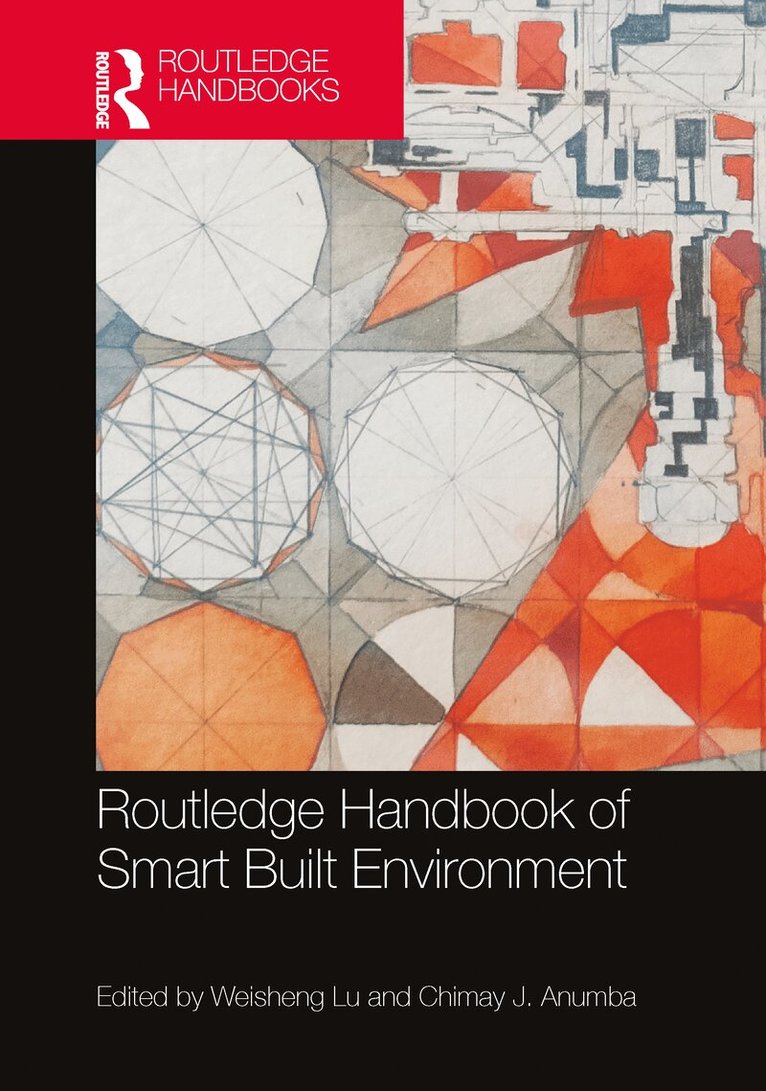
The primary aim of this edited volume is to document the current theories, best practices, and technological advancements in the move towards a Smart Built Environment (SBE). The needs to accelerate towards the SBE are numerous and include:
Increasing complexities and the need for interconnectivity within the built environment (e.g. mega infrastructure projects) Data-driven decision-making resulting in higher demand from clients (e.g. smart design, construction, operation, and end of life [EOL]) High requirements from stakeholders (e.g. system efficiency, environmental performance, green procurement) Fast paced technological advancement and integration Natural disaster resilience of the built environment (e.g. prediction, smart control of building component) Sustainability issues around the built environmentIn this book, the interrelationships among the various lifecycle stages: design, construction, operation, and EOL; the collective benefit of synergy at building level, multi-infrastructure level, and city-level, as well as the ultimate goals in relation to the deployment of smart technologies in the industry are addressed. Part I covers smart design and construction, Part II smart living, and operation, and Part III broadens the scope to the whole smart city. Chapters examine:
How smart technologies can improve the effectiveness, productivity, and efficiency of the built environment An overview of theories and practices that are enabled by innovations and technologies for developing the SBE The basis for new research agenda, new concepts, and frameworks for future developmentThis handbook documents the current theories, practices, and technologies and develops a holistic approach for research and practice by adopting a multidimensional outlook for the SBE. It is an essential reference work for all built environment stakeholders, from academia through to the professions.
2 924 kr
Läs direkt efter köp
The primary aim of this edited volume is to document the current theories, best practices, and technological advancements in the move towards a Smart Built Environment (SBE). The needs to accelerate towards the SBE are numerous and include:
Increasing complexities and the need for interconnectivity within the built environment (e.g. mega infrastructure projects) Data-driven decision-making resulting in higher demand from clients (e.g. smart design, construction, operation, and end of life [EOL]) High requirements from stakeholders (e.g. system efficiency, environmental performance, green procurement) Fast paced technological advancement and integration Natural disaster resilience of the built environment (e.g. prediction, smart control of building component) Sustainability issues around the built environmentIn this book, the interrelationships among the various lifecycle stages: design, construction, operation, and EOL; the collective benefit of synergy at building level, multi-infrastructure level, and city-level, as well as the ultimate goals in relation to the deployment of smart technologies in the industry are addressed. Part I covers smart design and construction, Part II smart living, and operation, and Part III broadens the scope to the whole smart city. Chapters examine:
How smart technologies can improve the effectiveness, productivity, and efficiency of the built environment An overview of theories and practices that are enabled by innovations and technologies for developing the SBE The basis for new research agenda, new concepts, and frameworks for future developmentThis handbook documents the current theories, practices, and technologies and develops a holistic approach for research and practice by adopting a multidimensional outlook for the SBE. It is an essential reference work for all built environment stakeholders, from academia through to the professions.
852 kr
Läs direkt efter köp
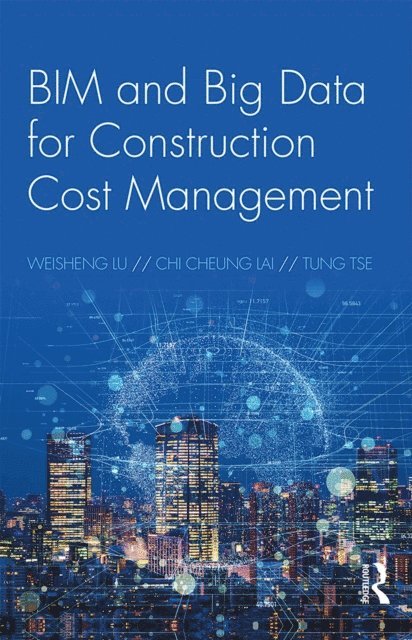
This book is designed to help practitioners and students in a wide range of construction project management professions to understand what building information modelling (BIM) and big data could mean for them and how they should prepare to work successfully on BIM-compliant projects and maintain their competencies in this essential and expanding area.
In this book, the state-of-the-art information technologies that support high-profile BIM implementation are introduced, and case studies show how BIM has integrated core quantity surveying and cost management responsibilities and how big data can enable informed decision-making for cost control and cost planning. The authors'' combined professional and academic experience demonstrates, with practical examples, the importance of using BIM and particularly the fusion of BIM and big data, to sharpen competitiveness in global and domestic markets.
This book is a highly valuable guide for people in a wide range of construction project management and quantity surveying roles. In addition, implications for project management, facilities management, contract administration, and dispute resolution are also explored through the case studies, making this book essential reading for built environment and engineering professionals.
852 kr
Läs direkt efter köp
This book is designed to help practitioners and students in a wide range of construction project management professions to understand what building information modelling (BIM) and big data could mean for them and how they should prepare to work successfully on BIM-compliant projects and maintain their competencies in this essential and expanding area.
In this book, the state-of-the-art information technologies that support high-profile BIM implementation are introduced, and case studies show how BIM has integrated core quantity surveying and cost management responsibilities and how big data can enable informed decision-making for cost control and cost planning. The authors'' combined professional and academic experience demonstrates, with practical examples, the importance of using BIM and particularly the fusion of BIM and big data, to sharpen competitiveness in global and domestic markets.
This book is a highly valuable guide for people in a wide range of construction project management and quantity surveying roles. In addition, implications for project management, facilities management, contract administration, and dispute resolution are also explored through the case studies, making this book essential reading for built environment and engineering professionals.
4 795 kr
Skickas inom 5-8 vardagar
825 kr
Läs direkt efter köp
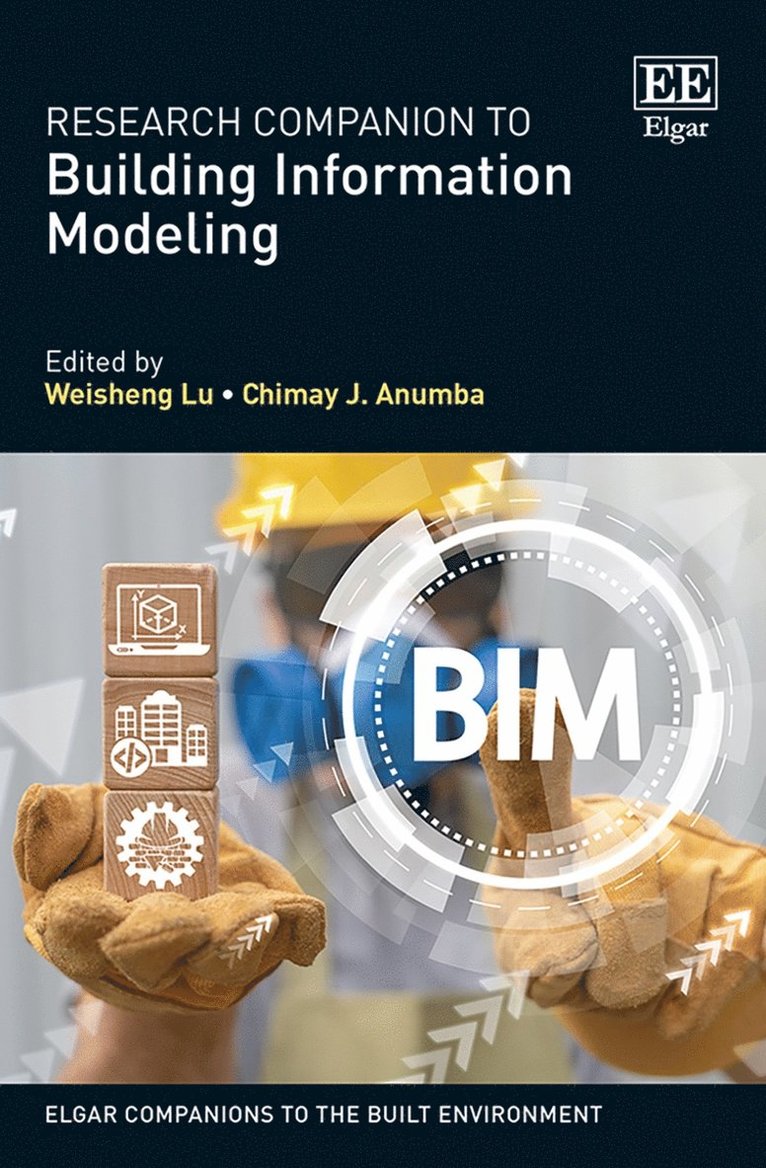
Accessible and thorough, the chapters explore the theory behind and facilitators of BIM, covering knowledge management around BIM, the development of ontologies and language in the area, holistic implementations, and BIM ecosystems. The book further discusses the technological developments of BIM, including scan-to-BIM, 3D digital reconstruction and AI and robotics techniques. Critical analysis of BIM-enabled construction and engineering management innovations are also examined, highlighting prospects and challenges in the area.
This will be a critical read for engineering, construction management and architecture students looking for a comprehensive study of BIM. It will also be beneficial to practitioners working in the Architecture, Engineering, Construction, Owner & Operation (AECOO) industry wanting a better understanding of the benefits and future developments of BIM.
2 522 kr
Skickas inom 10-15 vardagar
2 741 kr
Läs direkt efter köp
3 891 kr
Skickas inom 10-15 vardagar
3 046 kr
Läs direkt efter köp
2 856 kr
Skickas inom 10-15 vardagar
1 073 kr
Skickas inom 10-15 vardagar
1 367 kr
Läs direkt efter köp
1 265 kr
Skickas inom 10-15 vardagar
3 527 kr
Skickas inom 10-15 vardagar
3 865 kr
Läs direkt efter köp
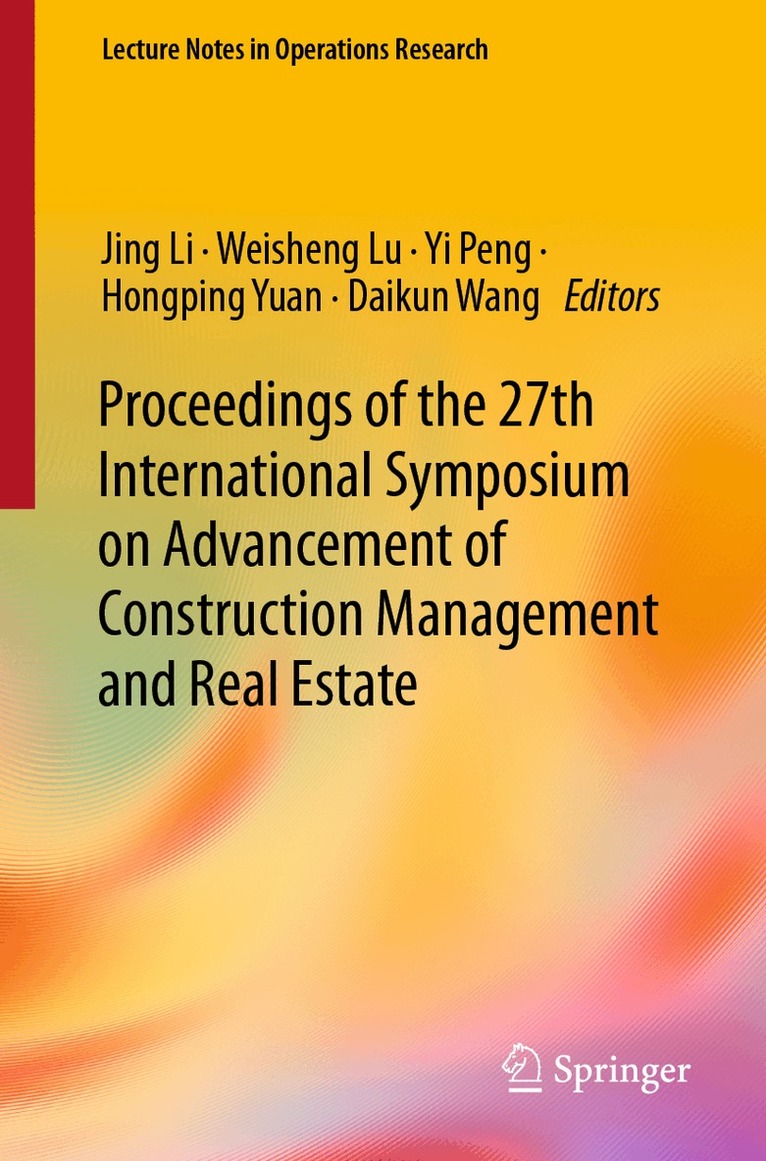
This book presents the proceedings of CRIOCM 2022 (27th International Conference on Advancement of Construction Management and Real Estate), sharing the latest developments in real estate and construction management around the globe. The conference was organized by the Chinese Research Institute of Construction Management (CRIOCM) working in close collaboration with The Chinese University of Hong Kong. Written by international academics and professionals, the book discusses the latest achievements, research findings, and advances in frontier disciplines in the field of construction management and real estate. Covering a wide range of topics, including spatial planning and land use innovation, integration and application of BIM and GIS, low-carbon built environment, post-pandemic resilient cities development, housing and social governance, real estate market and urban policy, real estate finance and economics, intelligent construction and smart city, built environment for healthy living, and construction management in the post-COVID-19 era, the discussions provide valuable insights into the implementation of advanced construction project management and real estate market in China and abroad. The book offers an outstanding resource for academics and professionals