Werner Tietz – författare
Visar alla böcker från författaren Werner Tietz. Handla med fri frakt och snabb leverans.
5 produkter
5 produkter
Inbunden, Tyska, 2013
1 555 kr
Skickas inom 11-20 vardagar
Häftad, Tyska, 1970
812 kr
Skickas inom 5-8 vardagar
E-bok
PDF, Tyska, 20131 204 kr
Läs direkt efter köp
This work deals with food as a sign or symbol in ancient Roman society. Of major relevance for such a field of research is the mos maiorum, the construed but normative way one''s forebears were said to have lived. Especially encounters with Greek culture lead the Romans to become aware of their own identity. Considering above all the mos maiorum, this book undertakes an examination of the various fields in which food worked as a social sign. Under scrutiny are, amongst others, questions of prestige, gift exchange, and identity. These fields are approached mostly from a dichotomic angle, e.g. with regard to social and cultural differences between city dwellers and the rural populace or Romans and non-Romans. Further attention is paid to phenomena of transgression. This regards gender and sexuality of the eaters as well as the substance and the quantity of the things consumed. To sum up, in every field described, food worked as a social symbol through which all kinds of meaning could be communicated, both in ›reality‹ by the ancient Romans and in literature by the Roman writers.
E-bok
PDF, Tyska, 2013794 kr
Läs direkt efter köp
E-bok
PDF, Tyska, 2022349 kr
Läs direkt efter köp
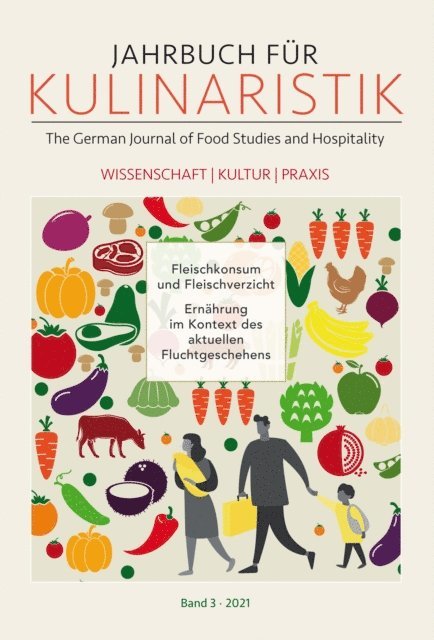
Band 3 des Jahrbuchs für Kulinaristik widmet sich zwei hochaktuellen Themen der historischen und sozialwissenschaftlichen Ernährungsforschung, zum einen dem Fleischkonsum und Fleischverzicht (Teil I) und zum anderen der Ernährung im Kontext des aktuellen Fluchtgeschehens (Teil II). Beide Themen machen deutlich, dass es sich bei der Ernährung in der Moderne um ein Phänomen handelt, für das globale Beziehungen und Verflechtungen konstitutiv sind. Die Tier- und Fleischproduktion sowie der damit verbundene Konsum berühren weltweite ökonomische, ökologische, soziale und gesundheitliche Konflikte und Fragestellungen. Das migrantische Essen bringt die "fremde" Küche in den lokalen Kontext. Bei beiden Themenstellungen wird ebenso deutlich, dass Ernährung nicht nur eine physische Funktion, sondern umfangreiche soziale und kulturelle Funktionen erfüllt. Denn nicht zuletzt geht es immer auch um eine identitäre Selbst- oder Fremdbeschreibung im Hinblick darauf, was man isst oder eben nicht (!) isst. Das gilt für karnivore oder vegetabile Ernährungsweisen ebenso wie für Selbst- und Fremdbilder, die über den Konsum spezifischer Regionalküchen konstruiert werden. Der Teil Varia bietet ein umfangreiches Literaturreview zu den Veränderungen der Ernährung in Folge der Corona-Pandemie, einen Tagungsbericht zu geschlechtsspezifischen Perspektiven auf Ernährungssysteme sowie einen historischen Beitrag zur Geschichte des Bieres in der Weinregion Kurpfalz.