W.F. Chen - Böcker
Visar alla böcker från författaren W.F. Chen. Handla med fri frakt och snabb leverans.
11 produkter
11 produkter
956 kr
Skickas inom 10-15 vardagar
Many important advances in designing modern structures have occurred over the last several years. Structural engineers need an authoritative source of information that thoroughly and concisely covers the foundational principles of the field. Comprising chapters selected from the second edition of the best-selling Handbook of Structural Engineering, Principles of Structural Design provides a tightly focused, concise, and valuable guide to the theoretical, practical, and computational aspects of structural design.This book systematically explores the fundamental concepts underlying structural design for each major type of structural material. Expert contributors authoritatively discuss steel structures, steel frame design using advanced analysis, cold-formed steel structures, reinforced concrete structures, prestressed concrete, and masonry, timber, and aluminum structures. For each construction material, the chapter explores the material properties, design considerations, and structural principles affecting overall design. Reflecting recent advances, the book includes two chapters devoted to reliability-based structural design and structure configuration based on wind engineering. Computational methods and simulation techniques illustrate the concepts of reliability-based design, while examples of real bridges highlight the application of wind engineering principles and methods.Principles of Structural Design couples fundamental concepts with advanced practices. It is an ideal introduction for newcomers to the field as well as a perfect review and quick-reference guide for seasoned engineers.
630 kr
Skickas inom 10-15 vardagar
This book provides an in-depth look at the behavior, design, and construction of offshore structures. It describes the behavior of cylindrical members and suggests appropriate software, written by the contributors, to determine everything from loading up to the ultimate load, including post-buckling and cyclic inelasticity.
915 kr
Skickas inom 10-15 vardagar
The Principles and Application in Engineering Series is a series of convenient, economical references sharply focused on particular engineering topics and subspecialties. Each volume in this series comprises chapters carefully selected from CRC's bestselling handbooks, logically organized for optimum convenience, and thoughtfully priced to fit every budget. From the award-winning Bridge Engineering Handbook, Bridge Engineering: Construction and Maintenance takes an in-depth look at the construction engineering and maintenance aspects of steel and concrete bridges. Topics include effective project management, construction procedures and practices, construction and maintenance inspections and ratings, and bridge strengthening and rehabilitation.
2 383 kr
Tillfälligt slut
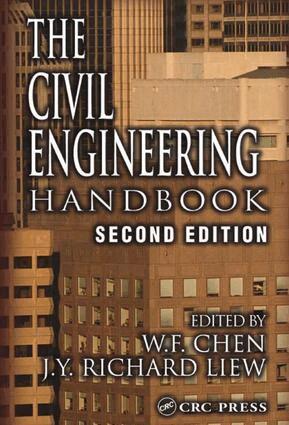
First published in 1995, the award-winning Civil Engineering Handbook soon became known as the field's definitive reference. To retain its standing as a complete, authoritative resource, the editors have incorporated into this edition the many changes in techniques, tools, and materials that over the last seven years have found their way into civil engineering research and practice.The Civil Engineering Handbook, Second Edition is more comprehensive than ever. You'll find new, updated, and expanded coverage in every section. In fact, more than 1/3 of the handbook is new or substantially revised. In particular you'll find increased focus on computing reflecting the rapid advances in computer technology that has revolutionized many aspects of civil engineering.You'll use it as a survey of the field, you'll use it to explore a particular subject, but most of all you'll use The Civil Engineering Handbook to answer the problems, questions, and conundrums you encounter in practice.
3 397 kr
Skickas inom 7-10 vardagar
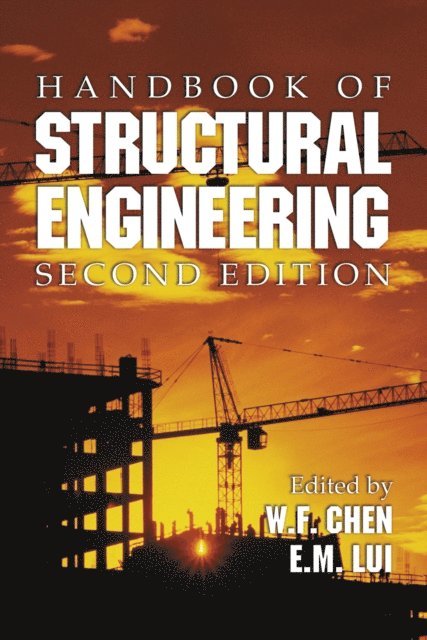
Continuing the tradition of the best-selling Handbook of Structural Engineering, this second edition is a comprehensive reference to the broad spectrum of structural engineering, encapsulating the theoretical, practical, and computational aspects of the field. The authors address a myriad of topics, covering both traditional and innovative approaches to analysis, design, and rehabilitation.The second edition has been expanded and reorganized to be more informative and cohesive. It also follows the developments that have emerged in the field since the previous edition, such as advanced analysis for structural design, performance-based design of earthquake-resistant structures, lifecycle evaluation and condition assessment of existing structures, the use of high-performance materials for construction, and design for safety.Additionally, the book includes numerous tables, charts, and equations, as well as extensive references, reading lists, and websites for further study or more in-depth information. Emphasizing practical applications and easy implementation, this text reflects the increasingly global nature of engineering, compiling the efforts of an international panel of experts from industry and academia. This is a necessity for anyone studying or practicing in the field of structural engineering.New to this editionFundamental theories of structural dynamics Advanced analysis Wind and earthquake-resistant design Design of prestressed concrete, masonry, timber, and glass structures Properties, behavior, and use of high-performance steel, concrete, and fiber-reinforced polymers Semirigid frame structures Structural bracing Structural design for fire safety
2 088 kr
Skickas inom 10-15 vardagar
Many important advances in designing earthquake-resistant structures have occurred over the last several years. Civil engineers need an authoritative source of information that reflects the issues that are unique to the field. Comprising chapters selected from the second edition of the best-selling Handbook of Structural Engineering, Earthquake Engineering for Structural Design provides a tightly focused, concise, and valuable guide to the theoretical, practical, and computational aspects of earthquake engineering.In chapters contributed by renowned experts from around the world, this book supplies the latest concepts, design methodologies, and analytical techniques for mitigating the effects of seismic damage to structures. It discusses the fundamentals of earthquake engineering, explaining the causes of earthquakes and faulting, measurement of earthquakes, and characterization of seismicity. Subsequent chapters discuss the various types of earthquake damage to structures including recent improvements in earthquake performance, seismic design of buildings and bridges considering various types of construction materials, and performance-based seismic design and evaluation of building structures. The book introduces probabilistic approaches to performance-based methodologies as well as an application example of performance-based design.Earthquake Engineering for Structural Design offers practical tools gathered together in a convenient reference for immediate implementation. It is an ideal resource for civil and structural engineers specializing in earthquake engineering.
2 289 kr
Skickas inom 10-15 vardagar
Many important advances in designing modern structures have occurred over the last several years. Structural engineers need an authoritative source of information that thoroughly and concisely covers the foundational principles of the field. Comprising chapters selected from the second edition of the best-selling Handbook of Structural Engineering, Principles of Structural Design provides a tightly focused, concise, and valuable guide to the theoretical, practical, and computational aspects of structural design.This book systematically explores the fundamental concepts underlying structural design for each major type of structural material. Expert contributors authoritatively discuss steel structures, steel frame design using advanced analysis, cold-formed steel structures, reinforced concrete structures, prestressed concrete, and masonry, timber, and aluminum structures. For each construction material, the chapter explores the material properties, design considerations, and structural principles affecting overall design. Reflecting recent advances, the book includes two chapters devoted to reliability-based structural design and structure configuration based on wind engineering. Computational methods and simulation techniques illustrate the concepts of reliability-based design, while examples of real bridges highlight the application of wind engineering principles and methods.Principles of Structural Design couples fundamental concepts with advanced practices. It is an ideal introduction for newcomers to the field as well as a perfect review and quick-reference guide for seasoned engineers.
2 490 kr
Skickas inom 10-15 vardagar
This book provides an in-depth look at the behavior, design, and construction of offshore structures. It describes the behavior of cylindrical members and suggests appropriate software, written by the contributors, to determine everything from loading up to the ultimate load, including post-buckling and cyclic inelasticity.
3 161 kr
Skickas inom 10-15 vardagar
The development of the limit state approach to design in recent years has focused particular attention on two basic requirements: accurate information regarding the behavior of structures throughout the entire range of loading up to the ultimate strength, and simple practical procedures to enable engineers to assess this behavior. This book satisfies these requirements by providing practical analysis methods for the design of steel frames. The book contains a wide range of second-order analyses: from elastic to inelastic, rigid to semi-rigid connections, and simple plastic hinge method to sophisticated plastic-zone method. Computer programs for each analysis are provided in the form of a floppy disk for easy implementation. Sample problems are described and user's manuals are well documented for each program developed in the book.
747 kr
Skickas inom 10-15 vardagar
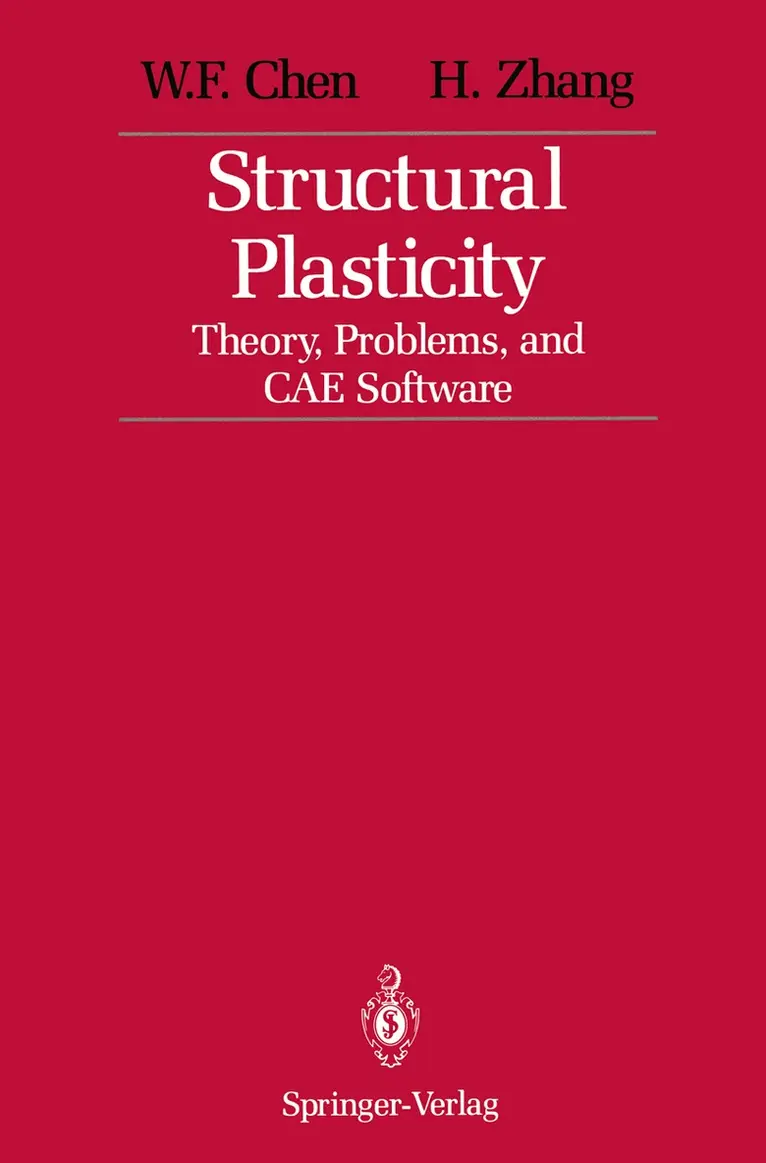
This book is designed for use as a supplement to the textbook "Plasticity for Structural Engineers" by W.F. Chen and D.J. Han (Springer-Verlag, 1988) or other plasticity texts. The purpose is to help students and structural engineers learn and practice how to solve typical engineering plasticity problems in general and, more importantly, how to use computers to solve plasticity problems in structural engineering in particular. To this end, specific numerical algorithms in the computer software implementation of the theory together with actual code development are given. A number of solved and supplementary problems are provided, as well as two computer-aided-education (CAE) programs, to enhance the students' understanding of these subjects.
959 kr
Skickas inom 10-15 vardagar
Plastic Design of Steel Frames assesses the current status and future direction of computer-based analyses of inelastic strength and stability for direct frame design. It shows how design rules are used in practical frame design and provides an introduction to the second-order theory of inelastic frame design. The book includes two computer programs on a diskette: one for the first-order analyses and the other for the second-order plastic hinge analysis of planar frame design. The second-order program can be used to predict realistic strengths and stabilities of planar frames, thereby eliminating the tedious task of estimating factors for individual member capacity checks. Both programs include clear input instructions. The diskette also contains the Fortran source-code listing for the second-order plastic-hinge analysis, enabling the user to customize the program. The programs will run on an IBM PC-AT or equivalent machine with 640 kB of memory and 30 MB hard drive.