Whit Gibbons - Böcker
Visar alla böcker från författaren Whit Gibbons. Handla med fri frakt och snabb leverans.
14 produkter
14 produkter
243 kr
Skickas inom 7-10 vardagar
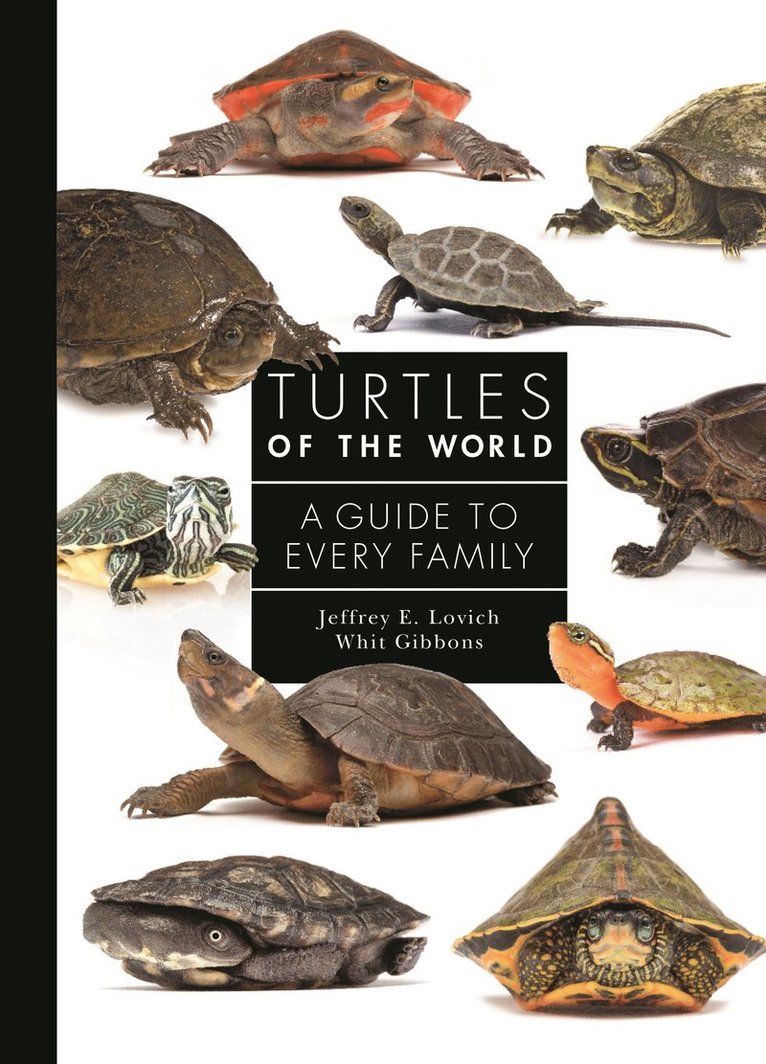
A lavishly illustrated guide to the world's turtles that covers every family and genusTurtles of the World reveals the extraordinary diversity of these amazing reptiles. Characterized by the bony shell that acts as a shield to protect the softer body within, turtles are survivors from the time of the dinosaurs and are even more ancient in evolutionary terms than snakes and crocodilians. Of more than 350 species known today, some are highly endangered. In this beautiful guide, turtle families, subfamilies, and genera are illustrated with hundreds of color photographs. Each genus profile includes a population distribution map, a table of information, and commentary that includes notable characteristics and discussion of related species.More than 250 beautiful color photosEach profile features a distribution map, table of information, and commentaryBroad coverage includes every family and genus
498 kr
Tillfälligt slut
Ever wonder how many kinds of turtles there are? Or if they have teeth? Why so many turtles have yellow stripes on their neck? If it is wise to feed turtles in your neighborhood pond or lake? Whit Gibbons and Judy Greene, two internationally known turtle biologists, provide complete answers to the most frequently asked questions about the more than 300 turtle, tortoise, and terrapin species of the world. From the palm-sized bog turtles of the United States to the great oceanic leatherbacks, turtles across the globe are admired for their persistence, patience, and resilience. They are favorites of scientific study and beloved pets throughout the world. With a friendly mix of scientific analysis and basic encyclopedic coverage, Gibbons and Greene discuss a broad range of turtle topics, including behavior, ecology, reproduction and development, turtle-human relationships, and the appearance of turtles in popular literature. With attractive photographs and an intuitive question-and-answer format, Gibbons and Greene answer more than 100 common questions about these remarkable creatures.Readers who want answers to specific questions or just want to expand their knowledge about these unique and interesting animals will find the information they seek in this essential reference.
363 kr
Skickas inom 7-10 vardagar
Ever wonder how many kinds of turtles there are? Or if they have teeth? Why so many turtles have yellow stripes on their neck? If it is wise to feed turtles in your neighborhood pond or lake? Whit Gibbons and Judy Greene, two internationally known turtle biologists, provide complete answers to the most frequently asked questions about the more than 300 turtle, tortoise, and terrapin species of the world. From the palm-sized bog turtles of the United States to the great oceanic leatherbacks, turtles across the globe are admired for their persistence, patience, and resilience. They are favorites of scientific study and beloved pets throughout the world. With a friendly mix of scientific analysis and basic encyclopedic coverage, Gibbons and Greene discuss a broad range of turtle topics, including behavior, ecology, reproduction and development, turtle-human relationships, and the appearance of turtles in popular literature. With attractive photographs and an intuitive question-and-answer format, Gibbons and Greene answer more than 100 common questions about these remarkable creatures.Readers who want answers to specific questions or just want to expand their knowledge about these unique and interesting animals will find the information they seek in this essential reference.
498 kr
Tillfälligt slut
Frogs are amazingly diverse-ranging from the massive goliath frog, which weighs several pounds, to the recently discovered gold frog, which measures a mere three-eighths of an inch when fully grown-and have inhabited the earth for more than 200 million years. Today, however, these amphibians face more challenges than any other vertebrate group. In this fun and informative book, herpetologists Mike Dorcas and Whit Gibbons answer common and not-so-common questions people may have about these fascinating animals. Dorcas and Gibbons discuss how frogs evolved, which species currently exist in the world, and why some have recently gone extinct. They reveal what frogs eat and what eats them, their role in cultures across the globe, why many populations are declining and what we can do to reverse this dangerous trend, why there are deformed frogs, and much more. They answer expected questions such as "What is the difference between a frog and a toad?" and "Why do some people lick toads?" and unexpected ones such as "Why do some frogs lay their eggs in the leaves of trees?" and "Do frogs feel pain?"The authors' easy-to-understand yet thorough explanations provide insight into the amazing biology of this amphibian group. In addressing conservation questions, Dorcas and Gibbons highlight the frightening implications of the current worldwide amphibian crisis, which many scientists predict will bring extinction rates experienced by frog species to levels not seen in any vertebrate animal group in millions of years. Packed with facts and featuring two color galleries and 70 black-and-white photographs, Frogs: The Animal Answer Guide is sure to address the questions on the minds of curious naturalists.
317 kr
Skickas inom 7-10 vardagar
Frogs are amazingly diverse-ranging from the massive goliath frog, which weighs several pounds, to the recently discovered gold frog, which measures a mere three-eighths of an inch when fully grown-and have inhabited the earth for more than 200 million years. Today, however, these amphibians face more challenges than any other vertebrate group. In this fun and informative book, herpetologists Mike Dorcas and Whit Gibbons answer common and not-so-common questions people may have about these fascinating animals. Dorcas and Gibbons discuss how frogs evolved, which species currently exist in the world, and why some have recently gone extinct. They reveal what frogs eat and what eats them, their role in cultures across the globe, why many populations are declining and what we can do to reverse this dangerous trend, why there are deformed frogs, and much more. They answer expected questions such as "What is the difference between a frog and a toad?" and "Why do some people lick toads?" and unexpected ones such as "Why do some frogs lay their eggs in the leaves of trees?" and "Do frogs feel pain?"The authors' easy-to-understand yet thorough explanations provide insight into the amazing biology of this amphibian group. In addressing conservation questions, Dorcas and Gibbons highlight the frightening implications of the current worldwide amphibian crisis, which many scientists predict will bring extinction rates experienced by frog species to levels not seen in any vertebrate animal group in millions of years. Packed with facts and featuring two color galleries and 70 black-and-white photographs, Frogs: The Animal Answer Guide is sure to address the questions on the minds of curious naturalists.
440 kr
Skickas inom 7-10 vardagar
A description of more than 200 poisonous plants and animals in Alabama and South-east America. There is a discussion of toxic properties, symptoms of poisoning, habitat occurrence and geographic distribution.
273 kr
Skickas inom 7-10 vardagar
Their Blood Runs Cold is entertaining, informative reading that not only enhances our understanding of a unique group of animals, but also provides genuine insight into the mind and character of a research scientist.Whit Gibbons possesses the rare talent of conveying the challenge and excitement of scientific inquiry. A research ecologist who specialises in the study of reptiles and amphibians, he gives accounts of work in the field that are as readable as good short stories.From the dangers of being chased by an angry rattlesnake to the exhilaration of discovering a previously undescribed species, Gibbons brings to life the everyday experiences of the herpetologist as he chases down lizards, turtles, snakes, alligators, salamanders, and frogs in their natural habitats. With essays like “Turtles May Be Slow but They’re 200 Million Years Ahead of Us” and “How to Catch an Alligator in One Uneasy Lesson,” Their Blood Runs Cold both entertains and informs.The thirtieth anniversary edition of Their Blood Runs Cold features a new prologue and epilogue, additions that address changes in the taxonomy and study of reptiles and amphibians that have occurred since the publication of the original edition and offer suggestions for further reading that highlight the explosion of interest in the topic.
418 kr
Skickas inom 3-6 vardagar
Seventy-five percent of the turtle species in the United States can be found in the Southeast. In fact, the region is second only to parts of Asia in its number of native turtles. Filled with more than two hundred color photographs and written with a special focus on conservation, this guide covers forty-five species of this nonthreatening, ancient lineage of long-lived reptiles.Heavily illustrated, fact-filled descriptions of each species and its habitat comprise the heart of the book. Species accounts cover such information as descriptions of adults and hatchlings; key identifiers including size, distinctive characters and markings; land, river, pond, and wetland habitats; behaviors and activities; food and diet; reproduction; predators and defense; and conservation issues.Also included is a wealth of general information about the importance of turtle conservation and the biology, diversity, and life history of turtles. Discussed are distinguishing turtle characteristics; differences among turtles, tortoises, and terrapins; shell structure and architecture; reproduction and longevity; turtle predators and defense mechanisms; and turtle activities such as basking, hibernation, aestivation, and seasonal movement. Useful information about the interactions of humans and turtles is also covered: species that are likely to be commonly encountered, turtles as pets, and more.Clearly written, cleanly designed, and fun to use, the guide will promote a better understanding of the habitat needs of, and environmental challenges to, this fascinating group of animals.Features:In-depth descriptions of the forty-two native speciesConservation-oriented approachMore than two hundred color photographsNearly forty distribution mapsClear descriptions of each species, including differences in the appearance of young and mature turtles“Did You Know?” sidebars of interesting turtle factsSize charts; key identifiers; and information about habitat, behavior and activity, food and feeding, reproduction, predators and defense, and conservation
334 kr
Skickas inom 3-6 vardagar
With more than forty native and introduced species of frogs and toads occurring in the southeastern United States, the region represents the heart of frog and toad diversity in the country. Renowned herpetologists Mike Dorcas and Whit Gibbons provide us with the most comprehensive and authoritative, yet accessible and fun-to-read, guide to these sometimes wet, sometimes warty wonders of nature.Dorcas and Gibbons enumerate the distinguishing characteristics of frogs and toads, including how they are different from other amphibians and the differences between a frog and a toad. Also discussed are the morphology of frogs and toads, the main groups to be found in the Southeast, and their habitats. Individual species accounts contain a physical description of the species plus information about distribution and habitat, behavior and activity, food and feeding, predators and defense, calls and vocalizations, reproduction and description of eggs and tadpoles, and conservation. Accompanying each account are photographs illustrating typical adults and variations and distribution maps for the Southeast and the United States.Given the recent worldwide decline in amphibian populations and increasing scientific and popular concern for what these declines mean for all other organisms, Frogs and Toads of the Southeast will appeal to people of all ages and levels of knowledge interested in natural history and conservation. The guide will help foster the growing interest in frogs and toads as well as cultivate a desire to protect and conserve these fascinating amphibians and their habitats.Features:Conservation-oriented approachApproximately 250 color photographsApproximately 45 distribution mapsClear description and photographs of each species in both tadpole and adult stagesChapters on identification, vocalizations, reproduction, global diversity (including remarkable species such as the gastric brooding frog, poison dart frogs, and saltwater frogs), and introduced speciesA selection of frog and toad vocalizations at www.ugapress.org/FrogsAndToads
394 kr
Skickas inom 3-6 vardagar
Describing 102 species of salamanders occurring in the southeastern United States, ecologists Joe Mitchell and Whit Gibbons provide us with the most comprehensive and authoritative, yet accessible and fun-to-read, guide to these often secretive, always fascinating wonders of nature.Mitchell and Gibbons enumerate the distinguishing characteristics of salamanders, including how they are different from other amphibians and from reptiles, especially lizards. Also discussed are distribution, habitat, behavior and activity, reproduction, food and feeding, predators and defense, conservation, and taxonomy. Accompanying each account are photographs illustrating typical adults and variations and distribution maps for the Southeast and the United States.Given that 17 percent of the world’s species of salamanders live in the Southeast and the scientific and popular concern for the worldwide decline in amphibian populations in general, Salamanders of the Southeast will appeal to people of all ages and levels of knowledge interested in natural history and conservation. The guide will help foster the growing interest in salamanders as well as cultivate a desire to protect and conserve these fascinating amphibians and their habitats.Features:Conservation-oriented approachMore than 400 color photographs77 distribution mapsClear descriptions and photographs of each speciesSections on biology, worldwide diversity, identification, taxonomy, habitats, and conservationDid You Know?” sidebars of interesting facts
496 kr
Skickas inom 3-6 vardagar
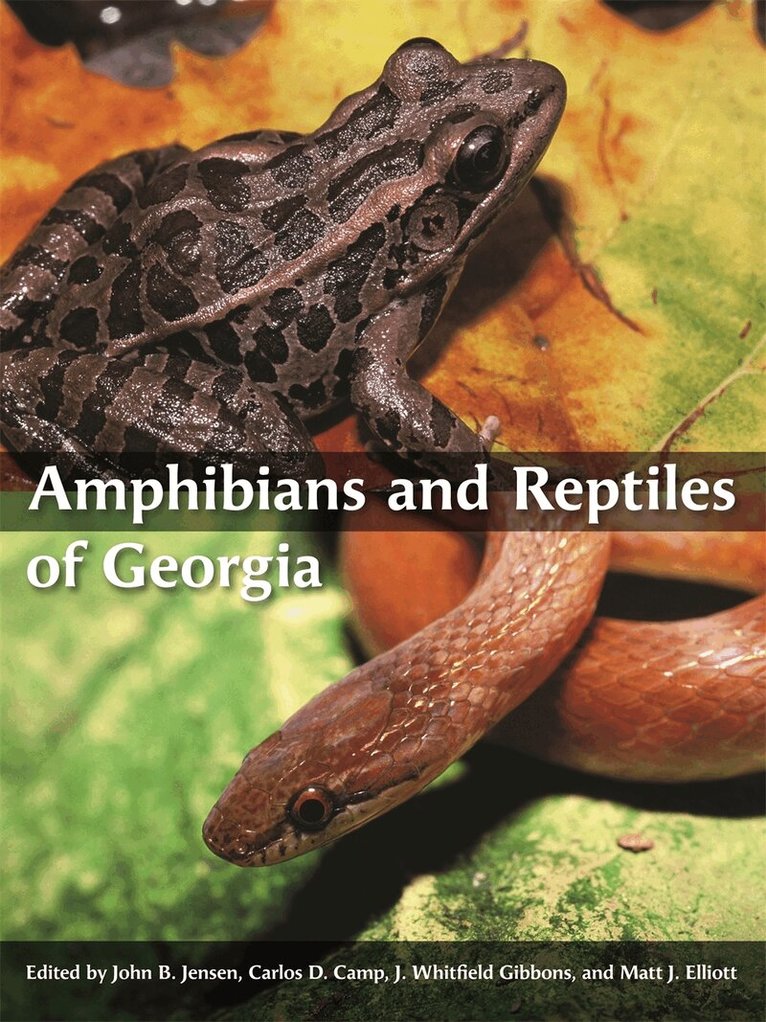
A hidden world of amphibians and reptiles awaits the outdoor adventurer in Georgia’s streams, caves, forests, and wetlands. Amphibians and Reptiles of Georgia makes accessible a wealth of information about 170 species of frogs, salamanders, crocodilians, lizards, snakes, and turtles. Throughout, the book stresses conservation, documenting declines in individual species as well as losses of local and regional populations.Color photographs are paired with detailed species accounts, which provide information about size, appearance, and other identifying characteristics of adults and young; taxonomy and nomenclature; habits; distribution and habitat; and reproduction and development. Typical specimens and various life stages are described, as well as significant variations in such attributes as color and pattern. Line drawings define each group’s general features for easy field identification. Range maps show where each species occurs in Georgia county by county, as well as in the United States generally. State maps depict elevations, streams, annual precipitation, land use changes, physiographic provinces, and average temperatures.The book includes a checklist, a chart of the evolutionary relationships among amphibians and reptiles, a list of the top ten most reported species by major group, and a table summarizing the diversity of amphibians and reptiles in the state’s five physiographic provinces. Amphibians and Reptiles of Georgia is an authoritative reference for students, professional herpetologists, biologists, ecologists, conservationists, land managers, and amateur naturalists.Features:Nearly 500 color photographs24 line drawings showing each group’s defining featuresAlmost 200 range maps detailing county-by-county distributionDetailed species accounts written by 54 regional experts providing information on size, appearance, and other identifying characteristics of adults and young; taxonomy and nomenclature; habits; distribution and habitat; and reproduction and developmentIntroductory sections providing overviews of physiography, climate, and habitats of Georgia, the Georgia Herp Atlas Project, taxonomic issues, conservation, and herpetology as a science and a careerA selection of frog and alligator vocalizations at www.ugapress.org/AmphibsAndReptiles
301 kr
Skickas inom 3-6 vardagar
With scholarly expertise and infectious enthusiasm, Whit Gibbons explores the many pieces that support our natural environment. Whether describing caterpillar disguises, fish that produce antifreeze, the mutual reliance of rhinoceroses and Trewia trees, or the origins of tumbleweed, he affirms the delicate and intricate biological relationships between species and encourages a deeper knowledge of our natural world. In these essays Gibbons celebrates the beauty of biodiversity and laments the tragedy of “ecovoids,” a term he coined to describe missing components of our environment that we wish were still present but can never be replaced.
379 kr
Skickas inom 5-8 vardagar
Host to more than one hundred species of reptiles and amphibians, the Savannah River Site, a 780-square-kilometer tract in South Carolina, is one of the most intensely studied areas of herpetological ecology in the world. This guide is a summary of basic information on the site’s richly varied herpetofauna, from their taxonomy and distribution to their behavior and habitats.Keys to identify the adult and larval forms of the site’s known species comprise the core of the guide. These keys are supplemented by maps, graphs, and illustrations as well as by information on habitats; population characteristics and distribution; behavior related to movement, feeding, and reproduction; morphology; and techniques for collecting specimens. The guide also includes information about special identification and study problems involving unresolved sighting reports; subspeciation; and venomous, edible, endangered, and introduced species. Finally, a bibliography gives not only the sources referred to in the guide but virtually all studies and reports based on herpetological research conducted at the Savannah River Site. The site-related publications are listed by author but can also be found through an index to the subjects they cover.Guide to the Reptiles and Amphibians of the Savannah River Site is a valuable one-volume introduction to the existing information on herpetofauna at the site and to the countless research opportunities the site still presents. Because it is clearly written and designed and lists most of the reptiles and amphibians found in Georgia and South Carolina, the guide is also useful to wildlife observers--professional and amateur--in those states.
385 kr
Skickas inom 3-6 vardagar
Describing more than 120 species of salamanders occurring in the eastern United States, ecologists Whit Gibbons, Larry Wilson, and Joe Mitchell, provide us with the most comprehensive and authoritative—yet accessible and fun-to-read—guide to these often secretive, always fascinating wonders of nature. Gibbons, Wilson, and Mitchell enumerate the distinguishing characteristics of salamanders, including how they are different from other amphibians and from reptiles, especially lizards. Also discussed are distribution, habitat, behavior and activity, reproduction, food and feeding, predators and defense, conservation, and taxonomy. Accompanying each account are photographs illustrating typical adults and variations and distribution maps for the eastern U.S. and the United States as a whole. Given that a high percentage of the world’s species of salamanders live in the Southeast and Northeast and the scientific and popular concern for the worldwide decline in amphibian populations in general, Salamanders of the Eastern United States will appeal to people of all ages and levels of knowledge interested in natural history and conservation. The guide will help foster the growing interest in salamanders as well as cultivate a desire to protect and conserve these fascinating amphibians and their habitats. FEATURES: conservation-oriented approach more than 400 color photographs more than 80 distribution maps clear species descriptions and photographs sections on biology, worldwide diversity, identification, taxonomy, habitats, and conservation “Did You Know?” sidebars of interesting facts