Will Davies – författare
Visar alla böcker från författaren . Handla med fri frakt och snabb leverans.
13 produkter
13 produkter
Häftad, Engelska, 2018
176 kr
Skickas
E-bok
Engelska, 2018291 kr
Läs direkt efter köp
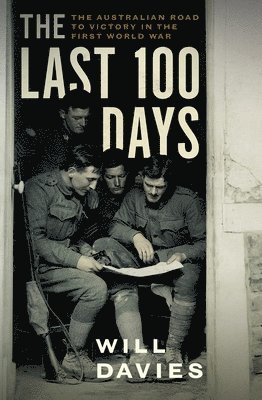
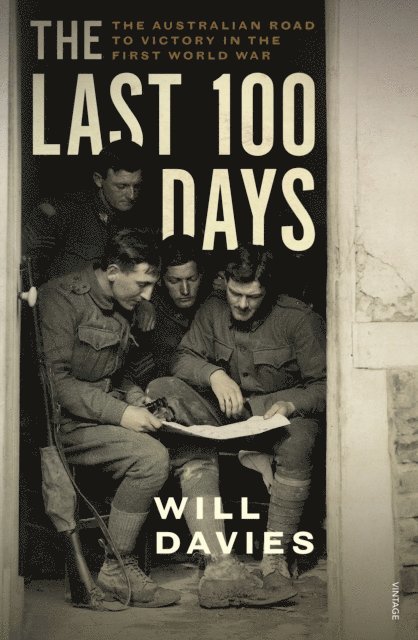
In March 1918, with the fear of a one-million-man American army landing in France, the Germans attacked. In response, Australian soldiers were involved in a number of engagements, culminating in the Second Battle of Villers-Bretonneux and the saving of Amiens, and Paris, from German occupation.Then came General John Monash''s first victory as the Commanding Officer of the newly formed Australian Corps at Hamel. This victory, and the tactics it tested, became crucial to the Allied victory after 8 August, the ''black day of the German Army''. On this day the major Allied counteroffensive began, with the AIF in the vanguard of the attack. The Australians, with the Canadians to the south and the British across the Somme to the north, drove the Germans back, first along the line of the Somme and then across the river to Mont St Quentin, Péronne and on to the formidable Hindenburg Line, before the last Australian infantry action at Montbrehain in early October.Fast-paced and tense, the story of The Last 100 Days is animated by the voices of Australian soldiers as they endured the war''s closing stages with humour and stoicism; and as they fought a series of battles in which they played a pivotal role in securing Allied victory.
E-bok
Engelska, 2021291 kr
Läs direkt efter köp
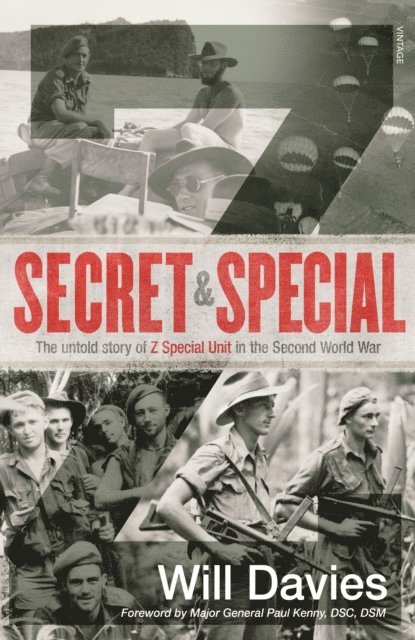
Soon after the declaration of war on Japan, a secret military reconnaissance unit was established, based on the British Special Operations Executive (known as SOE) and called the Inter-allied Services Department. The unit was tasked with the role to "obtain and report information of the enemy ... weaken the enemy by sabotage and destruction of morale and to lend aid and assistance to local efforts to the same end in enemy occupied territories." In 1943 it became known under the cover name Special Reconnaissance Department (SRD) and included some British officers who had escaped from Singapore. After arriving in Australia, they assembled in Melbourne, forming the nucleus of ISD and together with some Australians established what became the Z Special Unit.Training began in a number of locations around Australia including on Fraser Island off the Queensland coast, In Broken Bay near Sydney, at Careening Bay in Western Australia, at the “House on the Hill” in Cairns and at East Arm near Darwin. From these training areas and bases, Z Special undertook intelligence gathering and raiding missions throughout Southeast Asia including New Guinea, Singapore, Timor, Malaya, Borneo, Vietnam and the Dutch East Indies. The first operation was Jaywick in September 1943. Led by a 28 year old officer from the Gordon Highlanders, Captain Ivan Lyon. Using an old Japanese fishing boat renamed Krait this captured vessel was re-fitted and provisioned for a voyage from Australia to just south of Singapore where it released six commandos in three folding kayaks to attack Japanese shipping in the harbour. They placed limpet mines on several Japanese ships sinking 40,000 tons of shipping. After the successful attack, they paddled south, were picked up by the Krait and successfully returned to Australia. This was followed by Operation Rimau again led by Lyon but this time things went very wrong very early. Identified, they made a fighting withdrawal but all of the raiding party were shot or captured, with the last ten being executed just before the end of the war. Important in Z Special operations were a number of vessels designated “snake boats”. Four 66’ modified trawlers were constructed as well as a range of Asian vessels that allowed their operation in South East Asian areas of operation. One Z Special, the last in PNG, set out on the night of the 11 April 1945. Eight operatives were landed on the Japanese held island of Muschu about five kilometres off the coast near Wewak to determine the status of two 140mm Japanese naval guns that had been placed there. These guns would prove dangerous to planned naval landings at Wewak, and allied command needed to know if these were operational. The operatives were launched in four double folding kayaks from a HTML fast crash boat but the current carried them away from their landing position and the surf capsized their boats. The men swam ashore but both their radio and their signal torches had been destroyed and the men had no way of connecting with the return crash boat. Soon their lost equipment was found by the Japanese and a massive search with 1,000 troops scoured the island. Quite soon seven of the eight men had been captured, killed or died trying to swim to the mainland and only one man, Sergeant ‘Mick’ Dennis remained.Over the next three days he continued a one man war, fighting off Japanese patrols and living off the land. Unable to do this for long, he took to the dangerous shark and crocodile infested waters and with the aid of a log, paddled to the mainland. Landing on a Japanese controlled beach, he snuck ashore and after further firefights and a difficult journey travelling west, he finally was found by an Australian patrol. Mick Dennis was able to provide valuable information and for his service and bravery, was awarded a Military Medal.During the course of the war, Z Special Unit carried out 81 covert operations in the Southwest Pacific theatre. While the unit was disbanded after the end of the war, many of its techniques would be modified and used by Australian Special Forces to this day.
E-bok
PDF, Engelska, 2020440 kr
Läs direkt efter köp
Psychiatry Reborn: Biopsychosocial Psychiatry in Modern Medicine is a comprehensive collection of essays by leading experts in the field, and provides a timely reassessment of the biopsychosocial approach in psychiatry. Spanning the sciences and philosophy of psychiatry, the essays offer complementary perspectives on the ever more urgent importance of the biopsychosocial approach to modern medicine. The collection brings together ideas from the series of Loebel Lectures by world leaders in the field of psychiatry and associated Workshops at the University of Oxford, including revised versions of the Lectures themselves, and a wide range of related commentaries and position pieces. With contributions from psychiatry, psychology, neuroscience, and philosophy, the book provides the most comprehensive account to date of the interplay between biological, psychological, and social factors in mental health and their ethical dimensions. The 23 chapters of this multi-authored book review the history and place of the biopsychosocial model in medicine, and explore its strengths and shortcomings. In particular, it considers how understanding this interplay might lead to more effective treatments for mental health disorders, as developments in genomic and neurobiological medicine challenge traditional conceptions and approaches to the research and treatment of mental health disorders. The book explores the challenges and rewards of developing diagnostic tools and clinical interventions that take account of the inextricably intertwined bio-psycho-social domains, and the ethical implications of the conceptualization. It concludes with chapters drawing together the book''s range of expertise to propose a best conception of the model, and how it might be adopted going forward in an age of exponentially increasing technological advances and of integrated/collaborative care. The volume is intended to present the BPS model as it stands today in the academy, the lab, and the clinic, and to start to address the challenges and potential that the model has for each.
E-bok
Engelska, 2020440 kr
Läs direkt efter köp
Psychiatry Reborn: Biopsychosocial Psychiatry in Modern Medicine is a comprehensive collection of essays by leading experts in the field, and provides a timely reassessment of the biopsychosocial approach in psychiatry. Spanning the sciences and philosophy of psychiatry, the essays offer complementary perspectives on the ever more urgent importance of the biopsychosocial approach to modern medicine. The collection brings together ideas from the series of Loebel Lectures by world leaders in the field of psychiatry and associated Workshops at the University of Oxford, including revised versions of the Lectures themselves, and a wide range of related commentaries and position pieces. With contributions from psychiatry, psychology, neuroscience, and philosophy, the book provides the most comprehensive account to date of the interplay between biological, psychological, and social factors in mental health and their ethical dimensions. The 23 chapters of this multi-authored book review the history and place of the biopsychosocial model in medicine, and explore its strengths and shortcomings. In particular, it considers how understanding this interplay might lead to more effective treatments for mental health disorders, as developments in genomic and neurobiological medicine challenge traditional conceptions and approaches to the research and treatment of mental health disorders. The book explores the challenges and rewards of developing diagnostic tools and clinical interventions that take account of the inextricably intertwined bio-psycho-social domains, and the ethical implications of the conceptualization. It concludes with chapters drawing together the book''s range of expertise to propose a best conception of the model, and how it might be adopted going forward in an age of exponentially increasing technological advances and of integrated/collaborative care. The volume is intended to present the BPS model as it stands today in the academy, the lab, and the clinic, and to start to address the challenges and potential that the model has for each.
Häftad, Engelska, 2020
622 kr
Skickas inom 5-8 vardagar
Psychiatry Reborn: Biopsychosocial Psychiatry in Modern Medicine is a comprehensive collection of essays by leading experts in the field, and provides a timely reassessment of the biopsychosocial approach in psychiatry. Spanning the sciences and philosophy of psychiatry, the essays offer complementary perspectives on the ever more urgent importance of the biopsychosocial approach to modern medicine. The collection brings together ideas from the series of Loebel Lectures by world leaders in the field of psychiatry and associated Workshops at the University of Oxford, including revised versions of the Lectures themselves, and a wide range of related commentaries and position pieces. With contributions from psychiatry, psychology, neuroscience, and philosophy, the book provides the most comprehensive account to date of the interplay between biological, psychological, and social factors in mental health and their ethical dimensions. The 23 chapters of this multi-authored book review the history and place of the biopsychosocial model in medicine, and explore its strengths and shortcomings. In particular, it considers how understanding this interplay might lead to more effective treatments for mental health disorders, as developments in genomic and neurobiological medicine challenge traditional conceptions and approaches to the research and treatment of mental health disorders. The book explores the challenges and rewards of developing diagnostic tools and clinical interventions that take account of the inextricably intertwined bio-psycho-social domains, and the ethical implications of the conceptualization. It concludes with chapters drawing together the book's range of expertise to propose a best conception of the model, and how it might be adopted going forward in an age of exponentially increasing technological advances and of integrated/collaborative care. The volume is intended to present the BPS model as it stands today in the academy, the lab, and the clinic, and to start to address the challenges and potential that the model has for each.
Häftad, Engelska, 2008
137 kr
Skickas
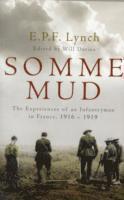
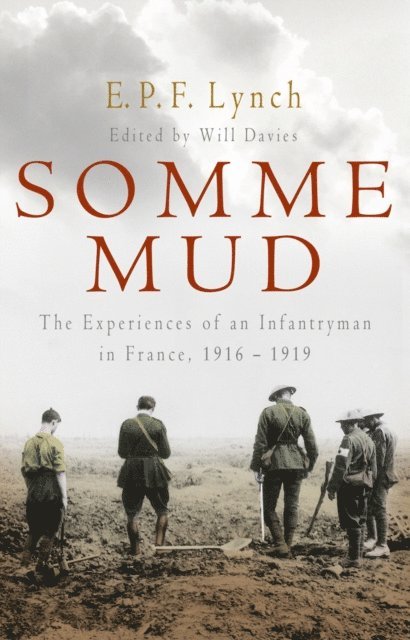
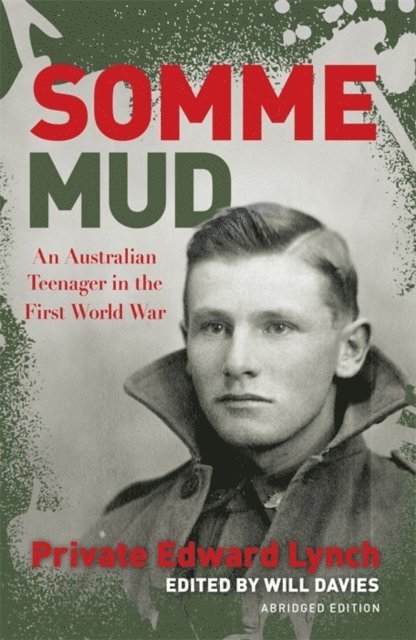
'It's the end of the 1916 winter and the conditions are almost unbelievable. We live in a world of Somme mud. We sleep in it, work in it, fight in it, wade in it and many of us die in it. We see it, feel it, eat it and curse it, but we can't escape it, not even by dying...'Edward Lynch enlisted when he was just 18 - one of thousands of fresh-faced men who were proudly waved off by the crowds as they embarked for France. It was 1916 and the majority had no idea of the reality of the Somme trenches, of the traumatised soldiers they would encounter there, of the innumerable, awful contradictions of war. Private Lynch was one of those who survived, and on his return home, wrote Somme Mud in pencil in over 20 school exercise books, perhaps in the hope of coming to terms with all that he had witnessed there? Written from the perspective of an ordinary 'Tommy' and told with dignity, candour and surprising wit, Somme Mud is a testament to the human spirit: for out of the mud that threatened to suck out a man's soul rises a compelling story of humanity and friendship. For all who are marking the centenary of the Great War, it is a rare and precious find.
Häftad, Engelska, 2010
187 kr
Skickas
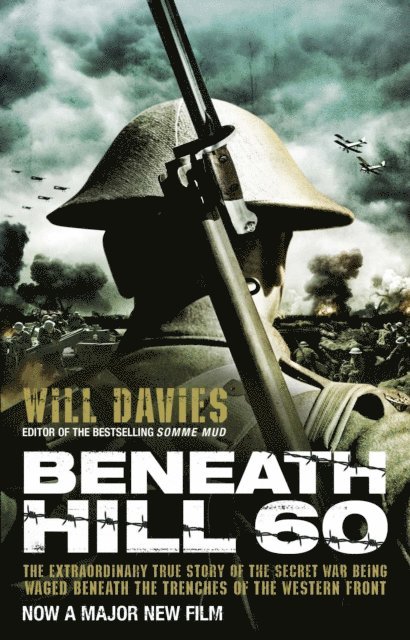
'Ten seconds, nine, eight, seven, six, five, four, three, two, one - fire! Down goes the firing switch. At first, nothing. Then from deep down there comes a low rumble, and it as if the world is spliting apart...'On 7th June 1917, nineteen massive mines exploded beneath Messines Ridge near Ypres. The largest man-made explosion in history up until that point shattered the landscape and smashed open the German lines. Ten thousand German soldiers died. Two of the mines - at Hill 60 and the Caterpillar - were fired by men of the 1st Australian Tunnelling Company, comprising miners and engineers rather than parade-ground soldiers. Drawing on the diaries of one of the key combatants, Benealth Hill 60 tells the little-known, devastatingly brutal true story of this subterranean war waged beneath the Western Front - a stygian battle-ground where men drowned in viscous chalk, suffocated in the blue gray clay, choked on poisonous air or died in the darkness, caught up up in vicious hand-to-hand fighting...
E-bok
Engelska, 2010105 kr
Läs direkt efter köp
'It's the end of the 1916 winter and the conditions are almost unbelievable. We live in a world of Somme mud. We sleep in it, work in it, fight in it, wade in it and many of us die in it. We see it, feel it, eat it and curse it, but we can't escape it, not even by dying...'Edward Lynch enlisted when he was just 18 - one of thousands of fresh-faced men who were proudly waved off by the crowds as they embarked for France. It was 1916 and the majority had no idea of the reality of the Somme trenches, of the traumatised soldiers they would encounter there, of the innumerable, awful contradictions of war. Private Lynch was one of those who survived, and on his return home, wrote Somme Mud in pencil in over 20 school exercise books, perhaps in the hope of coming to terms with all that he had witnessed there? Written from the perspective of an ordinary 'Tommy' and told with dignity, candour and surprising wit, Somme Mud is a testament to the human spirit: for out of the mud that threatened to suck out a man's soul rises a compelling story of humanity and friendship. For all who are marking the centenary of the Great War, it is a rare and precious find.
E-bok
Engelska, 2010105 kr
Läs direkt efter köp
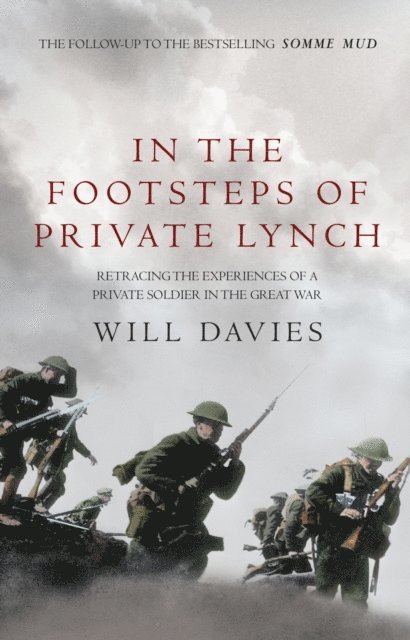
When Will Davies discovered the manuscript for Somme Mud he knew he had found a lost treasure. Private Lynch's powerful, personal story of his time in the trenches of the Somme has become a classic. In this new book, Will Davies meticulously follows in the footsteps of Lynch and his battalion, the 45th - from their long route marches to lice ridden billets, into the frontline and seeing action at such infamous battles as Messines, Dernancourt, Stormy Trench and Villers Bretonneux, and on the last great push to final victory after August 1918. The author assesses the impact Lynch and those like him had both on the battlefield and in the greater context of the war on the Western Front. Written in a lively and accessible style, it sheds light on the campaigns and offensives, the weapons and the equipment, the food, the living conditions and the neglected minutiae of war and in so doing brings to life the young men who sacrificed their youth over 90 years ago.
E-bok
Engelska, 2012144 kr
Läs direkt efter köp
'Ten seconds, nine, eight, seven, six, five, four, three, two, one - fire! Down goes the firing switch. At first, nothing. Then from deep down there comes a low rumble, and it as if the world is spliting apart...'On 7th June 1917, nineteen massive mines exploded beneath Messines Ridge near Ypres. The largest man-made explosion in history up until that point shattered the landscape and smashed open the German lines. Ten thousand German soldiers died. Two of the mines - at Hill 60 and the Caterpillar - were fired by men of the 1st Australian Tunnelling Company, comprising miners and engineers rather than parade-ground soldiers. Drawing on the diaries of one of the key combatants, Benealth Hill 60 tells the little-known, devastatingly brutal true story of this subterranean war waged beneath the Western Front - a stygian battle-ground where men drowned in viscous chalk, suffocated in the blue gray clay, choked on poisonous air or died in the darkness, caught up up in vicious hand-to-hand fighting...
E-bok
Engelska, 2013221 kr
Läs direkt efter köp
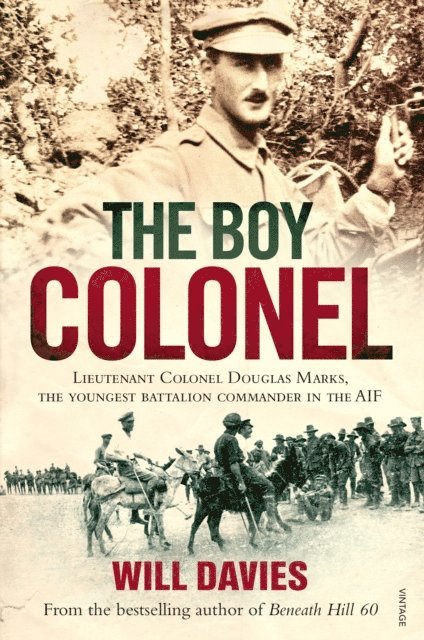
Known as The Boy Colonel, Lieutenant Colonel Douglas Marks, was the youngest battalion commander in the AIF and highly regarded not only as a future military commander, but as a business and community leader. It was a blustery day on the 25th January 1920 at Palm Beach to the north of Sydney and the surf was wild. Two attempts had already been made to save a young woman caught in an undertow and dragged out when a young man; skinny, gangly and frail and known to be a poor swimmer, threw off his coat and shoes and raced into the surf. As his fiancée and young nephew watched, the sea closed over him and he disappeared. His body was never recovered.This was the sad and tragic fate of a gallant, highly decorated and promising young man named Douglas Gray Marks. And it was a great loss to a nation whose manhood had been decimated and where the pain of the war remained evident and raw.Douglas Marks was born in 1895 and educated at Fort Street High School. He had, like so many enthusiastic and patriotic young men, basic military training when he turned up at the drill hall in Rozelle two days after the declaration of war. Before embarking in November 1914, he had received his commission as a Second Lieutenant in the AIF. After a period of training in Egypt, he embarked for the Gallipoli peninsula and landed on the second day. Spending a great deal of time in the dangerous frontline trenches at Quinn''s Post where he was wounded, he remained on Gallipoli until the evacuation in December of that year. Just twenty years old, he was seen as an inspirational young officer, promoted to captain and given acting command of his battalion.Marks then travelled back to Egypt, saw the re-organisation of his beloved 13th battalion and the raising of its sister battalion, the 45th. Sailing from Alexandria, he crossed the Mediterranean to Marseilles and took the train to the north of France and the nursery areas around Armentieres and Bois Grenier. From here, Douglas Marks found himself in the worst battles that the AIF were to fight in: Pozieres and Moquet Farm, Flers, Gueudecourt, Stormy Trench and Bullecourt on the Somme. He then travelled north and was part of the horrendous battles around Ypres in Flanders in 1917: Messines, Polygon Wood, Hollebeke and Passchendaele. Back on the Somme in early 1918, he fought at Villers Bretonneux, Le Hamel, the Battle of Amiens from the 8th August and in the fighting through to the withdrawal of his battalion in September 1918.By this time he had been wounded a number of times, was promoted to Lieutenant Colonel, was the commander of his battalion and had been decorated with a Military Cross, a Distinguished Service Order, the Serbian Order of the White Eagle and had been mentioned in despatches. He returned to Australia and to civilian life in late 1918. In 1919 he became engaged to "Queenie" and in January 1920, took that fateful journey to Palm Beach. Though we do not know what happened to "Queenie", his distraught mother never came out of her house again.
E-bok
Engelska, 2011222 kr
Läs direkt efter köp
Beautifully presented young readers’ edition of the bestselling memoir of a young soldier on the First World War’s Western Front.''It''s the end of the 1916 winter and the conditions are almost unbelievable. We live in a world of Somme mud. We sleep in it, work in it, fight in it, wade in it and many of us die in it. We see it, feel it, eat it and curse it, but we can''t escape it, not even by dying.''Private Edward Lynch was just 18 when he enlisted in the army. When he returned to Australia almost three years later, he wrote Somme Mud, a vivid account of the horrific realities of trench warfare from an ordinary infantryman’s point of view: the traumatised soldiers and ravaged landscapes, the curious mixture of hatred, empathy and admiration for the equally naive enemy soldiers, the disillusionment and the camaraderie. Lynch’s candour and down-to-earth wit make Somme Mud engaging for any reader, while archival photographs, a full glossary and editor Will Davies’ explanatory chapter introductions make this edition an illuminating text for students. As well as a memoir of one man’s experience of war, Somme Mud is an evocative record of the language and attitudes of early twentieth century Australia.