William Bartlett – författare
Visar alla böcker från författaren William Bartlett. Handla med fri frakt och snabb leverans.
18 produkter
Europe's Troubled Region
Economic Development, Institutional Reform, and Social Welfare in the Western Balkans
Inbunden, 2007
2515 kr
Lägg i varukorg
The countries of the Western Balkans - Albania, Bosnia and Herzegovina, Croatia, Macedonia, Montenegro, Serbia and the province of Kosovo - form a core European region. The region is known for its instability and recent history of wars and civil conflicts, but far less is known about the changes …
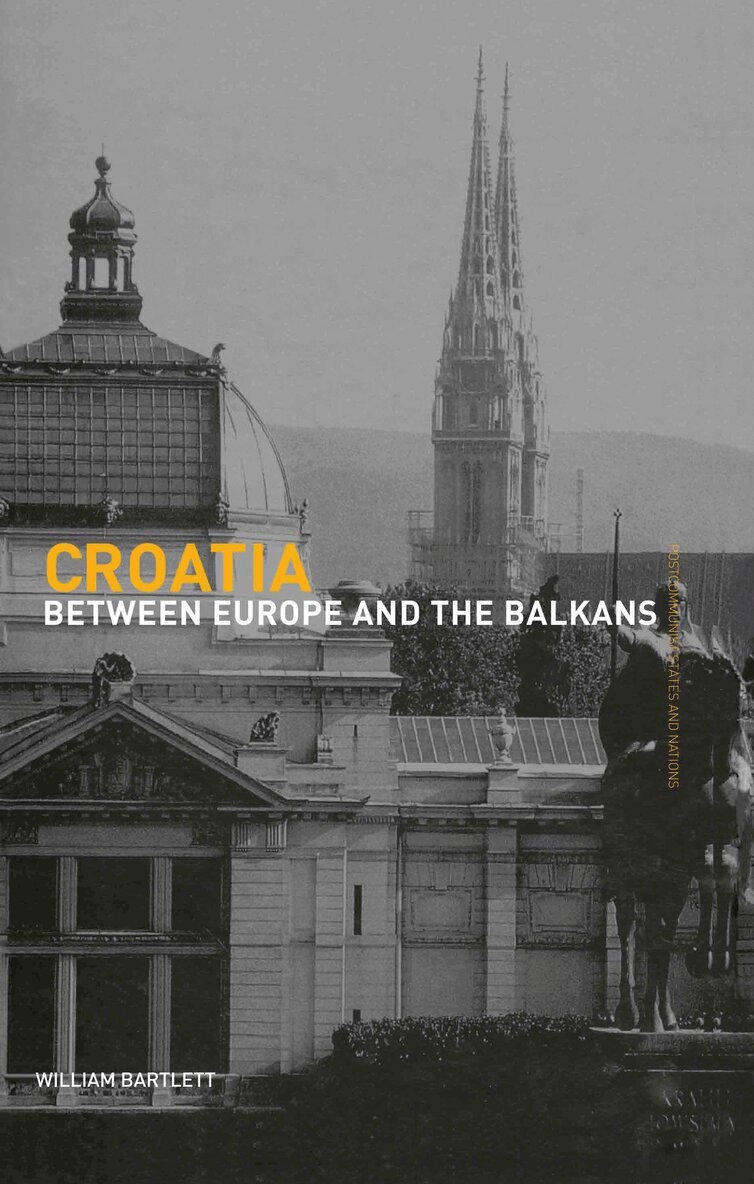
Croatia
Between Europe and the Balkans
Inbunden, 2002
2590 kr
Lägg i varukorg
Croatia, Between Europe and the Balkans addresses the key developments in economics, politics, international relations and social policy in the state over the last decade. It places these developments in their historical context, and shows how current policy dilemmas are structured within the …
Croatia
Between Europe and the Balkans
Häftad, 2006
938 kr
Lägg i varukorg
This book addresses the key developments in economics, politics, international relations and social policy in Croatia over the last decade. It places these developments in their historical context, and shows how current policy dilemmas are structured within the conflicting pressures which …
Europe's Troubled Region
Economic Development, Institutional Reform, and Social Welfare in the Western Balkans
Häftad, 2013
853 kr
Lägg i varukorg
The countries of the Western Balkans - Albania, Bosnia and Herzegovina, Croatia, Macedonia, Montenegro, Serbia and the province of Kosovo - form a core European region. The region is known for its instability and recent history of wars and civil conflicts, but far less is known about the changes …
Cancer: Don't Drop the MIC!
Lessons Learned, Opportunities Opened, and Purposes Pursued on the Treatment Trail
Av William Bartlett, Cynthia Bartlett
Häftad, 2016
256 kr
Lägg i varukorg
Croatia
Between Europe and the Balkans
E-bok, 2004
1074 kr
Lägg i varukorg
Croatia, Between Europe and the Balkans addresses the key developments in economics, politics, international relations and social policy in the state over the last decade. It places these developments in their historical context, and shows how current policy dilemmas are structured within the …
Croatia
Between Europe and the Balkans
E-bok, 2004
1051 kr
Lägg i varukorg
Croatia, Between Europe and the Balkans addresses the key developments in economics, politics, international relations and social policy in the state over the last decade. It places these developments in their historical context, and shows how current policy dilemmas are structured within the …
Europe's Troubled Region
Economic Development, Institutional Reform, and Social Welfare in the Western Balkans
E-bok, 2007
983 kr
Lägg i varukorg
The countries of the Western Balkans - Albania, Bosnia and Herzegovina, Croatia, Macedonia, Montenegro, Serbia and the province of Kosovo - form a core European region. The region is known for its instability and recent history of wars and civil conflicts, but far less is known about the changes …
Europe's Troubled Region
Economic Development, Institutional Reform, and Social Welfare in the Western Balkans
E-bok, 2007
1002 kr
Lägg i varukorg
The countries of the Western Balkans - Albania, Bosnia and Herzegovina, Croatia, Macedonia, Montenegro, Serbia and the province of Kosovo - form a core European region. The region is known for its instability and recent history of wars and civil conflicts, but far less is known about the changes …
(My) Reasons to Believe the Christian Gospel
A Tacklebox of Talking Points for Compelling Reasons to Believe in Jesus and the Bible
Häftad, 2025
129 kr
Lägg i varukorg
Fiscal Decentralisation, Local Government and Policy Reversals in Southeastern Europe
Av William Bartlett, Sanja Kmezić m. fl.
Häftad, 2018
1241 kr
Lägg i varukorg
This edited collection provides a comprehensive geographic and chronological overview of the decentralisation processes in the successor states of former Yugoslavia and Albania during their transition and EU integration years, from 1990 until 2016. These countries present a unique laboratory for …
Towards Economic Inclusion in the Western Balkans
Av William Bartlett, Milica Uvalić
Inbunden, 2022
1205 kr
Lägg i varukorg
The countries in the Western Balkans have been severely affected by the wars and conflicts that led to the breakup of former Yugoslavia, by political instability and the effort of creating new states, weak economies and high levels of unemployment, poverty and social exclusion, and inequality. As …
Towards Economic Inclusion in the Western Balkans
Av Milica Uvalic, William Bartlett
E-bok, 2022
1587 kr
Lägg i varukorg
The countries in the Western Balkans have been severely affected by the wars and conflicts that led to the breakup of former Yugoslavia, by political instability and the effort of creating new states, weak economies and high levels of unemployment, poverty and social exclusion, and inequality. As …
Towards Economic Inclusion in the Western Balkans
Av William Bartlett, Milica Uvalić
Häftad, 2023
1205 kr
Lägg i varukorg
The countries in the Western Balkans have been severely affected by the wars and conflicts that led to the breakup of former Yugoslavia, by political instability and the effort of creating new states, weak economies and high levels of unemployment, poverty and social exclusion, and inequality. As …
Fiscal Decentralisation, Local Government and Policy Reversals in Southeastern Europe
Av William Bartlett, Sanja Kmezić m. fl.
Inbunden, 2018
1641 kr
Lägg i varukorg
This edited collection provides a comprehensive geographic and chronological overview of the decentralisation processes in the successor states of former Yugoslavia and Albania during their transition and EU integration years, from 1990 until 2016. These countries present a unique laboratory for …
Fiscal Decentralisation, Local Government and Policy Reversals in Southeastern Europe
Av Katarina Ðulic, Sanja Kmezic m. fl.
E-bok, 2018
1670 kr
Lägg i varukorg
This edited collection provides a comprehensive geographic and chronological overview of the decentralisation processes in the successor states of former Yugoslavia and Albania during their transition and EU integration years, from 1990 until 2016. These countries present a unique laboratory for …