• Fri frakt över 249 kr
  • •
  • Snabba leveranser
  • •
  • Billiga böcker
Kundservice

Du är på sajten för privatpersoner.

Företag, bibliotek eller offentlig verksamhet?

Du handlar på classic.bokus.com, där alla dina funktioner finns intakta.
Till classic.bokus.com
Bokus logotyp. Gå till startsidan.
  • Erbjudanden
  • Nyheter
  • Student
  • Topplistor
  • Barn & ungdom
  • Bokus Play
  • E-böcker
  • Pocketböcker
  • Spel & pussel

10% rabatt på allt med kod: NYSTART10 →

Sidfot

Mina sidor

    Hjälp

    • Kundservice
    • Vanliga frågor och svar
    • Frakt och leverans
    • Retur vid ångerrätt
    • Reklamera vara
    • Betalning
    • Köpvillkor
    • Allmänna villkor
    • Information om webbplatsens tillgänglighet

    Om Bokus

    • Om oss
    • Pressrum
    • För studenter
    • För företag
    • För bibliotek och offentlig verksamhet
    • För leverantörer
    • Hållbarhet

    Populärt

    • Aktuella erbjudanden
    • Presentkort
    • Studentlitteratur
    • Nya böcker
    • Topplistor
    • Signerade böcker
    • Engelska böcker

    Inspiration

    • Boktips
    • BookTok
    • Populära bokserier
    • Barnbokskaraktärer
    • Populära författare
    Logotyp för Bokus
    Följ oss på Facebook (extern länk)Följ oss på Instagram (extern länk)Följ oss på YouTube (extern länk)Följ oss på TikTok (extern länk)
    bokus @ CookiesAnpassa cookiesIntegritetspolicyKöpvillkor
    Till Citymail hemsida (extern länk)Till Budbee hemsida (extern länk)Till Postnord hemsida (extern länk)Till Schenker hemsida (extern länk)Till Early Bird hemsida (extern länk)Till Walleys hemsida (extern länk)
    1. Ekonomi och Ledarskap
    2. Nationalekonomi
    3. Ekonomisk politik

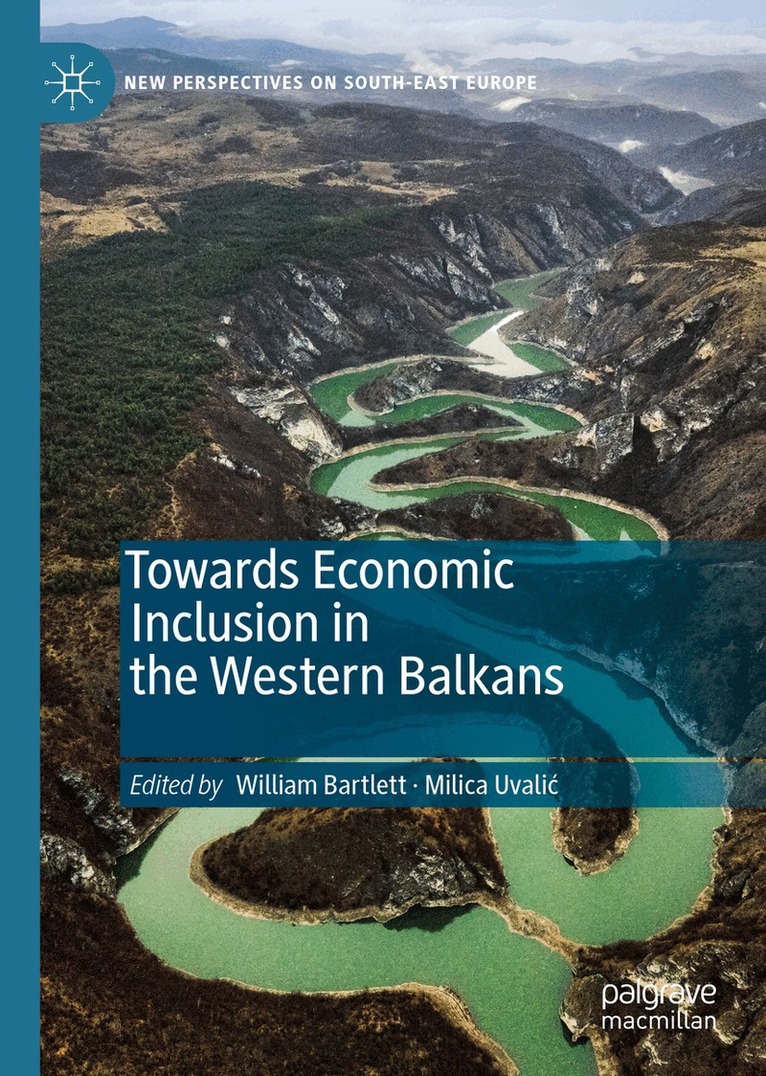
    Towards Economic Inclusion in the Western Balkans

    AvWilliam Bartlett,Milica Uvalić

    Inbunden, Engelska, 2022

    Del i serien New Perspectives on South-East Europe

    1 194 kr

    Beställningsvara. Skickas inom 10-15 vardagar. Fri frakt över 249 kr.

    Beskrivning

    The countries in the Western Balkans have been severely affected by the wars and conflicts that led to the breakup of former Yugoslavia, by political instability and the effort of creating new states, weak economies and high levels of unemployment, poverty and social exclusion, and inequality. As revealed by recent surveys, such as EBRD’s Life in Transition Survey and Eurofound’s European Quality of Life Survey, life satisfaction in the region is far below that elsewhere in Europe. In recent years they had achieved a strong impetus of economic growth with falling rates of unemployment and increasing optimism for the future. However, the COVID-19 pandemic of 2020 has brought about a sudden reversal of these trends and a renewed deterioration in the economic outlook, and an increase in social hardships that heralds a repeat of past failures in economic inclusion policies. This book identifies the key challenges in the areas of economic inclusion, focusing on thethemes of labour markets, vocational education and skills, female entrepreneurship and the integration of migrants. It considers the opportunities for solutions to “build back better” once the recovery from the COVID-19 crisis begins, and offers proposals for more acceptable, equitable and effective economic inclusion policies.

    Produktinformation

    • Utgivningsdatum:2022-10-11
    • Mått:148 x 210 x 32 mm
    • Vikt:646 g
    • Format:Inbunden
    • Språk:Engelska
    • Serie:New Perspectives on South-East Europe
    • Antal sidor:375
    • Förlag:Springer International Publishing AG
    • ISBN:9783031061110

    Utforska kategorier

    • Ekonomisk politik inom Ekonomi och Ledarskap
    • Offentlig förvaltning inom Samhälle och politik
    • Politik och statsskick inom Samhälle och politik

    Mer om författaren

    William Bartlett is Deputy Director of the LSEE Research Unit of the European Institute at the London School of Economics and Political Science, UK.Milica Uvalić is Professor of Economics at the University of Perugia, Italy.

    Innehållsförteckning

    • Chapter 1: Introduction: Key Challenges for Economic Inclusion in the Western Balkans.- Part I: Labour Market Inclusion.- Chapter 2: A Low-Wage, High-Tax Trap in the Western Balkans.- Chapter 3: Envelope Wages in Bosnia and Herzegovina: Incidence and Distributional Implications.- Chapter 4: Horizontal Job-Education Mismatch in Kosovo: Is There a Gender Gap?.- Chapter 5: Cross-national Comparison of Job Types: Analysis Using the EU LFS and Albanian LFS.- Part II: Vocational Training and Skills.- Chapter 6: The Professional Training Programme in Montenegro: An Active Labour Market Policy or a Way to Fill the Structural Gap?.- Chapter 7: The Quality of Vocational Training and the Position of the Individual in the Labour market in Serbia.- Chapter 8: The Apprenticeship System in Bosnia and Herzegovina: Myth or Reality?.- Part III: Female Entrepreneurship.- Chapter 9: Case Study on Female Entrepreneurship in Bosnia and Herzegovina.- Chapter 10: Female Entrepreneurship in Albania: FinancialIncentives and Disincentives.- Chapter 11: Economic Inclusion of Women Entrepreneurs During Covid-19 in Serbia, Montenegro and Bosnia and Herzegovina.- Part IV: Integrating Returning Migrants.- Chapter 12: The Relationship between Migration and Pensions Policy: The Case of Albania.- Chapter 13: The Role of Voluntary Return Migration in Supporting Economic Development in Albania.- Chapter 14: Immigrant Entrepreneurship and Resilience during the COVID-19 Pandemic: The Case of Croatia.- Part V: Conclusions.- Chapter 15: Towards an Inclusive Model of Development in the Western Balkans.