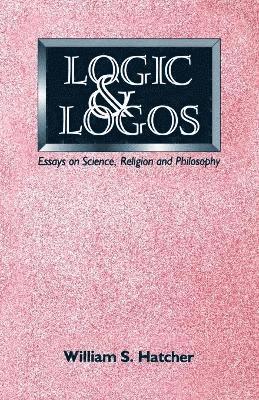
William S. Hatcher – författare
Visar alla böcker från författaren . Handla med fri frakt och snabb leverans.
3 produkter
3 produkter
Häftad, Engelska, 2003
606 kr
Skickas inom 10-15 vardagar
This book provides university students, policy makers, activists, public health workers, clinicians, and lay citizens alike with a vivid overview of the scope of the problem of gender-based violence worldwide, as well as a sense of the important work now underway to eradicate it. An integration of a vast range of data and insights from all the major disciplines that have contributed to our understanding of this problem, this book is invaluable as a classroom text. The authors have been guided throughout this work by the desire to contribute a document that would move the current international discourse along by providing an historical, interdisciplinary overview that is at once critical, constructive, and visionary.
Häftad, Engelska, 1990
209 kr
Skickas inom 5-8 vardagar
E-bok
PDF, Engelska, 2014783 kr
Läs direkt efter köp
The Logical Foundations of Mathematics offers a study of the foundations of mathematics, stressing comparisons between and critical analyses of the major non-constructive foundational systems. The position of constructivism within the spectrum of foundational philosophies is discussed, along with the exact relationship between topos theory and set theory. Comprised of eight chapters, this book begins with an introduction to first-order logic. In particular, two complete systems of axioms and rules for the first-order predicate calculus are given, one for efficiency in proving metatheorems, and the other, in a "natural deduction" style, for presenting detailed formal proofs. A somewhat novel feature of this framework is a full semantic and syntactic treatment of variable-binding term operators as primitive symbols of logic. Subsequent chapters focus on the origin of modern foundational studies; Gottlob Frege''s formal system intended to serve as a foundation for mathematics and its paradoxes; the theory of types; and the Zermelo-Fraenkel set theory. David Hilbert''s program and Kurt Gödel''s incompleteness theorems are also examined, along with the foundational systems of W. V. Quine and the relevance of categorical algebra for foundations. This monograph will be of interest to students, teachers, practitioners, and researchers in mathematics.