William Tow – författare
Visar alla böcker från författaren William Tow. Handla med fri frakt och snabb leverans.
7 produkter
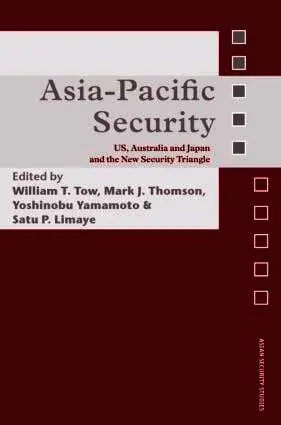
Asia-Pacific Security
US, Australia and Japan and the New Security Triangle
Av William Tow, Mark Thomson m. fl.
Inbunden, 2007
2506 kr
Lägg i varukorg
The aim of this book is to explore the implications stemming from the recent upgrading of Australia-Japan-US security interactions and the implications for Asia-Pacific regional security that these represent. While a fully functioning trilateral security alliance binding Australia, Japan and the …
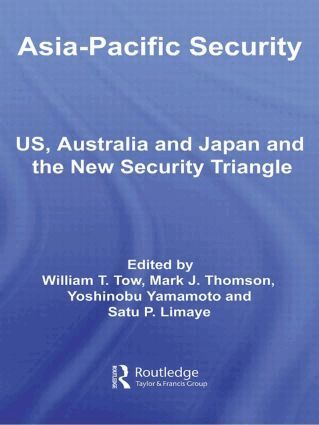
Asia-Pacific Security
US, Australia and Japan and the New Security Triangle
Av William Tow, Mark Thomson m. fl.
Häftad, 2008
370 kr
Lägg i varukorg
The aim of this book is to explore the implications stemming from the recent upgrading of Australia-Japan-US security interactions and the implications for Asia-Pacific regional security that these represent. While a fully functioning trilateral security alliance binding Australia, Japan and the …
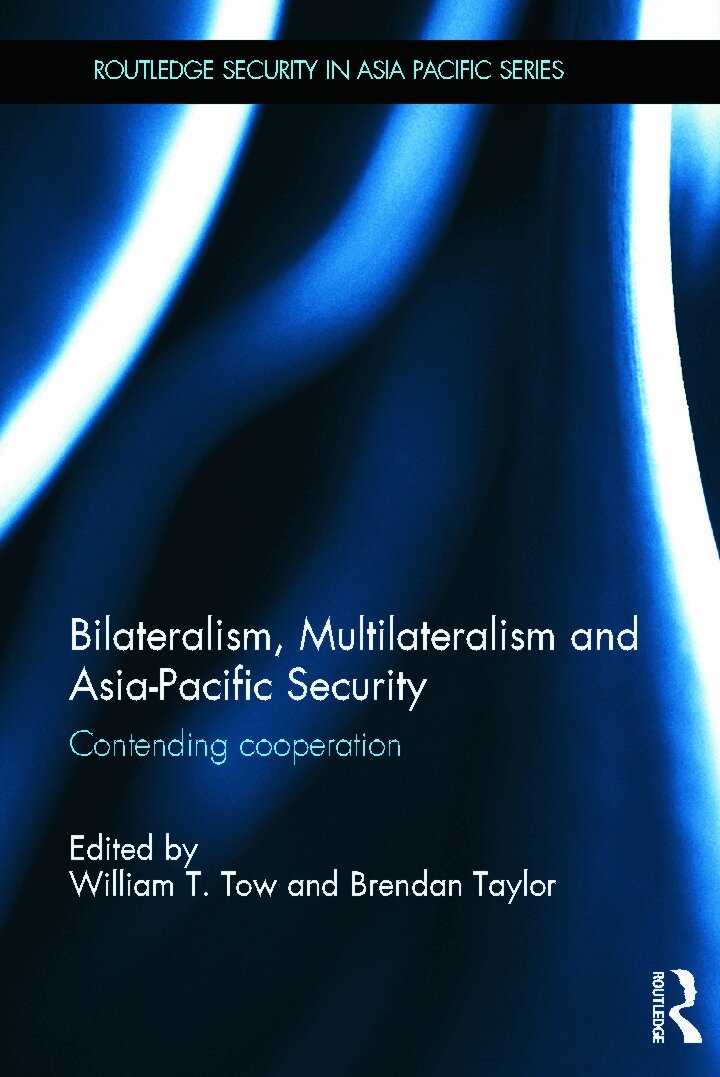
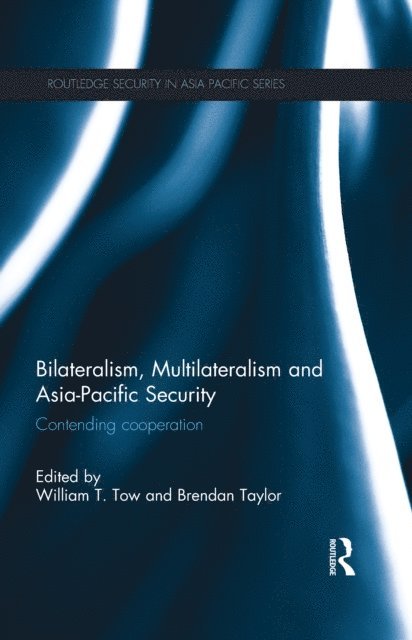
Bilateralism, Multilateralism and Asia-Pacific Security
Contending Cooperation
Av William Tow, Brendan Taylor
Inbunden, 2013
2506 kr
Lägg i varukorg
Many scholars of international relations in Asia regard bilateralism and multilateralism as alternative and mutually exclusive approaches to security co-operation. They argue that multilateral associations such as ASEAN will eventually replace the system of bilateral alliances which were the …
Asia-Pacific Security
US, Australia and Japan and the New Security Triangle
Av Satu Limaye, Yoshinobu Yamamoto m. fl.
E-bok, 2007
424 kr
Lägg i varukorg
The aim of this book is to explore the implications stemming from the recent upgrading of Australia-Japan-US security interactions and the implications for Asia-Pacific regional security that these represent. While a fully functioning trilateral security alliance binding Australia, Japan and the …
Bilateralism, Multilateralism and Asia-Pacific Security
Contending Cooperation
Av Brendan Taylor, William Tow
E-bok, 2013
830 kr
Lägg i varukorg
Many scholars of international relations in Asia regard bilateralism and multilateralism as alternative and mutually exclusive approaches to security co-operation. They argue that multilateral associations such as ASEAN will eventually replace the system of bilateral alliances which were the …
Bilateralism, Multilateralism and Asia-Pacific Security
Contending Cooperation
Av Brendan Taylor, William Tow
E-bok, 2013
830 kr
Lägg i varukorg
Many scholars of international relations in Asia regard bilateralism and multilateralism as alternative and mutually exclusive approaches to security co-operation. They argue that multilateral associations such as ASEAN will eventually replace the system of bilateral alliances which were the …
Bilateralism, Multilateralism and Asia-Pacific Security
Contending Cooperation
Av William Tow, Brendan Taylor
Häftad, 2015
722 kr
Lägg i varukorg
Many scholars of international relations in Asia regard bilateralism and multilateralism as alternative and mutually exclusive approaches to security co-operation. They argue that multilateral associations such as ASEAN will eventually replace the system of bilateral alliances which were the …