William W. Baden – författare
Visar alla böcker från författaren William W. Baden. Handla med fri frakt och snabb leverans.
4 produkter
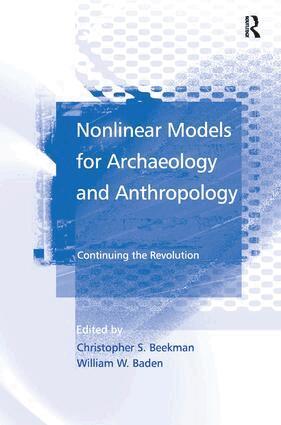
Nonlinear Models for Archaeology and Anthropology
Continuing the Revolution
Av William W. Baden, Christopher S. Beekman
Inbunden, 2005
2513 kr
Lägg i varukorg
The dominant social theory used by archaeologists has tended to focus on either small scale agency or large-scale cultural patterns and processes of change. The authors of this volume argue that archaeologists should use nonlinear models to more accurately model the connections between scales of …
Nonlinear Models for Archaeology and Anthropology
Continuing the Revolution
Av William W. Baden, Christopher S. Beekman
Häftad, 2016
940 kr
Lägg i varukorg
The dominant social theory used by archaeologists has tended to focus on either small scale agency or large-scale cultural patterns and processes of change. The authors of this volume argue that archaeologists should use nonlinear models to more accurately model the connections between scales of …
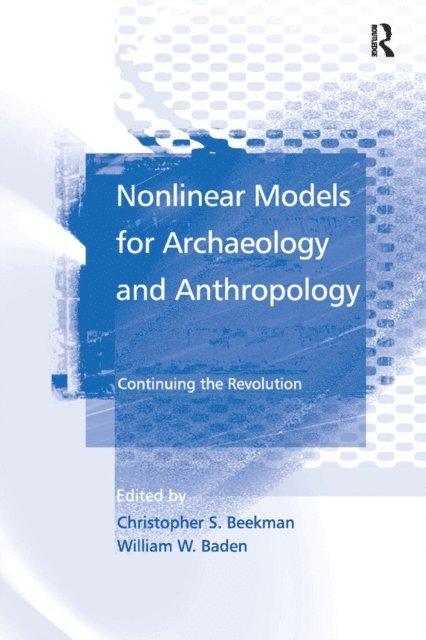
Nonlinear Models for Archaeology and Anthropology
Continuing the Revolution
Av William W. Baden, Christopher S. Beekman
E-bok, 2016
1106 kr
Lägg i varukorg
The dominant social theory used by archaeologists has tended to focus on either small scale agency or large-scale cultural patterns and processes of change. The authors of this volume argue that archaeologists should use nonlinear models to more accurately model the connections between scales of …
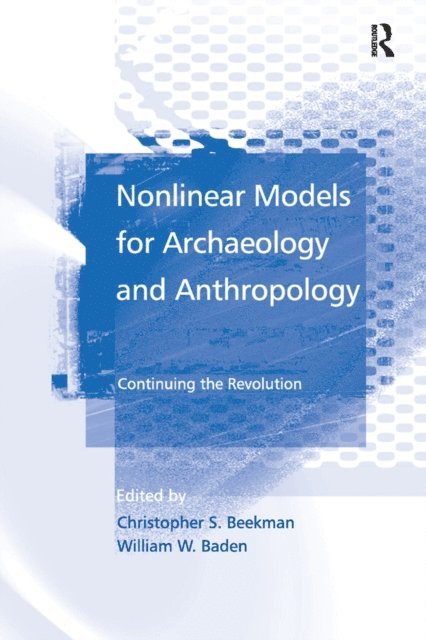
Nonlinear Models for Archaeology and Anthropology
Continuing the Revolution
Av William W. Baden, Christopher S. Beekman
E-bok, 2016
1106 kr
Lägg i varukorg
The dominant social theory used by archaeologists has tended to focus on either small scale agency or large-scale cultural patterns and processes of change. The authors of this volume argue that archaeologists should use nonlinear models to more accurately model the connections between scales of …