William Warren Rogers Sr. – författare
Visar alla böcker från författaren William Warren Rogers Sr.. Handla med fri frakt och snabb leverans.
3 produkter
3 produkter
E-bok
Engelska, 2015473 kr
Läs direkt efter köp
In the late 1870s, Jefferson County, Alabama, and the town of Elyton (near the future Birmingham) became the focus of a remarkable industrial and mining revolution. Together with the surrounding counties, the area was penetrated by railroads. Surprisingly large deposits of bituminous coal, limestone, and iron ore—the exact ingredients for the manufacture of iron and, later, steel—began to be exploited. Now, with transportation, modern extractive techniques, and capital, the region’s geological riches began yielding enormous profits.
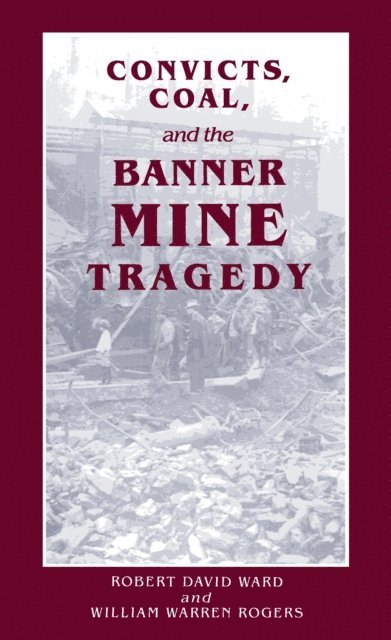
A labor force was necessary to maintain and expand the Birmingham area’s industrial boom. Many workers were native Alabamians. There was as well an immigrant ethnic work force, small but important. The native and immigrant laborers became problems for management when workers began affiliating with labor unions and striking for higher wages and better working conditions. In the wake of the management-labor disputes, the industrialists resorted to an artificial work force—convict labor. Alabama’s state and county officials sought to avoid expense and reap profits by leasing prisoners to industry and farms for their labor. This book is about the men who worked involuntarily in the Banner Coal Mine, owned by the Pratt Consolidated Coal Company. And it is about the repercussions and consequences that followed an explosion at the mine in the spring of 1911 that killed 128 convict miners.E-bok
Engelska, 2015511 kr
Läs direkt efter köp
The gripping story of the 1894 Alabama coal miners strike The Alabama coal miners’ strike of 1894 to gain improved working conditions and to protect themselves from wage reductions. The authors recount the depression of the early 1890s, which set the stage for the strike, and the subsequent use of convict labor, which became a catalyst. The gripping story of the strike includes the dramatic decision to strike and corporate attempts to break the strike by the use of company guards and “scab” labor. In Alabama corporate bosses inflamed passions further by deploying African American “black leg” workers, ultimately requiring the deployment of the state militia to restore peace.
E-bok
Engelska, 2018852 kr
Läs direkt efter köp
A new and up-to-date edition of Alabama’s history to celebrate the state’s bicentennial Alabama: The History of a Deep South State, Bicentennial Edition is a comprehensive narrative account of the state from its earliest days to the present. This edition, updated to celebrate the state’s bicentennial year, offers a detailed survey of the colorful, dramatic, and often controversial turns in Alabama’s evolution. Organized chronologically and divided into three main sections—the first concluding in 1865, the second in 1920, and the third bringing the story to the present—makes clear and interprets the major events that occurred during Alabama’s history within the larger context of the South and the nation. Once the home of aboriginal inhabitants, Alabama was claimed and occupied by a number of European nations prior to becoming a permanent part of the United States in 1819. A cotton and slave state for more than half of the nineteenth century, Alabama seceded in 1861 to join the Confederate States of America, and occupied an uneasy and uncertain place in America’s post-Civil War landscape. Alabama’s role in the twentieth century has been equally tumultuous and dramatic. General readers as well as scholars will welcome this up-to-date and scrupulously researched history of Alabama, which examines such traditional subjects as politics, military history, economics, race, and class. It contains essential accounts devoted to Native Americans, women, and the environment, as well as detailed coverage of health, education, organized labor, civil rights, and the many cultural developments, from literature to sport, that have enriched Alabama’s history. The stories of individual leaders, from politicians to creative artists, are also highlighted. A key facet of this landmark historical narrative is the strong emphasis placed on the common everyday people of Alabama, those who have been rightly described as the “bone and sinew” of the state.