Willis Gwenzi – författare
1 540 kr
Skickas inom 10-15 vardagar
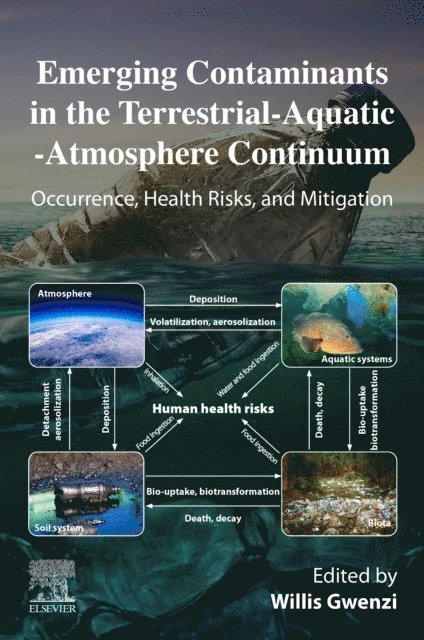
Emerging Contaminants in Terrestrial and Aquatic Environments: Occurrence, Health Risks, and Mitigation provides the latest information on the synthesis of the occurrence, behavior, human health risks and mitigation of emerging contaminants in developing countries. First highlighting sources, industrial applications, key drivers and regulatory frameworks, the book then goes on to discuss the nature of emerging contaminants, including organic (e.g., pharmaceuticals), inorganic (e.g., rare earth elements) and biological agents (e.g., antimicrobial resistance). It then presents the dissemination, environmental behavior, and fate in terrestrial and aquatic systems as well as the human and ecological exposure pathways, health risks, and more.
Offering a transdisciplinary approach that brings together perspectives and contributions from experts in environmental sciences, hydrology, environmental engineering, ecotoxicology, chemistry, material sciences, and legal and policy aspects, the book provides an approachable and flexible resource for researchers and upper-level students with diverse academic backgrounds.
Adopts a lifecycle perspective by including industrial applications, behavior and fate and human health risks and removal Focuses on developing regions and covers a wide range of emerging contaminants, including those often overlooked in earlier books such as rare earth elements and antimicrobial resistance Presents a clear understanding of the contrasts between developed and developing countries with respect to emerging contaminants and their health risks and mitigation, including water and wastewater treatment systems commonly used in developing countries Covers human and ecological health risks in developing countries2 190 kr
Läs direkt efter köp
1 440 kr
Skickas inom 10-15 vardagar
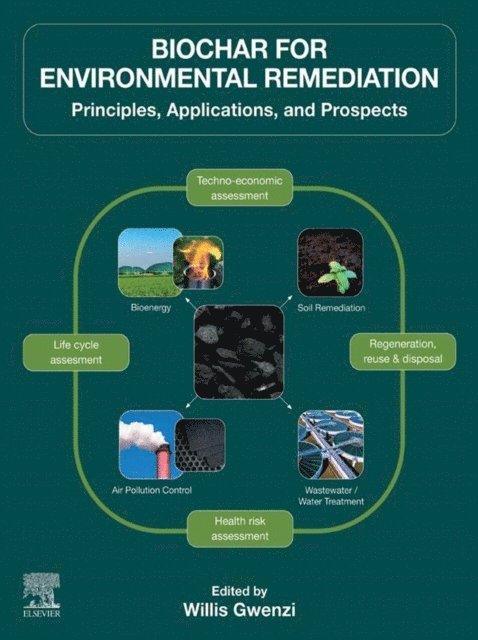
Biochar for Environmental Remediation: Principles, Applications, and Prospects synthesizes state-of-the-art knowledge on biochar-based systems for environmental remediation. This book examines a wide variety of biochar applications for the remediation of inorganic, organic, microbial, and emerging contaminants in various environmental media, including drinking water, industrial wastewater, urban stormwater, industrial and indoor air pollution, and contaminated lands and soils.
An increasing body of evidence shows that biochars have potential applications in environmental remediation of contaminants in soils, aqueous systems, and air pollution control. This book uses a systematic approach, covering biochar preparation, properties and characteristics, removal mechanisms, industrial applications, regeneration and disposal of spent biochar, life cycle analysis, and environmental and human health risks. Researchers, engineers, and graduate students will find this to be a valuable reference for understanding opportunities for the use of biochar in environmental remediation as it fills the gaps in existing literature and offers a clear roadmap to guide future research.
Addresses the whole biochar cycle from preparation, principles of application, industrial application domains, regeneration, recycling and final disposal, life cycle analysis, and environmental and human health risksCovers a broad range of inorganic, organic, microbial, and emerging contaminants, providing a one-stop source of biochar informationPresents applications of biochar in the remediation of diverse environmental media, including drinking water, industrial, wastewater, urban stormwater, acid mine drainage, contaminated lands and soils, and industrial and indoor air pollution control1 756 kr
Läs direkt efter köp
2 117 kr
Skickas inom 5-8 vardagar
2 452 kr
Läs direkt efter köp
Meet the challenge of contaminated water with a range of sustainable tools
The treatment of water which has been polluted by heavy metals is an increasingly significant environmental challenge in an industrialized global economy. The ongoing revolution in green technologies, however, has seen a range of sustainable methods emerge for treating water, soils, and other parts of the environment polluted by trace metals. By putting these methods into practice, environmental researchers and industrial professionals can improve water quality, and public health globally.
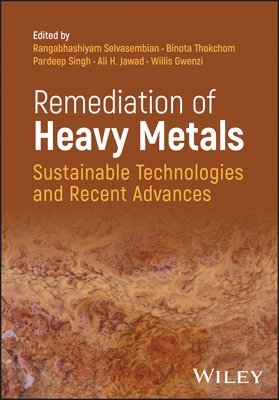
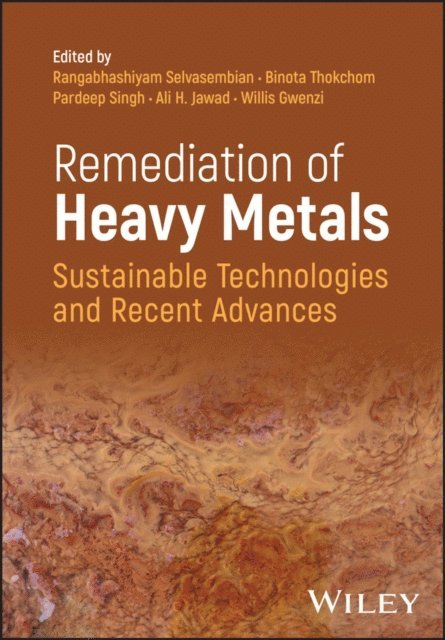
Remediation of Heavy Metals offers a clear, accessible reference on these methods and their applications. It offers an overview of the major effects of heavy metal contamination and works through each of the methods or protocols available to remediate soil and minimize pollution at the source.
Remediation of Heavy Metals readers will also find:
Comparison of different approaches for heavy metal removal Detailed discussion of physical, chemical, and biological remediation methods Case studies demonstrating proper remediationRemediation of Heavy Metals provides key knowledge for environmental scientists, environmental toxicologists, and other researchers or industrial professionals working in heavy metal removal, as well as advanced graduate students in these areas.
Rangabhashiyam Selvasembian, PhD, Associate Professor, Department of Environmental Science and Engineering, School of Engineering and Sciences, SRM University-AP, Amaravati, India
Binota Thokchom, PhD, DST-Inspire faculty member at the Centre of Nanotechnology, Indian Institute of Technology, Guwahati, India.
Pardeep Singh, PhD, Assistant Professor in the Department of Environmental Science, PGDAV College University of Delhi, New Delhi, India.
Ali H. Jawad, PhD, Associate Professor in the Faculty of Applied Sciences, Universiti Teknologi MARA, Selangor, Malaysia.
Willis Gwenzi, PhD, Leibniz Institute of Agricultural Engineering and Bio-economy e.V. (ATB), Potsdam, Germany, and Universität Kassel, Witzenhausen, Germany.
2 366 kr
Läs direkt efter köp
Meet the challenge of contaminated water with a range of sustainable tools
The treatment of water which has been polluted by heavy metals is an increasingly significant environmental challenge in an industrialized global economy. The ongoing revolution in green technologies, however, has seen a range of sustainable methods emerge for treating water, soils, and other parts of the environment polluted by trace metals. By putting these methods into practice, environmental researchers and industrial professionals can improve water quality, and public health globally.
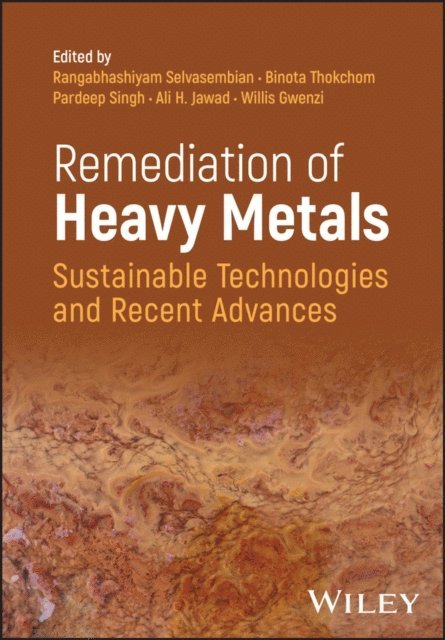
Remediation of Heavy Metals offers a clear, accessible reference on these methods and their applications. It offers an overview of the major effects of heavy metal contamination and works through each of the methods or protocols available to remediate soil and minimize pollution at the source.
Remediation of Heavy Metals readers will also find:
Comparison of different approaches for heavy metal removal Detailed discussion of physical, chemical, and biological remediation methods Case studies demonstrating proper remediationRemediation of Heavy Metals provides key knowledge for environmental scientists, environmental toxicologists, and other researchers or industrial professionals working in heavy metal removal, as well as advanced graduate students in these areas.
Rangabhashiyam Selvasembian, PhD, Associate Professor, Department of Environmental Science and Engineering, School of Engineering and Sciences, SRM University-AP, Amaravati, India
Binota Thokchom, PhD, DST-Inspire faculty member at the Centre of Nanotechnology, Indian Institute of Technology, Guwahati, India.
Pardeep Singh, PhD, Assistant Professor in the Department of Environmental Science, PGDAV College University of Delhi, New Delhi, India.
Ali H. Jawad, PhD, Associate Professor in the Faculty of Applied Sciences, Universiti Teknologi MARA, Selangor, Malaysia.
Willis Gwenzi, PhD, Leibniz Institute of Agricultural Engineering and Bio-economy e.V. (ATB), Potsdam, Germany, and Universität Kassel, Witzenhausen, Germany.