• Fri frakt över 249 kr
  • •
  • Snabba leveranser
  • •
  • Billiga böcker
Kundservice

Du är på sajten för privatpersoner.

Företag, bibliotek eller offentlig verksamhet?

Du handlar på classic.bokus.com, där alla dina funktioner finns intakta.
Till classic.bokus.com
Bokus logotyp. Gå till startsidan.
  • Erbjudanden
  • Nyheter
  • Student
  • Topplistor
  • Barn & ungdom
  • Bokus Play
  • E-böcker
  • Pocketböcker
  • Spel & pussel

10% rabatt på allt med kod: NYSTART10 →

Sidfot

Mina sidor

    Hjälp

    • Kundservice
    • Vanliga frågor och svar
    • Frakt och leverans
    • Retur vid ångerrätt
    • Reklamera vara
    • Betalning
    • Köpvillkor
    • Allmänna villkor
    • Information om webbplatsens tillgänglighet

    Om Bokus

    • Om oss
    • Pressrum
    • För studenter
    • För företag
    • För bibliotek och offentlig verksamhet
    • För leverantörer
    • Hållbarhet

    Populärt

    • Aktuella erbjudanden
    • Presentkort
    • Studentlitteratur
    • Nya böcker
    • Topplistor
    • Signerade böcker
    • Engelska böcker

    Inspiration

    • Boktips
    • BookTok
    • Populära bokserier
    • Barnbokskaraktärer
    • Populära författare
    Logotyp för Bokus
    Följ oss på Facebook (extern länk)Följ oss på Instagram (extern länk)Följ oss på YouTube (extern länk)Följ oss på TikTok (extern länk)
    bokus @ CookiesAnpassa cookiesIntegritetspolicyKöpvillkor
    Till Citymail hemsida (extern länk)Till Budbee hemsida (extern länk)Till Postnord hemsida (extern länk)Till Schenker hemsida (extern länk)Till Early Bird hemsida (extern länk)Till Walleys hemsida (extern länk)
    1. Naturvetenskap och teknik
    2. Geovetenskap
    3. Miljövetenskap och miljöpolitik

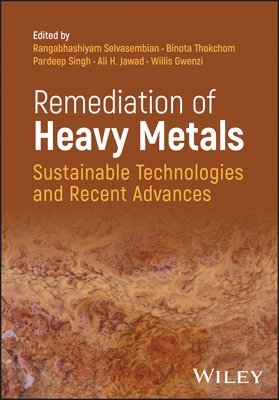
    Remediation of Heavy Metals

    Sustainable Technologies and Recent Advances

    AvRangabhashiyam Selvasembian,Binota Thokchom

    Inbunden, Engelska, 2024

    2 119 kr

    Beställningsvara. Skickas inom 5-8 vardagar. Fri frakt över 249 kr.

    Beskrivning

    Remediation of Heavy Metals Meet the challenge of contaminated water with a range of sustainable tools The treatment of water which has been polluted by heavy metals is an increasingly significant environmental challenge in an industrialized global economy. The ongoing revolution in green technologies, however, has seen a range of sustainable methods emerge for treating water, soils, and other parts of the environment polluted by trace metals. By putting these methods into practice, environmental researchers and industrial professionals can improve water quality, and public health globally. Remediation of Heavy Metals offers a clear, accessible reference on these methods and their applications. It offers an overview of the major effects of heavy metal contamination and works through each of the methods or protocols available to remediate soil and minimize pollution at the source. Remediation of Heavy Metals readers will also find: Comparison of different approaches for heavy metal removalDetailed discussion of physical, chemical, and biological remediation methodsCase studies demonstrating proper remediationRemediation of Heavy Metals provides key knowledge for environmental scientists, environmental toxicologists, and other researchers or industrial professionals working in heavy metal removal, as well as advanced graduate students in these areas. Rangabhashiyam Selvasembian, PhD, Associate Professor, Department of Environmental Science and Engineering, School of Engineering and Sciences, SRM University-AP, Amaravati, India Binota Thokchom, PhD, DST-Inspire faculty member at the Centre of Nanotechnology, Indian Institute of Technology, Guwahati, India. Pardeep Singh, PhD, Assistant Professor in the Department of Environmental Science, PGDAV College University of Delhi, New Delhi, India. Ali H. Jawad, PhD, Associate Professor in the Faculty of Applied Sciences, Universiti Teknologi MARA, Selangor, Malaysia. Willis Gwenzi, PhD, Leibniz Institute of Agricultural Engineering and Bio-economy e.V. (ATB), Potsdam, Germany, and Universität Kassel, Witzenhausen, Germany.

    Produktinformation

    • Utgivningsdatum:2024-02-22
    • Mått:170 x 244 x 22 mm
    • Vikt:839 g
    • Format:Inbunden
    • Språk:Engelska
    • Antal sidor:320
    • Förlag:John Wiley & Sons Inc
    • ISBN:9781119853558

    Utforska kategorier

    • Miljövetenskap och miljöpolitik inom Naturvetenskap och teknik
    • Tillverkningsteknik inom Naturvetenskap och teknik
    • Miljöteknik inom Naturvetenskap och teknik

    Mer om författaren

    Rangabhashiyam Selvasembian, PhD, Associate Professor, Department of Environmental Science and Engineering, School of Engineering and Sciences, SRM University-AP, Amaravati, IndiaBinota Thokchom, PhD, DST-Inspire faculty member at the Centre of Nanotechnology, Indian Institute of Technology, Guwahati, India.Pardeep Singh, PhD, Assistant Professor in the Department of Environmental Science, PGDAV College University of Delhi, New Delhi, India.Ali H. Jawad, PhD, Associate Professor in the Faculty of Applied Sciences, Universiti Teknologi MARA, Selangor, Malaysia.Willis Gwenzi, PhD, Leibniz Institute of Agricultural Engineering and Bio-economy e.V. (ATB), Potsdam, Germany, and Universität Kassel, Witzenhausen, Germany.

    Innehållsförteckning

    • List of Contributors xiEditors’ Biography xvPreface xvii1 Release, Detection, and Toxicology of Heavy Metals: A Review of the Main Techniques and Their Limitations in Environmental Remediation 1Dison S. P. Franco, Jordana Georgin, and Chandrasekaran Ramprasad1.1 Introduction to Heavy Metals: An Overview 11.2 Industrial Application of Different Metal Ions 51.3 Conclusion 5References 82 Heavy Metals Contamination in Environment 15Deeksha Aithani and Jyoti Kushawaha2.1 Introduction 152.2 Heavy Metals in Water 172.3 Heavy Metals in Soil 192.4 Heavy Metals in Biota 232.5 Heavy Metals in Air 252.6 Conclusion 25References 273 A Brief Study of the Effects of Heavy Metals and Metalloids on Food Crops 31Ngangbam R. Devi3.1 Introduction 313.2 Sources of Heavy Metals in Soils and Food Crops 323.3 Impacts on Soil–Plants/Food Crops 353.3.1 Metal Ions Transportation in Plants 363.4 Heavy Metals and Soil Microbes 373.5 Effect of Chromium (Cr) on Plants 383.6 Effect of Lead (Pb) on Plants 383.7 Effect of Arsenic (As) on Plants 383.8 Effect of Cadmium (Cd) on Plants 383.9 Effect of Mercury (Hg) on Plants 393.10 Effect of Nickel (Ni) on Plants 393.11 Future Perspectives 393.12 Conclusion 40References 414 Impact of Heavy Metals on Human Health 47Retwik Parui, Geetmani S. Nongthombam, Maimur Hossain, Laxmi R. Adil, Rajdikshit Gogoi, Soumalya Bhowmik, Debika Barman, and Parameswar K. Iyer4.1 Introduction 474.2 Mercury 484.2.1 Source and Entry of Mercury Metal into Our Body 484.2.2 Biological Impact of Mercury Metal 494.2.2.1 Sulfhydryl Affinity 494.2.2.2 ROS Generation Ability 494.2.2.3 Nephrotoxicity 504.2.2.4 Neurotoxicity 514.2.2.5 Cardiotoxicity 514.2.3 Detection and Remedial Techniques for Mercury Metals 514.3 Arsenic 524.3.1 Source and Entry of Arsenic Metal into Our Body 524.3.2 Biological Impact of Arsenic Metal 524.3.3 Detection and Remedial Techniques for Arsenic Metals 534.4 Iron 544.4.1 Source and Entry of Iron Metal into Our Body 544.4.2 Biological Impact of Iron Metal 544.4.3 Detection and Remedial Techniques for Arsenic Metals 554.5 Manganese 554.5.1 Source and Entry of Manganese Metal into Our Body 554.5.2 Biological Impact of Manganese Metal 564.5.3 Detection and Remedial Techniques for Manganese Metals 574.6 Zinc 574.6.1 Source and Entry of Zinc Metal into Our Body 584.6.2 Biological Impact of Zinc Metal 584.6.3 Detection and Remedial Techniques for Zinc Metals 594.7 Lead 594.7.1 Sources and Exposure of Lead Metal 604.7.2 Health and Biological Impact of Lead 604.7.3 Detection and Control of Lead Exposure 614.8 Chromium 624.8.1 Sources and Exposure of Chromium 624.8.2 Health and Biological Impact of Chromium 634.8.3 Safety Limits and Control 634.9 Copper 644.9.1 Source and Entry of Copper Metal into Our Body 644.9.2 Utility and Biological Impact of Copper 654.9.3 Detection and Remedial Techniques of Copper 674.10 Cadmium 674.10.1 Source and Entry of Cadmium Metal into Our Body 674.10.2 Toxicology of Cadmium Poisoning 684.10.3 Detection and Remedial Techniques of Cadmium 694.11 Nickel 704.11.1 Source and Entry of Nickel Metal into Our Body 704.11.2 Toxicology of Nickel Poisoning 704.11.3 Remedial Techniques 724.12 Radioactive Heavy Metals 724.12.1 Source of Radioactive Heavy Metals 724.12.2 Utility and Biological Impact of Radioactive Metal on Health 734.12.3 Detection and Remedial Techniques 744.13 Conclusion 74References 745 Different Approaches for Detecting Heavy Metal Ions 83Ziaul Hasan, Arif Jamal, and Tauseef Hassan5.1 Introduction 835.2 Detection 845.3 Methods of Detection 865.3.1 Spectroscopic Detection 865.3.1.1 Atomic Absorption Spectrometry 875.3.1.2 Graphite Furnace Atomic Absorption Spectrometry 885.3.1.3 Atomic Fluorescence Spectrometry 895.3.1.4 X-Ray Fluorescence Spectrometry 895.3.2 Electrochemical Methods of Detection 895.3.2.1 Potentiometry 915.3.2.2 Amperometry 925.3.2.3 Voltammetry 935.3.2.4 Galvanostatic Techniques 965.3.3 Optical Methods of Detection 985.3.3.1 Indicator Dye-Based Sensors 995.3.3.2 Ionophore-Based Sensors 995.3.3.3 Review on Optical Sensors 995.4 Conclusion 101References 1016 Remediation of Heavy Metals in Environmental Resources Using Physical Methods 109C. Arun, A. Sethupathy, R.V. Hemavathy, and Chandrasekaran Ramprasad6.1 Introduction 1096.2 Toxicity of HMs 1136.3 Physical Methods for Remediation of HMs from Wastewater 1136.4 Coagulation and Flocculation 1146.5 Ion Exchange 1146.6 Adsorption 1156.7 Membrane Filtration 1156.8 Conclusion 116References 1167 Chemical Approaches to Remediate Heavy Metals 123Ayushi Singhal, Arpana Parihar, Vedika Khare, Gagan Kant Tripathi, and Raju Khan7.1 Introduction 1237.2 Sources of Heavy Metal 1257.2.1 Natural Sources 1257.2.1.1 Rocks 1257.2.1.2 Soil 1277.2.1.3 Water 1277.2.2 Anthropogenic Sources 1287.2.2.1 Agricultural Activities 1287.2.2.2 Sewage Effluents 1297.2.2.3 Bio-Solids 1297.2.2.4 Industrial Activities 1297.2.2.5 Mining 1297.2.2.6 Coal and Petroleum Combustion 1307.2.2.7 Indoor and Urban Environments 1307.3 Chemical Remediation Technique for Heavy Metal Contamination in the Environment 1307.3.1 Chemical Precipitation 1317.3.1.1 Hydroxide Precipitation 1317.3.2 Coagulation 1327.3.3 Ion Exchange 1347.3.4 Electrochemical Method 1357.4 Current Challenges and Future Perspectives 1387.5 Conclusions 140Acknowledgments 141References 1418 Carbon-Based Absorption Materials for Heavy Metal Removal 149Ching T. Moi and Ruhima Khan8.1 Introduction 1498.2 Sources of Heavy Metal in Water 1508.2.1 Human Health and Heavy Metal Toxicity 1508.2.2 Toxicity of Mercury 1518.2.3 Toxicity of Lead 1518.2.4 Toxicity of Arsenic 1528.2.5 Toxicity of Chromium 1528.2.6 Toxicity of Cadmium 1538.3 Effects of Water Environmental Chemistry on Heavy Metal Removal 1538.3.1 Temperature 1538.3.2 pH Value 1548.3.3 Ionic Strength and Coexisting Ions 1548.4 Carbon-Based Nanomaterials 1558.4.1 Graphene and Derivatives 1568.4.2 Activated Carbon 1568.4.3 Carbon Nanotubes 1578.4.4 SWCNTs in the Purification of Heavy Metal-Contaminated Water 1578.4.5 MWCNTs in the Purification of Heavy Metal-Contaminated Water 1578.4.6 Fullerenes 1588.5 Adsorption Mechanisms 1598.5.1 Physical Adsorption 1598.5.2 Electrostatic Interaction 1598.5.3 Ion Exchange 1608.5.4 Surface Complexation 1608.5.5 Precipitation/Coprecipitation 1608.6 Conclusion and Outlook 162References 1629 Industrial Waste-Derived Materials for Adsorption of Heavy Metals from Polluted Water 169Rahul Sharma, Pinki R. Agrawal, Chankit, Chanchal, Ittishree, Vinod Kashyap, Ashok K. Sharma, and V. Alagesan9.1 Introduction 1699.2 Industrial Wastes: Origin, Amount, and Harmful Effects 1719.3 Sources of Heavy Metal Contamination in Water Sources 1759.3.1 Natural Sources 1759.3.2 Anthropogenic Sources 1769.3.2.1 Environmental and Health Hazards of Heavy Metal Contamination 1769.3.2.2 Regulatory Legislations and Permissible Limits of Heavy Metals in Water 1819.3.2.3 Remediation Technologies for Water Pollution 1829.4 Sequestration of Heavy Metals Using Industrial Waste-Derived Adsorbents 1859.5 Conclusion 188References 18910 Biological Remediation of Heavy Metals from Acid Mine Drainage—Recent Advancements 199Suparna Datta, Keisham Radhapyari, Snigdha Dutta, Rinkumoni Barman, and Anadi Gayen10.1 Introduction 19910.2 Acid Mine Drainage 20010.2.1 Overview of Acid Mine Drainage 20010.2.2 Environmental Effects of Acid Mine Drainage 20110.2.3 Remediation Options/Technologies 20210.3 Role of Microorganisms in the Formation and Remediation of AMD 20210.3.1 Role of Microorganisms in the Formation of Acid Mine Drainage 20210.3.2 Role of Microorganisms in the Remediation of AMD 20410.4 Bioremediation of Heavy Metals in AMD 20610.4.1 Arsenic 20610.4.1.1 Sulfate-Reducing Bacteria in Arsenic Removal 20610.4.1.2 Improved Technology for As Removal by SRB 20810.4.1.3 Novel Sulfur-Reducing Bacteria for Arsenic Removal 20810.4.1.4 Passive Bioremediation for Arsenic (A Field-Pilot) 21210.4.1.5 Anaerobic Membrane Bioreactor 21410.4.1.6 Continuous Flow Bioreactor for Arsenic Removal 22210.4.2 Copper 22210.4.2.1 Preventive Methods Relying on Inhibition of Oxidation of Sulfide Minerals 22410.4.2.2 Bioremediation of Cu Relying on Sulfate Reduction 22410.4.2.3 Bioremediation of Cu Relying on Selective Metal Recovery 22710.4.2.4 Bioremediation of Cu by Using Microalgae and Fungi 22710.4.3 Zinc, Cadmium, and Lead 22910.4.3.1 Bioremediation of Zinc with Sulfate-Reducing Bacterium 22910.4.3.2 Compost-Based Bioremediation of Zinc and Lead 22910.4.3.3 Cadmium Bioremediation by Bacterially Assembled Bio Polyester Nanobeads 22910.4.4 Bioremediation of Manganese and Iron 23010.4.4.1 Application of Iron- and Manganese-Oxidizing Bacteria (FMOB) 23210.4.4.2 Compost and Waste Biomaterials 23210.4.4.3 Application of SRB and Yeast in Bioremediation of AMD 23210.5 Bottlenecks and Future Prospects 23410.6 Conclusions 234Abbreviations 235References 23511 Phytoremediation and Microbe-Assisted Removal of Heavy Metals 247Sathya Albert Manoharan and Priya Dharshini Veeraragavan11.1 Introduction 24711.2 Popular Floral Profiles in Phytoremediation 24911.2.1 Heavy Metal Defense Mechanisms in Plants 24911.2.1.1 Avoidance 24911.2.1.2 Tolerance 25111.2.2 Major Phytoremediation Pipelines by Plants 25111.2.3 Sequential Process of Phytoimmobilization 25211.2.4 Phytostabilization 25311.2.5 Phytoextraction 25311.2.6 Phytovolatilization 25411.2.7 Rhizo/Phytofiltration 25411.3 Assistance of Microorganisms in Phytoremediation 25511.4 Microbial and Plant Symbiosis in Phytoremediation 25611.5 Phyto-Microbe Contributory Roles 25911.6 Conclusion 260References 26112 Recycling and Disposal of Spent Metal(loid)-Laden Adsorbents: Current and Emerging Technologies, and Future Directions 275Willis Gwenzi, Jerikias Marumure, Zakio Makuvara, and Tinoziva T. Simbanegavi12.1 Introduction 27512.2 Nature and Health Concerns/Risks of Spent/Used Adsorbents 27612.2.1 Nature 27612.2.1.1 Carbonaceous Adsorbents 27712.2.1.2 Metal/Metal Oxide and Their Composite Adsorbents 27712.2.1.3 Metal/Metal Oxide-Organic Composites 27812.2.1.4 Metal–Organic Frameworks 27812.2.2 Potential Environmental Health Risks 27812.3 Current Recycling and Disposal Technologies 27912.3.1 Regeneration and Recycling as Adsorbents 28012.3.2 Land/Soil Application 28012.3.3 Landfilling 28012.3.4 Cement Stabilization/Solidification 28112.4 Emerging Technologies 28112.4.1 Novel Catalysts 28212.4.2 Novel Construction Materials 28212.4.3 Solid Fuels 28212.4.4 Re-Engineered Adsorbents 28312.4.5 Novel Raw Materials 28312.5 Looking Ahead: Future Perspectives and Research Directions 28412.5.1 Opportunities and Challenges 28412.5.2 Knowledge Gaps and Future Research Directions 28412.6 Conclusions and Outlook 286Acknowledgments 286References 287Index 291