Wim Klooster – författare
Visar alla böcker från författaren Wim Klooster. Handla med fri frakt och snabb leverans.
17 produkter
17 produkter
Häftad, Nederländska, 2019
195 kr
Skickas inom 5-8 vardagar
Inbunden, Engelska, 2016
509 kr
Skickas inom 10-15 vardagar
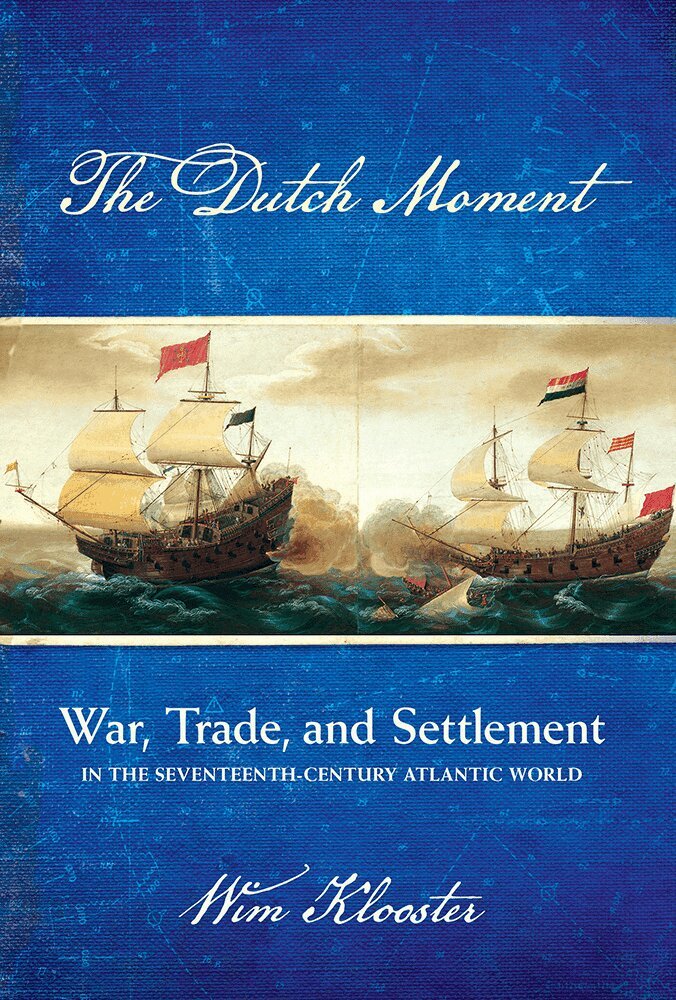
The author draws on a dazzling variety of archival and printed sources.... The Dutch Moment is a signal contribution to the field.―Renaissance QuarterlyIn The Dutch Moment, Wim Klooster shows how the Dutch built and eventually lost an Atlantic empire that stretched from the homeland in the United Provinces to the Hudson River and from Brazil and the Caribbean to the African Gold Coast. The fleets and armies that fought for the Dutch in the decades-long war against Spain included numerous foreigners, largely drawn from countries in northwestern Europe. Likewise, many settlers of Dutch colonies were born in other parts of Europe or the New World. The Dutch would not have been able to achieve military victories without the native alliances they carefully cultivated. Indeed, the Dutch Atlantic was quintessentially interimperial, multinational, and multiracial. At the same time, it was an empire entirely designed to benefit the United Provinces.The pivotal colony in the Dutch Atlantic was Brazil, half of which was conquered by the Dutch West India Company. Its brief lifespan notwithstanding, Dutch Brazil (1630–1654) had a lasting impact on the Atlantic world. The scope of Dutch warfare in Brazil is hard to overestimate-this was the largest interimperial conflict of the seventeenth-century Atlantic. Brazil launched the Dutch into the transatlantic slave trade, a business they soon dominated. At the same time, Dutch Brazil paved the way for a Jewish life in freedom in the Americas after the first American synagogues opened their doors in Recife. In the end, the entire colony eventually reverted to Portuguese rule, in part because Dutch soldiers, plagued by perennial poverty, famine, and misery, refused to take up arms. As they did elsewhere, the Dutch lost a crucial colony because of the empire’s systematic neglect of the very soldiers on whom its defenses rested.After the loss of Brazil and, ten years later, New Netherland, the Dutch scaled back their political ambitions in the Atlantic world. Their American colonies barely survived wars with England and France. As the imperial dimension waned, the interimperial dimension gained strength. Dutch commerce with residents of foreign empires thrived in a process of constant adaptation to foreign settlers’ needs and mercantilist obstacles.
Inbunden, Engelska, 2023
1 741 kr
Skickas inom 7-10 vardagar
Volume III covers the Iberian Empires and the important ethnic dimension of the Ibero-American independence movements, revealing the contrasting dynamics created by the Spanish imperial crisis at home and in the colonies. It bears out the experimental nature of political changes, the shared experiences and contrasts across different areas, and the connections to the revolutionary French Caribbean. The special nature of the emancipatory processes launched in the European metropoles of Spain and Portugal is explored, as are the connections between Spanish America and Brazil, as well as between Brazil and Portuguese Africa. It ends with an assessment of Brazil and how the survival of slavery is shown to have been essential to the new monarchy, although simultaneously, enslaved people began pressing their own demands, just like the indigenous population.
Inbunden, Engelska, 2023
1 741 kr
Skickas inom 7-10 vardagar
Volume II delves into the revolutions of France, Europe, and Haiti, with particular focus on the French Revolution and the changes it wrought. The demarcation between property and power, and the changes in family life, religious practices, and socio-economic relations are explored, as well as the preoccupation with violence and terror, both of which were conspicuous aspects of the revolution. Simultaneous movements in England, Germany, Hungary, Ireland, Italy, and Poland-Lithuania are also discussed. The volume ends with the Haitian Revolution and its impact on neighboring countries, revealing how the revolution was comprised of several smaller revolutions, and how, once the independent black State of Haiti was established, an effort was made to fulfill the promises of freedom and equality.
Inbunden, Engelska, 2023
1 741 kr
Skickas inom 7-10 vardagar
Volume I offers an introduction to the Enlightenment, which served as the shared background for virtually all revolutionary turmoil, and the American Revolution, which inaugurated the Age of Revolutions. Beginning with a thorough introduction, the volume covers international rivalry, the importance of slavery, and the reformist mind-set that prevailed on the eve of the revolutionary era. It addresses the traditional argument on whether the Enlightenment truly caused revolutions, concluding that the reverse is more apt: revolutions helped create the Enlightenment as a body of thought. The volume continues with a regional and thematic assessment of the American Revolution, revealing how numerous groups in British America - including Black and indigenous people - pursued their own agendas and faced interests at odds with the principles of the revolution.
Häftad, Engelska, 2018
327 kr
Skickas inom 5-8 vardagar
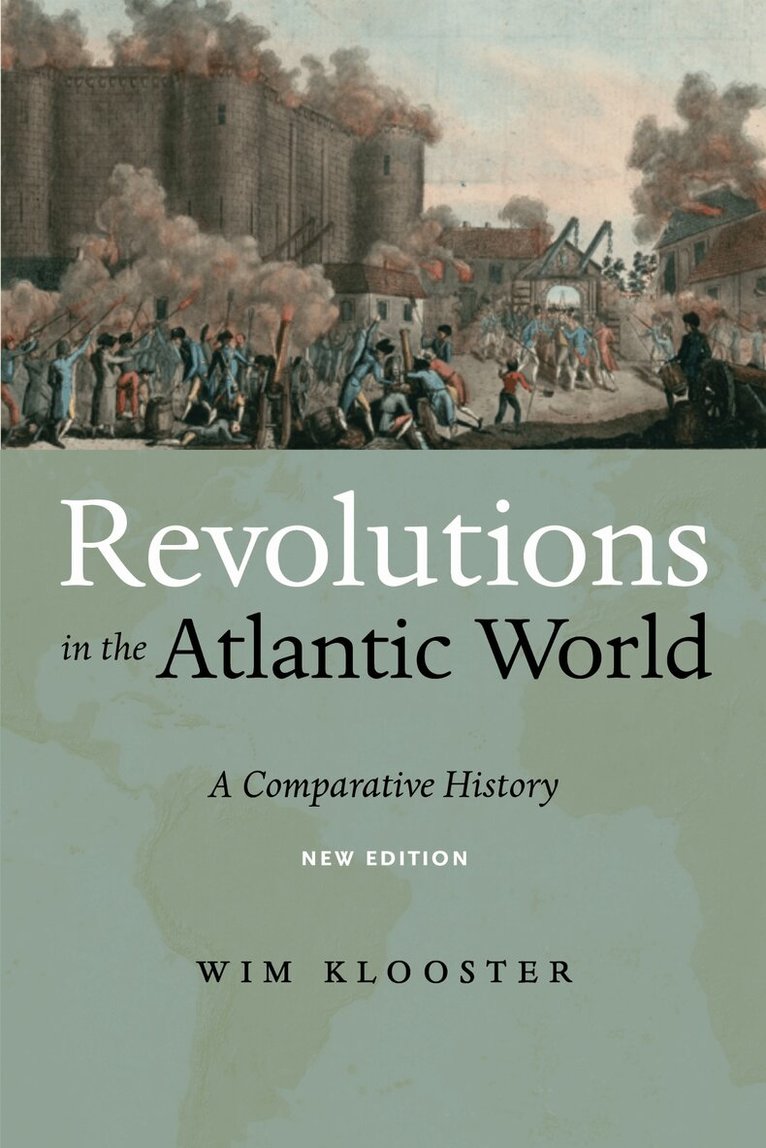
A new look at a contentious period in the history of the Atlantic world Within just a half century, the American, French, Haitian, and Spanish American revolutions transformed the Atlantic world. This book is the first to analyze these events through a comparative lens, revealing several central themes in the field of Atlantic history. From the murky position of the European empire between the Old and New Worlds to slavery and diaspora, Wim Klooster offers insights into the forces behind the many conflicts in the Atlantic world in the late eighteenth and early nineteenth centuries. Digging deeply into the structural causes and oppressive environments in which these revolutions occurred, Klooster debunks the popular myth that the "people" rebelled against a small ruling elite, arguing instead that the revolutions were civil wars in which all classes fought on both sides. The book reveals the extent to which mechanisms of popular mobilization were visible in the revolutions. For example, although Blacks and Indians often played an important role in the success of the revolutions, they were never compensated once new regimes rose to power. Nor was democracy a goal or product of these revolutions, which usually spawned authoritarian polities. The new edition covers the latest historiographical trends in the study of the Atlantic world, including new research regarding the role of privateers. Drawing on fresh research – such as primary documents and extant secondary literature – Klooster ultimately concludes that the Enlightenment was the ideological inspiration for the Age of Revolutions, although not its cause.
Inbunden, Engelska, 2018
1 115 kr
Skickas inom 10-15 vardagar
A new look at a contentious period in the history of the Atlantic world Within just a half century, the American, French, Haitian, and Spanish American revolutions transformed the Atlantic world. This book is the first to analyze these events through a comparative lens, revealing several central themes in the field of Atlantic history. From the murky position of the European empire between the Old and New Worlds to slavery and diaspora, Wim Klooster offers insights into the forces behind the many conflicts in the Atlantic world in the late eighteenth and early nineteenth centuries. Digging deeply into the structural causes and oppressive environments in which these revolutions occurred, Klooster debunks the popular myth that the "people" rebelled against a small ruling elite, arguing instead that the revolutions were civil wars in which all classes fought on both sides. The book reveals the extent to which mechanisms of popular mobilization were visible in the revolutions. For example, although Blacks and Indians often played an important role in the success of the revolutions, they were never compensated once new regimes rose to power. Nor was democracy a goal or product of these revolutions, which usually spawned authoritarian polities. The new edition covers the latest historiographical trends in the study of the Atlantic world, including new research regarding the role of privateers. Drawing on fresh research – such as primary documents and extant secondary literature – Klooster ultimately concludes that the Enlightenment was the ideological inspiration for the Age of Revolutions, although not its cause.
Inbunden, Engelska, 2018
568 kr
Skickas inom 10-15 vardagar
Wim Klooster and Gert Oostindie present a fresh look at the Dutch Atlantic in the period following the imperial moment of the seventeenth century. This epoch (1680–1815), the authors argue, marked a distinct and significant era in which Dutch military power declined and Dutch colonies began to chart a more autonomous path.The loss of Brazil and New Netherland were twin blows to Dutch imperial pretensions. Yet the Dutch Atlantic hardly faded into insignificance. Instead, the influence of the Dutch remained, as they were increasingly drawn into the imperial systems of Britain, Spain, and France. In their synthetic and comparative history, Klooster and Oostindie reveal the fragmented identity and interconnectedness of the Dutch in three Atlantic theaters: West Africa, Guiana, and the insular Caribbean. They show that the colonies and trading posts were heterogeneous in their governance, religious profiles, and ethnic compositions and were marked by creolization. Even as colonial control weakened, the imprint of Dutch political, economic, and cultural authority would mark territories around the Atlantic for decades to come.Realm between Empires is a powerful revisionist history of the eighteenth-century Atlantic world and provides a much-needed counterpoint to the more widely known British and French Atlantic histories.
Häftad, Engelska, 2019
372 kr
Skickas inom 10-15 vardagar
The author draws on a dazzling variety of archival and printed sources.... The Dutch Moment is a signal contribution to the field.―Renaissance QuarterlyIn The Dutch Moment, Wim Klooster shows how the Dutch built and eventually lost an Atlantic empire that stretched from the homeland in the United Provinces to the Hudson River and from Brazil and the Caribbean to the African Gold Coast. The fleets and armies that fought for the Dutch in the decades-long war against Spain included numerous foreigners, largely drawn from countries in northwestern Europe. Likewise, many settlers of Dutch colonies were born in other parts of Europe or the New World. The Dutch would not have been able to achieve military victories without the native alliances they carefully cultivated. Indeed, the Dutch Atlantic was quintessentially interimperial, multinational, and multiracial. At the same time, it was an empire entirely designed to benefit the United Provinces.The pivotal colony in the Dutch Atlantic was Brazil, half of which was conquered by the Dutch West India Company. Its brief lifespan notwithstanding, Dutch Brazil (1630–1654) had a lasting impact on the Atlantic world. The scope of Dutch warfare in Brazil is hard to overestimate-this was the largest interimperial conflict of the seventeenth-century Atlantic. Brazil launched the Dutch into the transatlantic slave trade, a business they soon dominated. At the same time, Dutch Brazil paved the way for a Jewish life in freedom in the Americas after the first American synagogues opened their doors in Recife. In the end, the entire colony eventually reverted to Portuguese rule, in part because Dutch soldiers, plagued by perennial poverty, famine, and misery, refused to take up arms. As they did elsewhere, the Dutch lost a crucial colony because of the empire’s systematic neglect of the very soldiers on whom its defenses rested.After the loss of Brazil and, ten years later, New Netherland, the Dutch scaled back their political ambitions in the Atlantic world. Their American colonies barely survived wars with England and France. As the imperial dimension waned, the interimperial dimension gained strength. Dutch commerce with residents of foreign empires thrived in a process of constant adaptation to foreign settlers’ needs and mercantilist obstacles.
Inbunden, Engelska, 2024
1 633 kr
Skickas inom 10-15 vardagar
Jewish Entanglements in the Atlantic World represents the first collective attempt to reframe the study of colonial and early American Jewry within the context of Atlantic History. From roughly 1500 to 1830, the Atlantic World was a tightly intertwined swathe of global powers that included Europe, Africa, North and South America, and the Caribbean. How, when, and where do Jews figure in this important chapter of history? This book explores these questions and many others. The essays of this volume foreground the connectivity between Jews and other population groups in the realms of empire, trade, and slavery, taking readers from the shores of Caribbean islands to various outposts of the Dutch, English, Spanish, and Portuguese empires.Jewish Entanglements in the Atlantic World revolutionizes the study of Jews in early American history, forging connections and breaking down artificial academic divisions so as to start writing the history of an Atlantic world influenced strongly by the culture, economy, politics, religion, society, and sexual relations of Jewish people.
Häftad, Engelska, 2024
344 kr
Skickas inom 10-15 vardagar
Jewish Entanglements in the Atlantic World represents the first collective attempt to reframe the study of colonial and early American Jewry within the context of Atlantic History. From roughly 1500 to 1830, the Atlantic World was a tightly intertwined swathe of global powers that included Europe, Africa, North and South America, and the Caribbean. How, when, and where do Jews figure in this important chapter of history? This book explores these questions and many others. The essays of this volume foreground the connectivity between Jews and other population groups in the realms of empire, trade, and slavery, taking readers from the shores of Caribbean islands to various outposts of the Dutch, English, Spanish, and Portuguese empires.Jewish Entanglements in the Atlantic World revolutionizes the study of Jews in early American history, forging connections and breaking down artificial academic divisions so as to start writing the history of an Atlantic world influenced strongly by the culture, economy, politics, religion, society, and sexual relations of Jewish people.
Del 13 - Linguistic Models
Sentential Complementation and the Lexicon
Studies in Honour of Wim de Geest
Inbunden, Engelska, 1989
1 893 kr
Skickas inom 5-8 vardagar
No detailed description available for "Sentential Complementation and the Lexicon".
E-bok
PDF, Engelska, 20242 050 kr
Läs direkt efter köp
This book aims to revise the history of Dutch world trade in the seventeenth and eighteenth centuries. While studies of Dutch economic expansion tend to focus on the East India Company and its Asian empire, activities in the Atlantic have been neglected. Consequently, their importance has been seriously underestimated. By examining the transit trade in the Caribbean, this thorough and original study presents an alternative view of the Dutch seaborne empire, facing east as well as west. The Dutch transit trade in the Caribbean revolved around Curacao and St. Eustatius, small islands that did not have much in common with other colonies in the region. Sugar and tobacco production in St. Eustatius was never a prosperous enterprise and Curacao proved to be unsuited for the cultivation of cash crops. But enterprising merchants turned these Dutch possessions into entrepots,local counterparts of Amsterdam, from where a wide variety of European commodities was sent to foreign colonies in exchange for tropical produce. Although outlawed by French, English, and Spanish mercantilist policies, inter-imperial commerce became a booming business, providing the Dutch in the New World with a niche which was much more profitable than historians have realized. The Caribbean contraband trade thus helped the Dutch to survive the loss in the mid-seventeenth century of most of their territorial empire in the Western hemisphere.
Inbunden, Ryska, 2024
463 kr
Skickas inom 5-8 vardagar
ENGIn the seventeenth century, the Dutch built an Atlantic empire that stretched from the Caribbean to the African Gold Coast and from present-day New York to Brazil. This empire was forged on the battlefields and the high seas, as Dutch armies and fleets extended the decades-old independence war against Spain across the ocean. Dutch transatlantic fleets, armies, and colonies included numerous foreigners, largely drawn from countries in northwestern Europe. Nor would the Dutch have been able to achieve military victories without the native alliances they carefully cultivated. Indeed, the Dutch Atlantic was quintessentially inter-imperial, multinational, and multiracial. At the same time, it was an empire designed to benefit the Dutch Republic.RUSВ XVII веке голландцы построили атлантическую империю, которая простиралась от Карибского моря до африканского Золотого Берега и от нынешнего Нью-Йорка до Бразилии. Империя формировалась на полях сражений и в открытом море, по мере того как голландские армия и флот вели затянувшуюся на десятилетия войну за независимость по всему океану. Голландские трансатлантический флот, армии и колонии включали множество иностранцев, в основном выходцев из стран северо-западной Европы. По сути, голландская Атлантика была межимперской, мультинациональной и мультирасовой.
Häftad, Ryska, 2026
371 kr
Skickas inom 3-6 vardagar
E-bok
PDF, Ryska, 2024919 kr
Läs direkt efter köp
ENGIn the seventeenth century, the Dutch built an Atlantic empire that stretched from the Caribbean to the African Gold Coast and from present-day New York to Brazil. This empire was forged on the battlefields and the high seas, as Dutch armies and fleets extended the decades-old independence war against Spain across the ocean. Dutch transatlantic fleets, armies, and colonies included numerous foreigners, largely drawn from countries in northwestern Europe. Nor would the Dutch have been able to achieve military victories without the native alliances they carefully cultivated. Indeed, the Dutch Atlantic was quintessentially inter-imperial, multinational, and multiracial. At the same time, it was an empire designed to benefit the Dutch Republic.RUS XVII , - . , . , , - . , , .
6 948 kr
Tillfälligt slut
In three volumes, The Cambridge History of the Age of Atlantic Revolutions brings together experts on all corners of the Atlantic World who reveal the age in all its complexity. The Age of Atlantic Revolutions formed the transition from an era marked by monarchical rule, privileges, and colonialism to an age that stood out for republican rule, legal equality, and the sovereignty of American nations. The seventy-one chapters included reflect the latest trends and discussions on this transformative part of history, highlighting not only the causes, key events, and consequences of the revolutions, but stressing the political experimentation, contingency, and survival of colonial institutions. The volumes also examine the attempts of enslaved and indigenous people, and free people of color, to change their plight, offering a much-needed revision to R.R. Palmer's first synthesis of this era sixty years ago.