Winston G Ramsey - Böcker
Visar alla böcker från författaren Winston G Ramsey. Handla med fri frakt och snabb leverans.
10 produkter
10 produkter
297 kr
Skickas
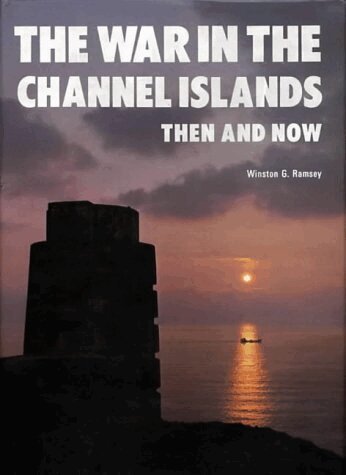
Besides being the only British territory occupied by the Germans in the Second World War, it is perhaps less generally known that the Channel Islands were fortified out of all proportion to the rest of Hitler's Atlantic Wall: a legacy that is explored in individual chapters on Alderney, Guernsey, Jersey and Sark. First-hand accounts of all seven Commando raids are brought together for the first time. A summary of how the Islands' hotels were put to use by their German guests may intrigue present-day visitors, and a review of the war museums gives an insight into the variety of relics that enthusiasts have had the foresight to preserve. The war cemeteries are described, and there is a list of every grave of both sides of the two World Wars. Annotated aerial photographs form an important aspect of the book among them unique pictures of Sark for which exceptional permission was granted to enter the island's inviolable airspace.
351 kr
Skickas
This volume covers September 3rd, 1939 to September 6th, 1940 of World War II. The book uses extracts from a log compiled by the Ministry of Home Security, which provides a contemporary diary of events. There are also articles by historians and eyewitnesses which interspace the daily happenings.
523 kr
Tillfälligt slut
This volume offers a day-to-day account of the Night Blitz, beginning with the first mass raid on London on September 7th, 1940. This work presents a record of a period which changed the face of Britain and cost the lives of 40,000 on her people.
351 kr
Skickas
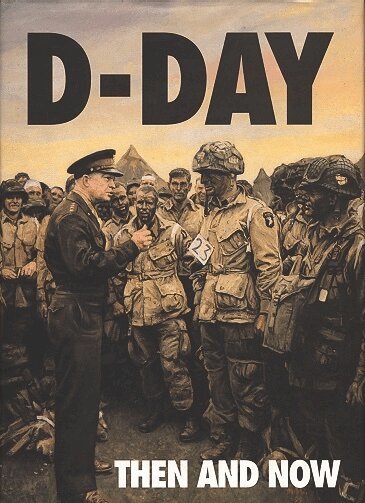
'People of Western Europe. A landing was made this morning on the coast of France...' With these simple - yet memorable - words, General Eisenhower, the Supreme Commander, Allied Expeditionary Force, announced to the world on June 6, 1944 that the Allies had begun Operation 'Overlord' to liberate Europe. Now, 50 years later, After the Battle presents the full story: from its inception, planning and preparation through to its launch on D-Day and the days that followed, as told by the commanders whose responsibility it was. Many of the hundreds of 'then and now' photographs have been taken exactly 50 years later - sometimes to the precise minute - from when the original events took place, creating a unique two-volume record of the greatest combined military, naval and air operation of all time. 800 illustrations
523 kr
Skickas
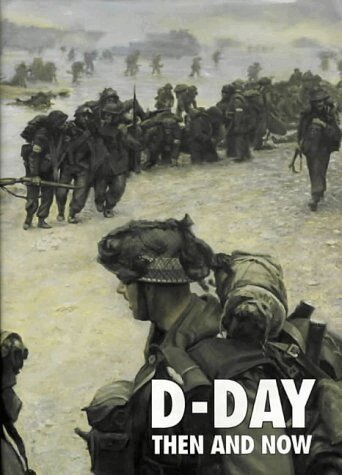
'People of Western Europe. A landing was made this morning on the coast of France...' With these simple - yet memorable - words, General Eisenhower, the Supreme Commander, Allied Expeditionary Force, announced to the world on June 6, 1944 that the Allies had begun Operation 'Overlord' to liberate Europe. Now, 50 years later, After the Battle presents the full story: from its inception, planning and preparation through to its launch on D-Day and the days that followed, as told by the commanders whose responsibility it was. Many of the hundreds of 'then and now' photographs have been taken exactly 50 years later - sometimes to the precise minute - from when the original events took place, creating a unique two-volume record of the greatest combined military, naval and air operation of all time. 1000 illustrations
183 kr
Skickas
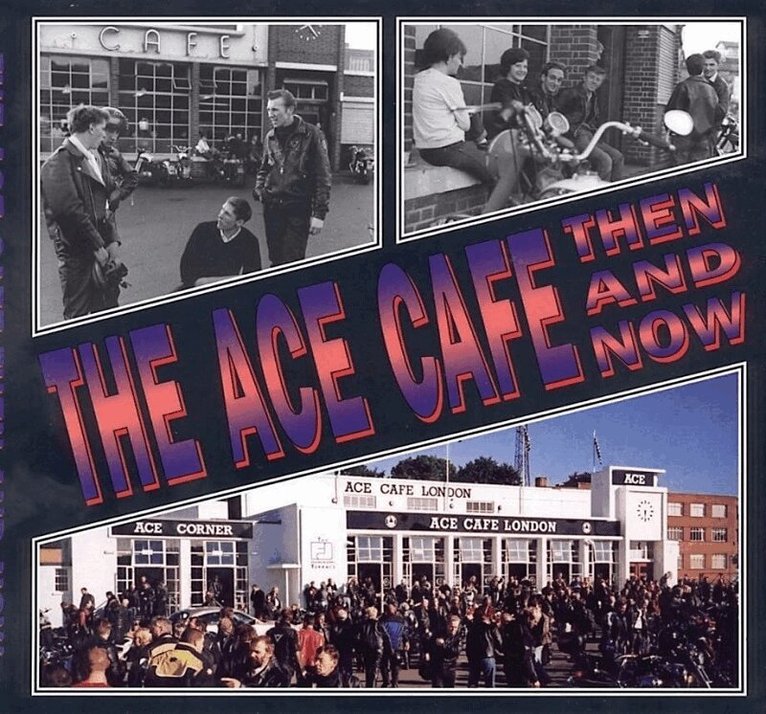
During the 1960s swarms of motorcyclists roamed along London's North Circular Road in nightly burn ups. Their pit stop was the Ace Cafe at Stonebridge Park. This is their story as told by the boys who raced and the policemen who chased, woven against a background of contemporary reports.
523 kr
Skickas
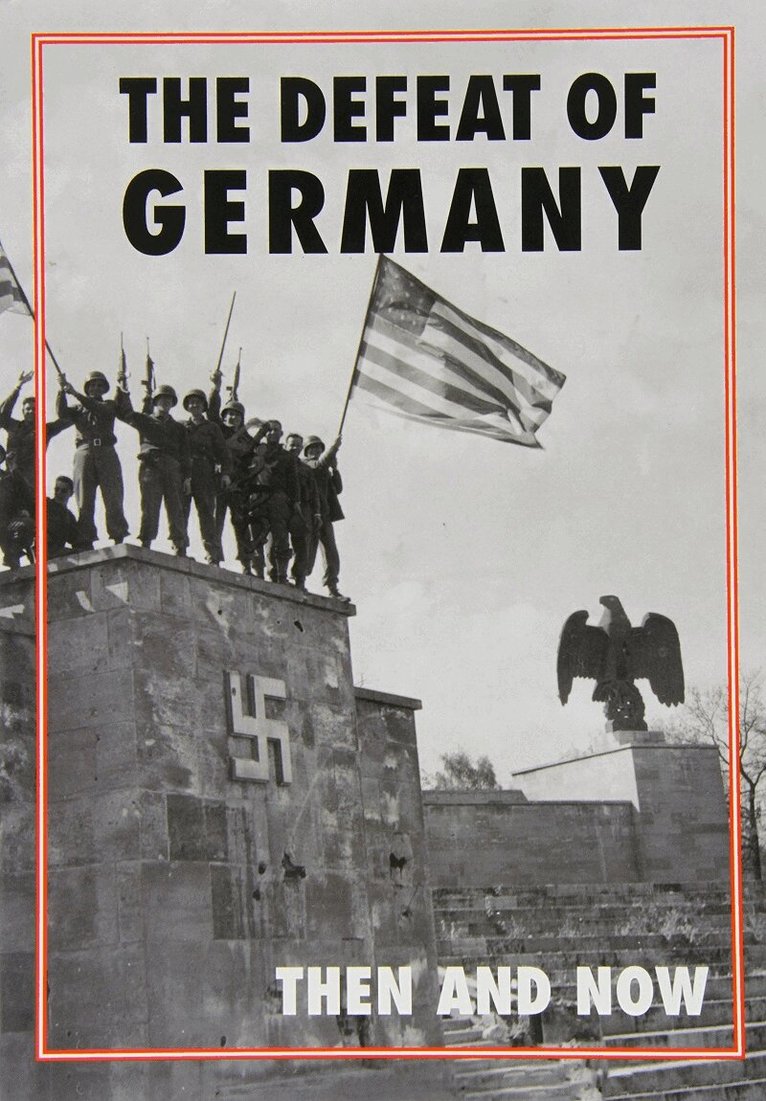
In December 1943, an American four-star general was appointed to lead the huge operation - code-named "Overlord" - which had been planned by Britain and the United States to defeat Germany. To that end, General Dwight D. Eisenhower arrived in London in January 1944 to establish his headquarters as Supreme Commander Allied Expeditionary Force (SHAEF). Although over 500 correspondents, photographers and broadcasters had been accredited by the Public Relations Division to cover the invasion of France due to take place in four months' time, SHAEF also decided to issue its own daily communiques, charting the progress of the battle, to be released under the signature of a former US pressman, Lieutenant Colonel D. Reed Jordon, the Chief of the Communications Section. Over the following months nearly 400 communiques were released by SHAEF and these are reproduced in the book. They were designed mainly as a guide for the press covering battlefield activities, so descriptions of the horror, the suffering, and the destruction that go with each shell fired and each bomb dropped were purposely left to the scores of talented news and photo reporters nearer the action.Alongside the measured text of the official communiques hundreds of photographs - many complete with censor deletions - taken by war photographers in France, Belgium, Holland, Luxembourg and Germany, are reproduced alongside 'then and now' comparison photos taken by After the Battle. Illustrating the battles by the western Allies to liberate western Europe, we follow the fighting month by month, beginning with D-Day in Normandy until signatures on a document in Berlin eleven months later denoted the final defeat of Nazi Germany.
210 kr
Skickas
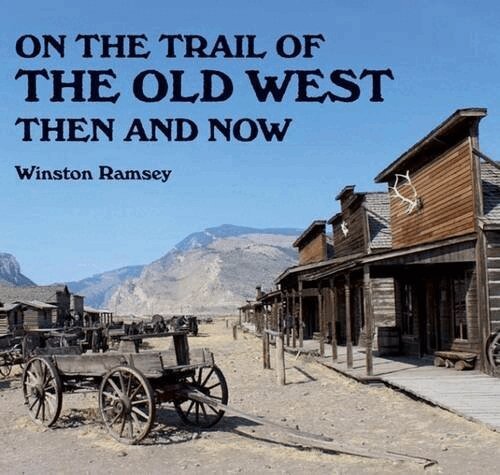
The Old West may have faded from living memory but the actual locations where the robberies and shoot-outs took place can still be found over one hundred years later. In the pages of On the Trail of the Old West Then and Now, we glimpse the past through contemporary newspaper reports, illustrated with comparison then and now' photographs. Here are towns like Dodge City and Tombstone and the stories of the clashes between lawmen and the badmen, with grim details of lawlessness, violence, and harsh frontier justice meted out by vigilante committees, to recall a timeless era of American history the Wild West!'
525 kr
Skickas
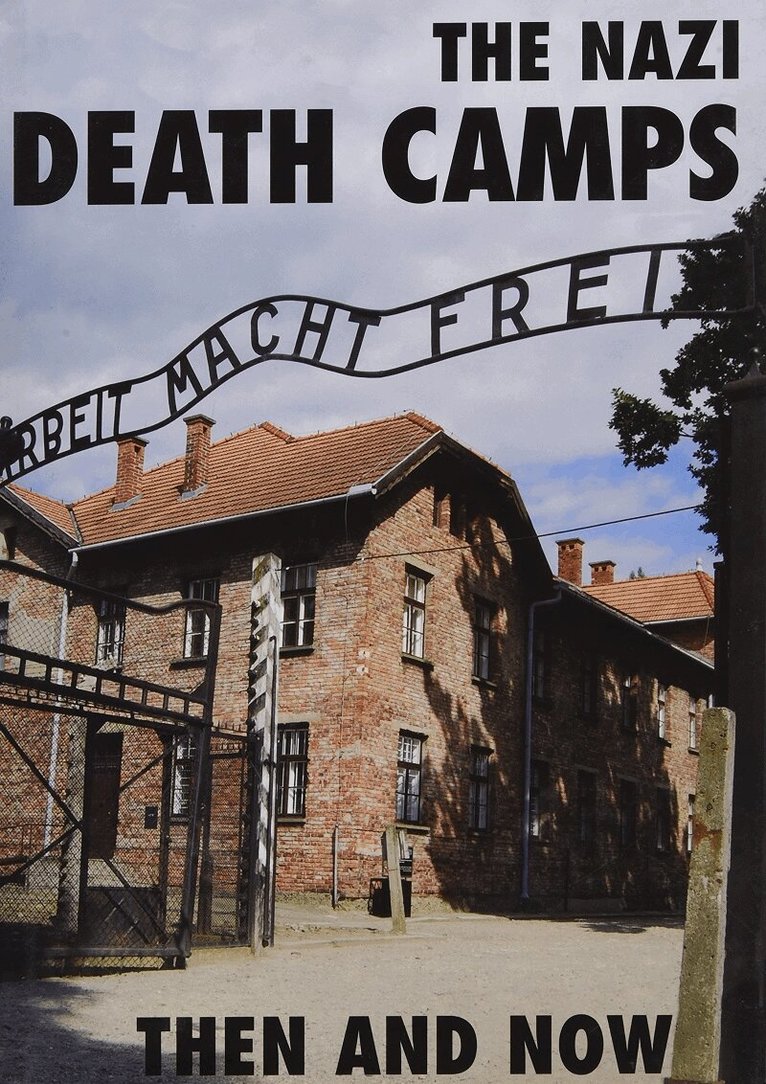
In the 12 years that the National Socialist Party was in power in Germany, upwards of 15,000 concentration and labour camps were established in the Greater Reich and the occupied countries to incarcerate all who were deemed enemies of the state. Contents includes: GERMANY Dachau, Oranienburg, Sachsenhausen, Buchenwald, Ohrdruf, Flossenburg, Neuengamme, Ravensbruck, Niederhagen/Wewelsburg, Bergen-Belsen, Mittelbau-Dora-Nordhausen, Arbeitsdorf. AUSTRIA Mauthausen. BELGIUM Breendonk, Mechelen: Caserne Dossin. CZECHOSLOVAKIA Theresienstadt. ESTONIA Vaivara/Klooga. FRANCE French Transit Camps, Natzweiler-Struthof, Wiesengrund/Vaihingen. HOLLAND Westerbork, Amersfoort, Herzogenbusch/Vught. ITALY Fossoli, Bolzano, Risiera di San Sabba. LATVIA Riga-Kaiserwald. LITHUANIA Kauen. NORWAY Falstad, Grini. UNITED KINGDOM Alderney, Channel Islands. BERLIN Wannsee Conference and Operation Reinhard'. POLAND The Warsaw Ghetto, Majdanek-Lublin, Belzec, Sobibor, Treblinka, Chelmno, Gross-Rosen, Stutthof-Danzig, Krakow-Plaszow, Auschwitz , Birkenau, War Crimes Trials.
450 kr
Skickas
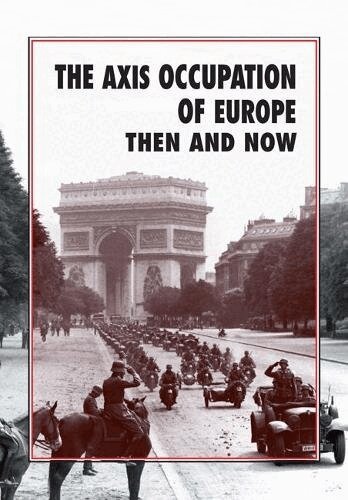
Winston and Gail RamseyThis book focuses on the systems used by the Axis powers for the governance of the countries that they occupied during the Second World War. It would be easy to assume that the administration of each country was carried out on a somewhat ad hoc basis, but streams of detailed orders and decrees were enacted to cover all aspects of everyday life . . . from finance to crime.Dr Raphael Lemkin was a Polish émigré and the person who coined the term `genocide’ during his study of international law concerning crimes against humanity which he began in 1933 — the year that the Nazis assumed power in Germany. Dr Lemkin’s much-acclaimed work Axis Rule in Occupied Europe was published in 1944 and extracts from it now form the framework on which we have built this `then and now’ coverage of the occupation of Czechoslovakia, Memel, Albania, Danzig, Poland, Denmark, Norway, Luxembourg, the Netherlands, Belgium, France, Monaco, the Channel Islands, Greece, Yugoslavia, the Baltic states, the Soviet Union, Romania, Italy and Hungary.Individual chapters also cover the most serious crimes committed by the occupier: the destruction of whole villages in Czechoslovakia, France, the Netherlands and Greece, and the genocidal acts carried out in Italy, Greece and Belgium, although nothing can equal the wholesale slaughter enacted in the Balkans and the USSR.It has been estimated that the Axis occupation of Europe cost between 20 and 25 million civilian lives, apart from the deaths of at least 16 million servicemen and women who paid the ultimate price in trying to put Europe back together again. It is a debt that can never be repaid.SIZE 12”×8½” 368 PAGES OVER 1,000 ILLUSTRATIONSISBN 9 781870 067935 £39.95